


RI Blows $644 Million in 'Wasteful' Spending
Stephen Beale, GoLocalProv News Editor
RI Blows $644 Million in 'Wasteful' Spending
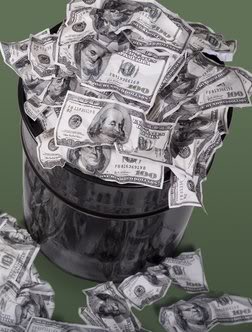
Waste was found at all levels of government, from cities and towns to the state budget to federal funds that were funneled back home, according to a new report. The waste and pork included:
■ $1.2 million to see if removing the ovaries of prepubescent rabbits and giving them hormone-treatments affects cardiac death rates. (Federal funds awarded to Rhode Island Hospital.)
■ $53,419 in cash rewards to young people in Mexico who do not contract an STD. (Federal funds awarded to Brown University.)
■ $20 million in federal funds to renovate state lawmakers’ offices.
■ $586,776 to operate the city-owned McDermott Swimming Pool in Warwick.
■ $5.3 million for a new elephant house and botanical exhibit at Roger Williams Park.
■ $1,000 in state funds to an artist who took pictures of naked people jumping and spitting.
The total amount of waste—which is close to a tenth of what the state spends annually—came as a surprise even to some of the most erstwhile local critics of government spending.
“I was surprised. As a former budget negotiator I was told over and over there is no savings in fraud, waste and abuse—those are picked clean,” said state GOP Chairman Ken McKay. “Democrats always say that we ‘have hard decisions to make on spending.’ Either they don’t know what they are talking about or they are misled by their leaders.”
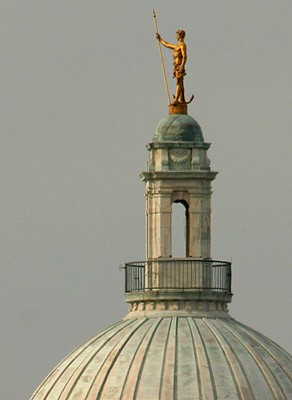
“On the state level, we found a lot of questionable expenses with art funding, corporate welfare, with stimulus funds,” said Drew Johnson, the Tennessee-based author of the report, titled “2011 Rhode Island Piglet Book.”
‘Legislative grants’ unique to Rhode Island
Johnson said he was most shocked by the legislative grants that House and Senate members channel back into their districts.
Unlike just about every other form of spending at the state level, legislative grants are not voted on by the full House and Senate. Instead, members in each chamber submit a list of funding requests—everything from youth sports to food banks—which are approved or denied by the Democratic leadership. It’s the closest thing Rhode Island has to earmarks—and it is unique to the Ocean State, according to Johnson, who has produced similar studies of government waste in several other states.
“These legislative grants are pork … any way you define them,” Johnson said. “It’s pretty disgusting.”
In all, $882,620 in Senate legislative grants was distributed in fiscal year 2011. The amount in the House was far less, $248,082. (Spokesmen for the House and Senate leadership declined to comment in time for publication. Click here to read the GoLocalProv report on legislative grants.)
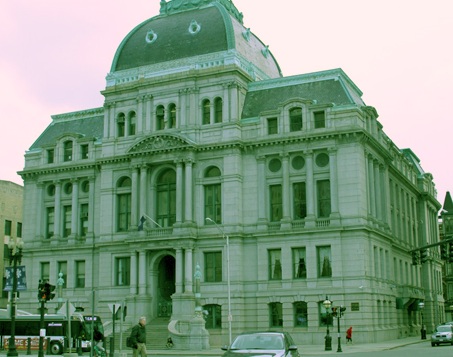
Rhode Island also stands out in another way. “On the local level basically we found a lot of wasteful spending in terms of the budget,” Johnson said. “The locals are really horrible at balancing their budgets. Cities in Rhode Island seem to be worse than cities in other states in terms of living within their means.”
From the state’s largest city to its smallest, communities across Rhode Island overspent their budgets in 2010. Providence went $58 million into the red, while Central Falls went over its budget by $2.5 million—right before the state appointed a receiver to manage its finances. A number of other communities blew through their budgets well, including:
■ Bristol—over by $5.1 million
■ Woonsocket—over by $2.6 million
■ Newport—police spent $553,000 more than budgeted
■ Smithfield—police went over their budget by $385,000
How is ‘waste’ defined?
Of course, one man’s wasteful spending is another’s worthwhile spending. Even one ardent critic of waste and inefficiency, former Moderate Party gubernatorial candidate Ken Block, took issue with some of the things the report called waste. “There are areas in the waste and fraud discussion where I agree with OSPRI’s report, and areas where we have substantial disagreement,” Block told GoLocalProv.

Johnson said he does not necessarily oppose all government funding at the arts. But he said it should be at the local, rather than state, level. He said that state funding of art projects, especially those that can be offensive, “crosses the line.”
He said state funding of recreational projects creates winners and losers across the state. “It just strikes me as unfair,” Johnson said.
(Click here to see how the report defines waste at the federal level.)
What about pensions?

The report also skips over the whole issue of pensions, which has dominated headlines for months in Rhode Island. Johnson said the topic is just too vast and complex to be covered in the report. “To me it would be a separate report,” he said. “You would basically end up with a pension report and a pork report on the side.”
Biggest waster: federal government
By far, the biggest area of waste was in federal funds that were spent in Rhode Island. In all, $394,268,792 in federal funds made the cut as pork-barrel spending—and that’s not counting all of the $2 billion in federal stimulus funds that found their way to the state. State spending accounted for another $167,670,321, leaving $74,997,548 to cities and towns.
Block said the state process for approval of the budget makes it particularly susceptible to waste.
“Our state budgeting process involves a budget document that has had at most a week of review by those who vote on it. A poorly vetted budget is guaranteed to have wasteful and unnecessary spending attached to it,” Block said. “Unless our state adopts a more transparent and thoughtful process for drafting and approving a budget, we will continue to spend state taxpayer dollars in unwise ways.”
Governor Lincoln Chafee’s office did not respond to a request for comment.
Click here to read the full report for Rhode Island.
If you valued this article, please LIKE GoLocalProv.com on Facebook by clicking HERE.