


UPDATED: RI Ethics Commission Moves Forward with Raimondo Investigation
GoLocalProv News Team
UPDATED: RI Ethics Commission Moves Forward with Raimondo Investigation
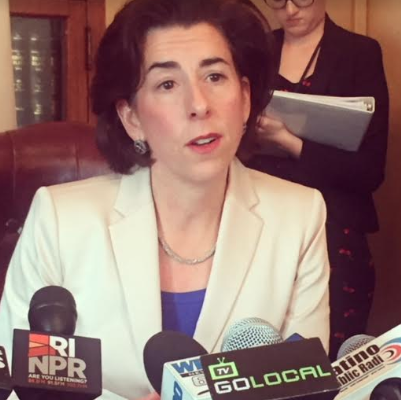
The complaint was filed by former GOP chairman Brandon Bell.
Representing Raimondo before the Rhode Island Ethics Commission is New Jersey attorney Jonathan Berkon.
GET THE LATEST BREAKING NEWS HERE -- SIGN UP FOR GOLOCAL FREE DAILY EBLASTBerkon also does legal work for the Democratic Governors Association which is at the heart of the ethics complaint.
According to Raimondo's office, her campaign is paying the legal bills for the case. Her campaign did not respond to requests for copies of the legal agreement between Berkon and 'Gina M. Raimondo' campaign. Her campaign has more than $659,000 cash on hand.
Raimondo and GOP
The Rhode Island Republican Party said, “The Rhode Island GOP is pleased that the Ethics Commission will investigate Raimondo for the special treatment her administration has shown IGT while Raimondo and Donald Sweitzer, a lobbyist for IGT, have been associates in the Democratic Governors Association.”
“In the past, the Ethics Commission has investigated and fined public officials like Governor Edward DiPrete and House Speaker Gordon Fox when they used their public office to favor their business associates. We hope the Ethics Commission will treat Raimondo the same as way they treated DiPrete and Fox,” said the GOP statement.

“We applaud the Ethics Commission’s decision to throw out one of the two claims filed by the state Republican Party. We are confident that when the Ethics Commission reviews the facts relating to the other claim, it will once again conclude this latest partisan complaint has no merit,” said Berkon.
Berkon cited that the Rhode Island Ethics Commission’s standard is such that an investigation does not validate a complaint.
Commission website: “The decision to investigate does not address the validity of the complaint; rather, it merely indicates that the allegations properly fall under the provisions of the Code of Ethics. Neither the complainant nor the respondent participates in the initial determination.”