


RI High School Referee Was Convicted on Drug Charges
Kate Nagle, GoLocal Contributor
RI High School Referee Was Convicted on Drug Charges

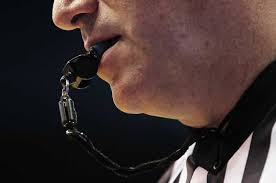
While the National Alliance for Youth Sports advocates disqualifying any official who has been convicted of major crimes, including sex, gun, and drug offenses, no matter how long ago they occurred, the Rhode Island Interscholastic League has allowed a referee convicted on drug-related charges to officiate high school basketball games.
Christopher Nicynski pled no contest to three felony charges in 1994 for violations of the controlled substance act including Class I/II substances. According to the RI Department of Health, Schedule I drugs are the "most dangerous drugs of all the drug schedules with potentially severe psychological or physical dependence." Nicynski was given a ten year suspended sentence and ten year probation on three separate counts, in including conspiracy to violate the controlled substance act.
GET THE LATEST BREAKING NEWS HERE -- SIGN UP FOR GOLOCAL FREE DAILY EBLASTIn 2009, in a separate court docket, Nicynski had a misdemeanor vandalism charge, which included throwing an object at a moving vehicle, to which he entered a not-guilty plea, and the case was disposed.
"We are well aware of the incident. The matter was reviewed and we approved his capacity to be a referee," said RIIL Executive Director Tom Mezzanotte, of Nicynski's record, and decision to allow him officiate in the league. Nicynski was not reachable for comment on Thursday.
Schools Sports in Spotlight

"Opponents of background checks note that crimes by school sports officials are rare. But they do occur," wrote the Globe's Bob Hohler. "Wisconsin and Washington began checking criminal records after basketball referees were charged with making bomb threats and drug trafficking, respectively."
Hohler wrote that the only New England state that requires background checks is Connecticut, "according to a recent study by the National Federation of State High School Association," but Mezzanotte said background checks were being conducted in Rhode Island.
"In Rhode Island, we conduct background checks on referees," said Mezzanotte, who said he spoke with the MIAA in the wake of the Globe article.
Mezzanotte said that he believed that he'd only overturned "a couple" of referee applicants that had criminal records in the past year. "One was a record that had since been expunged."
Tommy Jones with the the International Association of Approved Basketball Officials said that he believed that all states would have some sort of background check in the near future, but what that entailed -- and how it would be enforced -- would be up to the individual states.
"With our organization, it's going to be a major topic at our business meeting this spring," said Jones. "There are two things -- the local [referee] organizations, and then what does the state put out what we have to adhere to. And for that, it's not just basketball, it's all sports."
"There's a long list of things to consider," continued Jones regarding addressing background checks. "Should it be a life sentence, that's another question. DUIs, car accidents, we're wrestling as well with the time frame, and what is the individual's right to challenge. I don't have those answers, I bow to the wisdom of our [IAABO] advisors."
State Standards
"They have different standards in different states," said Goldberg. "There are different mechanisms in some states to be a high school referee. In some, you need an accreditation, in other states, they actually issue a license, like skilled professionals."
"Generally, [states] are entitled to set the bar as high -- or low-- as they want to make it," said Goldberg. "The state of Oregon, for example, has a system that says look if you qualify for a license to be a teacher, you qualify for a referee. If you couldn't get a teachers license, you couldn't t get a referee's license -- at least that's a bright line type of standard."
Mezzanotte said the decision to maintain Nicynski was made by him, and not at the Executive Board level. "He's a good referee, he's gotten glowing reviews," said Mezzanotte. "I stand by the decision."
Rhode Island Doctors Behaving Badly

B&E / Holding Marijuana
Roy M. Main, MD
The Rhode Island Department of Health suspended Dr. Main from practicing medicine in the State of Rhode Island indefinitely after breaking into a residence without permission at 3 in the morning and being in possession of marijuana.
Roy M. Main, MD, a physician licensed in the state of RI but with offices in Mystic, Connecticut, entered the home in Westerly, according to documents filed with HEALTH, on August 10 between 3 and 4 in the morning, calling out for a friend named Bill (whose house he thought he was in). The home's owner awoke, subdued Main and held him until police arrived.
Main was arrested for felony breaking and entering. He told police he mistakenly believed he had entered the home of a friend who'd instructed him "to enter a side door of that house." Main entered the wrong house, though, through its garage entrance "because it had no side door."
According to HEALTH, Westerly police found two bags containing about six grams of marijuana in Main's vehicle, which smelled of marijuana smoke.
To read more, go here.

Drug disappearance
The Rhode Island Department of Health suspended the license of a certified nursing assistant at the Charlesgate Nursing Home in August, following an incident involving missing drugs.
Erin Jeannine Blanchette, NA/MAD, allowed "one Joshua Roberts, whom the respondent had personally known and is alleged to have been involved in a relationship with" in a secured area with a secured medicine cart.
Staff at the Charlesgate Nursing Center reported a large quantity of narcotics missing to the Providence Police the same day. Upon investigation, Blanchette was "observed by the Providence Police to be incoherent and under the influence of narcotics."

EMT sexual harrassment
A Coventry EMT was suspended in July 2013 for sexual misconduct toward a fellow EMT, according to the Rhode Island Department of Health (HEALTH).
Randy Crowe was accused by a younger female coworker to have asked her to come inside a rescue truck at the Western Coventry Fire Department's Summit fire station so "he could practice placing ECG leads on her under the guise of teaching her how to do so properly."
According to documents filed with HEALTH, Crowe "placed two leads on her hips and collar bone [EMTs traditionally place four lines of their ECG marine on the wrists and ankles]." While placing the leads on her hips, Crowe pulled her pants down, according to the complaint. Further, "the Complainant also alleges that [Crowe] brushed her chest, told her to 'keep smiling' and pulled her face close to his in 'almost a kissing motion.'"
When the Complainant jumped off the vehicle and walked outside to her car, she alleges that Crowe "followed her, hugged her and kissed her on the side of the head."
HEALTH has suspended the EMT license of Randy Crowe indefinitely pending further order.

Over-prescribing meds
Chepachet-based physician Clayton Lanphear, III, DO, who had prescribed extremely high doses of Vicodin HP and Vicodin ES, as well as Percocet, without properly monitoring his patients' health, has had his license to practice medicine suspended by the RI Department of Health (HEALTH) in July 2013.
HEALTH also called Lanphear's medical records "often illegible and lack the minimum requirements of a bone fide medical record" in accordance with Board regulations and minimum standard of acceptable practice.
A review of Lanphear's prescriptions by HEALTH revealed three occasions of prescribing dangerous levels of the medications. His license is suspended until further review.

Dentist Violations
A Warwick dental practice was closed by the Rhode Island Department of Health (HEALTH), and two of its dentists cited for a number of violations regarding the storage and handling of controlled substances, according to HEALTH.
Frank Paletta, MD, DMD, and Mohammed Banki, MD, DMD, were both named by HEALTH as associated with practicing at 243 Jefferson Boulevard in Warwick.
According to HEALTH, dental inspectors learned that Dr. Banki used medications that were misbranded, did not check medications in syringes that were administered to patients intravenously, and left controlled substances in an unlocked cabinet, among other violations.

Morphine for babies
Pharmacist Leo Blais, RPH
Rhode Island pharmacist Leo Blais, RPH, was suspended in March 2013 for 2 years for dangerous and lax practices, including improper labeling and storage of medications that led to including morphine in omeprazole prescriptions for an infant and a toddler. Blais is also a former RI State Senator.
After the RI Department of Health announced the suspension, HEALTH director Michael Fine, MD, asked for the terms of the suspension to be reviewed.
UPDATE: Blais' license was revoked June, 2013.
To read more, go here.

Dirty conditions
Pharmacist Richard Mancini, RPH
Warwick pharmacist had his license suspended for a variety of unclean practices in January 2013.
Richard Mancini, RPH, the pharmacist-in-charge of Pharmerica, located at 83 Vermont Avenue in Warwick, was found to have allowed unlicensed individuals to practice as pharmacy technicians and engage in the compounding of sterile pharmaceutical compounds.
To read more, go here.

Malpractice in ER
Rita S. Kurl, MD
Rita S. Kurl, MD, was found guilty of unprofessional conduct arising from a malpractice litigation settlement, after having inserted a gastronomy tube improperly into a nursing home patient's abdomen, who later died as a result. Dr. Kurl's malpractice verdict was announced in December 2012.
Doctor Kurl, whose specialty is internal medicine, was involved in a case at Our Lady of Fatima Hospital emergency department on March 23, 2008.
To read more, go here.

Malpractice in ER, II
Joseph P. Turner, DO
The East Greenwich internal medicine physician was named guilty of malpractice after having underestimated the severity of a patient's condition who later died. His verdict was announced in December 2012.
Doctor Turner was the attending physician at Our Lady of Fatima Hospital in Providence on March 23, 2009, when a 56 year old male patient arrived, complaining of severe lower abdominal pain of "ten on a scale of ten." The patient had undergone elective gallbladder removal a week earlier on March 16.
To read more, go here.

Sexual fondling
Nursing Assistant Nathaniel Rodrigues
The nursing assistant at Rhode Island Hospital was suspended indefinitely in December 2012 after having sexually assaulted a female patient.
Nathaniel Rodrigues was employed as a Nursing Assistant at Rhode Island Hospital on September 24, 2012, when he assaulted a female patient by "digitally penetrating her vagina and sexually fondling her," according to HEALTH.
To read more, go here.

Meningitis contamination
Nurse Practitioner Gerald Dornhecker
The nurse practitioner at Skin Essentials Spa in North Providence, RI, was suspended in December 2012 for violations concerning pharmacy items that were recalled because of potential contamination with fungal meningitis.
Dornhecker told investigators that the facility did not have any potentially infected pharmaceutical product, but then reversed his story when recalled lots of the pharmaceutical were discovered on the premises.
To read more, go here.
Breaking suspension
Frederick Lury, DMD
The Warwick dentist who had been suspended from practicing dentistry for controlled substances violations was caught continuing to practice in November 2012.
Frederick Lury, DMD was already suspended from practice when a female patient says that Lury saw her on November 1, 2012, for a filling, and she returned to his office on November 10 with a complaint of jaw pain. Lury examined her tooth and took an x-ray. Lury wrote a referral slip in her presence and she made another appointment for the week of November 26. The patient says she witnessed other patients and dental hygienists in Lury's office on or about November 10.
To read more, go here.

Bogus medical marijuana
Tom Folcarelli + Maria Petrucci/11th State Consultations
A Providence company that had been providing customers with medical marijuana authorization was ordered to cease and desist operations as they are not licensed to do so, in November 2012.
11th State Consultations, LTD, located at 400 Reservoir Avenue in Providence, was operated by Tom Folcarelli and Maria Petrucci was ordered to "cease marketing and providing patient consultations and assessment services to the public for the purpose of providing medical authorizations for medical marijuana," according to HEALTH.
To read more, go here.

Controlled drugs for wife
Arnold Rosenbaum, MD
The Rhode Island physician was suspended in November 2012 for prescribing controlled substances after prescribing those very medications to his wife that didn't meet standards.
Arnold Rosenbaum, MD, had already come to attention of the Rhode Island's Board of Medical Licensure and Discipline for doing the same thing in 2008, at which time he promised to stop prescribing his wife controlled substances and that she would be treated by another physician.
To read more, go here.

Dangerous prescriptions
Psychiatrist Thomas Paolino, MD
The East Greenwich psychiatrist was suspended in October 2012 from prescribing controlled substances after it was discovered that he had prescribed benzodiazepine to a methadone user, a potentially dangerous combination.
HEALTH also found a pattern of "inadequate medical records" for four other patients, revealing "no evidence of diagnoses; undocumented controlled substance prescriptions; inadequate monitoring of controlled substance prescribing, prescription of controlled substances in a pattern that lack coordinated care with methadone clinics," and more violations.
To read more, go here.

Meds in sandwich bags
Pharmacist Christopher Rizzo, RPH, pharmacy technicians Roger Normand Croteau and Angelina Chanthearun Chea
Smithfield's Millennium Pharmacy pharmacy and three of its employees were suspended for numerous violations, including packing prescription medications in sandwich bags, in October 2012.
A series of violations were cited, including Rizzo being seen by an eyewitness hiding or conspiring to hide "suspected misbranded medications" prior to the arrival of Inspectors at the pharmacy.
To read more, go here.

Vicodin for family
Lisa Noyes-Duguay, MD
The Rhode Island physician was suspended from prescribing controlled substances after it was found that she had been improperly prescribing drugs for family members, including Vicodin and Klonopin.
Lisa Noyes-Duguay, MD, initially told investigators from the RI Department of Health's Board of Licensure and Discipline that she had never prescribed controlled substances for any family members. When asked again if she had ever prescribed Vicodin, Klonopin, Buprenorphine products or Hycodan syrup to a family member, she said she done so on two occasions. She then added that she had prescribed Suboxone to one family member twice about a year earlier.
To read more, go here.

Fondling elderly patient
Stephen R. Pezzullo, MD
The Rhode Island physician was suspended in August 2012 by the Board of Medical Licensure and Discipline for fondling a then-70-year-old patient.
According to the patient's written complaint, Dr. Pezzullo asked her to lie down and then he "started to examine my breast over and over" and "started to move his hands lower and lower pulling my slacks down as he moved toward my private (area)." While this allegedly was occurring, the patent stated she put pressure on her pants to stop Dr. Pezzullo from lowering her pants any farther, then he left the room.
To read more, go here.

OB-Gyn's opiates for men
Jorge Ruelos, MD
The Rhode Island OB/Gyn was suspended from prescribing controlled substances in July 2012 after having prescribed large amounts of opiates… to men.
Jorge Ruelos, MD, was found by the Board of Pharmacy to have been prescribing high-dose pain management medication to multiple male patients, "despite a specialty in obstetrics/gynecology."
To read more, go here.

Taking kickbacks
Physician's assistant Michael J. Cobb
The Rhode Island physician's assistant had his license suspended in May 2012 for receiving payment in exchange for recommending a certain brand of bone stimulators prescribed by surgeons with whom he worked.
Michael J. Cobb engaged in unprofessional conduct by violating Federal Anti-Kickback laws. Cobb, who worked as a physician assistant to two surgeons in Rhode Island (not named in documents provided by HEALTH), had duties that "permitted him to choose which type of post-surgical bone stimulator would be prescribed for the patient," according to HEALTH. Cobb was "receiving kickbacks from one bone stimulator manufacturer from 2004-2011."
To read more, go here.

Erratic and distracted
Marvin S. Kerzner, MD
Marvin S. Kerzner, MD was suspended from his internal medicine practice for erratic and distracted behavior as well as failing to respond to complaints with the Board of Medical Licensure and Discipline, in May 2012.
Dr. Kerzner, who was then 81 years old and whose principal place of business is Summit Medical Group at 154 Waterman Street in Providence, was under investigation by the Board after the Physician Health Committee (PHC) of the Rhode Island Medical Society expressed concerns about the "status of [Dr. Kerzner's] clinical competency." According to documents filed with HEALTH, "another physician expressed concerns to the PHC after two of his patients told him of problems. Specifically, the concern expressed was that the Respondent seemed 'erratic and distracted.'"
To read more, go here.

Nurse overprescribing
Psychiatric nurse Lisa Marenaro
A psychiatric clinical nurse was suspended by the Rhode Island Board of Pharmacy in May 2012 for prescribing high dosages of generic Adderall, Ritalin, and Xanax without proper documentation.
Based on a complaint from the Director of the Town of Coventry's Department of Human Services, the Board reviewed five of Lisa Marenaro's patients Among the findings: one patient was prescribed a 180-day supply of Amphetamine Salts (generic Adderall) in 75 days, at 90 mg/day. According to the HEALTH, the usual dose is 40mg/day, and "there was no explanation in the records to explain the prescription of a dose approximately two and one-half times higher than the usual amount." Another patient was prescribed three times the recommended amount of the same substance.
To read more, go here.

Prescription fraud
Edward L. Cullen, MD
Cranston-based physician Edward L. Cullen, MD, was suspended from practice by the Rhode Island Board of Pharmacy in May 2012 for prescribing OxyContin and Vicodin for people who were not his patients, among other violations.
To read more, go here.


