


State Leaders Convene in RI This Weekend
Stephen Beale, GoLocalProv News Editor
State Leaders Convene in RI This Weekend
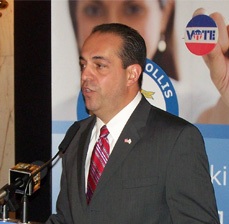
“It is an honor to bring secretaries of state from across the country to Rhode Island,” said Secretary of State A. Ralph Mollis.“This is an opportunity to showcase everything our state has to offer.”
Bringing the convention here has been a priority for Mollis since he took office three years ago, according to spokesman Chris Barnett. He described Rhode Island as the perfect place to host the convention.
GET THE LATEST BREAKING NEWS HERE -- SIGN UP FOR GOLOCAL FREE DAILY EBLAST“What makes Rhode Island attractive to convention-goers?” Barnett said. “There are few places that are on the ocean that have the number of evening activities that we have and that are both large enough and small enough for a convention of this size.”
So, in between sessions on everything from new federal legislation and relations with Mexico to how to work with small businesses, convention-goers will be stopping by WaterFire, savoring a traditional New England clambake at Fort Adams State Park in Newport, and touring Federal Hill—billed as “Little Italy” on the conference agenda.
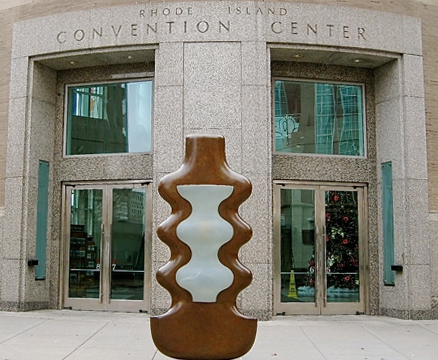
The convention for the National Association of Secretaries of State, or NASS, will draw about 200 to 300 attendees to the Rhode Island Convention Center in Providence, from July 17 to July 20.
Barnett says the convention will bring about $500,000 to the state economy. “We are really glad we could bring this convention to Rhode Island when our economy really needed a shot in the arm,” Barnett said.
But besides the economic benefit, there will be an indirect political one as well. One of the issues the Secretaries of State will take up at the convention is a proposal to create a rotating regional system of presidential primaries as early as the 2016 election, according to Barnett.
Under the new system, the country would be divided into four regions: east, south, mid-west, and west. The states in each region would hold their primaries in February, March, April, or May on a rotating basis. So, for example, the east might go first in February during one presidential election, but four years later it would be kicked back to May, and whatever region had its primaries in March would move up to February.
This would be a big change from the current primary system, where states that are later on the schedule don’t have much of a say in who the nominee will be because it’s already been decided in one of the earlier primaries, according to Barnett. The advantage of the new system is that it gives every state more of a role in determining the nominees, he said.
That would certainly have an impact on Rhode Island, which held its primary on March 4 in 2008, after most states had already had theirs. However, Iowa and New Hampshire would retain their status as the first caucus and first primary in the nation.