


As Chace v. Chace Moves Closer to Trial - a Look at the Biggest Trials in RI's History
GoLocalProv News Team
As Chace v. Chace Moves Closer to Trial - a Look at the Biggest Trials in RI's History

GET THE LATEST BREAKING NEWS HERE -- SIGN UP FOR GOLOCAL FREE DAILY EBLAST
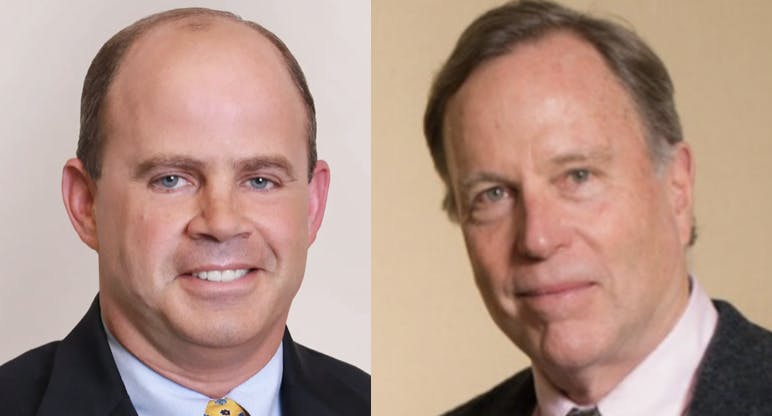
The dispute centers around allegations of misuse of tens of millions of dollars in trust monies.
The case pits family members against family members and includes mysteries about deathbed changes to patriarch Malcolm "Kim" Chace's will. He died in 2011.
On one side of the legal dispute are Kim Chace’s children, their spouses, and grandchildren. Leading the effort is Kim Chace's son Malcolm Chace, who heads the investment firm Canton Hathaway in Providence. His business partners include Jim Procaccianti, President and CEO of Procaccianti Companies — “a firm that claims more than $10 Billion of diversified real estate investments in more than 130 cities across 31 states coast to coast.”
The Malcolm Chace faction has sued cousin Arnold “Buff” Chace and William Saltonstall [Kim Chace’s stepson and Malcolm Chace’s step-brother] individually as well as the trust managing the money — M2K Trust. Liz Chace is also named in the suit -- she is Malcolm Chace's stepmother.
The litigation between the Chace family members may emerge as one of the most extensive trials in Rhode Island's history and rival some of the most notable cases in the state's history. One major difference between this battle and some of the other notable cases is this is a civil case and the most notable cases in the state's history have been criminal; cases -- murders, political corruption and more.
Here Are the Five Most Notable Cases in Rhode Island's History:
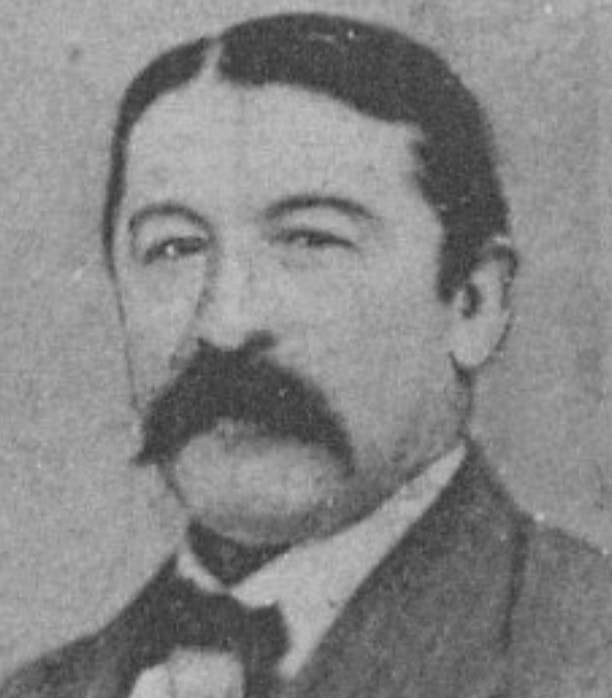
"But this case would not end with the death of John Gordon. Over 150 years after his conviction and execution, John Gordon was exonerated in what would become just one more incredible twist in the story of John Gordon. No one else was ever charged with the crime, making the murder of Amasa Sprague one of Rhode Island’s oldest cold cases," writes Caranci.

Dorr then led over 200 men the following year in an attempt to seize the state arsenal in Providence.
The attack failed and, within a short time, martial law was declared by Governor King, the state militia was called out, and more arrests were made.
Dorr was charged with treason and other crimes, but his trial became a cause célèbre and attracted national attention. Although Dorr was convicted, he was later pardoned and his efforts are seen to have helped pave the way for broader suffrage in Rhode Island.
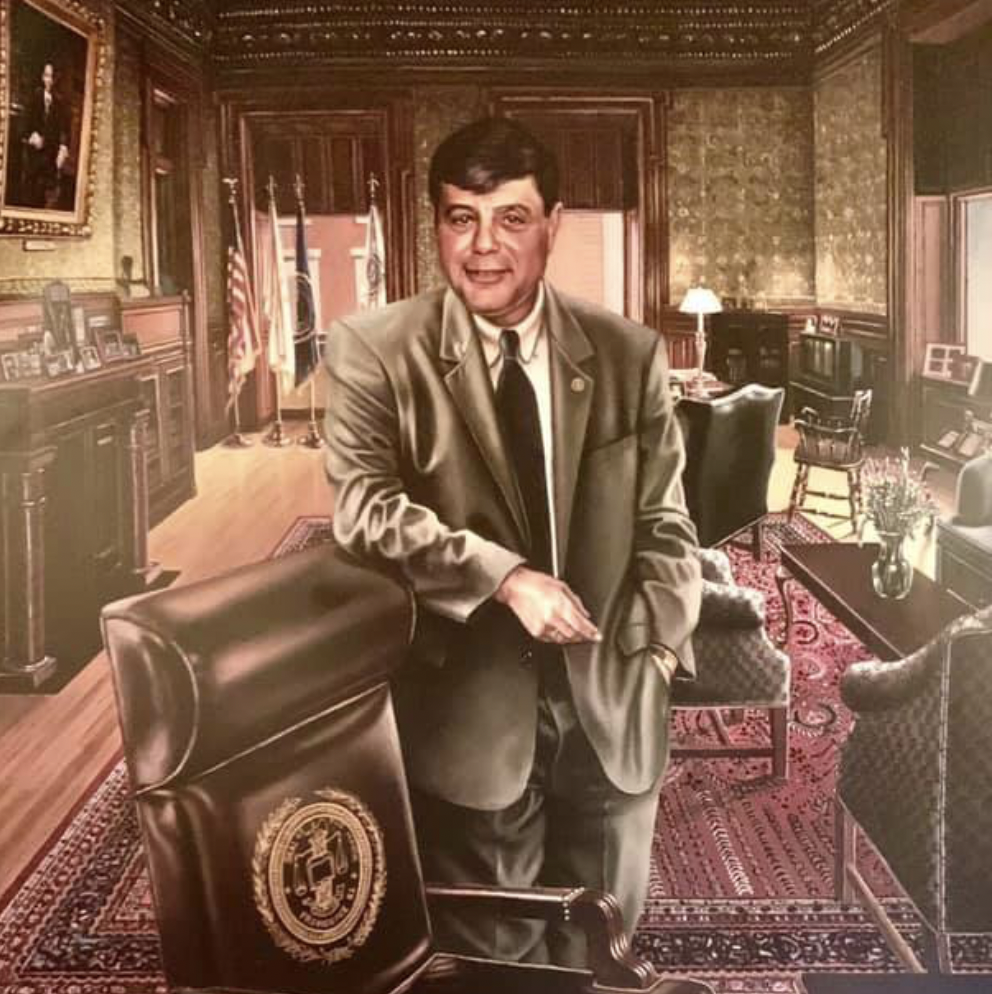
The New York Times reported in 1984:
Mayor Vincent A. Cianci Jr., whose career has been buffeted by scandal and accusations of mismanagement, pleaded not guilty today to charges of kidnapping, assault and attempted extortion.
Judge Domenic F. Cresto of Superior Court released the Mayor on his own recognizance but directed that he forfeit $27,000 if he failed to appear at subsequent hearings. The judge set a trial date of Sept. 19.
The Mayor was indicted on May 24 by a statewide grand jury that investigated a complaint by Raymond DeLeo, a contractor in Bristol, R.I., who the Mayor believed was having an affair with the Mayor's estranged wife, Sheila.
The indictment says the Mayor attacked Mr. DeLeo in the Mayor's Providence apartment on March 20. He Says He Loves the Job
The Mayor, a 42-year-old Republican who has held on to his office in a Democratic city since 1974, has vowed to stay in office despite calls for him to resign. ''I love the job of Mayor,'' he said at a news conference the day the indictments were handed up. ''These are merely accusations against me.''
The Claus von Bülow trial is another infamous trial that took place in Rhode Island. Claus von Bülow was a wealthy Danish-born socialite who was accused of attempting to murder his wife, Sunny von Bülow, by injecting her with insulin. The trial was held in Newport, Rhode Island, in 1982 and 1985.
Von Bülow was initially convicted of attempted murder in 1982 and sentenced to 30 years in prison. However, he appealed the decision and was granted a retrial in 1985. During the retrial, von Bülow's defense team argued that Sunny von Bülow's comatose state was the result of her long-standing drug and alcohol abuse, rather than a murder attempt by her husband.
In 1985, von Bülow was acquitted of all charges and released from prison. The trial attracted widespread global media attention and was the subject of several books and a movie, "Reversal of Fortune," which won an Academy Award for best screenplay and actor Jeremy Irons earned the 1990 Academy Award for Best Actor for his performance in the film.
The von Bülow trial remains one of the most famous and controversial trials in Rhode Island's history, and it has been the subject of much debate and analysis in legal and academic circles. He died in 2019.

Buddy Cianci's second trial was another high-profile legal case that attracted a great deal of attention in Rhode Island. Cianci, who had previously been convicted of assaulting a man he believed was having an affair with his estranged wife, was indicted on charges of racketeering, conspiracy, and extortion in 2001.
The charges against Cianci stemmed from allegations that he had used his position as mayor of Providence to extort bribes from city contractors and to enrich himself and his associates. The trial was held in federal court in Providence and lasted for several months.
In 2002, Cianci was convicted on one count of racketeering conspiracy and sentenced to five years in prison. He resigned from his position as mayor shortly after his conviction. Cianci's conviction effectively ended his political career and marked the end of an era in Rhode Island politics.
Cianci's second trial was notable not only for its high-profile defendant and the serious charges he faced, but also for the way it exposed the pervasive corruption that had long been a feature of Rhode Island's political landscape. The trial helped to bring about significant changes in the state's political culture and contributed to a renewed focus on transparency and accountability in government.
The New York Times reported in 2002:
Vincent A. Cianci Jr., the enduring and unshakably charismatic mayor of Providence, was sentenced today to five years and four months in prison for presiding over a City Hall that his judge called ''a criminal enterprise.''
The sentence summarily ended an epoch in this city, where Mr. Cianci, known as Buddy, was mayor for 21 of the last 27 years and became a kind of P. T. Barnum of Providence, ubiquitously promoting and ushering in the makeover of its downtown.
''I'm struck between the parallels between this case and the classic story of Dr. Jekyll and Mr. Hyde,'' Judge Ernest C. Torres of United States District Court said just before sentencing Mr. Cianci.
''There appear to be two very different Buddy Ciancis that came across,'' the judge said. ''The first is a skilled and charismatic political figure, probably one of the most talented politicians Rhode Island has ever seen, someone with wit, who thinks quickly on his feet and can enthrall an audience.''
The second Buddy Cianci, Judge Torres said, ''presided over an administration that is rife with corruption at all levels'' and ''engaged in an egregious breach of public trust by engaging to operate the city that Buddy Cianci was supposed to serve as a criminal enterprise to line his own pockets.''
Judge Torres added, ''My job is to sentence the second Buddy Cianci because the first Buddy Cianci wouldn't be here.''
Mr. Cianci, 61, was convicted in June of one count of federal racketeering conspiracy, and was acquitted of 11 other public-corruption charges he faced.
Timeline for Chace v. Chace
No trial date has been set for the litigation.
According to parties on both sides of the case, the trial could begin within the next couple of months. The case is before Rhode Island Superior Court Judge Brian Stern.
Editor's Note: An earlier version of this story in a photo caption misidentified John "Terry" MacFadyen,