


The Top 30 Dumbest City Ordinances in Providence
Stephen Beale, GoLocalProv News Contributor
The Top 30 Dumbest City Ordinances in Providence
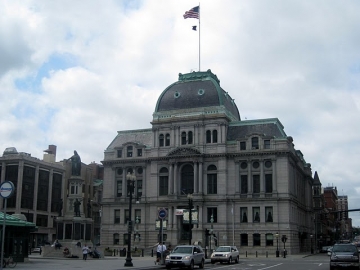
Many—like numerous rules against swearing in public or wearing improper swim attire—date back to a bygone era. Some seem silly: dropping slippery fruit peels on streets or selling model airplane glue to anyone under 21 are against city law. Others are more serious. One ordinance bars employees from taking any sick time for pregnancy-related illnesses. Another allows firefighters to compel citizen assistance in putting out fires. (See the below slides for the full list.)
Potential for abuse
GET THE LATEST BREAKING NEWS HERE -- SIGN UP FOR GOLOCAL FREE DAILY EBLAST“Many of the ordinances you’ve found are just silly, but others are quite problematic. The city ordinances barring people from sitting on the grass in parks or lying on park seats are ripe for selective enforcement, and could easily be targeted solely against particular people the police deem ‘undesirable’ for any reason,” said Steven Brown, the executive director of the Rhode Island chapter of the ACLU.
“And the ordinance barring the use of paid sick leave because of pregnancy or ‘immoral conduct’ is not only blatantly illegal and hopelessly out of date, but its sexist underpinnings simply don’t deserve to appear in a city’s list of current operating laws,” Brown added.

As absurd as some ordinances may seem, they carry penalties that could—in the hands of overzealous law enforcement authorities or prosecutors—become serious.
Many of the more archaic ordinances—such as those on proper speech or swim attire—do not have any penalties listed with them. But that doesn’t necessarily mean there aren’t any. In cases in which “no specific penalty is provided” the code of ordinances allows the city to impose a fine of between $1 and $500 or imprisonment of one to thirty days.
“It’s impossible for residents even to know all of the laws of their own towns or cities, let alone those imposed at the state and federal levels. The one thing we can all be reasonably certain of is that, at any given moment, we’re all violating some law or other. That leaves us always vulnerable to selective enforcement by a government that has unprecedented ability to track us and record information about us,” said Justin Katz, the research director at the Rhode Island Center for Freedom and Prosperity.
At the state level, the Freedom Center has advocated passage of a “criminal intent” statute to protest citizens from prosecution under outdated laws.
“[T]he center has suggested a variety of offices or panels that would clear antiquated or obstructive laws from the books, and that should apply at local levels, too. It’s not just a matter of keeping the books clean and reducing the effort necessary to maintain the laws. We also have to change our outlook on what laws are appropriate given the changing reality,” Katz said.

Some laws go back to World War I era
In a statement, Council President Michael Solomon acknowledged the city books have a number of outdated ordinances. Whenever it adopts new ordinances or changes existing ones, Solomon said the council “takes the opportunity to update, correct, and modernize those sections.” (He pointed to the article on minimum housing standards as an example.)
“While removing antiquated and obsolete ordinances is important, it is a time-consuming task that we simply could not focus on during the last several years as we worked to avert bankruptcy. I would expect city departments and staff to use discretion in applying the letter of the law when it comes to ordinances that are clearly no longer relevant,” added Solomon, who is also a candidate for mayor.
But Brown says the issue involves more than just removing outdated ordinances. “Every municipality, as well as the state, should make it a practice to examine their laws at least every ten years to remove deadwood from the statute books. There are too many laws out there that are not just archaic and out of date, but also clearly unconstitutional. The danger always exists that laws like those can occasionally be traps for the unwary, or wrongly used by government officials to harass individuals,” Brown said.
Several of the ordinances reviewed by GoLocalProv date back to the 1950s or even the pre-war era—pre-World War I, that is. The grass-walking ban was first introduced in 1914, as were rules against revealing swimwear, throwing water on sidewalks, or leaving fruit peels on streets. The last time some were modified was in the mid-1940s, even as others were added. One ordinance against sweeping dirt onto sidewalks and gutters was introduced to the code in 1944.

It’s unclear when Providence last conducted a comprehensive update of all of its ordinances. Responsibility for maintaining official copies of ordinances falls on the City Clerk’s office. Deputy City Clerk Lori Hagen told GoLocalProv that the office adds new ordinances passed by the Providence City Council about once or twice a year. She also confirmed that the code of ordinances accessible from the City Clerk’s Web page is the most up-to-date version available online, aside from any ordinances passed in 2014 that have not yet been entered into the system.
Hagen said she could not comment on older ordinances.
City Councilman Luis Aponte remembered just one time in his 16 years on the council when there was discussion about updating the ordinances—and that went nowhere, according to Aponte. “I think that there needs to be an effort to go through the code of ordinances with a mind to streamlining the ordinances and removing ones from a bygone era,” Aponte said.
“This is one of the things that seem to be on to-do lists. They just never get done,” he added.
Stephen Beale can be reached at [email protected]. Follow him on Twitter @bealenews
Providence's Dumbest Ordinances

Unglued over Model Planes
Ordinance: 16-1-9
We understand that—as with other common household items—there’s a potential for it to be used as inhalant, but a city ordinance banning the sale or delivery of model airplane glue to anyone under the age of 21 seems to go a bit far. If we can trust 18-year-olds to vote and serve in the military, we can probably trust them with model airplane glue.

Ban on Spitting
Ordinance 16-1-15
It may be rude, but we’re not sure spitting in public should be against the law. But it has been in Providence since 1939, under an ordinance that bans spitting in most public places—sidewalks, churches, theaters, grocery stores, markets, or any other “building frequented by the public.” We’re not sure if Providence police ever enforced this back in the day, but it’s hard to image them handing out tickets for spitting today.

No Racy Bathing Suits
Ordinance: 16-1-16
No doubt there are some people out there who think today’s bathing suits are a bit immodest. But we don’t think even the most socially conservative among us want police out in public pools inspecting bathing suits to determine whether those swimming are “properly clothed.” And the ordinance gives law enforcement authorities little guidance as to what is even considered proper. But we can be sure that what was considered proper back in 1914, when the ordinance was first passed, is probably a lot different than today.

Grass Isn’t for Walking
Ordinance: 18-1-13
Your grumpy neighbor may have every right to bark at you to get off his lawn, but we’re wondering what city lawmakers were possibly thinking when they passed an ordinance outlawing residents from standing, sitting, or walking on “any grass” on “any public land” that is considered a park.

Sweeping Rules
Ordinance: 23-1-12
We can all agree that city sidewalks should be clean. But does Providence really need an ordinance for that? Since 1944, it’s been illegal to sweep or throw dirt and sand on sidewalks during the day.

Throw Water on Sidewalk
Ordinance: 23-1-18
If you’re going to have an ordinance against throwing or sweeping sand and dirt on a sidewalk, shouldn’t you allow residents wishing to correct their error to pour water on sidewalks to wash all that grime away? Well, that’s illegal too. It’s not just pouring water that’s taboo. Placing, throwing, or spattering water is explicitly forbidden too. But hydromaniacs don’t panic: if you can’t resist that urge to make a mess with water, you can still do it as long as it’s after 7 p.m. or before 7:30 a.m.

No Time Off for Pregnancy
Ordinance: 17-3-107
No one is endorsing abuse of sick leave, but a city ordinance dating back to 1951 seems needlessly specific in listing “dissipation” and “immoral conduct” as unacceptable excuses for absences. And, if that doesn’t raise any red flags, the section against sick leave for any pregnancy-related illnesses should. We think a separate ordinance against false reports of illnesses does the job just fine.

No Amusements Near School
Ordinance: 14-10-202.2
Kids in city schools have lots of bad influences these days. Drugs, gangs, guns, and underage drinking come to mind. “Amusement centers” or “mechanical amusement devices” don’t. But a city ordinance refuses the granting of licenses to any amusement center or business with a “mechanical amusement device” within 1,200 of school property if the owner plans to be fully open for business before 4 p.m. This sounds like a law dating back to a simpler time, but it’s listed as a 2013 addition to the code of ordinances.

Chair Mischief
Ordinance 18-1-14
We certainly don't condone vandalism of any kind, so if that’s what city lawmakers had in mind when they drafted an ordinance against overturning seats in parks, we get it. But why also make it illegal to sleep or lie upon park seats? Something tells us if you find someone asleep on a park bench at night, they don’t have many other options.

The Slippery Banana Rule
Ordinance: 23-1-22
As a society, we should celebrate healthy eating. But if you happen to be out on a sidewalk or street noshing on peach, you could be in trouble if there’s no trash bin nearby. It’s against the law in Providence to “cast, throw, place or deposit” on any sidewalk or street “any fruit or vegetable or other substances” which could cause someone to slip and fall. We wonder what was happening with fruit on city streets in 1914 to warrant such an ordinance. As for today, the city’s ordinance against littering should be enough. Otherwise, this sounds more like material for a Three Stooges skit rather than a matter for local law enforcement.

Horse Speed
Ordinance: 23-6-155
Today, “horse speed” means something quite different than it did in 1914 when the city passed an ordinance authorizing the director of public works to set speed limits for horses “or other animals” over any bridges in the city. The ordinance was updated in 1946, apparently to include cars, but the horses were left in. A bunch of similarly outdated ordinances in this section were scrapped in 2010, but local legislators missed this one.

No Pigs in Providence
Ordinance: 4-1-3
We don’t think many farmers are left in the city of Providence, but, for any that are, we wonder why it’s illegal to keep swine in city limits? It’s a blanket prohibition, which means that your pet pig is against the law too. This law seems like another from a bygone era, but it’s listed as a 2012 ordinance.

Pigs: Finders, Eaters
Ordinance: 4-1-2
If your pet pig escapes, consider yourself warned: all swine found wandering around in the city are “declared forfeited” and any person may seize them and “convert the same to his own use.” Given that city law already prohibits anyone from keeping swine, that leaves few options for any finders.

Keep Your Servants
Ordinance: 14-6-116
We doubt there are any more “intelligence offices” or “servants” left in Providence. But it’s still probably a good idea for city officials to take a second look at a 1946 ordinance banning any licensed keepers of intelligence offices from inducing or attempting to induce “any servant employed in any place to leave.”

For Whom the Bell Tolls
Ordinance: 14-1-9
Businesses need all the help they can get these days. We’re not sure ringing bells would attract more customers to your store or restaurant, but don’t try it: it’s currently against city law to ring bells, horns, or any other similar instruments to draw customers.

Licenses for Pool Halls
Ordinance: 14-10-202
Want to run a bar? Open a restaurant? We get why the city might want to license those businesses. But pool? Billiards? Other “mechanical amusement devices?” Unless you plan on installing a mechanical bull in your bar, we wonder why anyone would need a license for any of those things.

Poison Ivy
Ordinance: 12-1-17
No one likes having poison ivy on their properties. But, for obvious reasons, removing it can be a delicate task. As long as the ivy isn’t creeping around your mail box or front porch, most homeowners probably decide to leave it alone. Why there is a city ordinance allowing the superintendent of health to intervene and order the removal of poison ivy within five days is a head-scratcher for us.

Rude on RIPTA
Ordinance: 24-3-76
Legislating good manners might have made sense in 1920, but it doesn’t today. We’re all for politeness but a city ordinance allowing bus drivers to refuse service to anyone “using profane or obscene language”—even if not drunk or otherwise acting boisterous—seems to create more problems than it solves.

A Bridge Too Far
Ordinance: 23-6-154
Weight limits on roads and bridges is pretty par for the course in modern regulations. But the city might want to double check the current weight limit on bridges, which is set at 30,000 pounds in an ordinance that was last updated in 1946. According to The Truckers Report, the legal weight for an 18-wheeler in the United States is 80,000 pounds.

Coal, Hair, and Oysters
Ordinance: 12-3-60
The city already has an ordinance against littering, so we’re not sure why there’s a separate ordinance that lists a grab bag of items not to be thrown out on the streets. We’re also not sure why anyone would want to throw coal, hair, oyster, clam, or lobster shells out on the street.

Warning Flag
Ordinance: 2-20-328
If a hurricane barrels down on Providence later this summer or fall, we certainly hope that city officials do more than follow Ordinance 2-20-238 in warning us about it. Under the ordinance, the city sergeant shall hoist the city “storm flag” on “stormy and windy days” instead of the national flag.

Sound Rules?
Ordinance: 24-6-102
It’s hard to think anyone would argue that the city shouldn’t have any noise ordinances, but who are city officials to say that only “music or human speech” will be allowed to be broadcast from “sound trucks” (a precursor, we presume, to today’s modern speakers). If a crowd wants to gather to hear recordings of chirping crickets or singing whales why stop them?
No direct link available to the ordinance.

Spotless Septic Tanks
Ordinance: 12-4-96
We’re wondering exactly how this public health ordinance dating back to 1946 could be enforced today: “When any privy vault or any cesspool is cleaned, the entire contents thereof shall be removed.” We’re all for making sure the job is finished, but city health inspectors probably have more important things to do than check septic tank levels after a cleaning.
No direct link available to the ordinance.

Deposit Checks
Ordinance: 12-1-16
Even if the city could enforce this ordinance, we’re not sure it would want to: “No person shall deposit, nor allow to be deposited, in any water closet, cesspool, privy vault, drain, waste pipe, or soil pipe, any ashes, swill, rubbish, or solid refuse matter other than fecal matter.”

Foul-mouthed Bootblacks
Ordinance: 14-3-52
If there are actually still any bootblacks or news boys roaming around downtown Providence, it’s probably hard enough for them to make a living without worrying about losing their license of using “indecent or profane language,” as this ordinance stipulates. As for the city’s rule against committing any acts of a “dishonest nature,” that’s probably a matter for the Better Business Bureau.
No direct link available to the ordinance.

Fashion Police
Ordinance: 14-1-6
Under this ordinance, anyone who runs a laundromat or dry-cleaning service has to submit reports to the public safety commissioner detailing “the type and style of laundry or dry-cleaning identification marks which are attached to or stamped on or written upon garments processed by such establishment when returned to the customer.” The reports must be “accompanied by actual samples of the identification markings used.” We’re not sure what issue compelled city legislators to add this to the code in 1954, but whatever it was, it was convincing enough to win over state lawmakers too, as it took a special act of the General Assembly to authorize the ordinance.

Burying Dead Animals
Ordinance: 4-1-6
Should you have a need to bury your dead horse, mule, ox, or bull, city law is strict about how deep the carcass must be: three feet below the ground. Just to be clear, that’s the “natural surface of the ground.” Other requirements set by the superintendent of health may apply.

Involuntary Firefighters
Ordinance: 9-1-2
Just how much power should firefighters have? It may be debatable whether a city ordinance authorizing them to “suppress any tumult or disorder” at the scene of a fire blurs the line between police officers and firefighters. But a provision that allows firefighters to “command from the inhabitants of the city all needful assistance in the suppression of fires”—and makes it illegal to refuse service—sounds like a recipe for disaster.

Boxing Bones
Ordinance: 12-3-76
Residents are not permitted to “carry or convey” any “bones, grease, animal or soap fats” in any street or park unless the material is in covered cans, tubs, or other containers that are properly marked. We’re not sure why anyone would carry a bunch of animal bones around in the first place, let alone why the city is asking them to advertise that fact.
No direct link available to the ordinance.

Light Duty
Ordinance: 23-5-139
This ordinance, titled “Duty as to city lights found not burning,” directs the chief of police to “cause the daily report of city street lights found ‘out’ with the hour and location of such ‘outs,’ to be forwarded to the office of the public service engineer daily.” Forget for a moment that there’s no longer such a thing as a street lamp that has stopped burning. How did this chore land on the police chief’s desk in the first place? Why couldn’t the city’s public service engineer be bothered with it?


