


What Comes After Delta? RI's Exploding Cases Creates Vulnerabilities for Dangerous New Variants
Nick Landekic, Guest MINDSETTER™
What Comes After Delta? RI's Exploding Cases Creates Vulnerabilities for Dangerous New Variants

Now, Rhode Island's spread of the virus is one of the highest in the country.
Recent clinical studies have shown that the current mRNA vaccines are only about 40% effective in preventing infection or symptomatic illness, compared with 95% against the original strain, and even more recent studies confirm that vaccine effectiveness declines over time.
GET THE LATEST BREAKING NEWS HERE -- SIGN UP FOR GOLOCAL FREE DAILY EBLASTHow long it will take before a completely resistant variant emerges is impossible to predict, but there are already two on the horizon that have been identified with potentially even greater resistance to the vaccines: Lambda (C.37), and B.1.621.
What is a variant?
The code for how the virus is built is its ‘nucleotide sequence’, a set of about 30,000 ‘letters’ of RNA, ribonucleic acid. As an infected cell builds new coronaviruses, it occasionally makes tiny copying errors as it reproduces, called mutations, which are a change in any one of these ‘letters’. These mutations can be tracked as they are passed down through a lineage, which is a branch of the viral family tree. A group of coronaviruses that share the same inherited set of mutations is called a variant. If enough mutations accumulate in a lineage, the viruses may evolve clear-cut differences in how they work. These lineages are known as strains. The disease COVID-19 is caused by a coronavirus strain known as SARS-CoV-2.
Mutations are random and most are irrelevant or can even be damaging to the virus. However, the rules of evolution select for mutations that help the virus survive. With billions and billions of mutations happening all the time, some turn out to be beneficial to the virus – which are usually harmful to us. Once that happens, a new variant can spread fast and quickly become dominant in an area. This has now happened several times around the world including Rhode Island. Earlier this year the Alpha variant (also called B.1.1.7) become dominant and has now been replaced by the more aggressive Delta (B.1.617.2). More are coming.
How Do Variants Become More Dangerous?
There are several ways for the coronavirus to mutate to increase its chances for survival, including:
- Increasing transmissibility – becoming more contagious and easier to spread
- Increasing virulence – reproducing more quickly in our body
- Immune escape – evading our defense mechanisms, including vaccines
There are likewise many biological mechanisms available for the virus to achieve these goals:
- How it attaches to human cell membranes (by changing the shape of its spike protein)
- How it injects itself into our cells
- How it co-opts our cellular machinery to manufacture copies of itself (essentially turning our own cells into virus-producing zombies)
- How it ejects copies of itself from within our cells
- Different ways of suppressing our natural immune system or vaccine antibody defenses
The Delta variant has developed several of these weapons with its mutations. It creates over 1,000 times more copies of itself in our bodies more quickly, and thus spreads more easily and causes more serious illness. It is also partially resistant to vaccines because of changes to the shape of its spike protein that make it harder for antibodies created by vaccines to bind to it.
Because Delta reproduces so much faster with so many more copies of itself than previous strains, it can also create even more mutations and variants faster than ever before. The more copies of a virus there are, the more mutations and variants will be created.
The variants are getting better at evading our weapons, which is the natural process of evolution. Alpha was more contagious than the original strain, and Delta is more contagious than Alpha.
We also have to worry not just about new variants, but the declining effectiveness of vaccines over time. Antibody levels in our bodies decrease over time, making us more susceptible to aggressive variants.
The Pfizer and Moderna vaccines are initially about 95% effective. This drops to 70% by 200 days after vaccination, and 50% by 250 days. The antibodies from the Astra-Zeneca vaccine reach near zero after just 70 days.
As a result, Israel, Germany, and the United Kingdom https://www.axios.com/germany-uk-covid-booster-shot-da857b95-781b-4d52-8b72-6c0cdd0906d2.html have all decided to give third, booster shots of vaccine starting with older people.
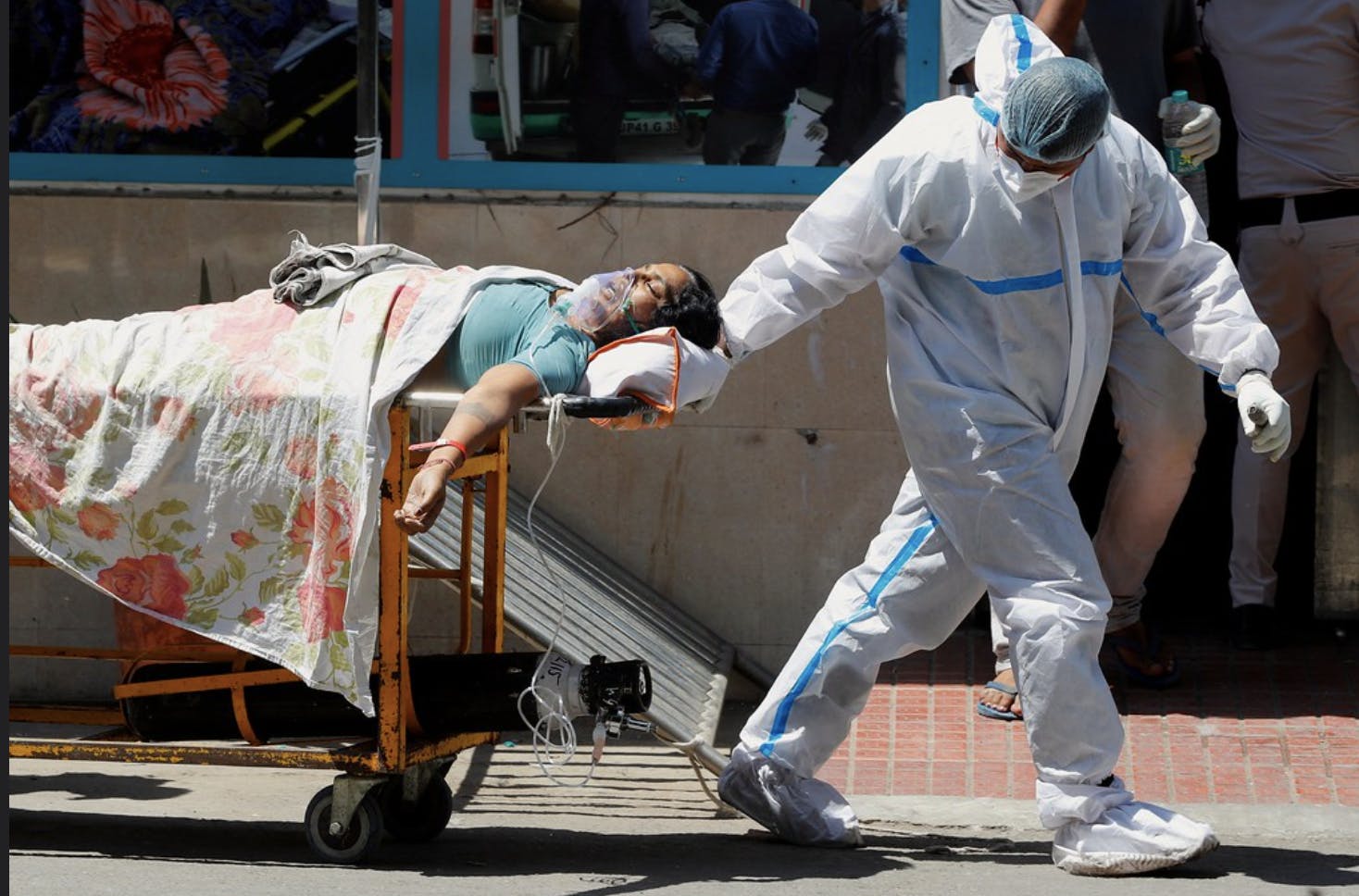
Thousands of variants have been identified since the start of the pandemic. The total number of possible mutations is ridiculously high, and the number of potential variants impossible to predict.
Two new worrisome variants are already on the horizon. Little is known about them so far since they are so new, but enough to be concerned that they may continue the evolutionary drive of Alpha and Delta and be even more resistant to our vaccines.
Lambda
Lamba (also called C.37) was first identified in Peru. It contains 7 mutations in the virus’s ‘spike’ region, including one, termed F490S, that a recent study says maybe a ‘vaccine escape mutation’. Studies have shown that it is more resistant to antibodies from vaccines than previous variants.
Peru has the highest per capita COVID death rate in the world, and is a stark example of what a deadly variant can do. Lambda has already been found in the U.S., with 1,043 cases to date.
B.1.621
The B.1.621 variant is so new that it has not yet been assigned a Greek ‘letter’ name. It was first identified in Columbia, and has already spread so fast that it accounts for 10% of cases in Florida.
The European Center for Disease Control and Prevention has also named B.1.621 as a variant of interest, as the preliminary scientific evidence suggests it could have significant impact.
B.1.621 has several mutations in the ‘spike’ region. It’s rapid appearance and rise in such a short time in places that had good vaccination rates suggests it could be a major problem in the future.
As serious as the Delta variant is and as calamitous as the problems it is causing for us today, and as worrisome as the Lambda and B.1.621 variants appear to be, the pandemic will not end with them. Science has a great deal more to learn about the SARS-CoV-2 virus, but it is certain that evolution of the virus will continue, and rapidly, in ways to make it spread more quickly.
What About Lethality?
It is sometimes presumed that viruses generally evolve towards becoming less lethal, and some hope the SARS-CoV-2 virus might someday become more like the common cold. This is a dangerous assumption.
There are no evolutionary pressures to drive the SARS-CoV-2 virus to become more benign to humans. Evolution would indeed select against a virus that killed swiftly. For example, while Ebola is highly contagious, it has not become a widespread pandemic because it kills its victims quickly, before they have a chance to infect many others.
The SARS-CoV-2 virus does not behave this way. Death comes late in the COVID-19 infection process, leaving the virus plenty of time to reproduce and infect many new victims. Killing someone late in the infection process doesn’t inhibit a variant from propagating. A hypothetical coronavirus variant so virulent that it killed its targets early on would likely not become dominant and probably be an evolutionary dead end, but more virulent late killers like Delta do just fine. While there are no evolutionary advantages to drive the virus to kill faster, it would be naïve to hope that the coronavirus will rapidly evolve in ways to suit our purposes just to make us happy.
Rhode Island has done well with vaccinations, currently fifth in the country for fully vaccinated https://www.nytimes.com/interactive/2020/us/covid-19-vaccine-doses.html. However, the Delta experience is painfully showing us that vaccination alone is not enough. The pandemic will not be contained solely by vaccination. It is a critically important tool for reducing severe illnesses and deaths, but other efforts are needed in addition to vaccination. “Herd immunity” simply is not possible with current vaccines. If we want to avoid a repeating pattern of surges, infections, overcrowded hospitals, and soaring deaths going on for many years into the future, then we need to shift strategy and do more.
Other states and countries grasp the enormity of the danger before us, and are responding in prudent, science-driven ways. France now requires proof of vaccination to enter restaurants, bars, and other public places, and New York City is adopting a similar approach and also requiring vaccination to enter restaurants and gyms. Many areas are following the recommendations of both the Centers for Disease Control and the World Health Organization by asking for masks in indoor spaces.
Governor McKee seems to be following Governor Raimondo’s example and other than vaccination, is currently doing almost nothing to respond to the greatest public health crisis in over a century. This is creating ideal conditions for new variants to form and spread in Rhode Island. Lambda and B.1.621 are hints at what is coming next after Delta. It will get worse before it gets better, and we are not prepared.
Other than vaccinations, Rhode Island has done a poor job at safeguarding our health and lives. We still have the second-highest overall infection rate in the country, and the fourth-highest per capita death rate. We are the only state in the top 5 for both.
The risk level in Rhode Island is “Very High”, and our COVID cases are up about 1,500% in the past month https://covidactnow.org/us/rhode_island-ri/?s=21351059. Rhode Island is experiencing the second fastest growth rate of new COVID cases in the country.
At this rate, we should not be surprised to see a new “Rhode Island Variant” in our future.
Nick Landekic is a retired scientist and biotechnology executive with over 35 years of experience in the pharmaceutical industry.