


Whitcomb: Boston as Economic Early Warning; East Side Hotel Miss: Pet-Friendly Newport
GoLocalProv
Whitcomb: Boston as Economic Early Warning; East Side Hotel Miss: Pet-Friendly Newport

Crossing the road under the elm trees,
About the mechanism of my car,
GET THE LATEST BREAKING NEWS HERE -- SIGN UP FOR GOLOCAL FREE DAILY EBLASTAbout the Commonwealth of Massachusetts….
That wins my praise….
It is what man does not know of God
Composes the visible poem of the world.’’
-- From “On a Squirrel Crossing the Road in Autumn, in New England,’’ by Richard Eberhart, (1904-2005)
‘‘We’re strongly dissatisfied and oppose Adam Silver’s claim to support Morey’s right to freedom of expression. We believe that any remarks that challenge national sovereignty and social stability are not within the scope of freedom of speech.’’
-- The Chinese state broadcast agency responding to NBA Commissioner Adam Silver saying, after hemming and hawing, that the league is not apologizing for Houston Rockets general manager Daryl Morey’s since-deleted tweet in which he supported pro-democracy demonstrators in Hong Kong.
The temptation to compromise or even jettison principles will obviously be strong for enterprises doing business in nations run by dictators.
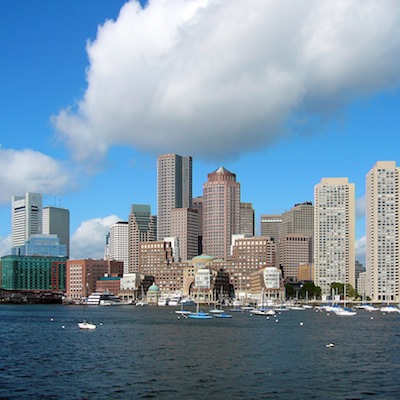
The very rich greater Boston area may be signaling that a recession is coming. Bloomberg News reports that for the first time since the Great Recession “tenants in the third quarter cut back on office and lab space in Boston, Cambridge and the suburbs, said Aaron Jodka, who leads the research team at Colliers International Group Inc.’s Boston office. A quarter-over-quarter reduction in occupied space in all three markets has only happened during recessions or in the early stages of a recovery, he said.’’ Boston has seen a boom in the construction of office and luxury residential space since the end of the Great Recession, with new skyscrapers making downtown resemble Manhattan.
New York and some other cities are reporting declines similar to what’s being reported in Boston.
We often don’t know we're in a recession until after one has started. A big challenge in fighting the next one will be that the oceanic federal budget deficits, in part from Republican tax cuts for the rich, as well as the very, very low interest rates engineered by the Federal Reserve, apparently at least partly in response to pressure from Trump, even in a time of (general) prosperity, will give the federal government far weaker tools than in previous downturns to fight a recession. They’ve used them up when they didn’t need them.
Happily, the Bay State has a very able administration led by Gov. Charlie Baker that would probably deal with the challenges of recession better than the leaderships of most states, and, of course, Massachusetts will continue to be one of America’s richest places.
To read more, please hit this link:
Recession Triggers
Much, maybe too, has been made of the damage from Trump’s trade war and its possible causative role in the next recession. But declining corporate earnings and companies’ failure to adequately invest in capital projects for long-term growth (instead of further enriching executive suites with such goodies as stock buybacks) may be turn out to be bigger culprits, as well as an aging population.
Hound Haven
You can see the allure of the new inn in Newport called Paws on Pelham {Street}, which will provide dog beds in its 13 guestrooms. As families get smaller, pets take on bigger roles in our emotions. (And it’s usually easier to travel with dogs than with children.) I’m not sure, however, how much the canines will appreciate the mansions and other grand sites and sights of Newport, and I hope that the inn’s proprietors make poop bags available.
Will the inn ever ban pit bulls?

Wrong Look for the Neighborhood
William Morgan, a nationally known architectural historian, and a GoLocal columnist, is right to condemn the design of the sterile six-story, 130-room structure that Smart Hotels wants to build at the intersection of Brook and Angell streets, in Providence’s College Hill neighborhood. The building looks like one of those housing blocks put up in the Soviet Union. The plan, at this point anyway, would involve tearing down three old houses to make space available for this thing in that expensive part of Providence.
The East Side/College Hill area could use a hotel but to put something up with this “design’’ would do considerable damage to the aesthetics of a neighborhood still nationally known for its architectural charm and intimacy. And if there is to be a hotel on that site, I would hope that the houses could be saved by being moved. God knows, there’s a long tradition of moving even big old houses in the city.
Whatever happens with this hotel, rest assured that heavy development pressures will continue in that neighborhood, mostly because Brown University is there. The people running colleges all seem to think that their institutions must relentlessly grow lest they start to die. And the bigger the empire they can rule, the happier they are. This means more and more university structures but also more and more non-Brown (and non-RISD) buildings, such as hotels, to serve the housing, feeding and other needs and wants of people closely or more loosely associated with the university. Brown students and their visiting parents, many of whom are rich, are a particularly alluring group to local businesspeople.
To read Mr. Morgan’s column, please hit this link:

Barrett Bready’s recent column in The Providence Journal on why he supports Jason Fane’s proposed 46-story tower in Providence’s I-195 Redevelopment District is the most cogent defense of the project that I’ve seen. Dr. Bready is a physician, a life-sciences entrepreneur and the longest-serving member of the I-195 Redevelopment District Commission. Whether a project looks good or bad, Providence is a tough place to get new buildings approved.
To read it, please hit this link:
IGT More Promising
As I have often written, government’s tight ties with gambling-related companies stink, but in the controversy about the competing state contract proposals of Twin River and IGT, I still see the State of Rhode Island’s staying in bed with the latter as less awful than being in bed with Twin River because at least IGT is an international technology company. Twin River is basically just a casino operator at a time when the New England casino racket may be on the verge of saturation. IGT’s tech power enables it to expand into many sectors outside of gambling.
Still, to perhaps clear the air, I like Republican legislators’ idea of having an independent organization study both companies’ claims on how their proposals would be best for the state’s finances, if not for its social health.
Having said that, I take any job promises by corporations, even for a very few years, with a chuckle. There are far too many variables, including where senior executives want to live and whether a company is sold.
Two Bridges Are Enough
I’m glad that the Army Corps of Engineers decided against proposing a third bridge over the Cape Cod Canal, though some folks in the tourist trade liked the idea. The already overdeveloped and fragile Cape doesn’t need more cars funneled onto the long, narrow (and washing away) glacial moraine.
The corps does propose replacing the deteriorating Bourne and Sagamore bridges, which were built in the ‘30s. The new bridges would include four travel lanes, two added lanes for merging traffic, and – praise be to God! -- a median separating the on-Cape and off-Cape-bound traffic on each bridge. The lack of a median has added a certain frisson to driving over the New Deal era spans, especially as tank-like SUV’s, which always seem to be speeding, plow across.
Also encouraging is that there will be improved access for bike riders and pedestrians to enjoy the dramatic views of the world’s largest sea-level canal, with steep, wooded bluffs plunging down to it. The current structures would remain in service until the new bridges open to traffic.
The Cape needs more rail service (including railroad stations) as an alternative to cars. So I’m glad the quaint, vertical-lift railroad bridge, also put up in the ‘30s, at the western end of the canal, is not being torn down; it’s said to be in good condition.
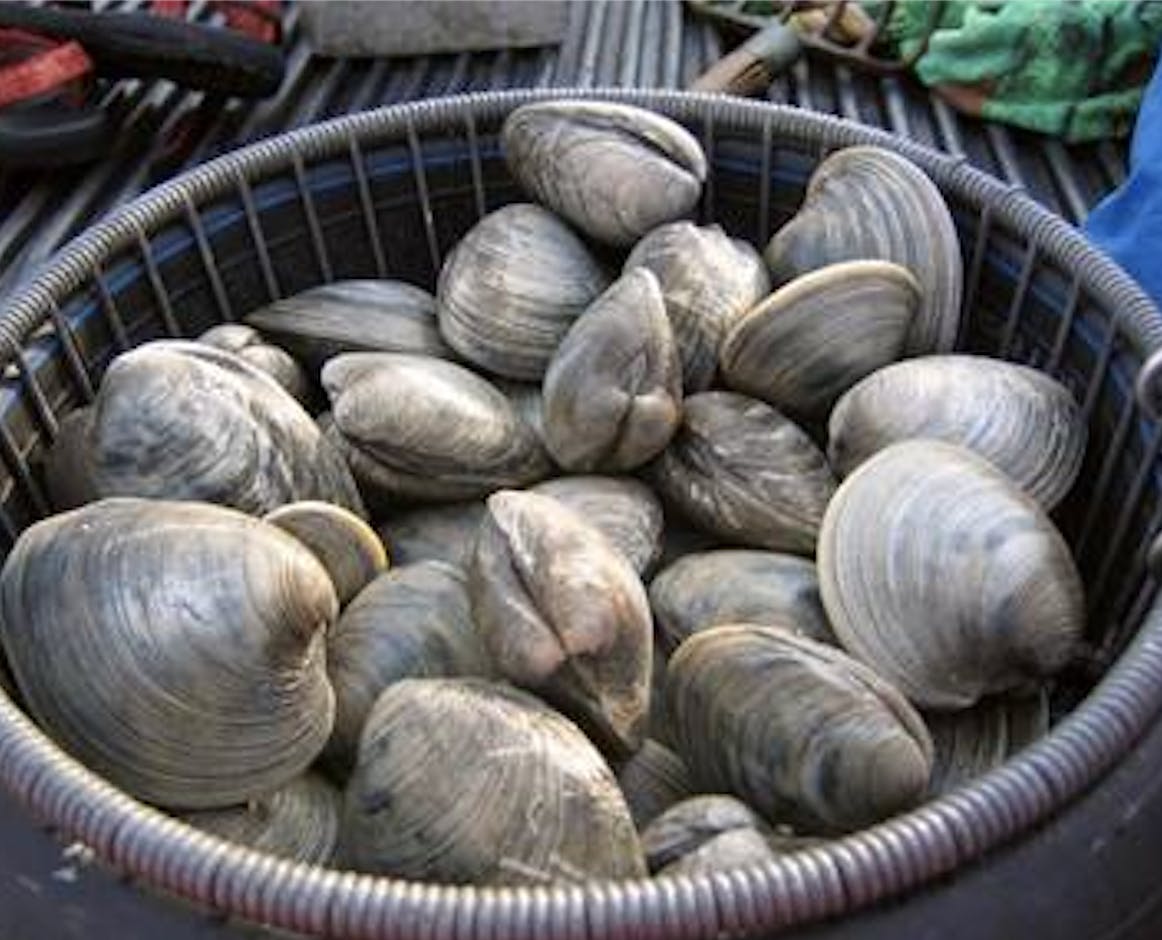
I’ve become increasingly interested in the potential of aquaculture all along the New England coast but the burgeoning oyster business in Maine’s Damariscotta River has particularly caught my eye. What's happening there has some lessons for the whole New England coast.
On the Damariscotta, a tidal river, and elsewhere in the Pine Tree State, entrepreneurial and innovative fishermen are developing a virtually new industry by growing what may well be the world’s finest oysters. (Oyster farming is expanding in southern New England, too.)
Coming from a wide range of backgrounds – for example, some growers are from Maine and some “From Away,” some come from families of fishermen, some not, some are highly educated, some much less so -- they all share a passion for growing oysters of such quality that they’re sought around America.
These aquaculturalists want to work on the water even in the face of the hurdles posed by global warming, ocean acidification and high-end coastwise development, with its associated Nimbyism, and considerable public misinformation about what happens when you raise oysters. (The bivalves clean the water.) Then, of course, there are bad weather, broken equipment and other routine problems.
The warming of the Gulf of Maine, nearly the fastest of any salt-water body in the world, has already damaged many traditional fish stocks, and the remaining mainstay – lobsters – is now threatened as the waters warm. The oyster aquaculturalists (some of them past or present lobstermen) see their crop as offering them a way to make a living in places they love even as other fish harvests disappear from the coast because of climate change, and, for some species such as clams, because of invasive species such as green crabs.
These farmers display great pluck and the willingness to do hard research, to experiment and to take big risks, and again and again show the strength to bounce back from reverses, most of them outside their control. Some of these growers are taciturn and some are chatty. Most have a sense of humor, albeit some of it mordant. They all want to make this still young sector a major force in the economy of their state, which could certainly use a dynamic new growth industry.
The Incorrect China!
I heard an extraordinary faux pas on Oct. 6 at an annual ceremony to celebrate the Republic of China (Taiwan) hosted by Taiwan New England headquarters.
At the reception, held in the Park Plaza Hotel’s ballroom, political, business and other leaders from New England praised Taiwan, with its vibrant democracy and economy. Sadly, for fear of offending the People’s Republic of China (PRC), no federal officials participated.
Anyway, our jaws dropped as Linda DiSilvestro, a New Hampshire state representative, began reading commentary to celebrate the national day (on Oct. 1) of Communist China -- the PRC -- and not that of Taiwan, which comes on Oct. 10. She touted the glorious parade in Tiananmen Square in 1949 to celebrate the arrival in power of what would turn out to be a murderous, social-engineering dictatorship. Tiananmen, of course, is most associated with the Communist regime’s shooting down of hundreds or thousands of pro-democracy demonstrators in June 1989.
I don’t know which idiot gave her the remarks to read -- or was it some sort of PRC plant? I do know that Ms. DiSilvestro was so ignorant that until someone on the stage gently interrupted her she went on lauding the PRC. Finally, she stopped, suddenly looked mortified and took her place with the other politicians and other dignitaries at the back of the stage.
Taiwan’s press office in Boston gently noted: “The incident serves to highlight the importance of soft-power outreach programs designed to increase global awareness about the history, culture and democratic values of Taiwan. Such programs are vital in combating disinformation and creating mutually beneficial bilateral ties between Taiwan and the world.’’ Americans are famous in much of the world for their ignorance of the, well, the world.
Of Memory and Forgetting
There’s a lovely piece in The New England Journal of Higher Education by Caitrin Lynch, a cultural anthropologist at the Olin College of Engineering, about how we tend to remember few details of what we studied in school but do remember such things such as what it was like to write in exam books (we called them “blue books,’’ though some were other colors), a professor’s handwriting and how we studied. She wrote in reference to her 30th reunion at Bates College, in Lewiston, Maine, which came with her professor Steve Kemper’s retirement. She writes:
“Memories can be triggered by a whiff of an odor, a snippet of a song, or a bit of food: events, experiences, and emotions long-ago tucked away spring up at a resonant prompt. Holding the exam book in my hand, I suddenly remembered working in the college library; studying for hours for Steve’s tests; re-reading books, articles and lecture notes; taking new notes and writing practice responses to questions he had provided in advance.
“When I remembered the library study sessions, I had an epiphany. There was something about the esoteric nature of the exam topics, and my absence of memory of the details of the materials but clear memory of studying for the test, that led me to really understand—just in time for my 30th reunion—what I learned in college.
“I now see that Steve helped me to have a genuine interest in people unlike me, and to understand the necessity and value of the hard work of reading, researching, interviewing, seeing, feeling, talking, listening: all in the interest of making sense of how we live in the world, what matters most for people and why.”
To read her piece, please hit this link:
xxx
I have often thought of asking the people who now live in the house I grew up in, or even those living in my first New York apartment, if they would let me inside so that I could see if what I remember from decades ago bears much resemblance to their current reality. I suspect the spaces would seem smaller than I remember.

Thank you, Scott Mackay, of the Public’s Radio, for urging folks to move on from the much-outdated cliches of dark, mob-ridden Boston and Providence. It’s been a long, long time since the Mafia has been a big force in either city, and Whitey Bulger’s Irish-American mob in South Boston has been gone for many years, too. I have worked and lived in both cities and am weary of the cartoon versions presented by the entertainment media.
Then there are the tedious – and associated with the Mafia obsession – reruns of the life of Buddy Cianci (whom I knew). His vaudeville act was stale well before he died, in 2016. But I’ll always be impressed by his genius for getting credit for other individuals’ and organizations’ contributions to the city and for his charming lack of interest in the city’s fiscal stability. Still, yes, to be fair, Buddy aroused a lot of interest, even excitement in cynical old Providence, and he could be very funny.
To read Mr. McKay’s essay, please hit this link:
Censure Safer
In the end, perhaps only the Republicans, voting in a Senate impeachment trial, can bring down the treasonous, relentlessly criminal Trump administration. But don’t hold your breath waiting for some patriotism from this bootlicking crowd, whose submission to Trump seems comical until you consider what it’s doing to the country.
But then, the only persistent “principle’’ of the congressional GOP has been huge tax cuts for its very rich paymasters.
When oh when will a critical mass of congressional members of this so-called “conservative’’ party (more like banana republic fascists) obey their oath to defend the Constitution, and national security, instead of enabling treason, lies and fraud as the gaslighting goes on in the Oval Office?
What sort of legacy do they want?
The White House, of course, will continue to flout the law, most importantly the U.S. Constitution, and stonewall the impeachment inquiry. So censuring the gangster rather than impeaching him seems the reliable course for now.
One route into studying Trump’s cesspool is getting at the records of infamous Deutsche Bank, the Trump mob’s favorite financial institution (the New York banks learned long ago to avoid being defrauded in Trump deals ).
Deutsche Bank’s illegalities have included massive tax evasion, bribing foreign officials, violating international sanctions on dictatorships, defrauding customers and laundering money for Russian billionaires. Just the sort of professional services that would appeal to the Trumps!
Everyday there’s another example of how Trump does business. Here’s today’s:
By the way, who is paying Rudy these days? He has had business dealings with the Russians….
And, oh yes, Trump gave as a rationale for betraying the Kurds that he wanted to get out of “these Mideast wars.’’ Americans are understandably sick of those wars. But what happens if Israel is attacked, or if the Iranians launch a real war against Trump’s pals the Saudis?
There are some fine Republican governors -- in New England alone, Massachusetts’s Charlie Baker and Vermont’s Phil Scott. But over time they too will be stained by being in a party that has become so sleazy at the national level.
xxx
If you notice that’s there’s more government and business corruption these days, you can turn to the evisceration, by social-media monopolists and Wall Street, of journalism for an explanation. The watchdogs are dying. A few national enterprises, such as The Wall Street Journal, The New York Times, Bloomberg, Reuters, Politico and The Washington Post, which have the resources to report on national and international affairs, carry on. But more and more activities in localities and the states are going uncovered, even as gridlock and pay-to-play corruption rules Washington, leaving the states and localities, not the Feds, to get stuff done for something approaching the general welfare. Newish entities such as GoLocal are trying to fill this reporting gap.
Putin’s Blow for Public Health
Russian President Vladimir Putin has ordered numerous foes murdered and has greatly enriched himself and his circle with his vast power. But the dictator, known to be quite abstemious in personal habits, has also saved many lives by overseeing a crackdown on his compatriots’ lethal alcohol abuse. The World Health Organization reports that alcohol use fell 43 percent 2003-2018, with all-cause mortality falling by 39 percent in men and 36 percent in women in the period. Not drinking is so un-Russian!
Welcome to Ireland
Donal Ryan’s sometimes shocking short-story collection A Slanting of the Sun is filled with the “Terrible Beauty’’ of Ireland and scenes of horror and humor.