


Whitcomb: Building in Burrillville; Surprising Immigration Profile; Far From ‘Victimless’
Robert Whitcomb, Columnist
Whitcomb: Building in Burrillville; Surprising Immigration Profile; Far From ‘Victimless’

“Dear March—Come in—
How glad I am—
I hoped for you before—
Put down your Hat—
You must have walked—
How out of Breath you are—
Dear March, how are you, and the Rest—
Did you leave Nature well—
Oh March, Come right upstairs with me—
I have so much to tell—….’’
From “Dear March -- Come In,’’ by Emily Dickinson (1830-1886).
“….Come, let us counsel some cold stranger
How we sought safety, but loved danger.
So, with stiff walls about us, we
Chose this more fragile boundary:
Hills, where light poplars, the firm oak,
Loosen into a little smoke….’’
-- From “Last Hill in a Vista,’’ by Louise Bogan (1897-1970), American poet who was a Maine native and the first woman named U.S. poet laureate.
“Progress robs us of past delights.’’
-- Sam J. Ervin Jr. (1896-1985), folksy North Carolina senator and lawyer most famous for leading the Senate committee investigating the Watergate scandal.

Exurban/suburban Burrillville, R.I., has admirably been at the forefront of making housing available to people with minimal means. And I particularly like that the town has tried to concentrate new housing in its village centers. This reduces sprawl and makes it easier for people to shop without having to use a car.
Meanwhile, in a national sign of moves to make housing, including owner-occupied dwellings, more affordable, very small houses (some only 400 square feet) are going up in some communities as larger, but still small, houses become increasingly unaffordable to people with low or moderate incomes.
In 2022, the average size of a single-family home in the United States was 2,522 square feet. Although in the past five years American homes have been shrinking a bit, since 1975, they have almost doubled in size. That’s even as the size of families has shrunk, more people are living alone and the population is aging.
It's about time that many more smaller dwellings were built.
Finally, look for more confrontations between state governments that are pressing communities to change zoning ordinances and make other changes to encourage more “affordable” housing construction, especially near public transit and shopping. Consider Milton, Mass., some of which is very affluent, rejecting in a referendum a state mandate meant to promote affordable housing in communities with MBTA lines. The state will yank some state grants to the town unless it swiftly comes into compliance.
Excluded: How Snob Zoning, NIMBYism and Class Bias Build the Walls We Don’t See, by Richard D. Kahlenberg is worth a read.
The communities are legal children of the state, and the housing crisis will demand that it compel some of the pull-up-the-bridge towns to change their housing policies. This is not just a matter of fairness. The long-term health of our economy will depend in no small part on adequate housing for the full range of workers and their families.
Maybe there should be a surtax on some vacant urban and suburban land to encourage building housing there.
The New Immigration Profile
Commonwealth Magazine pointed me to an important new report that said that, while in 1990, six European countries were among the top 10 countries of origin for immigrants in Greater Boston, by 2021, no European country was in the top 10. Instead, China topped the list, mostly followed by countries from Latin America and the Caribbean, though India was third, after the Dominican Republic.
Perhaps surprising to some because so many immigrants these days, compared to 1990, come from poor countries and aren’t highly skilled, the report said that 39 percent of the total immigrant population were defined as having low incomes. You might think the percentage would be higher.
The immigrants came to a region with otherwise very slow population growth.
Massachusetts, in general, and Greater Boston, in particular, as a high-tech, research, higher-education, and health-care center, needs a lot of highly educated people. The report found that the region’s new immigrants, many from China and India, are disproportionately represented in such high-paying jobs as scientist, software development, and medicine.
Sir Ian Jacob, an aide to Winston Churchill, during World War II, is reported to have quipped to his boss that the Allies won the war ‘'because our German scientists were better than their German scientists.’’
We need to do more to attract highly skilled immigrants to keep the U.S. economy competitive in this oft-frightening world, in which an alliance of dictators seeks to weaken us at every turn.
Here's the report, which public-policy makers and businesses around New England would do well to read:
Owners and Fans
As I’ve written here before, most economic studies find that building professional stadiums for owners of professional sports teams with taxpayer money doesn’t promote long-term regional employment or per-capita income growth. (There can be quite a few short-term construction jobs created.)
These projects do appeal to many residents’ desire for group entertainment that gives them a sense of social cohesion and a distraction from their worries. Thus, many taxpaying sports fans will keep smiling as tough businesspeople lighten fans’ wallets. The fans in the stands are the romantics; the owners are in it for the money.
But will even avid soccer fans/taxpayers happily help pay for Pawtucket’s Tidewater Landing Stadium, with only a minor league team based there? The real mania is for major league teams.
Wholly or partly publicly financed stadiums are welfare for the rich. And consider the opportunity cost: Could the money instead be used to improve such things as public schools, transportation, public-health facilities, and parks, including those with amateur sports facilities? Maybe it not sexy, but it is crucial for the socioeconomic health of a region.
xxx
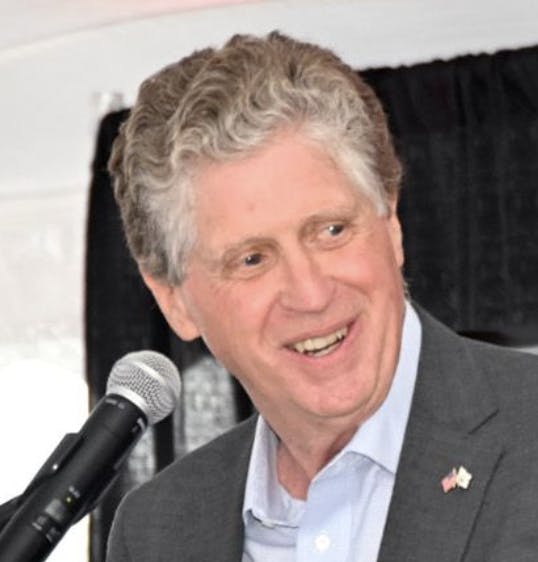
Taxi cabs, I was happy to learn on recent visits to downtown New York and Boston, are, like vinyl records, having a comeback. They look increasingly good against Uber and Lyft, and for at least two good reasons:
They’re fairly tightly regulated and thus usually safer and reliable, and their rides are often cheaper, especially because they don’t hit customers with surge pricing during rush hours.
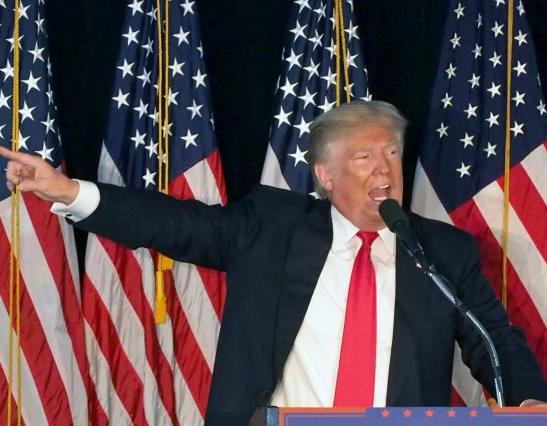
Lawyers for Trump and his corrupt real-estate organization claimed in the fraud case against him in New York that there were no victims of their extreme lies about the size and value of the Mafia-like organization’s properties – lies that got them big loans.
Not true!
By lying about the value of the Trump Organization’s properties, Trump and his entourage got money that would otherwise have gone to honest companies. And of course, the extreme lies undermined the stability of the entire real-estate market. Even that hard-nosed industry requires a certain level of trust.
Meanwhile, a reminder: A source of money for the Trumps has long been Russian oligarchs, especially after many big banks refused to have anything more to do with the sleazy family’s company after the banks were badly cheated. Some of the Russians are closely connected with Putin (now on a particularly murderous roll), whom Trump both admires and fears and for whom he would be a servant if the millions of MAGA voters, in all their willful ignorance, angry frustration and wishful thinking, put him back into office.
Back in 2008, Donald Trump Jr. said that “Russians make up a pretty disproportionate cross-section of a lot of our assets.” Indeed.
Meanwhile, the GOP/QAnon/Kremlin cult that very narrowly runs the U.S. House is on yet another two-week vacation, as the world burns. Keep Vlad happy.
But then, maybe new Speaker Mike Johnson would like to spend quality time with American Ethane, which gave his 2018 congressional campaign $37,000. At the time, the company was 88 percent owned by three Russian nationals—Konstantin Nikolaev, Mikhail Yuriev and Andrey Kunatbaev. Nikolaev is a top Putin ally. Johnson asserts that the money was returned when more was learned about the contribution. But why would the trio want to give money to Johnson in the first place?
In any case, mind your p’s and q’s! The boyish Mr. Johnson and his entourage would like to impose their version of “Christianity” on all of us to create a kind of theocratic America. Congratulations to this sect for so confidently navigating and cherry-picking through the Bible’s innumerable contradictions!
This isn’t what the Founding Fathers had in mind, but welcome to our brave new world.
Ain’t No Hero
There’s much baloney being peddled by some, mostly on the left, that the sociopathic Julian Assange, whose WikiLeaks hacked into U.S. computers to steal top-secret stuff, is a heroic “journalist” who deserves to be protected. This has come up as efforts are underway to extradite him to the United States from London, where he has been in prison.
No, Assange, a deeply narcissistic Australian with a record of intense personal corruption, has worked hand in glove with Russian intelligence in order to undermine America over the years by stealing and publishing U.S. military and diplomatic secrets. While WikiLeaks had access to much nasty stuff about Russia, Vladimir Putin was safe. Assange is, in effect, a Russian agent.
While Assange has touted himself as a defender of free speech, he has been in bed with a totalitarian regime that suppresses free speech through imprisonment and murder.
It’s unknown whether Assange was paid by the Kremlin or just hates America and its allies, or both. A look at his very troubled family past may explain some of this vicious man’s destructive work.
Some of Assange’s actions threatened – and may have taken-- the lives of American personnel. They also certainly violated the security and privacy of many Americans who were private citizens. WikiLeaks published thousands of emails by Americans with addresses, Social Security numbers and passport details.
Some hero!
xxx
Ah, those Russians, always in bed with the GOP/QAnon. Hit this link about the latest chapter in the Kremlin’s interminable efforts to make hay from the saga of troubled Hunter Biden. Once again, they have overreached.
https://www.cbsnews.com/news/hunter-biden-alexander-smirnov-joe-biden-russia/
Turn, Turn, Turn
As commuters recently went through turnstiles at central Paris’s Miromesnil subway stop, they powered mini-turbines that generated electricity. Bloomberg News reported that if this pilot program were installed across the network, such turbines could generate 136 megawatts of clean energy a year, according to Iberdrola, the Spanish company running the project.
Let’s keep looking for ways, large and small, to get off oil, coal, and gas. France is ahead of most developed countries because almost 63 percent of its electricity generation is from nuclear plants. But many of them are aging and so will fairly soon have to be replaced.
The turnstile pilot program will soon be extended to Madrid’s subways.
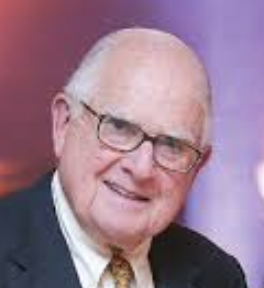
Arthur Robbins, a visionary, highly successful, and impressively honest businessman, philanthropist, all-around civic leader, and good friend to many, including me, has died at 91. He gave his ideas, his energy and his money to a multitude of good causes. I especially loved his help for Home & Hospice Care of Rhode Island, but that was only one of the many good causes he helped over the decades.
And he was great company, always with compassion, curiosity and good humor to spare.
Arthur’s death is a great loss to the community he loved. A mega-mensch indeed!

There have probably been far too many books written about the innards of The New York Times, and I’ve read a few over the years.
But Adam Nagourney’s new book, The Times: How the Newspaper of Record Survived Scandal, Scorn, and the Transformation of Journalism, is well worth reading because through The Times’s ups and downs we learn a lot more about how technology and changing societal norms and demographics have revolutionized journalism – and society in general -- over the past few decades, with some good effects and some very bad ones.
The biggest challenge arrived in 1990, when Tim Berners-Lee invented the World Wide Web, which ended up ravaging the advertising base of the news media. Things got really bad with the arrival of what became gargantuan social-media companies that not only took most of the traditional news media’s advertising but swiped without compensation its copyrighted material. In the process, it has destroyed much of the journalism that citizens rely upon to make intelligent decisions in a democracy and has severely hurt America’s civic culture in the process. But it has been great for dictators and other crooks, including the spray-tanned former president.
The Times’s size and prestige, and that it has remained family-controlled, let it survive stretches of low profits, cut dividends and a depressed stock price as it transformed itself to meet the competitive challenges of the digital revolution. After some scary years, it learned how to heartily prosper again. The Times is unique, of course, but there are lessons in the book for other news media, from old ones to startups.
I confess that I read it in part for its vivid observations of some people I used to know at The Times and some of the outlets competing with it. The book provides voyeuristic pleasure as we see sometimes nasty office politics among very smart and ambitious but insecure people whose job is to try to explain what’s going on in our churning world.