


Whitcomb: I Headed for the Hills; Ukraine Needs These Things; Antidote to Abortion War?
Robert Whitcomb, Columnist
Whitcomb: I Headed for the Hills; Ukraine Needs These Things; Antidote to Abortion War?

“I want to stay on the back porch
while the world tilts
toward sleep, until what I love
misses me, and calls me in.’’
-- From “On the Back Porch,’’ by Dorianne Laux (born 1952), American poet
GET THE LATEST BREAKING NEWS HERE -- SIGN UP FOR GOLOCAL FREE DAILY EBLAST
“Here {in taverns} diseases, vicious habits, bastards and legislators are frequently begotten.’’
-- Samuel Adams (1722-1803), an American Founding Father and the fourth governor of Massachusetts
“The four great motives that move men to social activity are hunger, love, vanity and fear of superior powers. If we search out the causes which have moved men to war we find them under each of these motives or interests.’’
-- William Graham Sumner (1840-1910), American sociologist
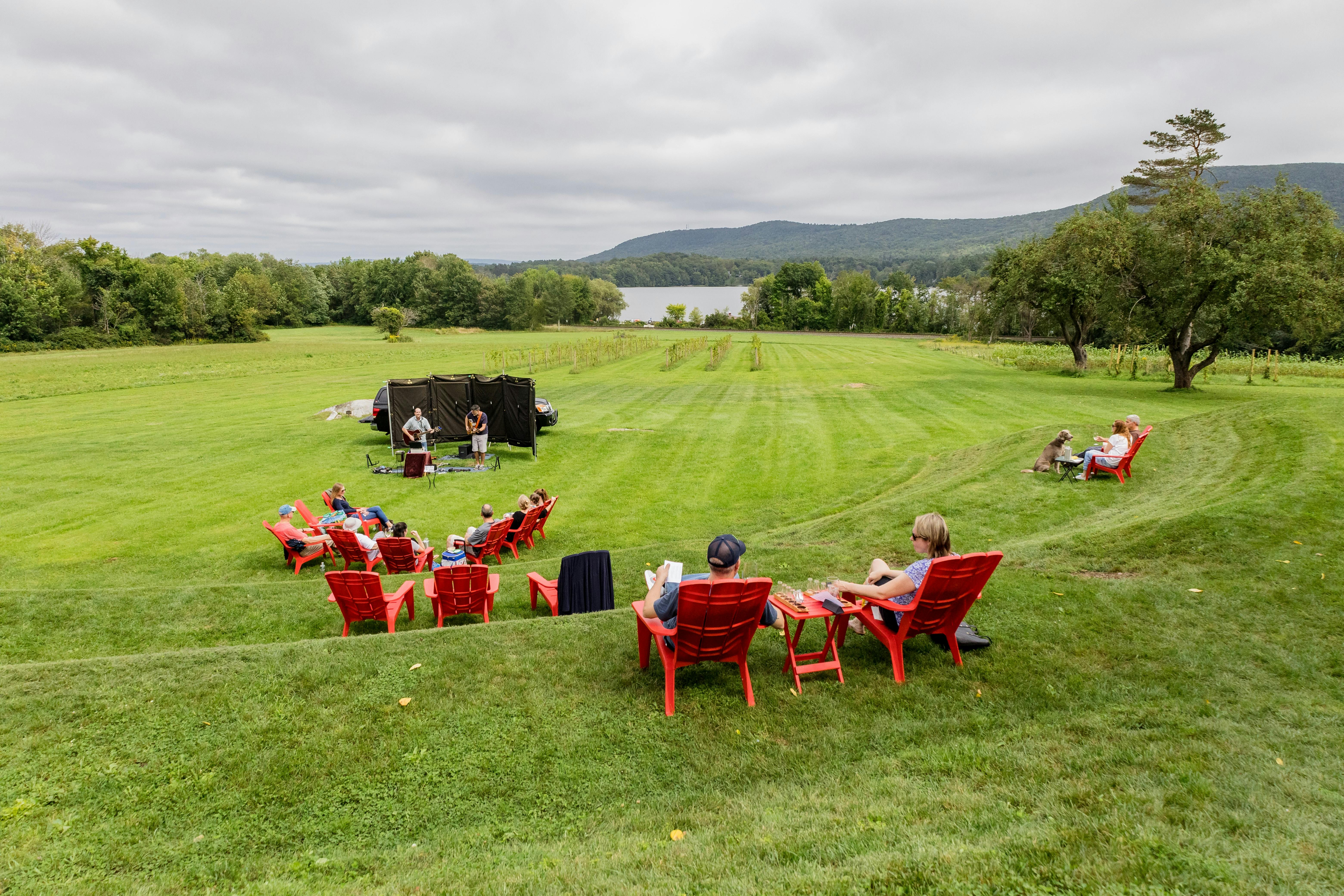
I drove out to The Berkshires last week for a couple of meetings. It brought back memories. In the late ‘50s’ I traveled there (by train from Boston!) to see relatives outside of Pittsfield in the little town of Richmond, and in the ‘70s I spent quite a few weekends staying with friends in a couple of towns along the Connecticut-Massachusetts line as an escape from New York City, where I was living and working.
One of my strongest recollections of the region is the election of 1970, when the Boston Herald Traveler (RIP) sent me to cover the vote in Berkshire County. I had little idea of how to go about that. So I first went to Pittsfield, the county seat and biggest town, and started walking around its then-busy downtown – lots of industry still around -- came across a radio station and went in to introduce myself. Unlike now, when most radio stations are owned by chains, many stations were locally owned and provided hefty doses of local news and other stuff from Berkshire communities.
I explained my plight to the station manager – ignorance – and he told me: “Don’t worry about it. We’ll bring you the vote tallies tonight. Would you like a donut and a cup of coffee? Take a look at The Berkshire Eagle’’ (a great local paper that still lives). He then gave me an overview of the county, including its reliance on General Electric and other big manufacturers that employed thousands of people, paid well and offered attractive fringe benefits. They also dumped large quantities of dangerous, cancer-causing chemicals into the region’s many rivers. The cleanups continue to this day.
My bosses in Boston were surprised that I was able to so quickly send them so much information that night….
Anyway, my trip last week reminded me that most of the county’s industrial base is gone.
And so, increasingly the area has depended on tourism as well as on affluent people (most, apparently, from the New York City area) who have second homes there amidst the lovely hills and the region’s astonishingly large collection of cultural organizations. Here’s a few: Tanglewood (music), Jacob’s Pillow (dance), Shakespeare & Company (theater), the Clark, Berkshire, Williams College, and Norman Rockwell museums and the Massachusetts Museum of Contemporary Art. Route 7, in particular, is Culture Gulch.
Not surprisingly, the region has long drawn famous painters and writers. After all, much of it is beautiful, and it’s close to New York and Boston. (I love that Herman Melville saw the shape of a whale while gazing at Mt. Greylock from his house in Pittsfield, as he worked on Moby Dick.)
People are drawn from far and wide to such lovely towns -- if maybe a tad too precious/quaint to some people -- as Stockbridge, Lenox, Williamstown, and Great Barrington, with their fine 19th Century houses, fancy restaurants, art galleries, bookstores, weavers, health spas and big country estates. Private equity, hedge fund, and tech moguls have taken over some of the last, many built by “Robber Barons’’ from after the Civil War through the Roaring Twenties.
All these attractions, however, have helped raise housing costs by drawing rich people who have bid up property prices and made a living in the region unaffordable for many people who, decades ago, might have had good jobs in a local factory. But God bless a lot of the newcomers. Most aren’t showy -- they don’t want to be in the Hamptons or on Nantucket or Martha’s Vineyard --- and some give big bucks to charities in The Berkshires, a couple of civic leaders explained to me.
In any event, away from the spiffy towns are gritty and depressed ones, with closed stores and ramshackle housing. But Pittsfield, anyway, seems to be coming back from its long economic depression.
How to make the Berkshires prosperous for more people? The tourism/ hospitality businesses don’t pay well and are quite seasonal. The state is pushing for more pharmaceuticals-manufacturing plants, and state officials have said that they want to make Berkshire County a biotech hub. Really? And perhaps the region could ramp up its farming sector to take advantage of the public’s growing desire for more locally-grown food and for less reliance on huge agribusinesses far away. The Berkshires’ proximity to the huge Greater New York market is a plus. But the hilly terrain puts a limit on the size and number of farms, even as human-caused global warming extends the Berkshires’ growing season.
Global warming is also producing more flooding and other extreme weather events, as I was reminded early last week when I came upon some roads washed out by the same system that did such damage in Vermont. Torrential rain in hilly areas can be devastating, and such downpours are becoming more frequent. Local and state officials must push for new rules to discourage building in such potentially dangerous places as right along rivers. Reading about the disastrous flooding in such communities as Montpelier, Vt., last week reminded me of how strange it is that so much building has long taken place on riverbanks. Of course, people love being along water, and some of the original construction there were mills using waterpower, but at what cost now? Presumably, more and more insurers will stop writing property insurance in such vulnerable places, which will block a lot of waterfront buildings. That’s happening in many places along the coast as sea levels rise.
The Berkshires used to be a pretty important ski region, but not so much any more; the weather’s too unreliable and there are more environmental concerns about ski areas’ massive use of energy and water (for snowmaking) and erosion off the hills.
Much of Berkshire County, despite its bucolic reputation, is more exurban than rural. There are ugly malls with windswept parking lots in strips along roads without sidewalks and other depressing scenes of sprawl, some of which threaten water pollution. But local officials and the general population are more aware than they were just a few years ago of the need to control sprawl, by, among other ways, boosting public transportation and encouraging more housing density near the old downtowns, whose businesses would be helped by having more customers within walking distance.
Let’s hope that in the next few years, Berkshire County offers some edifying new examples of how to protect the scenic and cultural attractions of an area that’s so close to big cities, while also creating better jobs for year-round residents so that they aren’t compelled to leave.
Meanwhile, enjoy the glories of the Berkshires, where summer road traffic can be bad, but not nearly as bad as traffic along the coast, as I saw last Wednesday, when it took me almost an hour and a half to drive to Narragansett from Providence in bumper-to-bumper traffic there. Head for the hills, not the coast, in high summer, when millions want to visit New England all at once.

Ukraine Needs These
President Biden is right to authorize the shipment of cluster bombs to Ukraine. Of course, they’re nasty weapons (weapons of war are meant to be nasty), but they’re urgently needed to help offset Russia’s numerical superiority in troops and weapons, especially as Ukraine draws down supplies of Western munitions in Europe’s biggest war since World War II. Yes, a few civilians will be killed, but not nearly as many as would be killed were Russia to win this war. Putin’s forces have already killed tens of thousands of civilians, tortured, pillaged and raped with abandon and kidnapped many thousands of children while destroying cities and towns.
Remember, the Ukrainians will use these weapons on their own territory, which they know very well, and hence will be able in most cases to minimize civilian casualties. Indeed, they’ve already been using them, though not as much as Russia, which has been using cluster bombs throughout its murderous assault on its neighbor.
If Putin is allowed to win this war outright, or just keep most of the Ukrainian land his often ill-disciplined troops have occupied, he’ll order a massive overt and covert revenge campaign (worse than now) against not only those who have served in the Ukrainian government and army but also against defenseless civilians (his favorite targets) in areas he deemed as disloyal to his tyranny. Expect more mass murder from this mega-terrorist.
And success in Ukraine might well encourage Putin to try to attack neighboring countries in various ways.
We should have provided Ukraine with cluster bombs (and long-range missiles) a year ago.
And take a look at this documentary:
A Partial Way Out of the Abortion War?
Let’s hope that the Food and Drug Administration’s first-time approval of an over-the-counter birth-control pill takes some of the heat, political and otherwise, out of the abortion war.
Of course, some people oppose birth control of any kind, as if we don’t have enough people on the planet. Most people will rightfully ignore them.
This is a big deal.
xxx
Will this super-white paint help us deal with more comfortably and cheaply with global warming? Hit this link: