


Whitcomb: Old Walks; Shoreline Stuff; What’s Meant by ‘Best’? Local Boy Right-Winger and Great Leak
Robert Whitcomb, Columnist
Whitcomb: Old Walks; Shoreline Stuff; What’s Meant by ‘Best’? Local Boy Right-Winger and Great Leak

“The mass and majesty of this world, all
That carries weight and always weighs the same
Lay in the hands of others; they were small
And could not hope for help and no help came:
What their foes like to do was done, their shame
Was all the worst could wish; they lost their pride
And died as men before their bodies died.’’
-- From “The Shield of Achilles,’’ by W.H. Auden (1907-1973), Anglo-American poet
To read the whole poem, hit this link:
“…in Spring, it is more natural to labor actively than to think. But my impulse is to be idle altogether.’’
-- Nathaniel Hawthorne (1804-1864), Massachusetts-based novelist and short-story writer
‘’Happiness, whether in business or private life, leaves very little trace in history.’’
-- Fernand Braudel (1902-1985), French historian

For a few hours last Thursday, it seemed that you could see the buds on the trees open in front of you in five minutes in the warm wind.
The fine weather reminds me of the joys and usefulness of walks. They’re good for the body and the mind. A good walk can help clarify your thinking when you have a difficult and/or complicated decision to make.
My favorite walks:
Walking from our house down a pot-holed one-lane road to rocky headlands on Massachusetts Bay when I was a boy. It went through cedar and oak woods and by a marsh thick with reeds through which we cut trails and created little rooms. Then I’d look up to the left at a gray-shingled house on a granite crag in the woods where hawks always seemed to be flying. As the road descended slightly to almost sea level there was a cottage to the right – I assume mostly a summer place – on a beach that extended out to a mussel bed. In those days we didn’t eat these shellfish but used them solely for bait to catch mackerel.
Then, near the end of the road, came a little beach, more stones than sand, on the left and two granite headlands, both with quartz stripes, one of which was an island at high tide on which stood a brick mansion, with a swimming pool, which we thought exotic. It was connected to the road by a slightly arched bridge. It took me no more than about 15 minutes to get to this place from our house, but that was enough in the salty air to feel refreshed with new ideas.
When I worked in Lower Manhattan, in the ‘70s, I frequently strolled down Broadway to The Battery, at the tip of the island, to stare out on New York Harbor, usually rippled by a southwest breeze. There I might buy a hot dog, with sauerkraut, from a cart manned by an old man with a beard. He too admired the view, though he noted in some sort of Slavic accent that “It’s too bad the water’s so dirty and smelly.’’ This was before the newly created EPA had sprung into action.
The best days for these walks were Sundays, a work day for me. Hardly anyone lived in Lower Manhattan then – it was almost entirely offices, most in the financial sector -- and so the neighborhood had a kind of sweet sadness on
weekends.
One day I was walking with my colleague Marty Hollander down Broadway, and he looked over at the new Twin Towers and said: “Someday someone’s gonna fly into them.’’ I’m trying to recall if he meant intentionally or by accident.
Many of my most vivid memories are from walking in New York, though I only lived there for four years. I guess one’s memories are implanted more firmly when one is young.
Before my Lower Manhattan gig, I’d daily walk to and fro between the campus of Columbia University, where I was a grad student, and the apartment I shared about 25 blocks south. When I didn’t stroll up Riverside Park, I’d go up
Broadway, by the Thalia movie theater and strange eateries. One specialized in Mexican Chinese food. On my way back home, the usual hookers stood by at the entrance to a store that sold newspapers and magazines; they nodded with dignity as people walked by.
On the trip to Columbia, I’d plan out the day, sometimes stopping to jot down ideas and reminders.
In Providence, where I’d come to work at The Providence Journal, then in its last glory decades, I’d hike from our house in Fox Point and later the East Side among the architectural marvels of College Hill to the Journal Building and back again at night – often very late. The homeward-bound trip was fine exercise because of the steep hill. Later on, however, when I became an “executive’’ I found that I no longer had the time and drove. It was frustrating.
I fixed a lot of problems on these walks, which I did in all weather, including the Blizzard of ’78.

Clean It Up or Close It Down
I’m not one of those who wanted condos and expensive restaurants on the long-industrialized part of the Providence waterfront. A working waterfront is a plus in the economic mix of a port city.
But it has to be overseen by state and local officials to prevent serious environmental dangers.
Despite years of complaints by the state, Rhode Island Recycled Metals continues to thumb its nose at the law, with Terry Gray, the director of the state Department of Environmental Management, accurately calling the extraordinarily messy and dirty site effectively “unregulated.’’
Not only does the company’s negligence pose health and environmental risks, the lack of civil or criminal action against the company encourages other enterprises to flout the law, too.
Time should be up for this long-running scofflaw.
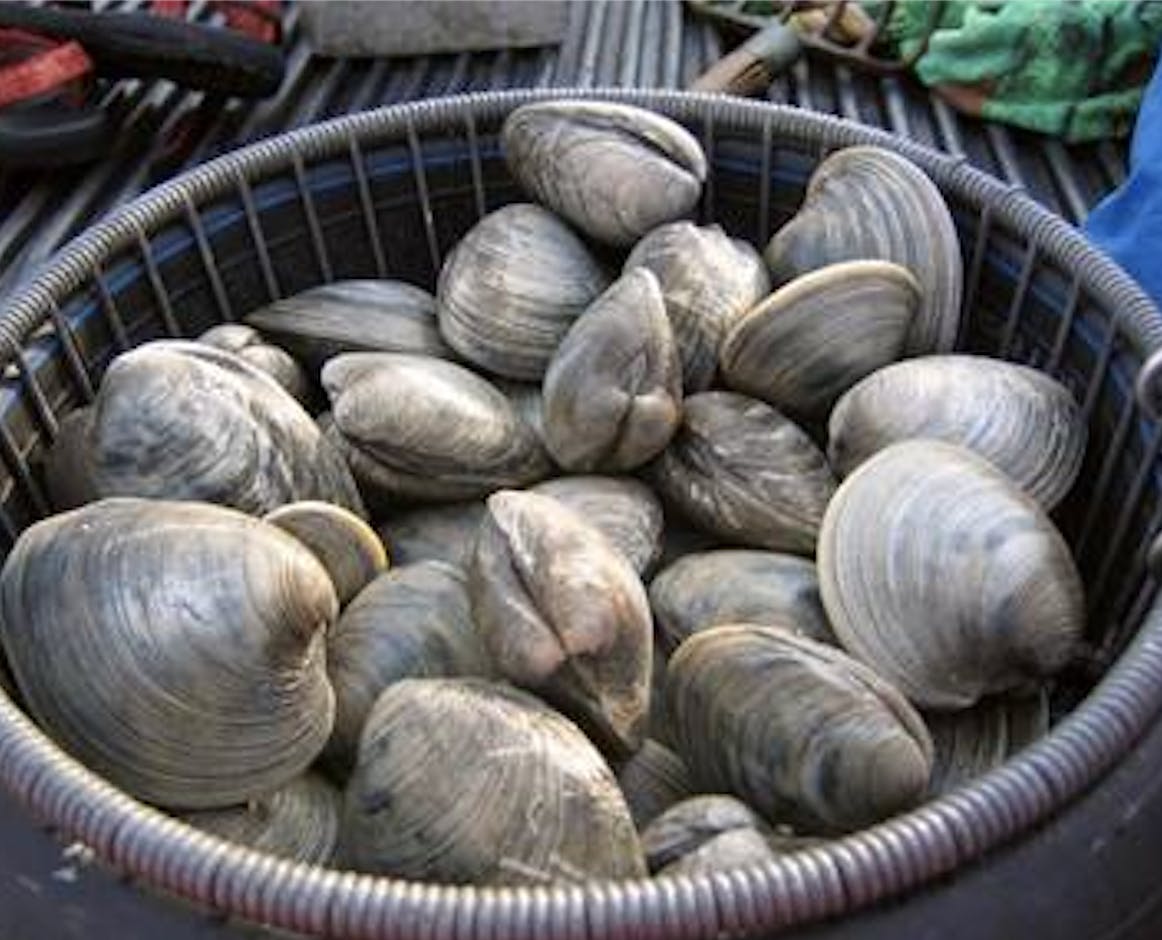
This is happy news that speaks to a Rhode Island comparative advantage.
Ground has been broken on the Matunuck Shellfish Hatchery and Research Center, in South Kingstown. It’s a joint venture of Matunuck Oyster Farm and Bar, URI researchers and the East Coast Shellfish Growers Association.
The facility can help expand shellfish growing in the state, producing new jobs and bigger crops of delicious, high-protein food while improving the coastal environment. Among the benefits of these farms is that they clean the water. I much enjoyed learning more about this while editing a pretty book, published by Perna Content, called “Maine Oysters,’’ about the Maine Coast in general (including its sociology and the big effects of global warming there) and the Pine Tree State’s expanding oyster-farming sector in particular.

That a state, such as Rhode Island, is ranked a “bad state for physicians’’ doesn’t necessarily mean that it’s ranked low for its “health system.’’ By “bad for doctors,’’ these rankings generally mean that they don’t get paid as much as they would like. Actually, the Ocean State is ranked highly in some health system indices. The latest was reported last week:
https://www.golocalprov.com/health/ri-ranked-3rd-best-state-for-childrens-health-care
And hit this one:
https://www.moneygeek.com/insurance/health/analysis/2022-top-states-health-care/
Still, over time, it would be nice if Rhode Island’s doctors made about as much as ones in Massachusetts since the Ocean State is to a considerable degree, an economic satellite of the Bay State, a world medical practice and -research capital.
We have to watch out for such sometimes misleading assertions as that higher teachers’ salaries always translate into better school outcomes. (One assertion that does hold up is that getting more parents more engaged with helping their children learn helps teachers do their jobs; that doesn’t mean, however, that parents should be telling the teachers how and what to teach.)
xxx
We all notice that many more stores these days have jars at checkouts in which to put tips for employees. The stores encourage this because it makes it easier to keep wages low and profits high. The workers, at least in big store chains, would do better to join a union, but in any case it’s hard not to push a couple of dollars into the jar, even knowing that the money probably won’t be reported to the tax authorities.
‘Inclusionary Zoning’ in Worcester
The Worcester City Council has passed an ordinance mandating that a minimum percentage of new housing projects in private developments be “affordable’’ for low-income or lower-middle-class households. The city, New England’s second-biggest in population (although the Providence metro area is much bigger), has, like many places in the past few years seen record-high rents. The term “affordable’’ can be quite plastic.
A big question is whether the Worcester ordinance will scare away private developers, thus, over the years, limiting the housing supply and raising overall housing costs.
Providence needs to watch how Worcester fares with this.
Wisecracks From a Parasite
There’s so much baloney about taxes. For example, New Hampshire’s Republican governor, Chris Sununu, likes to taunt Massachusetts for the fact that its taxes are higher than the Granite State’s. It bears noting that Sununu, the son of former New Hampshire governor, and later George H.W. Bush’s tough-guy chief of staff, John Sununu, is thinking about running for president and the promise of ever-lower taxes is part of the GOP/QAnon theology, along with guns galore, etc.
“What the hell are you all thinking?” Sununu asked Bay Staters at a recent New England Council meeting. “Oh, and thank you. I’m giving {Massachusetts Gov.} Maura Healey the ‘Customer Service’ Award for New Hampshire because of the insanity that’s going on in Massachusetts.
“As soon as that Millionaire’s Tax {narrowly} passed {in a referendum last fall} our phone is literally ringing off the hook. A lot of high-net wealth individuals and big companies were saying, ‘We’re done. We are tapping out of here.’ And they wanted to come over to the tax-free suburb of Boston, which is called New Hampshire, and take advantage of everything that we had to offer, which is great.” (New Hampshire is not exactly “tax-free”. It has high local property taxes as well as a flat 4 percent individual income tax rate levied only on interest and dividend income and a 7.5 percent corporate-income tax rate.)
(Newly elected Governor Healey has proposed a bunch of tax measures that favor the affluent, presumably aimed at diluting some of the effects of the Millionaires Tax.)
Sununu’s remarks suggest that he knows that most people will forget that Massachusetts, as a densely populated, heavily urbanized state, has far more complicated and expensive challenges than New Hampshire, which is suburban (in the strip near Greater Boston), exurban and deep rural. And so more taxes are needed in the Bay State. And the commonwealth spends the money on maintaining such things as America’s best public schools, a fine health system and, by economic and social necessity, a dense public-transit system. The tax revenue to help pay for these services ends up enriching the state by, among other ways, making it a place with many highly educated, productive and inventive (“high-value-added”) people; Massachusetts has the second highest per-capita income (after Connecticut) of any state. As I’ve noted several times before, New Hampshire, eighth highest in per-capita income, prospers by being next to the wealth and job-creation motor of Greater Boston. It’s an economic parasite.
I lived in each state for years.
Do lots of rich folks flee states with higher taxes and move to “low-tax” Red states? That’s debatable. And actually, those Red States tend to have high sales taxes, which hit the poor and middle class much more than the rich.
xxx
It’s no surprise that Ohio GOP/QAnon Rep. Jim Jordan is violating the U.S. Constitution by sending a revenge subpoena to Manhattan District Atty. Alvin Bragg after a grand jury there indicted Jordan’s maximum leader, Trump, for allegedly falsifying documents involving payoffs to porn star Stormy Daniels and two other people.
Jordan, in a sick joke, is chairman of the House Judiciary Committee.
This creature is one of the most vicious and puerile members of Congress. Representing a heavily armed and outrageously gerrymandered district particularly vulnerable to lies and demagoguery, Jordan is trying to intimidate Bragg by inserting a congressional committee into what is entirely a state matter.
Please stop calling these people “conservatives’’.
Lots of people call Jordan “Gym’’ because of a sexual abuse and coverup scandal involving a wrestling-team doctor at Ohio State University when Jordan was a coach there.
An independent 2019 investigation found that Richard Strauss, M.D., sexually abused at least 177 students from 1979 to 1998. So Ohio State agreed to pay a total of $40.9 million to settle the lawsuits of 162 men who alleged sexual abuse during the former university team doctor's tenure.
Anyway, instead of attacking Bragg with lies about New York’s violent crime rate, Jordan might look at the much higher violent crime rates in Ohio’s cities.
How Did He Get at Them?
The current gigantic leak of classified U.S. documents suggests that there are potential traitors and/or slobs in too many places in our intelligence and military operations and that the number of people who have legal access to this material must be reduced pronto.
There’s a local angle! Jack Teixeira, a 21-year-old resident of North Dighton, Mass. and a member of the Massachusetts Air National Guard, was arrested last Thursday for allegedly leaking the documents. Why, in God’s name, did someone like him, who worked at Joint Base Cape Cod, have access to these documents?!
The Washington Post reported:
“The man behind a massive leak of U.S. government secrets that has exposed spying on allies revealed the grim prospects for Ukraine’s war with Russia and ignited diplomatic fires for the White House is a young, charismatic gun enthusiast who shared highly classified documents with a group of far-flung acquaintances searching for companionship amid the isolation of the pandemic.
“United by their mutual love of guns, military gear and God, the group of roughly two dozen — mostly men and boys — formed an invitation-only clubhouse in 2020 on Discord, an online platform popular with gamers.’’
Discord has been a favorite platform of the Trumpian far right, and Teixeira has such views himself.
To read the whole Post article, hit this link:
Hmm...
Putin suck-up Trump stole and hid national security documents at Mar-a-Lago and elsewhere, and now there's this massive intelligence leak.....
xxx
It’s hard to envision Americans doing the sort of thing French people have been doing for weeks – demonstrating, even rioting, against the government’s plan to raise the retirement age to 64 from 62. The French have long savored time off, be it their minimum of five weeks a year of vacation time and their long retirements. Most Americans don’t feel they have the clout to demand anything like such benefits.
Why It Was So Gruesome
Niall Ferguson’s brilliant and panoramic book “The War of the World: Twentieth-Century Conflict and the Descent of the West’’ is an analysis, much of it controversial and contrarian, ignited by the huge question of how and why the last century’s military-industrial slaughter, much of it the genocidal mass murder of civilians, came to happen. What went wrong with the modernity that so many people had faith in before the outbreak of World War I, in the summer of 1914?
His answer boils down to “ethnic conflict, economic volatility and empires in decline” as he blows up pieces of the conventional wisdom about the wars of the century, which saw such advances and such horrors.
While his book was published back in 2006, it holds up well, including about the rise of China.