


Whitcomb: South Coast Rail Delay; Take Over Providence Schools; Sanders’ Stupid Idea; Implosion
Robert Whitcomb, Columnist
Whitcomb: South Coast Rail Delay; Take Over Providence Schools; Sanders’ Stupid Idea; Implosion

Passions of rain, or moods in falling snow;
Grievings in loneliness, or unsubdued
Elations when the forest blooms; gusty
Emotions on wet roads on autumn nights;
All pleasures and all pains, remembering
The bough of summer and the winter branch.
These are the measures destined for her soul.
-- From “Sunday Morning,’’ by Wallace Stevens
GET THE LATEST BREAKING NEWS HERE -- SIGN UP FOR GOLOCAL FREE DAILY EBLAST
“In the U.S., ironically, people work longer hours than they do in Europe or in any other industrialized country. They seem utterly oblivious to May Day, don't really know what it is -- our own history.’’
-- Eric Drooker, American painter and graphic novelist.
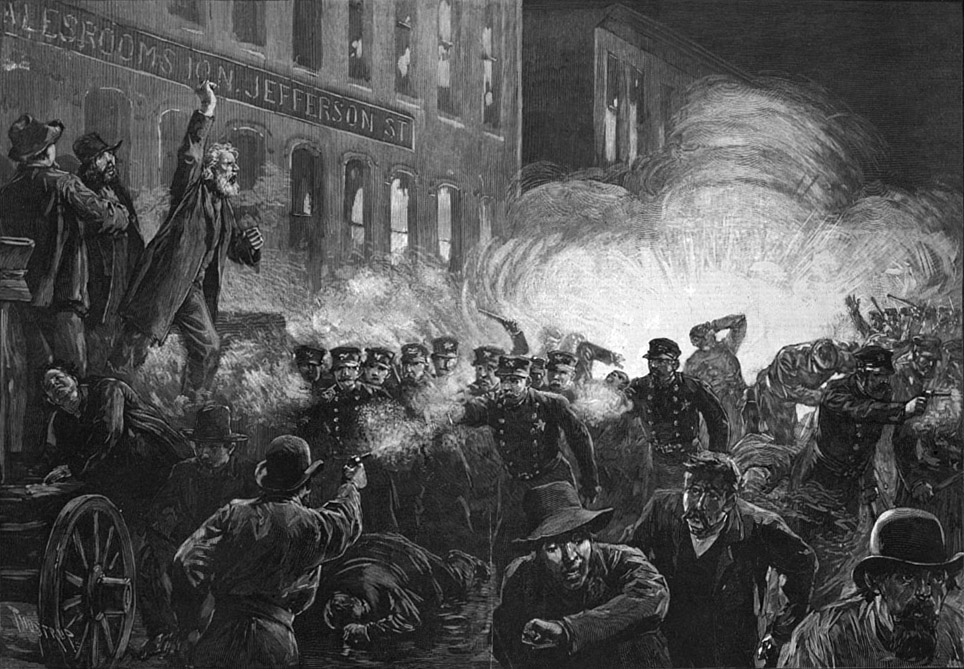
The Haymarket Riot began as a peaceful rally in support of workers striking for an eight-hour work day, the day after police killed eight workers. An unidentified person threw dynamite at the police as they tried to disperse the rally, and the blast and ensuing gunfire killed seven police officers and at least four civilians and led to the executions of four anarchists.
South Coast Rail Promise
The best news for our region in a while comes from Massachusetts Gov. Charlie Baker, who, fulfilling a campaign promise, is dedicating more than $1 billion in state bond revenue to the long-delayed extension of MBTA service to Fall River, New Bedford and Taunton. The plan is to have the project, called South Coast Rail, completed by late 2023. Taunton, Fall River and New Bedford are the only Massachusetts cities within 50 miles of Boston that don’t have commuter rail access to Boston.
The extension will make it easier for southeastern Massachusetts and eastern Rhode Island to share in the wealth and economic development of Greater Boston while making southeastern Massachusetts’s housing, whose costs are generally much lower than Boston’s and its suburbs’, more accessible to commuters. (And Rhode Islanders in Tiverton, Little Compton, on Aquidneck Island and Bristol may find it easier to take the train to Boston from Fall River than from Providence.)
In the long run, South Coast Rail will help make southeastern New England more prosperous, help restrain traffic congestion and reduce car traffic’s strain on the environment.
In any case, much needs to be done to get more people off the roads. Consider that a MassINC Polling Group recent survey of 1,200 Bay State registered voters found that 67 percent say that they’ve left work earlier or later to avoid Greater Boston’s traffic crush. Sixty-three percent describe themselves as angry /frustrated about the delays on the roads and the MBTA. The pollsters found:
"Among those with commutes longer than 45 minutes, about half (51%) have thought about changing jobs; 30% have considered leaving their area altogether.’’ The booming Metro Boston economy, fueled by technology, health care, finance and higher education, has kept the jobless rate low (latest: 3 percent) but eventually traffic congestion might cause many to leave the area. The best answer is more and better commuter rail service.
Please hit this link to learn more:

Providence has long since proven that, because of its mixture of demographics, union power and politics, it can’t fix its generally abysmal public-education outcomes without very big structural changes. It’s a disaster for Rhode Island’s largest city (the center of New England’s second-biggest metro area) and capital to have such low education outcomes. (There are a few exceptions – most notably Classical High School.) A healthy economy and civic culture require a well-educated populace.
Of course, government can’t do everything. The socio-economic problems of many Providence families – all too many of them with only one parent – in a kind of an electronic-device-dependent, distracted, post-literate society makes fixing education in a city such as Providence very difficult. We need a more economically secure, disciplined and orderly citizenry, too
Better that state government take over the schools than to leave reform efforts mostly up to the city, which has shown itself incapable of turning things around. (Disclosure: My children attended Providence public schools.)
GoLocal News Editor Kate Nagle and Whitcomb

Let’s hope that Rhode Island’s news media repeatedly publish the names of the state legislators who are raising future property taxes by voting for one measure that would indefinitely extend otherwise expired municipal and teacher contracts and another that would set a mandatory 42-hour overtime threshold for firefighters in a state that already has the highest firefighting costs in America!
The special-interest votes are examples of the inherent conflict of interest around public-employee unions, which use politicians desirous of their campaign money and other organizational support to try to get what they want. Quite rational! Sometimes things get very intimate indeed. Consider that Sen. Valerie Lawson (D.-East Providence), is a member of the Senate Labor Committee and vice president of the Rhode Island affiliate of the National Education Association, the teachers union. But then, the committee’s chairman, Frank Ciccone (D.-Providence, North Providence), is a paid consultant for the Laborers’ International Union of North America, which represents some state and municipal employees in Rhode Island.
Private-sector unions are quite another thing: They must bargain without special help from politicians (usually). We need more and stronger private-sector unions. Their decline has hurt the middle class, while the political power of public-employee unions, at least in some places, has raised citizens’ cynicism about, and lack of trust in, their governments, which can end up being bad for hard-working public employees, too -- in the long run.

Lifespan has denounced Boston-based Partners HealthCare’s bid to take over Care New England. I wonder if Lifespan would change its tune if Partners, in the fullness of time, made a nice offer for Lifespan, with big golden parachutes for Lifespan executives. Meanwhile, to those who warn that Partners would, over time, shift a lot of Rhode Island area patients to its high-priced hospitals in Boston: Yep, Partners would almost inevitably do just that.
Warren’s Bridge Too Far
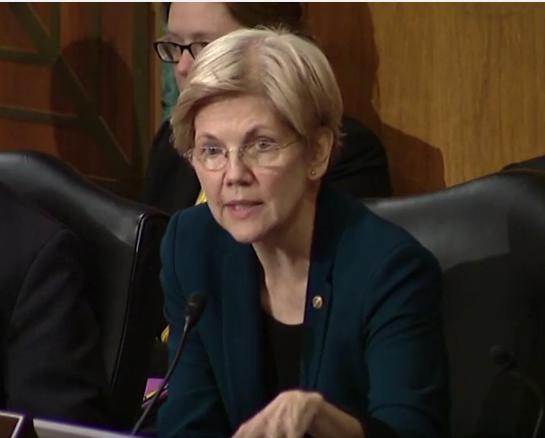
Massachusetts Senator and presidential candidate Elizabeth Warren’s proposal to cancel college-student debt for everyone with under a $100,000 income, and some debt relief even for those earning up to $250,000, and, going forward, provide “free’’ public higher education (financed by a new tax on households making more than $50 million a year) is not the way to go. For one thing, it would tend to subsidize people from middle- and upper-income families who could afford to pay for college with family money, private-sector loans and Pell Grants, etc., and reap the lifelong earnings gains that could flow from that education, which they’d pursue with or without the Warren program. And, especially for past and present students, it would encourage the idea that you don’t have to pay back money you borrowed.
There’s also the question of how valuable “college’’ is for some students compared with, say, high-quality vocational education. For some of us, liberal arts can be “vocational’’ – e.g., a history major who plans to go into journalism, aka “history on the run.’’ But perhaps not for the majority of students.
In any event, I’m sure that many people in the surplus of private colleges and universities would be terrified if it seemed that Senator Warren’s plan could be enacted, leading many more students to opt for “free’’ public colleges. New England has a famously dense concentration of private colleges, some of them in deep financial trouble because of worsening demographics.
Paradise Pier
The Rhode Island Department of Environmental Management hopes that work on the new, 280-foot-long T-shaped pier at Rocky Point, in Warwick, scheduled to start within a few weeks, will be finished by year’s end. Too bad it won’t be ready for this summer, but the fact that it will be there soon is heartening. Long piers are potent magnets for people (and fish) and this one, with its shade structure, benches, railings and solar-powered lights, will be a more powerful one than most. That the new pier will provide easy access to saltwater fishing only 10 miles from downtown Providence will be a big draw, including out-of-state tourists.
I sure wish that there were more such public amenities, especially when the rich monopolize so much of the shoreline. Bring back the WPA!
Weird Towers
I’ll miss the two gigantic cooling towers at the now shut Brayton Point power plant, on Mount Hope Bay in Somerset. The plant had been the largest fossil-fuel-powered electricity plant in New England; the plan is to turn it into a logistical port and support center for offshore wind farms and other industries. The towers’ creepy, ghostly shapes, especially in a thin fog at dawn or dusk, imparted some excitement to bored drivers on Route 195. The towers were imploded yesterday.
SEE GoLocal drone coverage below.
Forging Connections Among the Young
Like some of the Democrats seeking their party’s presidential nomination, I like the idea of mandatory national service, to be undertaken after high school. As income inequality widens along with political and cultural differences, a system in which most young Americans serve, be it in the military, public works, disaster relief or some other sector, would help unify the country by educating young people about compatriots they would not otherwise encounter. It would forge new connections among widely different parts of our hyper-heterogeneous society, as did military service during World War II.
One approach would be to make national service a condition for getting federal student loans.
Chronicle of Collusion
The Mueller Report, even with its partisan redaction by Trump’s attorney general (grotesquely acting as the mobster’s personal lawyer) makes for very disturbing reading. It details the Trump Mafia’s enthusiastic collusion with an adversary state and strenuous efforts (which continue to this day) to cover it up. We still do not know all the reasons – Kremlin blackmail of Trump, or his business deals, including Russian money in Trump properties in New York and elsewhere?
In a nutshell, Mr. Mueller’s investigators showed how:
Russia intervened in the election to promote Trump, who has been trying to do business deals in Russia for 30 years, and damage Hillary Clinton. The Trump campaign welcomed Russia’s help and encouraged it, publicly and privately.
Robert Mueller noted his frustration during the probe that some in the Trump crowd deleted or encrypted key communications that would have been useful in an investigation already hamstrung by sabotage by Trump and his family and servants. And of course Justice Department policy is not to indict a sitting president. Mr. Mueller basically tossed the hot potato over to Congress.
Mr. Mueller wrote:
“The Office learned that some of the individuals we interviewed or whose conduct we investigated — including some associated with the Trump Campaign — deleted relevant communications or communicated during the relevant period using applications that feature encryption or that do not provide for long-term retention of data or communications records.’’
Still, the report is devastating enough. To read it, please hit this link:
Given the Trump administration’s lack of interest in combatting Russian efforts to interfere in the 2020 elections, and Trump’s continuing disinclination to call out Putin, we can infer that his toxic special relationship with the Kremlin continues.
Meanwhile, as Trump increases his frenetic daily Twittering and spends much of his day watching Fox News, you have to wonder about the degree to which the Executive Branch is being managed.

“For {photographer Brian} Rose, Atlantic City is an almost-too-perfect metaphor for Trump’s zero-sum, winner-take-all philosophy. ‘He left the city desolate, with high unemployment, high vacancies. You look at Atlantic City and you see, in a very graphic way, the result of Donald Trump’s business model and his way of doing things.” ‘
From Michael Hardy’s article “Trump’s Casinos Couldn’t Make Atlantic City Great Again.’’ To read it, please hit this link:
Voting in Prisons
The Democrats’ ability to pull defeat from the jaws of victory is illustrated by Bernie Sanders’s support for letting convicts – including Boston Marathon bomber Dzhokar Tsarnaev! -- vote. As things stand, only Senator Sanders’s state, Vermont, and Maine let felons vote while in prison. Whatever you might think of this idea (I hate it) I would guess that the vast majority of Americans oppose the idea, which strikes me as a variant of the sort of edgy politics that gets the Democratic Party in trouble in Middle America.
Marketing Up Health-Care Costs
“Medical marketing has evolved into a sophisticated, high-dollar enterprise that permeates every aspect of the health care system. In a comprehensive analysis published in the Journal of the American Medical Association (JAMA) in January, husband-and-wife team Steven Woloshin and {the late} Lisa Schwartz, …. traced how spending on drug marketing, disease awareness campaigns, health services, and laboratory testing increased from $17.7 billion in 1997 to $29.9 billion in 2016….’’
“’What struck us most is just how much marketing, how much promotion there is,’ Woloshin … told me. He put the spending explosion in context: The nearly $30 billion spent on medical marketing was more than five times the Food and Drug Administration’s budget, he noted, and roughly equal to the entire budget of the National Institutes of Health.’’
“The most rapid growth has been in direct-to-consumer marketing, which accounted for only 12 percent of expenditures in 1997, but nearly one-third of spending by 2016.’’
-- From “Many Anti-Vaxxers Don’t Trust Big Pharma. There’s a Reason for That,’’ by Teresa Carr, in UNDARK. To read the piece, please hit this link:
The Semi-Nation of New England
To read an exciting new take on the early religious, political, social and economic history of New England and its dominant city, get The City-State of Boston: The Rise and Fall of an Atlantic Power, 1635-1865, by Mark Peterson. The worst villains in the book, which is well-illustrated, are leaders of the Slavocracy of the South, which distorted New England’s economy (especially that connected with cotton textiles) and undermined its morality. Mr. Peterson convincingly writes of how New England, almost as much as the South, came to think of itself as something like a nation.
Book of the Dead
Al ‘’All the rivers run into the sea; yet the sea is not full; unto the place from whence the rivers come, thither they return again.’’
l the rivers run into the sea; yet the sea is not full.
-- Ecclesiastes
While looking for something in my dusty family files, I came across the little guestbook that nonfamily mourners signed at my father’s memorial service, in 1975, and I noted that just about everyone who signed it is dead, too. Go with the flow.
And then I came across a poem, entitled “The Menaces,’’ written, or at least signed by, my maternal great uncle, William Dale White Jr., sometime during World War I. I know it’s WWI because the lines include:
“And such is {Woodrow} Wilson – let the victors fling
Their laurels to whatever gods they will.
We shall keep better faith: We think of him
Who to the lapping waters said ‘Be still.’’’
I had always thought that Uncle Will, who was mysteriously murdered in Chicago, died before the “Great War’’. I really should take a closer look at this old stuff in manila envelopes.
'Ah, Those Predictions!
As Larry Swedroe wrote in CBS’s Moneywatch on Nov. 26, 2012:
“The majority of economists didn't ‘predict’ the three most recent recessions (1990, 2001 and 2007) even after they had begun.
“In November 2007, economists in the Philadelphia Federal Reserve's Survey of Professional Forecasters called for growth of 2.4 percent for 2008, with only a 3 percent chance of a recession, and only a 1 in 500 chance of the GDP falling by more than 2 percent. GDP actually fell 3.3 percent.
“Since 1990, economists have forecasted only two of the 60 recessions that occurred around the world a year in advance.’’