


Whitcomb: Tis the Season to Send Money; Millionaire Migrations? Singleton’s PPAC; David Brussat
Robert Whitcomb, Columnist
Whitcomb: Tis the Season to Send Money; Millionaire Migrations? Singleton’s PPAC; David Brussat

“Certainly good cheer has never been what’s wrong,
though solemn people mistrust it.
Against evil, between evils, lovely words are right.
How absurd it would be to spin these noises out …,
if they couldn’t make a person smile.’’
-- From “The Cheer, ‘’ by William Meredith 1919-2007, American poet (including as U.S. poet laureate) and educator
GET THE LATEST BREAKING NEWS HERE -- SIGN UP FOR GOLOCAL FREE DAILY EBLAST
“Today, at least three-quarters of Americans do not believe that humans evolved from lesser creatures. Half of all citizens think that God plays a major role in the outcome of the Superbowl. Fewer than half have read a single book in the past year, aside from the Bible.’’
-- Don Morrison, columnist and a former Time Magazine senior editor
“Once suspicion is aroused, everything feeds it.’’
-- Amelia Edith Barr (1831-1919), English novelist
After a day of cold rain last week, amidst the season’s deepening darkness, the sun came out last Wednesday to remind us that in a couple of weeks the days will start getting longer again. Meanwhile, some seed catalogs are in the mail.
But snowflakes must fall – trillions of them, and to think that each looks different up close! (I see snowfall as a reminder of the shroud of death on a cloudy day and as a celebration of light and therefore of life on a sunny one.)
The coming of winter-storm season reminds me of the irritating demand that people show up to work at the newspapers where I labored, regardless of the weather. In my case most memorable was trudging and climbing home from The Providence Journal in the Blizzard of ’78 and walking home as branches were still falling during the tail end of Hurricane Bob in 1991.
But as the great English playwright, songwriter and director Noel Coward asked: “Why Must the Show Go On?’’ Here’s the song:
And so what happened on Sunday, Dec. 7, 1941, seems to recede ever faster into the past, with fewer and fewer people taking note of it. Read Conduct Under Fire: Four American Doctors and Their Fight for Life as Prisoners of the Japanese, by John A. Glusman.
xxx
I have fond memories from childhood of visiting what’s now called the Edaville Historic Train & Festival of (holiday) Lights, whose origins go back to 1947. It’s a magical place (at least for children) in South Carver, Mass., in the heart of Cranberry Country. Check it out:
At this time of year, any place with bright lights, colored or just white, is much appreciated.
xxx
Help the environment and stick it to Amazon. Forget about sending Christmas packages and send family and friends money instead. A lot of them really need it.

All hail Lynn Singleton, who is retiring as CEO and president of the nonprofit Providence Performing Arts Center, which he joined in 1983 as executive director. He’ll remain CEO and president of Professional Facilities Management, a for-profit PPAC subsidiary.
Mr. Singleton led the transformation of the former movie palace – with 3,000 seats! -- into a nationally famed multimedia showcase for concerts and touring Broadway productions – musicals and straight plays – and one-person shows, including comedians. And it sometimes shows films, too.
PPAC introduced many thousands of people to very walkable downtown Providence, making the neighborhood livelier and safer and boosting restaurants, hotels, and other businesses there. I know of some people who even decided to move there after PPAC really got cooking. Indeed, the venue has been a boon for the whole region, luring many people to Providence to see the sort of shows that they’d otherwise have to go to Boston or New York to hear/ see.
I like the excitement of entertainment centers such as PPAC that are in a dense city, rather than professional sports stadiums, which, except when there’s a game, are surrounded by dead, windswept parking lots. And they’re yet another way that taxpayer money is taken to make the very rich richer.
Read the latest on the Pawtucket soccer stadium:
xxx
Speaking of density, Nicolas Rohatyn, the CEO of the New York City-based Rohatyn Group, had an interesting suggestion in a recent New York Times article: Converting free street parking in the city, starting in Manhattan, to a paid system to help pay for free bus service. (I myself would prefer that fares simply be made cheaper to encourage use. And would completely free buses attract homeless people?) Mr. Rohatyn reports that there are about three million on-street parking spaces in New York, only about 80,000 of which are metered. He proposes using parking meters where demand is high and residential permits where it isn’t.
This program or something like it could reduce traffic congestion, improve air quality, boost small businesses, and all in all improve life in America’s largest city, which Pope John Paul II called “the capital of the world,’’ and not just because the United Nations is based there.
By the way, Mr. Rohatyn is the son of the late Felix Rohatyn, a child refugee from Nazi-occupied France who became a pillar of Wall Street and who brilliantly led the rescue of New York City from insolvency in the 1970s.
Here’s Nicolas Rohatyn’s essay:
Myth of Millionaire Migration
Very rich people often threaten to move if the jurisdictions they live in, say New York City or Massachusetts, plan to raise their taxes. This terrorizes some politicians into backing down even if the extra money is needed to pay for what most people would deem as services and infrastructure necessary for, among other things, the long-term growth of their economies. Don’t want to offend current or potential political campaign contributors!
But the millionaires and billionaires – who are usually middle-aged or older -- make the threats much more rarely flee than some of their rhetoric might suggest. That’s partly because of tight ties with family, friends, and business that make it hard to leave, but also because high-tax places support the services and quality of life that’s good for making money over the long run.
Supreme Court Justice Oliver Wendell Holmes famously said: "Taxes are the price we pay for a civilized society." The quote is inscribed on the outside of the headquarters of the Internal Revenue Service, now being ravaged at the direction of thief and con man Donald Trump, a serial tax evader, and proud of it!
Visit such former Slave States as Mississippi, Alabama and Louisiana if you want to know what life is like where the tax structure is set up almost entirely for the benefit of the politically powerful rich. They’re mired in poverty and other social pathologies.
Why is it that after decades of right-wing hyping of low taxes for the rich, the poorest states remain those with lowest taxes on the rich but high taxes on the poor, via hefty sales taxes, which are regressive? Come to think about it, the Social Security tax is regressive, too: For 2025, the level at which you stop paying Social Security tax (aka “payroll tax’’) on your earnings is $176,100. This is the maximum earnings subject to the 6.2 percent Social Security tax (12.4 percent for self-employed individuals).
Take a look at Cornell sociologist Cristobal Young’s new book, a rigorous deconstruction of millionaire/billionaire migrations -- The Myth of Millionaire Tax Flight: How Place Still Matters for the Rich.
As the book blurb notes, he analyzes “IRS tax returns and billionaire data to show that wealthy Americans are far less mobile than commonly believed. Despite their resources, millionaires tend to stay put—because their success is deeply tied to place, networks, and insider advantages…
“The takeaway for tax policy is clear: states can raise taxes on the rich without triggering mass flight—and use that revenue to invest in infrastructure, education, and opportunity for the next generation.’’
Of course, higher taxes will send some fat cats away, but, again, their numbers have been exaggerated. Meanwhile, it bears noting that many of the rich pay remarkably little in taxes, in part because capital-gains taxes are lower than those on earned income and because of assorted tax shelters that paid-off politicians give them. (I myself am a beneficiary of low capital-gains taxes.) Some very rich people pay no income taxes._
So, when are taxes on the wealthy too high? That must be answered jurisdiction by jurisdiction as conditions change over time. Now, the rich have never been richer. Some are wonderfully generous and smart people, some are driven only by avarice and power lust. But as the late Supreme Court Justice Potter Stewart said of pornography: “I shall not today attempt further to define the kinds of material I understand to be embraced within that shorthand description ["hard-core pornography"], and perhaps I could never succeed in intelligibly doing so. But I know it when I see it.’’
Outlaw Administration Keeps at It
“I used to do drugs. I still do, but I used to, too.’’
-- Mitch Hedberg (1968-2005), American comedian. He died of a drug overdose.
Has the lawless Trump regime added “murderer” to its stellar achievements in treason, fraud, extortion, racism, cruelty, ignorance and perjury? We’re growing old waiting for evidence that those 83-and-counting people that deeply troubled, hyper-intense “War Secretary” Pete Hegseth, like his boss a serial liar, had killed on small boats were actually Venezuelan drug traffickers and not, say, fishermen. (I’ve been to Venezuela, which has many coastal fishermen.) Who knows? Maybe it’s drug traffickers making fishermen give them rides at the point of a gun.
In any event, the hyping of Venezuela serves as a handy way to divert easily distracted Americans from layoffs, inflation, Epstein and swelling reminders of seemingly bottomless corruption at home, and betrayals abroad.
The attacks are an incentive for other nations to treat Americans the same way we treat Venezuelans on those little boats, ignoring international law.
As for “narco-terrorists, ‘’ how about really going after the American drug lords – small and large – that feed our insatiable craving for hard drugs. And I wonder about former Honduran President Juan Orlando Hernández, a drug-trafficking kingpin whom Trump has pardoned. We really know don’t why he was, but perhaps the possibility of future business opportunities (in Russia, etc.?) with the Trump Organization beckoned. After all, Hernández probably has millions of dollars stashed away in offshore accounts ready to be reinvested.
Maybe someday we’ll learn what was in it for him in each of these cases, which came even as Trump raged on about drugs flowing into the country. Small-time neighborhood peddlers are sent to the slammer. Kingpins can hope for dinner at Mar-a-Lago.
Trump is poisoning the presidential pardon system, which will lead to an explosion of public and private corruption. Crooks know if they suck up to the Sociopath-in-Chief, they have a good chance to avoid the long jail sentences they deserve.
xxx
West Bay Blue Wave
Here’s an interesting example of healthy local civic and political engagement, this one in Rhode Island: CLICK HERE
It would be nice if non-Trump Republicans, if they’re brave enough, try creating a similar organization.
xxx
PolitiFact, which is a nonprofit, offers a nonpartisan and frequently updated check on public officials’ and other luminaries’ lies and the assorted mythologies polluting the public square. Of course, it has its hands full keeping up these days!
It can even be darkly amusing. Hit this link and check the site every week: SEE HERE
And if you have a few extra bucks, please give some to PolitiFact so that they can keep up their much-needed work.
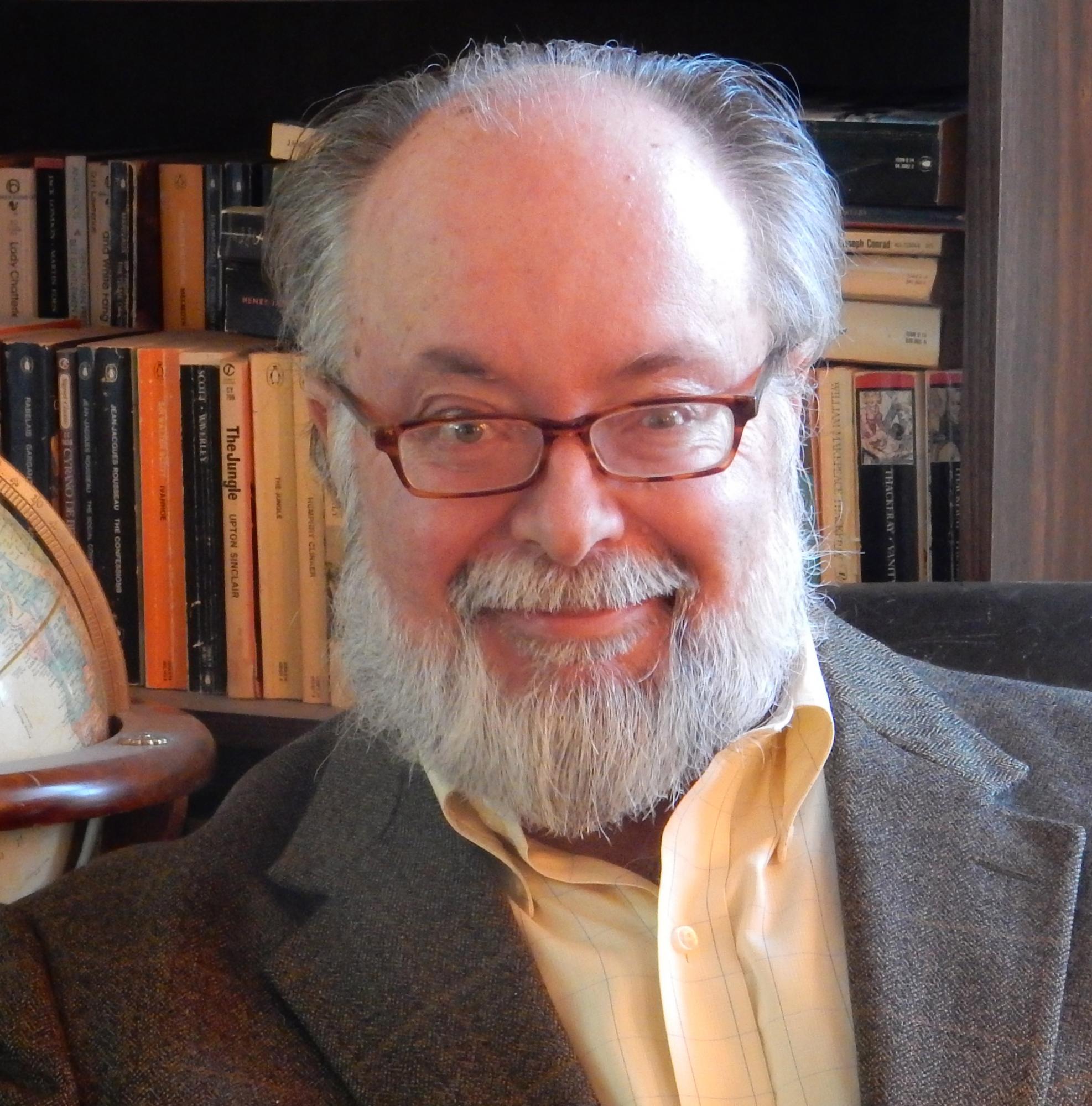
David started as an editorial writer for The Providence Journal, then transitioned to being primarily a page-layout man for the once mighty paper’s commentary pages, for which he also wrote columns. Those were mostly about architecture and city and land planning in general, which led to a blog called “Architecture Here and There” and a book, Lost Providence. He died Nov. 25, at the age of 72.
I worked with him from 1989 to 2013, mostly as his boss. I didn’t always agree with David’s passion for what he called “classical architecture,’’ as he defined it. Nor did I share his hatred of “Modernist” buildings -- some are gorgeous, though “Brutalist’’ creations can be hideous. I admired his enthusiasm for journalism and architecture, if not his personal politics – he was always a right-winger and a couple of years ago confirmed to me that he was a Trumper.
By writing so frequently and passionately about buildings and cityscapes, he encouraged his readers to look around their surroundings more intensely and to push to make things better, or at least not worse, which in many cases involved saving and renovating lovely old buildings. And his denunciations of the sort of zoning that led to the creation of hideous shopping strips (now undermined by Amazon, etc.), such as Bald Hill Road in Warwick and some depressing stretches of roads leading to Newport , were much appreciated. Who knows, maybe some of his writings led a few city and town officials to stop encouraging what David called “crudscapes.’’
Heartland Tour
Here’s another charming travel book from Matthew Stevenson -- Playing in Peoria: From Abraham Lincoln to Warren Harding by bike, train, and bus. This delightfully discursive work about his tour of the Midwest and Upstate New York blends American history, with its moral triumphs and failures, hypocrisies and humor with ruminations on current affairs and stuff about his very intriguing friends and family. He has a sharp eye for natural and manmade beauty and ugliness – and extraordinary physical energy.
Mr. Stevenson, who’s based in Switzerland but grew up in the New York City area, has long written about train travel. Indeed, he’s an expert. He tried to take Amtrak as much as he could to research this book, but was frequently frustrated and angered by the grossly underfunded system’s unreliability. Aren’t we all.
Anyway, his book is a charming way to get to know a bit more about “The American Heartland,’’ from the ground up.