


Whitcomb: Tout Takeout; How Long to Hunker? Park Panels in Parking Lots; Brady Bathos
Robert Whitcomb, Columnist
Whitcomb: Tout Takeout; How Long to Hunker? Park Panels in Parking Lots; Brady Bathos

“The winds of March that make my heart a dancer
A telephone that rings but who's to answer?
Oh, how the ghost of you clings!
These foolish things remind me of you.’’
From the song “These Foolish Things (Remind Me of You)” (1938), with lyrics by Eric Maschwitz and music by Jack Strachey
GET THE LATEST BREAKING NEWS HERE -- SIGN UP FOR GOLOCAL FREE DAILY EBLAST
“I’m not sure why I touched it.
A crocus tip can be more dazzling,
And a boy would rather throw dice
Or marbles than be soft-hearted.’’
-- From “Last Patch of Snow,’’ by George Abbe (1911-89), a New England poet and novelist
“Every secret thing degenerates, even the administration of justice; nothing is safe that does not show how it can bear discussion and publicity.’’
-- John Emerich Edward Dalberg-Acton (1834-1902), but usually just called Lord Acton
He’s best known for the remark "Power tends to corrupt, and absolute power corrupts absolutely.’’
xxx

Enjoy gazing at the slowly greening grass. Green is a soothing color.

I hope that folks will help out our local restaurants now barred from offering sit-down service by ordering as much takeout as they can afford to help keep these places open. I fear that draconian “social-distancing’’ rules will drive many of them out of business in the next few months, leaving us at the mercy of boring national chains.
I checked out a Whole Foods (owned by Amazon) store in Providence last Wednesday and discovered that Amazon has taken over a corner of it as a place to fill food bags to be picked up. The current crisis means that Jeff Bezos’s empire will grow even faster, as we are told to hunker down at home and await deliveries, if we can afford them. Whole Foods, for one, generally ain’t cheap. (They used to call it “Whole Paycheck’’.)
Big business, with its access to capital, even in a recession, and its lobbyists pushing special-interest stuff such as bailouts, obviously have a huge advantage over small business. Will that inequality of influence be considered in public policy in the recession we’re in now? It wasn’t in the 2008-09 recession.
xxx
“I’d rather die than live like that.”
-- An elderly worker in a Lowe’s store on “social distancing’’ when my wife asked if she should move a few feet away as he looked for something she needed.
Some experts, citing successful (for now) virus-containment efforts in South Korea, Singapore, and Japan, are talking about mandating severe social distancing for months, not weeks, to limit the spread of COVID-19, including staying six feet away from others, barring gatherings of more than 10 people and, connected with that, ordering restaurants, bars and many stores to stay closed indefinitely.
But such a stretch would do catastrophic economic and social damage. We won’t be able to cover the vast medical costs of the pandemic if we bring the economy to its knees. Long-term draconian rules would cause a huge increase in poverty as many more millions lose the ability to earn a living because many businesses would close forever. Poverty is bad for your health. Following all these draconian demands for as long as some are proposing would cause a huge increase in stress and the mental and other illnesses that go with it and raise crime and violence, especially domestic violence. Note the ominous increase in gun and ammunition sales just in the last week or so.
The fact is that we’ll probably have to tolerate many deaths from the virus to keep society going as we await a vaccine. There is a treatment, but no vaccine yet, for COVID-19 being tested in China. Please hit this link to read more:
I wonder how many people the containment efforts themselves could kill.
(By the way, be leery of data on the virus coming out of China. It’s a dictatorship that closely manages public information to protect itself. And watch out for Russian disinformation on the pandemic on social media. Putin’s people are hard at work sowing conspiracy theories and distrust in the West.)
Okay, let’s continue to do social distancing, especially, of course, with people who are sick, in the next few weeks to, we hope, bend the curve of the epidemic of a virus we’re still learning about. But for months beyond that? No.
And, yes, let’s all keep washing our hands – a good habit even without a pandemic!
What should Rhode Island do in the way of closings and lockdowns? Whatever Massachusetts does.
xxx
Sign of the times -- leaving off food and drink at friends’ houses, hoping that they won’t be stolen, maybe by people who have lost their jobs….
xxx
xxx
There’s been a throng of wealthy summer residents from Greater New York heading out to stay on Martha’s Vineyard and Nantucket to, they hope, reduce their chances of getting COVID-19. The virus is presumably more common in urban/suburban areas than on those exurban islands. (Is Block Island seeing some of this off-season influx, too?) The trouble is that these islands aren’t geared to take all these unexpected invaders in the off-season.
xxx
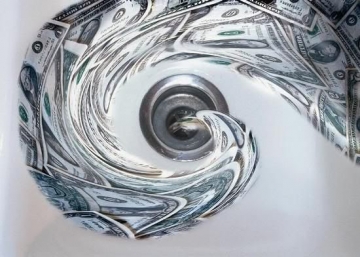
I’ve long written about how the Federal Reserve Board, responding to political pressure to keep the economy pumped up, and especially the stock market, has created a vast speculative bubble by shoveling out cheap (low-interest) money for years. A result: extreme corporate-debt levels. Now, as sales plunge in the pandemic, many companies that took out huge loans probably won’t be able to pay them back and will go bankrupt, exacerbating the financial slide in the COVID-19 crisis. What the mortgage meltdown was to Crash of 2008, corporate debt may be to the one unfolding now.
And because the Fed kept interest rates so low during the recent relative (if very uneven) prosperity it now lacks the weaponry it might have had to calm the economy.
It just took the unforeseen “black swan’’ of COVID-19 to unleash this inevitable financial crisis, which recalls Yogi Berra’s brilliant remark: “I never make predictions, especially about the future.’’
The oil-and-gas frackers are in particular peril as the Russians and Saudis engage in a price war that will drive world oil and gas prices down to such low levels that many heavily indebted U.S. frackers go out of business, perhaps taking many lenders with them, unless, of course, Washington enacts a vast bailout to protect them from their fecklessness.
xxx
So will a new wave of bailouts mostly leave average Americans behind?
That the gigantic federal debt is about to explode further with huge economic-relief measures makes it all the clearer that when things calm down, in a year or two or three, there will have to be big tax increases to help pay for swelling interest charges on the national debt. Years of an irresponsible mix of tax cuts and out-of-control spending, including health care (Medicaid and Medicare) in the Developed World’s most expensive and fragmented health-care system are putting federal finances on the road to disaster. Vast cost-plus military contracts add to the mighty river of red ink.
Sadly, the one great federal project that would make the country richer and stronger over the long run – rebuilding America’s decayed infrastructure – doesn’t seem to be on the agenda.
Trees and Panels
I hope that solar-energy firms around here are constantly on the lookout for already open land, such as parking lots around moribund shopping centers, as alternatives to cutting down woodlands to make space for solar panels. The recession we’re now in may well make more moribund shopping center parking lots available.
Trees, after all, are also important in addressing climate change, not to mention wildlife and green aesthetics that help humans’ health. There’s a natural temptation to use a lot of that woodland in exurban southern and western Rhode Island for solar farms. But there’s plenty of asphalt open space in our urban areas, and wide flat roofs on big-box stores.
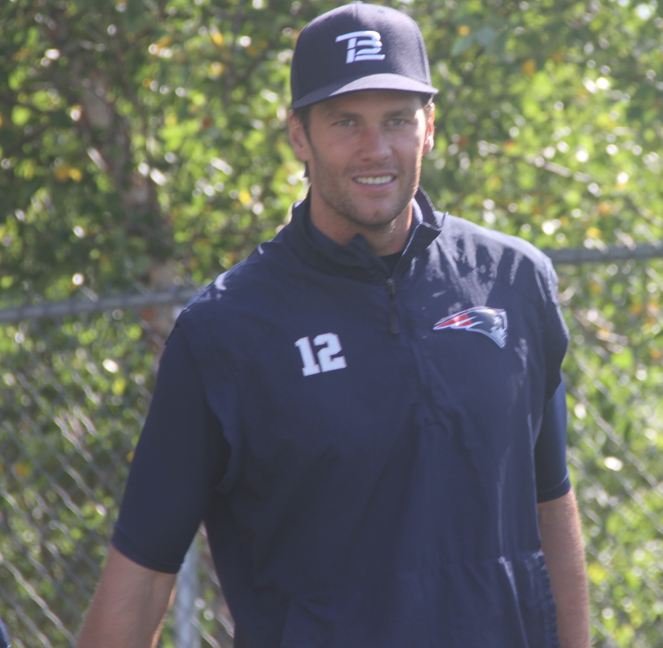
With the virus panic seeming to monopolize the world, reading about Tom Brady’s exiting The New England Patriots for the Tampa Bay Buccaneers is a weirdly welcome distraction. Most sportswriters have denounced the Patriots for not paying any price, bearing any burden to keep the legendary quarterback. They especially blame coach Bill Belichick, the great stone face, for apparently being unwilling (or unable) to keep Tom Terrific. Of course, the Kraft family, the owners, could have ordered that Mr. Brady be kept on by acceding to his contract demands, but they seemed happy to let the public blame Mr. Belichick.
But, hey, Mr. Brady is 42 and only has a couple of seasons left, and although he still looks like a movie star, he must be pretty banged up. The Pats probably made the right move.
If his replacement turns out to be superb, you might be surprised at how fast the current anguish fades in the minds of Patriots fans.

Aesthetic Achievement at URI
Now, this is happy news! Architectural critic and historian Willliam Morgan has written an exciting column, with splendid photos, in GoLocal about the University of Rhode Island’s gorgeous new Fascitelli Center for Advanced Engineering, along with commentary on some other university-architecture developments. It’s a very nice tour d’horizon.
URI, which has been on a roll during President David Dooley’s tenure, has done itself proud with this building. To read Mr. Morgan’s piece, please hit this link:
Fill Out Your Census Forms!
Most people should have received their U.S. Census forms by now. Please fill them out! Many things depend on their data – especially the determination of how many congressional districts each state gets and the extent of federal programs that benefit individual states, along with information essential to many local businesses. Barring an unexpected (and mysterious) population increase, Rhode Island may be down to one congressional seat in the 2022 election.
He Needs to Pick His Veep Soon
-- "As others noted, it's like the Spanish flu of 1918 and the stock market crash of 1929 at the same time, but overseen by Harding's total incompetence plus Nixon's pettiness and paranoia."
--- Princeton historian Keven Kruse on Twitter on the Trump administration
As we all seek home entertainment during our current house arrest, here’s an offering to put into your browser and whomp:
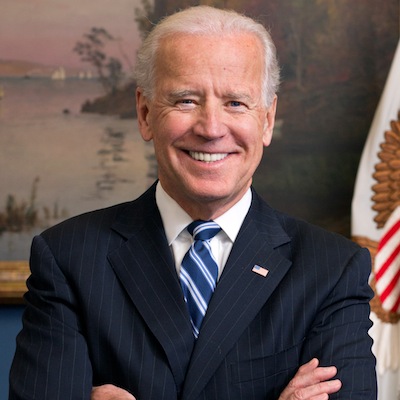
Now that Joe Biden seems to have virtually locked up the Democrats’ presidential nomination, he ought to identify as soon as he can his vice-presidential running mate. The general-election campaign needs to start now. Biden has said he’ll pick a woman. It must be somebody who clearly can take over as president, especially given Biden’s (77) age, and somebody who can relentlessly take the fight to Trump and his hilariously sycophantic Vice President Mike Pence.
And Biden ought to promise that he’d only serve one term.
Besides Senators Amy Klobuchar, Kamala Harris and Kirsten Gillibrand – all of whom ran for president in this cycle -- there’s been some talk about tapping New Mexico Gov. Michelle Lujan Grisham, a former congresswoman. She was also her state’s health director – an experience that might be particularly useful this year. But she’s far from a national figure.
At the rate things are going in this country, the public by the fall may feel we need another New Deal.
News Shrink
At times like this, you see vividly the effects of local-news-media layoffs, especially at surviving newspapers. Other than sports – all Brady all the time! – there’s mostly just COVID-19 news. (I plead guilty here too.) The dearth will further erode their readerships.
Come and Get It
I’ve been gradually throwing out things, but not nearly as fast as I should. In this editing decision, I try to think: “Would my daughters actually want this?” The answer is almost always no. So, after brief qualms, I usually throw out or give away old books or sticks of furniture I’ve been eyeing for execution and feel a tad more liberated.
But some stuff has a rich enough history that I’ll never get rid of it myself. For instance, I’ll always keep my beautiful but unread and probably close-to-worthless leather-bound first English edition of “The Works of Alphonse Daudet’’ (a late 19th Century French writer) because it was given to a murdered great uncle of mine called William Dale White as, I think, a college or high school graduation present. The family story was that he was stabbed to death by a “Mexican’’ in Chicago. But anyone who could fill in details has been dead for at least half a century.
Home Entertainment
One of my innumerable regrets is not learning how to play a musical instrument. When I was growing up, many kids in our town took outside lessons, or were taught by their parents, to play the piano. Both my parents played, though my father was better. With a little more practice, perhaps in a crunch he could have played in a cocktail lounge. We had a borrowed baby grand for years. My father also had a ukulele, which he’d play on the weekends, often with a cigarette in his mouth. It’s a strong memory I have of that kindly but rather cryptic man.
We even had an old pump organ, bought in a sort of junk and antique store in Marshfield, Mass., called Reed’s Ark. My father would play songs from the turn of the 20th Century on it.
Marshfield’s Wickedlocal noted of Reed’s Ark, a dusty firetrap in which you entered the 19th Century:
“Some 50 years ago, there was a fascinating store near the middle of Marshfield. You could prowl among antique junk or books or tools and occasionally find something worth actually buying.’’
Playing musical instruments and reading were primary middle-class home attractions, and, unlike with much of our electronic life now, active, not passive activities. (My God, we got a lot of magazines! Maybe eight a week, all jammed with ads.)
I’m thinking of this these days because we’re all spending a lot more time at home, whether we want to or not.
Who Am I? Oh, No!
DNA testing is, for many people, changing how they see their family history as they seek a clearer sense of “who am I?”
Libby Copeland’s new book, The Lost Family: How DNA Testing Is Upending Who We Are, is a very engaging exploration of how genetic testing, by enabling us to get accurate, if sometimes unsettling, knowledge of whom we came from, is changing family dynamics and raising difficult bioethical issues and social and psychological challenges as it reunites some relatives and distances others as it exposes family secrets. There are suspenseful detective stories in this elegantly written and superbly researched book – enough for several movies.
And the book gets us back to the old nature-vs.-nurture battle and asks what a family really is.