


Whitcomb: Would They Pay for It? Hurricane Hype; Unsightly Lines; ‘God Is Not Great’
GoLocalProv
Whitcomb: Would They Pay for It? Hurricane Hype; Unsightly Lines; ‘God Is Not Great’

“I wake to sleep, and take my waking slow.
I feel my fate in what I cannot fear.
GET THE LATEST BREAKING NEWS HERE -- SIGN UP FOR GOLOCAL FREE DAILY EBLASTI learn by going where I have to go.’’
-- From “The Waking,’’ by Theodore Roethke (1908-1963), American poet
“I know not with what weapons World War III will be fought, but World War IV will be fought with sticks and stones.”
― Albert Einstein (1879-1955), physicist whose name has become synonymous with genius
“Only the dead have seen the end of war.”
― Plato (about 428 to 347 B.C.), Greek philosopher
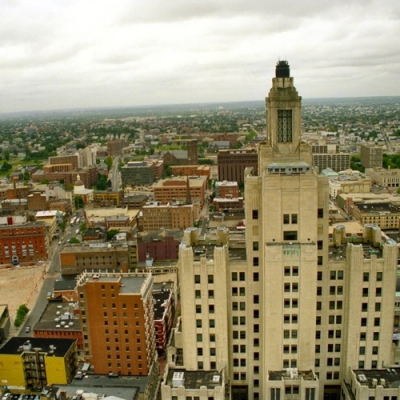
There’s a housing shortage for the poor and middle class these days, if not for the rich. The location and relative fame of the old pile (built in 1928) might attract a lot of people who’d like to live there.
Given the pandemic-accelerated move to remote work of many white-color jobs and the Amazon, etc.-driven flight to online retaining, housing would seem the only possible main use of the edifice, which has been vacant for eight years and is crumbing in some places. A restaurant, with of course a dramatic view, could go on top.
Assuming that $215 million could be raised to pay for what the building’s owner, High Rock Development LLC, has in mind, the plan would indeed be a boon for downtown Providence. But how much would taxpayers be willing to subsidize the conversion of “the Superman Building’’? GoLocal reports that High Rock will ask for state subsidies of $45 million and federal historic tax credits of $22 million. There would also be a tax-stabilization deal with the City of Providence.
Taxpayer anger over the state money provided to the collapsed 38 Studios video-game company helped doom the public subsidies that would have kept the Pawtucket Red Sox in Rhode Island. Would the same thing happen with the Industrial Trust Building, considered one of the most important endangered historic buildings in America?
If the building is indeed retrofitted under this proposed deal, could taxpayers get back some of the rental and/or condo-sale revenue, or proceeds from High Rock’s sale of the building to, say, Brown University for dorm rooms or other uses? And to elaborate on what I wrote above: If the High Rock plan were implemented, the apartments could be turned into condos and sold after five years, when Federal Historic Tax Credits expire.
Anyway, it will be interesting to see if Rhode Islanders, especially those living outside of Providence, love the Industrial Trust Building more than they did the PawSox, doomed by the sour taste left by the 38 Studios debacle.
xxx

But then, many people enjoy the hype and indeed like hurricanes, as long as their property isn’t damaged, and they get their electric power back within a day or two, which they usually do. Storms take people out of themselves by putting on a diverting show. And they jazz up late summer, when many people are tiring of the season, especially this year with its months of steamy weather. (How do people live in Florida year-round?)
Hurricane Carol (Aug. 31, 1954) left many New Englanders without juice for up to two weeks. These days, utilities pump up an oncoming storm to ensure that they get timely help from utilities outside the region and that they won’t be blamed in those rare cases in which a storm turns out to be worse than forecast, such as last year’s Tropical Storm Isaias in Connecticut.
My most vivid memory as a boy of hurricanes, besides watching a couple of trees being uprooted, is the sweet smell of Sterno, which we used for cooking after the power went out.
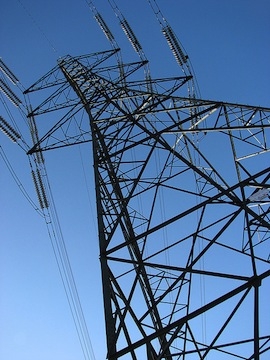
People in Providence’s Fox Point neighborhood, at the head of Narragansett Bay (or the head of the Providence River, if you prefer) who have fought for almost 20 years to get the utility lines from India Point Park to East Providence buried must have felt a pang when they read in GoLocal:
“The Scenic Aquidneck Coalition has announced the completion of a project to bury power and communication lines along Third Beach Road and Indian Avenue in Middletown, Rhode Island. Inspired by the 2017 Second Beach project, the Scenic Third Beach Project removes the rest of the poles on Sachuest Point along Third Beach and up Indian Avenue, promoting ‘coastal resiliency, restoring the historic landscape and enhancing the area’s scenic appeal.’’’
But the Middletown project only cost $4 million and was entirely paid with private donations. (There are plenty of rich individuals and organizations on Aquidneck Island.) The price of burying the Fox Point lines has risen to $33.9 million, and it remains uncertain how the cost would be shared among Providence and East Providence property taxpayers and statewide electricity ratepayers and taxpayers and National Grid – or other permutations and combinations.
I suspect that a big hurricane that takes out power for a long time would work wonders in getting those lines buried. Never waste a crisis.
Religiously Endangering the Public
The “religious exemption’’ for adults and their children to avoid vaccination has got to go. These people can go to public places, such as schools, without their COVID shots, thereby putting many others at risk.
For that matter, I’ve long been dubious about the tax exemption granted to some religious organizations that function as political organizations or money-making schemes for con-men preachers, some of them on television.
As COVID-19 drags on, in large part because of the ignorance, willfulness, superstitions and politics of the unvaccinated, I think of how it has reduced our mobility. Travel and other restrictions persist and can change with little warning, and many of us remain leery of being in crowds. And we must remember to take along face masks (which, let’s face it, do make it harder to breathe and be understood).
COVID has been the second major impediment to our freedom since 9/11, the security rules from which continue to make travel, especially air travel, more unpleasant than it was before that event while also making it more laborious to get into big buildings. The current Afghan disaster reminds us that we may not be able to cast off these controls in our lifetimes.
And encouraging paranoia has become public policy: “If you see something, say something….’’
Afghan Angst, Continued
As we watch the desperate effort to get people out of Afghanistan, it remains clear that President Biden should not have set such a specific deadline as Tuesday to evacuate the terrified throngs and that the American withdrawal seems to have been poorly organized, not that any such effort would have been smooth in that country, no matter when it came. Anyway, it’s too late now. The Taliban are in the driver’s seat (for now) and we’re way past the time that we have the stomach to restart the war.
Early last week Biden said: "Every day we're on the ground is another day we know that ISIS-K is seeking to target the airport and attack both U.S. and allied forces and innocent civilians.’’ ISIS-K is a violent opponent of the Taliban, which it considers too soft (!) in enforcing Sharia law. What a theology! It reminds me of Christopher Hitchens’s book God Is Not Great: How Religion Poisons Everything.
A couple of days after Biden’s warning, of course, came bloody ISIS-K attacks.
You might think that Biden, whose late son Beau served in Iraq, would have ordered more troops sent in to rescue Americans and other Westerners, as well as Afghans from around that country who had worked with us. This would have involved setting up at least several rescue centers in that grim land. But that would have had to have been done weeks ago, before U.S. intelligence picked up the imminence of the Afghan government’s collapse.
(And as I have written before, Taliban-supporting and Chinese client state Pakistan has been another factor in the disaster in Afghanistan.)
The president made a bad Trumpian mistake in not conferring with our closest allies about his decision not to extend the deadline. This is a time to tighten our links with long-established democracies in an era when autocracies are on the march. Always talk with our allies – early and often -- on any serious foreign-affairs matters. That will help keep them allies.
But then, Biden has long sought to leave Afghanistan and focus on rebuilding America. Interestingly, he led his remarks on the evacuation early last week with this, a reference to the Democrats $3.5 billion New Deal-style social program.
"We are a step closer to truly investing in the American people, positioning our economy for long-term growth and building an America that outcompetes the rest of the world.’’
Massachusetts Congressman Jake Auchincloss, who served as a Marine officer in Afghanistan, has written a thoughtful column on that disaster of a country. Hit this link:
xxx
“The whole system was set up in a way to enable contractors to rip off the government,” Linda Bilmes, an expert in government budgeting (especially military budgeting) at Harvard’s Kennedy School of Government, told NPR.
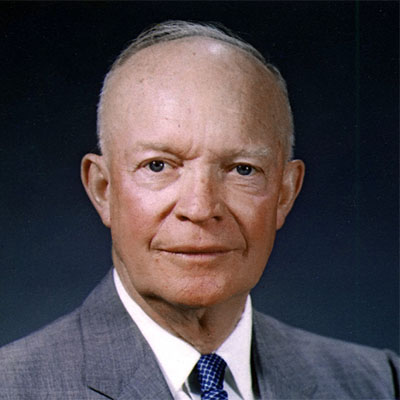
It might be a good time to read President Eisenhower’s farewell address reference to what he called “The Military-Industrial Complex”.
Let’s hope that we’ve learned how to better control contracts in future foreign expeditions. U.S. taxpayers have been cheated out of billions in Afghanistan, and the Afghan people didn’t get a lot of the aid they thought was coming because it was in effect siphoned off by corruption and not just by Afghan officials. Whatever the outcome of a war, U.S. contractors always make a killing, so to speak.
xxx
Meanwhile, a far, far more fearsome threat to democracy than Islamic terrorists is the increasingly Orwellian police state China, which is extending its tyranny with, for example, secret Chinese operations in countries where massive Chinese investments have made governments amenable to cooperation with a government whose techniques include concentration camps for dissidents and others. One such facility is a Chinese-run prison in Dubai, where members of the ethnic minority Uyghurs have been held.
xxx
The news media still seem culturally dominated by the fast-expiring Baby Boomers, and by Generation X, at least as suggested by the publicity accorded the death at 80 of Rolling Stones drummer Charlie Watts. What might he mean to someone, say, 30?
Changing Small Town
The other day I looked at municipal reports of my hometown, Cohasset, Mass., in the late ‘50s, when I lived there. There have been big changes since then, among them that Republicans outnumbered Democrats by more than 5 to 1, reflecting the old allegiances of small-town New England Yankees back then: The town’s Democratic now. And they called the town dump the “town dump’’ instead of the euphemism of Cohasset’s current “Recycling Transfer Station’’.
The old reports’ language was a bit more formal than now, indeed sort of Victorian, to wit, in the late ‘50s: “That the Selectmen are instructed to advise His Excellency the Governor and our Senators and Representatives….” And nicknames are frequently used now in the reports, a practice unheard of back then.
There were also such reminders of the passage of time as Memorial Day being called Decoration Day (in my house we still called Veterans Day Armistice Day back then) and a plan to spray a wetland with DDT, the environmental menace that wouldn’t be banned until 1972. But perhaps the most noticeable change was that most of the names of town officers in the reports in the late ‘50s were WASP, and now there are lots of Irish and Italian names, and some names whose ethnicity is hard to figure. Those once-city dwellers left the city to move to the suburbs, including now-rich ones such as Cohasset.
But I was charmed to read that the town still has that old colonial occupation of “fence viewers,’’ charged with dealing with property disputes.
You can learn a bit of local culture and sociology by reading old small-town reports.
Too-Neat Memoirs
“Memoirs are a type of fiction to begin with.”
-- Jim Carrey, actor, comedian and writer
Memoirs remain all the rage in publishing. A lot are good tales, but to call them “memoirs’’ might delude many readers into thinking that authors aren’t making up large parts of them. I’ve read one memoir after another where lots of dialogue is presented as if the writer actually wrote down what was said right after it was said, as if in preparation for publication.
In fact, all too often it sounds as if they just made it up to fit in with the memoir’s narrative and theme to make the book saleable. In one popular memoir, The Glass Castle, by Jeannette Walls, she quotes herself as saying at age three “Mom says I’m mature for my age” and there are lots of other quotations of what she and those around her said over the years, from her early childhood on. Remarkable, remarkable, if true…. Or maybe her mother and others reported back to her later what she said?
We’ll never know. Maybe if they’d just call their memoirs novels.
Of course, many, if not most memoirs are about overcoming terrible childhoods. In Ms. Walls’s book, her parents were clearly crazy and living in fantasy worlds.
I myself would find it very difficult to write a memoir. On the one hand, I’d really want it to be accurate, but on the other I’d rather not impose my numerous painful experiences on others, assuming they’d believe my telling of them.
Anyway, my first memory is happy -- watching an old man throw bread up to pelicans at Siesta Key, Florida. But maybe he wasn’t old.
I don’t remember any dialogue.
xxx

He’s going to keep this lucrative personality-cult racket going as long as he can! As Calvin Coolidge said: “The business of America is business.’’
But Bad for Your Health
My very good friend Llewellyn King wrote a charming piece about journalism that brought back memories. Certainly, the adventures and engagement with the world that it offers can be enticing.
Hit this link to read his column:
But I tend to remember the drawbacks more than perhaps I should: The long and unpredictable hours, the sometimes forbidding deadlines and other pressures that at least used to lead to heavy drinking and smoking, and even, for some reporters, physical danger. (No wonder newsrooms were smoked-filled.) It can be a hard life, and too often thankless for the effort and time involved. But it can also from time to time be very amusing, and you get to see people at their best and worse.
For a memorable look at the joys of journalism, there’s H.L. Mencken’s (1880-1956) book Newspaper Days, about his first years as a journalist in the zoo of ragtime Baltimore. Much of it may be even be accurate, and lots of it is hilarious.