


100 Academics Endorse Sanders' College for All Act
GoLocalProv News Team
100 Academics Endorse Sanders' College for All Act
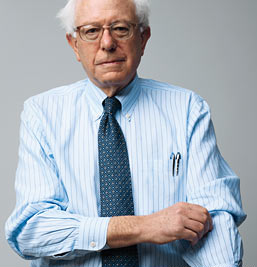
Sanders will appear in a Democratic primary debate on Thursday night.
As GoLocalProv reported, the legislation would eliminate tuition and fees at all public four-year colleges and universities, as well as, make community colleges, trade schools, and apprenticeship programs tuition-and fee-free for all.
GET THE LATEST BREAKING NEWS HERE -- SIGN UP FOR GOLOCAL FREE DAILY EBLAST“To some, this will appear too radical. To us, it is the bold solution we need. It is high time we enacted policies that benefit the real job creators—the ones on Main Street. The time has come to cancel student loan debt and to allow future generations to graduate from college debt free,” wrote the group in a letter to U.S. Congress.
Read the Letter Here
Sanders responded to the groups’ letter by saying, “These scholars are saying what millions of young people already know from their own experience: the Wall Street crash of 2008 devastated the economic prospects of an entire generation. If we do not act boldly and decisively, these young people will face lower living standards than those their parents enjoyed. Our College for All Act will boost our economy and offer real opportunity for our people. And the cost will be borne entirely by speculators on Wall Street.”
Sanders was joined in introducing the legislation by Representative Pramila Jayapal and Representative Illhan Omar in making the legislation.
The Bill
Under the College for All Act, the average student loan borrower would save about $3,000 a year, and the economy would get a boost of approximately $1 trillion over 10 years.
The proposal also eliminates all $1.6 trillion in student debt for 45 million Americans.
The estimated $2.2 trillion cost of this bill would be paid for entirely by a tax on Wall Street speculation.
The members of Congress propose imposing a small Wall Street speculation tax of just 0.5 percent on stock trades (50 cents for every $100 worth of stock), a 0.1 percent fee on bonds, and a 0.005 percent fee on derivatives, which would raise up to $2.4 trillion over the next decade.