


RI Congressman is 1 of 35 Veteran Legislators Who Never Passed a Bill
Kate Nagle, GoLocal Contributor
RI Congressman is 1 of 35 Veteran Legislators Who Never Passed a Bill
Rhode Island Congressman Jim Langevin, who was first elected to the U.S House of Representatives in 2000, is one of 35 veteran legislators in Washington, D.C. who have never passed a bill.
According to data compiled by "Find the Best," 35 returning members of Congress -- not freshman -- have never had legislation they were the primary sponsor of signed into law.
Read About the Full List of 35 Here -- Read Rest of Story Below Graphic
The graphic above shows what Langevin has sponsored during the 113th Congress. In total, he has sponsored 168 pieces of legislation and cosponsored 2,226 – 112 of which have become law – during his tenure.
GET THE LATEST BREAKING NEWS HERE -- SIGN UP FOR GOLOCAL FREE DAILY EBLAST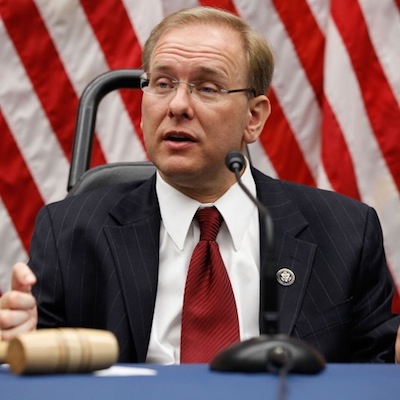
"Congressman Langevin has been in the political minority for much of his time in the House. This makes it difficult to pass legislation, especially with all the polarization between Republicans and Democrats. If you are not in the majority, your bills are going to end up in oblivion," said Darrell West, Vice President of Governance Studies at Brookings.
"What members do in that situation is to make any impact through other means such as constituent service, earmarks, or cosponsored legislation. That is the way to do things for your state even when your party is out of power."
Politics, and Power
Jennifer Duffy with the Cook Political Report outlined the power dynamics Langevin has faced during his seven terms in office.
"Langevin has been in the minority for 10 of the 14 years he has served in the House. Plus, his committee assignments don't really lend themselves to being able to push bills that don't start with the chairman or ranking member. The leadership of both parties has taken a more prominent role in recent years in determining what gets to the floor, which doesn't help rank and file members," said Duffy.
'Finally, it is important to look at the bills passed by many legislators," continued Duffy. " A lot of them name post offices or commemorate events. While there is certainly a place for such legislation, it's not as if 400 of the 435 members of the House have sponsored legislation that has set major policy or has had great impact on the nation, their state or even their district."
Brown University Professor of Political Science Wendy Schiller pointed out that power aside, there is an inherent numbers game in the sheer volume of introductions -- and that individual pieces of legislation often end up as part of a larger bill package.
"There are close to 10,000 bills sponsored in each Congress (2 year session) so the competition is fierce to get a bill on the agenda, or get it folded into an omnibus bill and then claim credit for it. And then it has to pass the Senate in some form. Typically the House members who get bills passed are subcommittee or full committee chairpersons, or party leaders and even then they are folded into larger bills. And in the last Congress, which was the least productive in modern history, no one got bills passed," said Schiller.
"So Representative Langevin is not alone in not passing any bills, but the larger questions is can he point to other accomplishments such as getting legislative language in another bill, or securing funding for his district that would offset his failure to pass a bill? And if he has succeeded in those arenas, RI voters need to know more about it," continued Schiller.
Defending His Record

"Just a few examples," continued Geoghegan, who then outlined them as follows:
• Within the Child and Family Services Improvement and Innovation Act, which was signed into law in September 2011, Congressman Langevin authored a proposal to address identity theft among foster youth. His provision mandates free credit checks for foster youth over 16 years and requires that they receive assistance in clearing inaccuracies from their records.
• Langevin authored the Lifespan Respite Care Act in the 107th Congress and reintroduced it in the 108th. To increase its chances of passage, Langevin worked with Republican Congressman Mike Ferguson, who introduced it in the 109th Congress. The bill passed and was signed into law in 2006. (It’s also important to note that the Congressman has long worked on caregiver issues, and in the last session introduced a bill specifically to support veteran caregivers)
• In his role on the Seapower and Projection Forces Subcommittee of the House Armed Services Committee, Langevin fought for and successfully included a provision that would allow for advance procurement funding for Virginia Class Submarines – which are constructed by Electric Boat in Quonset. He also successfully included a proposal that increased the Virginia Class procurement from one to two per year.
• As co-chair of the Congressional Career and Technical Education Caucus, Langevin successfully led the charge for strong funding for career and technical education. Last year, with his Republican co-chair Rep. GT Thompson, Langevin saw that fight through to an increase of $52 million in Perkins Act dollars within the FY14 Consolidated Appropriations Act.
• Langevin amended the FY14 Defense Appropriations Act to double the funding for Spinal Cord research to $30 million.
• Langevin, who created the Cybersecurity Caucus and is considered a national leader on cyber, co-chaired the Center for Strategic and International Studies’ Commission on Cybersecurity for the 44th Presidency. The commission provided a blueprint to President Obama for improving cybersecurity in this country. The President adopted several recommendations, including the establishment of an office for cybersecurity in the National Security Council. Congressman Langevin also introduced the first piece of cybersecurity legislation to pass either chamber of Congress, and he remains committed in this session to seeing our nation’s critical technology infrastructure better protected.
• And just last year, the Wood-Pawcatuck Watershed Protection Act – which Langevin introduced in 2010 - passed as part of the National Defense Authorization Act. technology center!
14 Biggest Political Stories of 2014

Cianci Runs Again
It was the long-awaited decision that ended months of speculation -- two-time former Mayor of Providence Vincent "Buddy" Cianci announced his intentions to run a third time.
Cianci, the longest serving Mayor in the history of Providence, claimed a mountain of achievements in his quest to regain the office of the Capitol city -- but was also infamous for having been forced to resign from office, and for serving four years in federal prison for running a criminal enterprise.
However, it was Cianci's decision to run as an Independent -- and not enter the Democratic primary - that landed Cianci on the 2014 blunders list.

State House Raid
It was a dark day in Rhode Island's history as the State House was raided by federal and state law enforcement officials for the very first time in March.
On March 21, a contingent of dozens of State Police officers, as well as Federal Bureau of Investigation and Internal Revenue Service officers swept into the iconic Rhode Island Capitol to raid files of the Speaker of the House - Gordon Fox.
"I've been around 27 years. We've arrested people at the State House, but I can't remember something like this before," said Rhode Island State Police Colonel Steve O’Donnell.

Raimondo's Historic Win
Governor-elect Gina Raimondo's victory in November to become Rhode Island's first female Governor is one of 2014's top political stories.
With 40.7 percent of the vote, Raimondo bested challengers Republican Allan Fung, who garnered 36.2% of the vote -- and Moderate Party candidate Bob Healy who got 21.4%.
The first newly elected Democrat in Rhode Island since 1992, Raimondo grew up in Scituate, boasting impressive educational credentials, graduating as Valedictorian from La Salle High School, and then going on to graduate from Yale, Harvard, and Oxford. Raimondo founded venture capital company Point Judith Capital before being elected General Treasurer in 2010.
Photo credit: Richard McCaffrey

Clay Pell's Car Problems
Following the revelation that he had failed to vote in more than half of the elections since he was eligible, democratic gubernatorial candidate Clay Pell's missing car (not once -- but twice) became one of 2014's biggest political stories.
The Pell campaign acknowledged the episode in a statement in March, in which Pell acknowledged contacting the police that week -- as well as another time when the car went missing the previous December.
The incident did not go away however, as social media continued to bring up the situation -- questioning whether between the voting, and the car, if Pell, the youngest candidate in the race, was ready to lead the state.
Pell finished third in the Democratic primary in September.

Former ProCAP Head's Role
One of the biggest political stories of 2014 was when John Hope Settlement House -- whose board chair is State Rep Anastasia Williams -- opted to go with former discredited head of Providence Community Action Program (ProCAP) Frank Corbishley to be interim Executive Director.
Corbishley was forced to resign from ProCAP in 2011 after a multi-month investigation by GoLocalProv. He had served in the role of Executive Director since 1991 when then-Mayor of Providence Buddy Cianci named him to the position. During the investigations that found ProCAP to be severely mismanaged, Providence Mayoral candidate Michael Solomon chaired the ProCAP board.
GoLocalProv learned that in a heated board fight at the South Providence’ John Hope Settlement Board, Williams forced Executive Director Taino Palermo out and replaced him with Corbishley.
The group called "Concerned Citizens for John Hope" continues to bring up issues it sees with the house.

Anti-Cianci Memo Leaked
In September, GoLocalProv obtained a copy of a confidential memo outlining the strategy by a group of predominantly East Side residents to create a secret fund of $1 million to defeat Buddy Cianci for Mayor of Providence in November.
According to a confidential memo emailed by failed Providence Mayoral candidate Lorne Adrain to a group of 29 including a number of former top level staffers to David Cicilline, the group’s goal was to create a 501(c)(4) fund – a fund that would not have to disclose its members.
The individuals listed on the memo included: top Washington Trust Banker Ned Handy, former top David Cicilline aides Carol Grant and Deb Brayton, former Providence Journal Editor of the Editorial Page Bob Whitcomb, and three-time candidate for Governor Myrth York, to name a few.

Fung's Ohio Move
The move by the Republican gubernatorial candidates Allan Fung's campaign to shoot a commercial about small business in Rhode Island -- in Ohio -- not only landed Fung on the biggest blunders list, it was one of 2014's top political stories.
Fung's second quarter filing with the Rhode Island Board of Elections showed an expenditure to the Ohio-based Strategy Group (and a $139 hotel stay at an Embassy Suites in Columbus, OH early in June), as well as showed campaign contributions including $7,350 from partners or employees of the Strategy Group over the same time period.
The Strategy Group is a national Republican firm that has produced award-winning ads for Michelle Bachman, the "Restore America" campaign, and for multiple U.S. congressional and statewide campaigns. Six Strategy staff members maxed out with $1000 contributions to Fung during the reporting period -- when Fung was purportedly shooting the commercial in Ohio.

Elorza Denies Smiley Deal
The formal announcement was made two weeks prior to the Democratic primary that Brett Smiley would be dropping out of the race for Providence Mayor and throwing his support behind Democrat Jorge Elorza, but the candidates dodged questions about whether a back room deal had been struck or what an Elorza/Smiley "dual ticket" would look like.
“What we have agreed to is that neither of us want to see our city go backwards and the handshake that we put on the deal was that Buddy Cianci and Mike Solomon cannot be elected mayor because it would bring our city backwards,” said Smiley.
“Brett and I had a discussion and the conversation entailed how we are going to win in September and how we are going to win in November. I look forward to working with Brett and I look forward to having his advice and his council,” said Elorza.
Now, Smiley has been tapped to be Mayor-elect Elorza's Chief Operating Officer.

Solomon's Ethics
State Ethics Commission filings by City Council President Michael Solomon showed the Providence Mayoral candidate had failed to report the correct information for his Conrad building PEDP loan between 2005 and 2010, and while an amended filing in 2012 corrected two of the years, other outstanding issues remained
The Conrad Building property, of which Solomon has an outstanding Providence city loan dating back to 1988 as a minority shareholder, was listed at its location at 385 Westminster Street in his ethics reports for 2009 through 2013. The Hummel Report's Jim Hummel first reported in that Solomon still owed the city 24 years later on the $500,000 loan
However, Solomon's reports for 2005 and 2006 listed "1355 Westminster"; 2007 lists no property on Westminster, and 2008 and 2009 list "1150 Westminster" -- and nothing at 385 Westminster.
More ethics charges -- and amendments -- followed suit, and Solomon was ultimately fined by the ethics commission, a week and a half after the election.

Corso's Bar + 38 Studios
In May, a former subcontractor for 38 Studios came forth with allegations that his firm was ordered to work on former Speaker of the House Gordon Fox's business colleague Michael Corso's bar as part of their contract - and produced what he said is documentation to prove it.
Project manager Michael Rossi with SyNet, Inc. revealed a budget for work which he says shows at $25,000 line item for work to be done at Corso's Tazza Cafe in 2011 -- under a job order for the failed 38 Studios.
Warwick-based SyNet bills itself as "the premier design-build low voltage contractor of structured cabling, access control, surveillance and audio visual systems in the Northeast."

Crime in Providence
While crime numbers in Providence might have improved in recent years, Providence's position nationally kept dropping under the Taveras administration.
A study released in February by Congressional Quarterly analyzed murders, rapes, robbery, aggravated assaults, burglaries and motor vehicle thefts in more than 400 cities -- and since Taveras took over for Mayor for now Congressman David Cicilline, Providence has dropped from 44 spots in the national rankings and is now among the cities in the top 25% for serious crime.
During the four year period, Providence dropped from being ranked 314th in the United States to a ranking of 358th. In a bruising Democratic gubernatorial primary, the issue of crime in the city -- and how Taveras performed at the helm -- was a major point of contention.

RhodeMap RI Battle
The battle over RhodeMap RI began heating up in mid-November between supporters of the state's new economic planning initiative -- and opponents who began calling on the 35-member RhodeMap RI consortium to postpone adoption of its controversial plan until a more rigorous public debate ensued.
RhodeMap RI, billed itself as a "coordinated and forward-looking effort by the state to make Rhode Island a better place to live and work by mobilizing state and community assets in a whole new way. Through RhodeMap RI, the State seeks to strengthen our economy, meet current and future housing needs, and plan for future growth through the development of an integrated plan that will also include strategies for transportation, land use and environmental protection."
"What we see is a coordinated national-state-local scheme where federal agencies are poised to seize unprecedented levels of control over local land-use and housing issues," commented Mike Stenhouse, CEO for the Center for Freedom and Prosperity. "Property owners and local officials are about to lose sovereignty over their own affairs to the federal government."
A hearing in December brought opponents out in force, but the plan was ultimately adopted. However, the debate is sure to be far from over.

Elorza Lifts Apology
The revelation that then-Mayoral candidate Jorge Elorza had plagiarized an apology for getting caught stealing when he was younger was just one of 2014's top political stories that was also a blunder.
When first asked why Elorza brought up the arrest, his campaign manager, Marisa O’Gara said, “Much of his story is about his struggles as a young man, and how he turned his life around. He chose to be forthright about this because he believes strongly in transparency and ethics, and he wants to be completely upfront with the people of Providence. He wants them to hear directly from him how these struggles shaped his vision for Providence.”
Asked tonight why his confession was nearly identical to [Central Falls Mayor James] Diossa’s, O’Gara said an advisor had drafted the letter. She confirmed the advisor, whom she did not name, had also worked for Diossa. She said the campaign had not been aware of the similarity in language.
“A former advisor helped our campaign write the first draft of this letter, and this same advisor had also worked on James Diossa’s letter. Jorge relayed his personal story, our advisor presented us with this language, and Jorge felt it accurately described his personal struggle. If we had known the language was the same as Mayor Diossa's, we would have immediately corrected it. What was really important to Jorge was disclosing the truth about the mistakes he made as a young man, mistakes about which he has been forthright and upfront,” O’Gara said.

38 Studios Battle Con't
In a political story that spanned most of the year, the issue of investigating the failed 38 Studios deal -- and whether to pay back the bonds -- dominated General Assembly business, campaign messaging, and public attention throughout 2014.
From whether or not the SEC should investigate, to an 11th hour hearing during the General Assembly session, opponents continued to line up to battle paying back the beleaguered bonds -- but under threat of a diminished credit rating, Rhode Island leaders opted to once again pay back the obligation.


