


Bishop: Justice Isn’t Made at the Borders
Brian Bishop, GoLocalProv Guest MINDSETTER™
Bishop: Justice Isn’t Made at the Borders
B. a legal guardian;
C. an adult relative (brother, sister, aunt, uncle, or grandparent);
GET THE LATEST BREAKING NEWS HERE -- SIGN UP FOR GOLOCAL FREE DAILY EBLASTD. an adult individual or entity designated by the parent or legal guardian as capable and willing to care for the minor's well-being in (i) a declaration signed under penalty of perjury before an immigration or consular officer or (ii) such other document(s) that establish(es) to the satisfaction of the INS, in its discretion, the affiant's paternity or guardianship;
E. a licensed program willing to accept legal custody; or
F. an adult individual or entity seeking custody, in the discretion of the INS, when it appears that there is no other likely alternative to long-term detention and family reunification does not appear to be a reasonable possibility."
This is the list, in order of preference, to whom a minor in the custody of immigration officials is to be released expeditiously. It is part of the settlement of Flores v Reno between the Clinton administration and immigrant minors who sued as a class over their detention. Following disagreement over whether the settlement applied to minors who arrived with their parents and implied a duty to release parents to take custody of their children, the 9th circuit recognized the class had in fact argued somewhat to the contrary, that “release to adults other than their parents was preferable to remaining in custody until their parents could come get them”. That argument can thus be imputed neither to the Obama administration, nor the Trump administration, both of whom instituted that practice, but to those representing immigrant children.
If nothing else, this episode cautions against the way in which the class action suits ultimately compromise the future rights of the class. The arguments, in that case, were motivated by an explicit recognition of the difficulties for unaccompanied minors. Yet the class certified was “all minors apprehended by the INS [now ICE]”. This demonstrates that unintended consequences flow from court settlements just as readily as from legislation and regulation.
Poetic Justice and ‘Popetic’ Justice
Rhode Island has its own history demonstrating how administration through court orders is classically fighting the last war, not the next one. After a long harangue with the state over a large mill pond that he owned but was effectively required to make available for public use, former State Representative Vincent Mesolella opened the dam, which he also owned, draining the pond. DEM rushed to court for an order to make him close the dam. He did just that and then it rained 2 inches the following weekend . . . The same cottage owners who were amongst those egging DEM on to force the dam closed were suddenly faced with an imminent flood. But the court order DEM had obtained was for Mesolella to close the dam and he refused to open it.
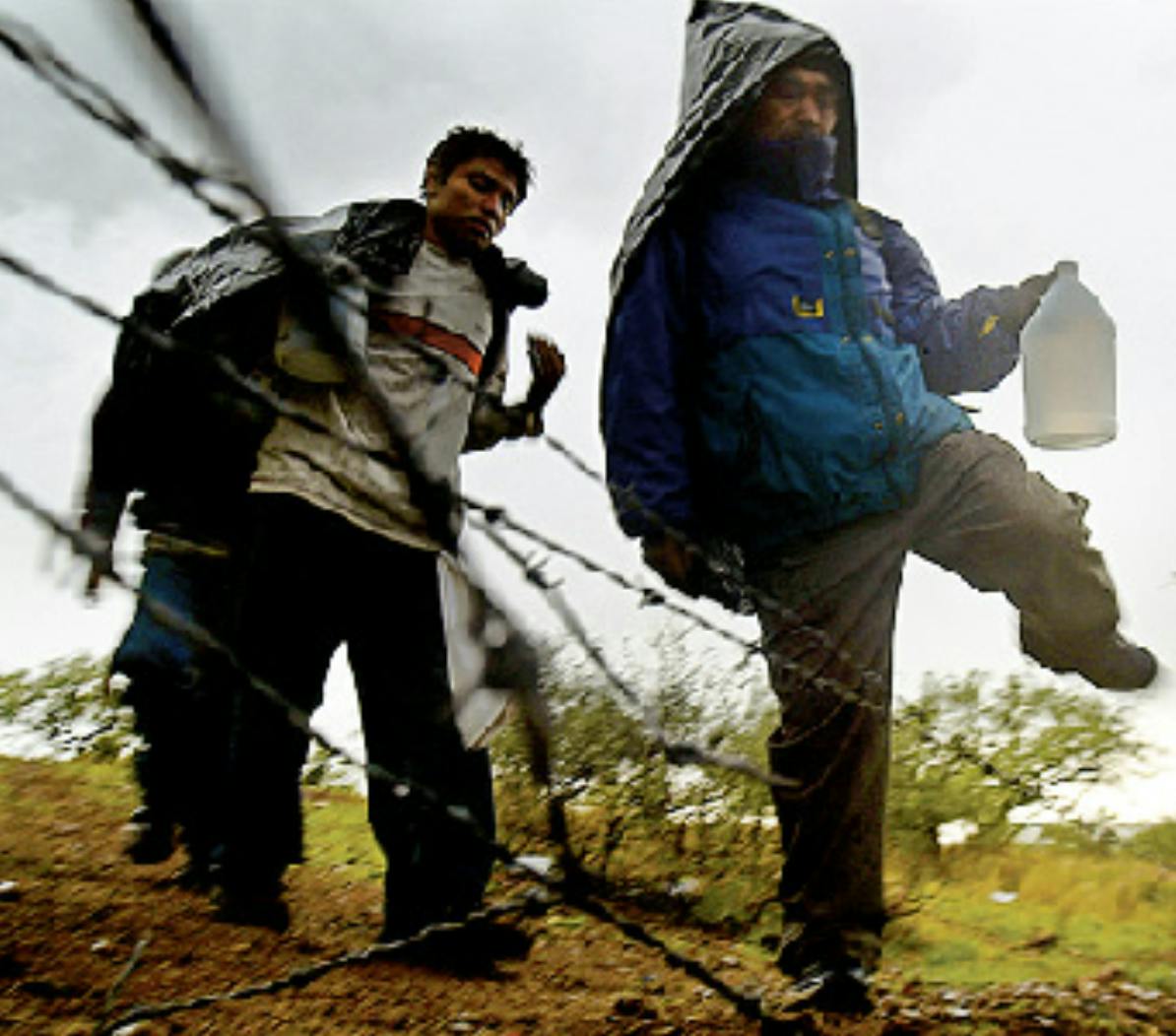
Besides justice, sometimes there is poetic justice. It’s not clear that either is on display at our southern border, but there is a sober caution against counting on various pontifications on principle to administer the real world. Speaking of pontiffs, the Catholic Church has been consistent in its views on immigration and Pope Francis was paying special attention to the troubles of immigrant children long before the Trump administration – who knew they had trouble before the Trump administration. This is not to join in the clamor from Trump’s supporters who insist that the Obama administration kept children in ‘cages’ too. Rather it is to focus on a the detention of children at a scale that dwarf’s the 2000 plus who have been separated from parents in the last two months during the ‘busy season’ for illegal border crossing.
Indeed, ICE officials are housing 10,000 other children. The vast majority of this broader wave of minors were “unaccompanied” – at least by any adults who would qualify for their custody under the court settlement. And those detained represent but a small part of the flow of such minors that reached over 60,000 in 2014. It was in 2014 that Pope Francis wrote: “This humanitarian emergency requires, as a first urgent measure, these children be welcomed and protected. These measures, however, will not be sufficient, unless they are accompanied by policies that inform people about the dangers of such a journey and, above all, that promote development in their countries of origin.”
The Pope at least was measured in recognizing that the unstable societies in Central America were the root of the problem leading to family separation and dangerous trafficking of children on a scale that makes the recent foibles of Homeland Security at the border pale by comparison. Some have pointed out fairly that Americans can feel more compunction to decry separations carried out by our government in our name. While that is true, it retains a focus on “moral perfection by proximity” (credit Lant Pritchett) that confounds our immigration policy. If you make it to our border we spend a lot of time wringing our hands over what to do, but if you are stuck in a hell hole you are on your own.
The real relation of immigration to family separation

Indeed, the tidier habit of a father who left the home country to work, sending remittances to the family in the home country, has been a notable form of immigration. Sometimes this was by way of ‘leading the way’, where the rest of the family would follow; other times it supported the family, improved their own and, in aggregate, the home country’s development with unification periodically or ultimately through the return home of the working parent.
It would appear, at least anecdotally from this Chicago Tribune story, that the modern demographic of single-parent households has created a more complex version of family separation. But if the circumstances of the home country have become so fraught with violence and bereft of opportunity that it is necessary for a single parent to leave the child to create some kind of beachhead here – legally or otherwise – for the child, or to send the child alone toward relatives in the states, is family separation really a second tier issue? How traumatic can it be compared to the lives we are assured these asylum seekers are escaping?
Solutions are for the wrong problem
The predominant action item of the recent executive order by the President was directing the Justice Department to seek to reopen the settlement in Flores v Reno to provide more flexibility for keeping families together during detention. Meanwhile, Cruz in the Senate and Meadows in the house have new legislative proposals for addressing the conundrum. Ironically, though, what remains unaddressed are the forces that have lead some 60,000 unaccompanied minors a year to cross our borders, even while family separation is a sudden raison d’etre of the public mood.
These matters are hard to address. Much harder than opportunistic PR visits to facilities that were full of kids before the cameras got shined on them and will remain full of kids when the reporters and congressmen slap themselves on the back and go home. Much harder to address than embarrassing some judge into modifying a crappy consent decree they had ordained.
Some worry that how we treat families at the border will encourage more or less to cross it – depending on their views on immigration. But our focus should instead be not on those who make it to our border, but those left behind. America’s drug war has probably done more damage through creating thriving black markets and smuggling trade throughout Central America and that is something really important that Sessions can be faulted for ignoring, rather than blaming him for the administrative yin and yang at the border.

GoLocal Statewide Poll - Conducted by Harvard's Della Volpe - June, 2018

Registered Voters
Q1: Are you registered to vote in Rhode Island?
Total 501 100%
Yes: 501 100%
No: 0 0%
Don't know: 0 0%
Gender
Q2: Are you ...
Total
Total: 100%
Male: 44%
Female: 56%
Age
Q3: In which age group are you?
18-24: 7%
25-34: 16%
35-44: 15%
45-54: 20%
55-64: 17%
65+ 25%
Political Party
Q4: When it comes to voting, do you consider yourself to be affiliated with the Democratic Party, the Republican Party, Moderate, or Unaffiliated with a major party?
Democrat: 38%
Republican:14%
Moderate: 6%
Unaffiliated: 39%
Don't know/Refused: 3%
Likely Voters
Q5: Next year, in November of 2018, there will be a statewide general election for Governor and many other state offices. How likely is it that you will vote in this election? Will you definitely be voting, will you probably be voting, are you 50-50...
Definitely be voting.............................. 81%
Probably be voting............................... 19%
All others............................................. 0%
Top Issue
Q6: What would you say is the number one problem facing Rhode Island that you would like the Governor to address?
Taxes.................................................. .18%
Jobs and economy.............................. 16%
State budget.........................................11%
Roads...................................................10%
Education............................................ 8%
Healthcare........................................... 5%
Corruption/Public integrity.................... 4%
Immigration.......................................... 4%
Housing.............................................. ..2%
Governor............................................. ..2%
Homelessness.......................................1%
Other.. ............................................... 14%
Don’t know.......................................... 6%
Direction
Q7: In general, would you say things in Rhode Island are headed in the right direction or are they off on the wrong track?
Right track........................................... 19%
Wrong track......................................... 36%
Mixed.................................................. 45%
Optimism
Q8: Thinking ahead several years, is your outlook about Rhode Island more optimistic or more pessimistic?
Optimistic............................................ 52%
Pessimistic...........................................48%
Finances
Q9: Over the last three years or so, has your family's financial situation improved, gotten worse, or not changed at all?
Changed for the better......................... 24%
Changed for the worse......................... 33%
Not changed at all................................ 43%
Governor
Q10: Which of the following comes closest to your view regarding each of the following potential candidates for governor of Rhode Island?
Gina Raimondo, a Democrat
I am sure to vote for her: 9%
There is a good chance I will vote for her: 19%
It is possible that I vote for her: 24%
It is unlikely that I will vote for her: 18%
I will never vote for her: 31%
Governor
Q11: Which of the following comes closest to your view regarding each of the following potential candidates for governor of Rhode Island?
Matt Brown, a Democrat
I am sure to vote for him: 4%
There is a good chance I will vote for him: 8%
It is possible that I vote for him: 40%
It is unlikely that I will vote for him: 30%
I will never vote for him: 17%
Governor
Q12: Which of the following comes closest to your view regarding each of the following potential candidates for governor of Rhode Island?
Spencer Dickinson, a Democrat
I am sure to vote for him: 3%
There is a good chance I will vote for him: 7%
It is possible that I vote for him: 37%
It is unlikely that I will vote for him: 35%
I will never vote for him: 18%
Governor
Q13: Which of the following comes closest to your view regarding each of the following potential candidates for governor of Rhode Island?
Paul Roselli, a Democrat
I am sure to vote for him: 2%
There is a good chance I will vote for him: 7%
It is possible that I vote for him: 35%
It is unlikely that I will vote for him: 37%
I will never vote for him: 19%
Governor
Q14: Which of the following comes closest to your view regarding each of the following potential candidates for governor of Rhode Island?
Allan Fung, a Republican
I am sure to vote for him: 7%
There is a good chance I will vote for him: 18%
It is possible that I vote for him: 28%
It is unlikely that I will vote for him: 25%
I will never vote for him: 21%
Governor
Q15: Which of the following comes closest to your view regarding each of the following potential candidates for governor of Rhode Island?
Patricia Morgan, a Republican
I am sure to vote for her: 3%
There is a good chance I will vote for her.: 9%
It is possible that I vote for her: 32%
It is unlikely that I will vote for her: 35%
I will never vote for her: 21%
Governor
Q16: Which of the following comes closest to your view regarding each of the following potential candidates for governor of Rhode Island?
Giovanni Feroce, a Republican
I am sure to vote for him: 2%
There is a good chance I will vote for him: 5%
It is possible that I vote for him: 24%
It is unlikely that I will vote for him: 35%
I will never vote for him: 34%
Governor
Q17: Which of the following comes closest to your view regarding each of the following potential candidates for governor of Rhode Island?
Luis-Daniel Muñoz, an Independent
I am sure to vote for him: 3%
There is a good chance I will vote for him: 6%
It is possible that I vote for him: 33%
It is unlikely that I will vote for him: 38%
I will never vote for him: 21%
Governor
Q18: Which of the following comes closest to your view regarding each of the following potential candidates for governor of Rhode Island?
Joe Trillo, an Independent
I am sure to vote for him: 1%
There is a good chance I will vote for him: 8%
It is possible that I vote for him: 37%
It is unlikely that I will vote for him: 34%
I will never vote for him: 19%
Governor
Q20: If the election for Governor were held today and the candidates were: Democrat Gina Raimondo, Republican Allan Fung and Independent Joe Trillo - for whom would you vote?
Allan Fung, a Republican..................... 33%
Gina Raimondo, a Democrat................ 33%
Joe Trillo, and Independent.................. 16%
Don't know 18%
Governor
Q20: If the election for Governor were held today and the candidates were: Democrat Gina Raimondo, Republican Patricia Morgan and Independent Joe Trillo - for whom would you vote?
Gina Raimondo, a Democrat................ 39%
Patricia Morgan, a Republican............. 20%
Joe Trillo, an Independent................... 19%
Don't know ......................................... 22%
Governor
Q21: If the election for Governor were held today and the candidates were: Democrat Matt Brown, Republican Allan Fung and Independent Joe Trillo - for whom would you vote?
Allan Fung, a Republican..................... 35%
Matt Brown, a Democrat...................... 25%
Joe Trillo, an Independent.................... 14%
Don't know .......................................... 27%
Governor
Q22: If the election for Governor were held today and the candidates were: Democrat Matt Brown, Republican Patricia Morgan and Independent Joe Trillo - for whom would you vote?
Matt Brown, a Democrat...................... 30%
Patricia Morgan, a Republican............. 20%
Joe Trillo, an Independent.................... 18%
Don't know .......................................... 33%
U.S. Senate
Q23: If the election for the U.S. Senate were held today and the candidates were: [ROTATE] Democrat Sheldon Whitehouse and Republican Robert Nardolillo - for whom would you vote?
Sheldon Whitehouse, a Democrat........... 53%
Robert 'Bobby' Nardolillo, a Republican.. 31%
Don't know............................................... 16%
U.S. Senate
Q24: If the election for the U.S. Senate were held today and the candidates were: [ROTATE] Democrat Sheldon Whitehouse and Republican Robert Flanders - for whom would you vote?
Sheldon Whitehouse, a Democrat........ 54%
Robert Flanders, a Republican............. 32%
Don't know.......................................... 14%
Schools
Q25: If there was an election today, would you vote to approve or reject issuing $250 million in financing supported general obligation bonds to repair Rhode Island's deteriorating school buildings and bring them up to minimum standards called "warm, safe and dry"?
Net: Approve...................................... 74%
Definitely approve............................... 36%
Probably approve................................ 38%
Net: Reject......................................... 17%
Probably reject.................................... 9%
Definitely reject.................................... 7%
Don't know.......................................... 9%
PawSox
Q26: The Rhode Island General Assembly is in the process of negotiating a $40 million public financing deal with the Pawtucket Red Sox for a new stadium, hoping to bring a vote before the House and Senate this summer.
In general, do you favor or oppose the use of public funds to help finance a new stadium for the Pawtucket Red Sox?
Net: Favor.......................................... 33%
Strongly favor...................................... 13%
Somewhat favor.................................. 21%
Net: Oppose....................................... 59%
Somewhat oppose.............................. 21%
Strongly oppose.................................. 38%
Don't know.......................................... 8%
Fane Tower
Q27: The City of Providence and the state of Rhode Island are considering a proposal by New York developer Jason Fane to build a 46-story luxury residence tower in Providence, next to a public riverfront park. The developer will invest $250 to $300 million of his own funds. The project is called the Hope Point Tower, it would be 170-feet taller than the Superman building and would require waiving height restrictions and the use of state tax credits.
In general, do you favor or oppose development of the Hope Point Tower?
Net: Favor.......................................... 39%
Strongly favor...................................... 13%
Somewhat favor.................................. 27%
Net: Oppose....................................... 50%
Somewhat oppose.............................. 23%
Strongly oppose.................................. 27%
Don't know.......................................... 11%
Elorza/Traffic Cameras
Q28: How would you rate the job that Mayor Jorge Elorza has done managing issues related to speed cameras in Providence?
Net: Excellent/Good.......................... 26%
Excellent............................................. 6%
Good................................................... 20%
Net: Fair/Poor.................................... 74%
Fair...................................................... 29%
Poor.................................................... 45%
Q29: Since it was launched in 2016, UHIP -- the Rhode Island program designed to improve customer service for those who receive federal benefits -- has run into significant problems, including long lines, cost overruns, lost applications, over- and under-charging of patients and families.
Based on what you know at this time, what percent of blame for this do you assign to:
Deloitte, the consulting company who
produced the system........................... 53.3%
Governor Gina Raimondo, who has
been governor since the system
launch in September 2016................... 47.1%
NIMBYism
Q30: Presently, there are local groups opposing the development of a natural gas facility in Burrillville, solar projects in Exeter, a LNG facility in Providence and wind projects in North Kingstown.
Some people say that it is important for local groups to play a role in opposition of projects like these that could be dangerous or harmful to citizens;
Others say that local groups have gone too far to the detriment of the state’s long-term energy needs.
Which statement comes closer to your own view?
Local groups play an important role...... 46%
Local groups have gone too far............. 31%
Not sure................................................. 24%
Corruption
Q31: Compared to other states, do you think there is:
More political corruption in RI................. 63%
Less political corruption in RI................ 7%
About the same level as other states..... 30%
Income
Q32: The next question is about the total income of YOUR HOUSEHOLD for the PAST 12 MONTHS. Please include your income PLUS the income of all members living in your household (including cohabiting partners and armed forces members living at home).
$50,000 or less.................................... 33%
More $50,000 but less than $75,000..... 18%
More $75,000 but less than $100,000... 16%
More $100,000 but less than $150,000. 13%
$150,000 or more................................ 10%
Don't know/refused.............................. 10%
Ethnicity
Q33: What particular ethnic group or nationality - such as English, French, Italian, Irish, Latino, Jewish, African American, and so forth - do you consider yourself a part of or feel closest to?
Net: White, Non-Hispanic..................... 82%
Black or African American.................... 6%
Latino/Hispanic.................................... 5%
Other.................................................... 7%
Geography
Q34: City/Town Into Region.
West Bay............................................ 28%
Metro-Providence................................ 28%
Blackstone Valley................................ 21%
South County...................................... 10%
East Bay............................................. 13%
