Colin Powell: An Appreciation -- Rob Horowitz
Rob Horowitz, MINDSETTER™
Colin Powell: An Appreciation -- Rob Horowitz
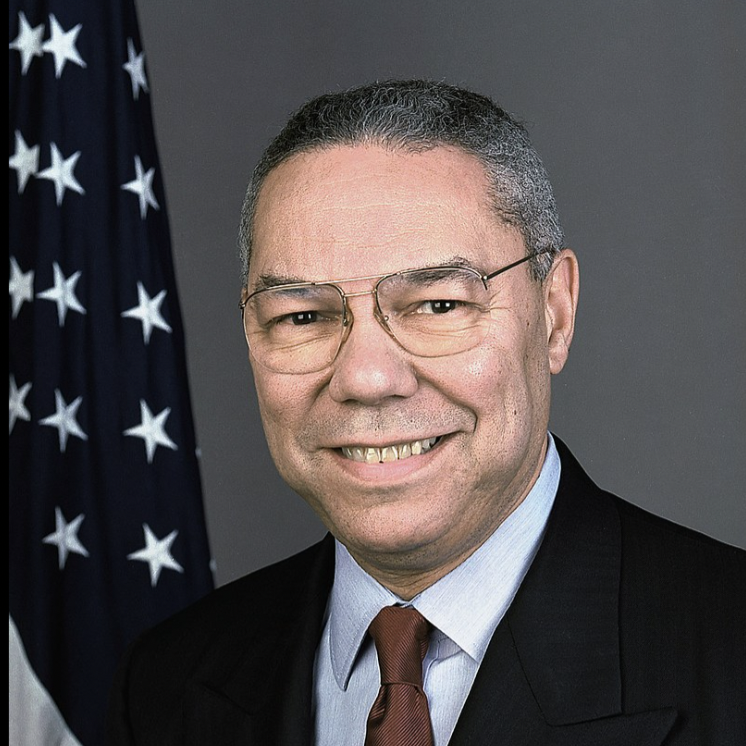
The son of Jamaican immigrants, Powell grew up in the South Bronx. He graduated from City College of New York, which was free during the time he attended and served as a launching pad to the middle class for many young New Yorkers from low-income families who otherwise would not have been able to afford a college education. While at City College, he joined ROTC, finding his purpose and dedicating his life to serving our country. As the New York Times summarized the beginning of his Army Career in its front-page obituary, “Starting as a young second lieutenant commissioned in the dawn of a newly desegregated Army, Mr. Powell served two decorated combat tours in Vietnam.”
Rising to the rank of general, Powell went on to become the first African American to serve as National Security Advisor, chairman of the Joint Chiefs of Staff and secretary of state with 3 separate American presidents, Ronald Reagan, George H.W. Bush and George W. Bush respectively, appointing him to those high profile posts. He was the most prominent example of the opportunities available in the armed forces to African Americans and other minorities and through his leadership he paved the way for our military to be perhaps the most fully integrated institution in our society.
GET THE LATEST BREAKING NEWS HERE -- SIGN UP FOR GOLOCAL FREE DAILY EBLASTHis greatest accomplishment was organizing and leading our successful military operation in the 1991 Persian Gulf War, where we successfully extracted Iraq from Kuwait with relatively few American casualties. In that war, Powell employed the now famous Powell Doctrine. “It states in general terms that the United States should not engage in military action without precise goals and clear public support -- and that if it commits to a conventional war, it should use all its resources to accomplish its objectives," reported The Washington Post In formulating the doctrine, Powell was very much influenced by the lessons he and his generation of military leaders learned in Vietnam, where there was not sufficient public support for our efforts, where there were shifting objectives, and where the objectives were not achievable, despite our large scale commitment of troops.
Powell’s biggest mistake, one he owned up to and readily acknowledged, was his making the case at the United Nations in 2003 for the United States invading Iraq because it had weapons of mass destruction and was planning to use them—a case that it later turned out was based on faulty intelligence. Powell had cautioned President George W. Bush about going to war with Iraq, telling the president that it was like handling the merchandise at Pottery Barn, “You break it, you’re going to own it.” But as a loyal member of the administration, when he was asked to make the case for a decision he disagreed with, he answered the call.
Powell bridged the partisan divides and was nearly universally admired. He was appointed to his top posts by Republican presidents and served mainly in Republican administrations. In 1996 he flirted with running for president as a Republican and in 2000 he endorsed George W. Bush at the Republican convention in Philadelphia. In 2008, he surprised many of his closest acquaintances by bypassing his old friend John McCain to endorse Barack Obama for president. Coupled with the endorsement of former Federal Reserve chair, Paul Volker, Powell’s endorsement helped persuade people who liked the then first term Senator but wondered about whether he was sufficiently experienced. Powell opposed President Trump in both his presidential campaigns and was an outspoken critic of the former president. This made Colin Powell in his later years, for some, a more polarizing figure.
Still upon his death last week, with the predictable exception of Mr. Trump, Colin Powell received accolades from people across the American political spectrum and across the globe
Former President George W. Bush, for example, said, "Laura and I are deeply saddened by the death of Colin Powell. He was a great public servant, starting with his time as a soldier during Vietnam. Many Presidents relied on General Powell’s counsel and experience. He was National Security Adviser under President Reagan, Chairman of the Joint Chiefs of Staff under my father and President Clinton, and Secretary of State during my Administration. He was such a favorite of Presidents that he earned the Presidential Medal of Freedom – twice. He was highly respected at home and abroad. And most important, Colin was a family man and a friend. Laura and I send Alma and their children our sincere condolences as they remember the life of a great man."
He was joined in his praise for Powell by former President Barack Obama: “General Powell helped a generation of young people set their sights higher. He never denied the role that race played in his own life and in our society more broadly. But he also refused to accept that race would limit his dreams, and through his steady and principled leadership, helped pave the way for so many who would follow.”
And former British Prime Minister Tony Blair added, “His life stands as a testament not only to dedicated public service but also a strong belief in willingness to work across partisan division in the interests of his country.”
When asked by The New York Times to sum up how he saw himself in the interview they conducted with his obituary in mind, Powell accurately described himself in the third person: “Powell is a problem-solver. He was taught as a soldier to solve problems. So he has views, but he’s not an ideologue. He has passion, but he’s not a fanatic. He’s first and foremost a problem-solver.”
General Powell’s life’s story embodied the American Dream and as a public servant and as a private citizen, he worked overtime to clear the obstacles, including racism out of the way, that still unfairly prevents some Americans from achieving it. Soldier, Statesman, American; Colin Powell will be missed.