


E-Cigarettes, Renewable Energy and More: This Week at the State House
GoLocalProv Political Team
E-Cigarettes, Renewable Energy and More: This Week at the State House
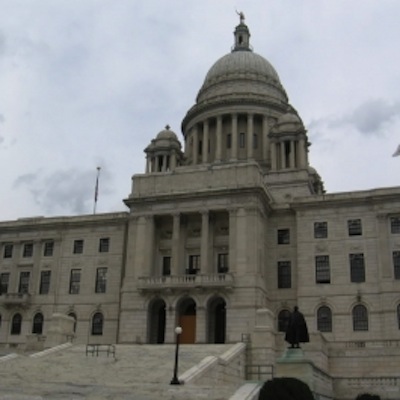
House, Senate pass bills adding e-cigarettes to indoor smoking ban
E-cigarettes and vaporizers will join cigarettes in being banned from most indoor public places in Rhode Island under bills passed by the House and the Senate. The legislation, sponsored by Senate President Dominick J. Ruggerio (D-Dist. 4, Providence, North Providence) and Rep. Teresa A. Tanzi (D-Dist. 34, South Kingstown, Narragansett), adds the use of e-cigarettes, vaporizers and similar products designed for electronic, vapor or aerosol delivery of nicotine, to the definition of “smoking” in the Public Health and Workplace Safety Act, which in 2005 banned smoking in nearly all enclosed areas of places that are open to the public. Each bill will now progress to the other chamber.
GET THE LATEST BREAKING NEWS HERE -- SIGN UP FOR GOLOCAL FREE DAILY EBLASTClick here to see House news release.
Click here to see Senate news release.
Ruggiero bill expanding renewable energy program wins House approval
The House approved legislation sponsored by Rep. Deborah Ruggiero (D-Dist. 74, Jamestown, Middletown) to extend the Renewable Energy Growth Program another 10 years to 2029, with targets of enrolling new systems totaling 40 additional megawatts every one of those years. The program allows homeowners, businesses, and municipalities to install renewable energy systems with financing over a 15- to 20-year period for lower electricity costs. The legislation now goes to the Senate, which has passed identical legislation sponsored by Sen. William J. Conley Jr. (D-Dist. 18, East Providence, Pawtucket).
Click here to see news release.
Senate OKs McCaffrey bill requiring notification of sex offenders near bus stops
The Senate passed legislation introduced by Senate Majority Leader Michael J. McCaffrey (D-Dist. 29, Warwick) that would require local law enforcement to share information with local school departments for the purposes of notifying parents of students whose bus stop is within 1,000 feet of the residence of a level 3 sex offender. The measure now heads to the House of Representatives for consideration, where similar legislation has been introduced by Rep. Joseph J. Solomon Jr. (D-Dist. 22, Warwick).
Click here to see news release.
Senate OKs Gallo bill for funding formula for career/tech programs
The Senate has passed legislation introduced by Sen. Hanna M. Gallo (D-Dist. 27, Cranston, West Warwick) that would develop a funding formula for school districts sending students to career and technical programs outside the district. The measure now heads to the House of Representatives for consideration.
Click here to see news release.
Senate OKs Goodwin’s bill to create Aging and Disability Resource Center
The Senate approved legislation (2017-S 0270A) sponsored by Senate Majority Whip Maryellen Goodwin (D-Dist. 1, Providence) to create an office within state government to help connect Rhode Islanders with helpful resources for long-term care. The legislation now goes to the House, where Rep. Lauren H. Carson (D-Dist. 75, Newport) is sponsoring companion legislation.
Senate passes legislation creating driver’s ed course for parents of teen drivers
The Senate has passed legislation introduced by Sen. Hanna M. Gallo (D-Dist. 27, Cranston, West Warwick) that would establish a free educational course for parents of students in driver’s education classes. The measure now heads to the House of Representatives for consideration, which has passed similar legislation introduced by House Majority Leader K. Joseph Shekarchi (D-Dist. 23, Warwick).
Click here to see news release.
Senate passes Ruggerio bill to stiffen penalties for assaulting a delivery person
The Senate passed legislation introduced by Senate President Dominick J. Ruggerio (D-Dist. 4, Providence, North Providence) to create stiff penalties for assault on a delivery person. The bill now goes to the House, where Rep. Raymond A. Hull (D-Dist. 6, Providence, North Providence) is sponsoring companion legislation.
Click here to see news release.
Rep. Lima expungement bill passes House
Rep. Charlene M. Lima’s (D-Dist. 14, Cranston, Providence) bill that would enable persons with less than six misdemeanor convictions to obtain an expungement of the records of those convictions, as long as the person has not been convicted of any felony passed the House of Representatives. Misdemeanor convictions for domestic violence or driving under the influence of alcohol or drugs and refusal to submit to a chemical test would not be eligible for expungement under this act.
Senate passes Crowley bill to fix loophole in Madeline Walker tax lien program
The Senate passed legislation introduced by Sen. Elizabeth A. Crowley (D-Dist. 16, Central Falls, Pawtucket) to close a loophole in the Madeline Walker tax lien program, administrated by the Rhode Island Housing and Mortgage Finance Corporation. The legislation would protect the agency from liability for any violations of environmental or minimum-housing standards, or any liability concerning the tax title property, for five years from the date of the tax sale.
Click here to see news release.
Rep. Johnston, Sen. Crowley bills would expedite merger of hospitals
Rep. Raymond H. Johnston, Jr. (D-Dist. 61, Pawtucket) and Sen. Elizabeth A. Crowley (D-Dist. 16, Central Falls, Pawtucket) have introduced legislation that would streamline the procedure for the approval of mergers of nonprofit hospitals in response to the proposed merger of Memorial Hospital in Pawtucket with Prime Healthcare Foundation. Representative Johnston’s bill has been referred to the House Committee on Corporations and Senator Crowley’s bill was heard by the Senate Committee on Health and Human Services.
Click here to see news release.
Winners and Losers in Raimondo's FY18 Budget Proposal

Winner
Criminal Justice Reform
Per recommendations from the Justice Reinvestment Working Group, the Governor is proposing nearly $1 million in investments such as the public defender mental health program ($185,000), improved mental health services at the ACI ($410,000), recovery housing ($200,000) and domestic violence intervention, in her FY18 budget.

Winner
English Language Learners
Under the heading of “promoting 3rd grade reading,” Raimondo proposed adding $2.5 million to make English Language Learning (ELL) K-12 funding permanent. The Governor’s office points out that RI is one of four states that doesn’t have permanent funding.
The suggestion was one made by the Funding Formula Working Group in January 2016, who said that “in the event that Rhode Island chooses to make an additional investment in ELLs, the funding should be calculated to be responsive to the number of ELLs in the system and based on reliable data, and include reasonable restrictions to ensure that the money is used to benefit ELLs — and promote the appropriate exiting of ELL students from services.”

Winner
Car Owners - and Drivers
Governor Raimondo wants to reduce assessed motor vehicle values by 30% - a change that would reduce total car tax bills by about $58 million in calendar year 2018. Speaker of the House Nicholas Mattiello, however, has indicated that he might want to go further in its repeal.
In her budget proposal, Raimondo also put forth adding 8 staffers to the the Department of Motor Vehicles to "address wait times."

Winner
T.F. Green
The “Air Services Development Fund” would get an influx of $500,000 to “provide incentives to airlines interested in launching new routes or increasing service to T.F. Green Airport.” The Commerce Corporation set the criteria at the end of 2016 for how to grant money through the new (at the time $1.5 million fund).
Also getting a shot in the arm is the I-195 development fund, which would receive $10.1 million from debt-service savings to “resupply” the Fund to “catalyze development & attract anchor employers.”

Tie
Minimum Wage Increase
An increase in the state minimum wage is part of Raimondo’s proposal, which would see it go from $9.60 an hour to $10.50 an hour. Raimondo was unsuccessful in her effort in 2016 to bring it up to $10.10 — it was June 2015 that she signed legislation into law that last raised Rhode Island’s minimum wage, from $9 to 9.60.
The state's minimum hourly wage has gone up from $6.75 in January 2004 to $7.75 in 2013, $8 in 2014, and $9 on Jan. 1, 2015. Business groups such as the National Federation of Independent Business however have historically been against such measures, citing a hamper on job creation.

Tie
Cigarette Tax
Like the minimum wage, Raimondo is looking for an increase - in this instance, the cigarette tax, and revenue to state coffers. Raimondo was unsuccessful in her effort to go from a tax of $3.75 to $4 last year. Now she is looking for an increase to $4.25 per pack, which the administration says would equate to $8.7 million in general revenue — and go in part towards outdoor recreation and smoking cessation programs.
The National Federation of Independent Business and other trade groups have historically been against such an increase, saying it will hurt small businesses - i.e. convenience stores. And clearly, if you’re a smoker, you’re likely to place this squarely in the loser category instead.

Loser
Hospitals
As often happens in the state budget, winner one year, loser the next. As GoLocal reported in 2016, “the Rhode Island Hospital Association immediately lauded the budget following its introduction, and addressed that while it is facing some reductions, that it "applauds" this years budget after landing on the "loser" list last year.”
This year, it falls back on the loser list, with a Medicaid rate freeze to hospitals, nursing homes, providers, and payers — at FY 2017 levels, with a 1% rate cut come January 1, 2018.

Loser
Online Shoppers
The taxman cometh — maybe. Raimondo proposed an “Internet Sales Tax Initiative” — which would purportedly equate to $34.7 million in revenues.
"Online sales and the fact that online sellers do not collect sales tax has created a structural problem for Rhode Island's budget — our sales taxes have been flat," said Director of Administration Michael DiBiase, of the tax that Amazon collects in 33 states, but not Rhode Island. "We think mostly due to online sales, we’re able to capture the growth. The revenue number is $35 million dollars — it improves our structural deficit problem. It’s an important fiscal development."

Loser
Long Term Care Funding
The Governor’s proposal recommends “redesigning the nature” of the State’s Integrated Care Initiative, by transferring long-term stay nursing home members from Neighborhood Health to Medicaid Fee-for-Service and repurposing a portion of the anticipated savings (from reduced administrative payments to Neighborhood Health) for “enhanced services in the community.” “The investments in home- and community-based care will help achieve the goal of rebalancing the long-term care system," states the Administration.
Cutting that program is tagged at saving $12.2 million; cuts and “restructuring” at Health and Human Services is slated to save $46.3 million.


