


Fecteau: The 51st State? Not Just Yet
Matt Fecteau, GoLocalProv Guest MINDSETTER™
Fecteau: The 51st State? Not Just Yet
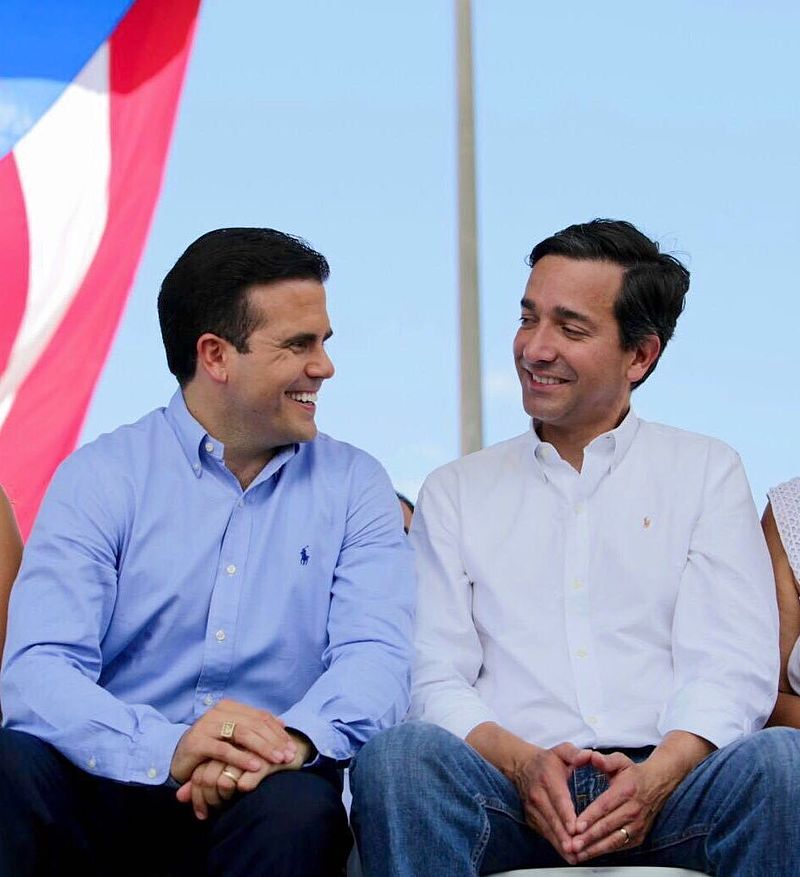
Located in the northeastern Caribbean, Puerto Rico has been a territory of the United States since 1898. Congress established an elected government on the island, and granted citizenship to those who live and were born on the Island; conversely, Puerto Ricans cannot vote in presidential elections or have a representative in Congress (it has a non-voting federal delegation). Unlike the other former 32 territories that became states, Puerto Rico was never set on a track to statehood like Hawaii was in 1959 or bequeathed independence like the Philippines in 1946.
While statehood may be asking too much, Puerto Rico does need some reprieve from its on-going crisis. Puerto Rico is on the brink of insolvency with $123 billion in debt obligations, a 45% poverty rate, floundering schools, and health and pension systems on the verge of bankruptcy.
GET THE LATEST BREAKING NEWS HERE -- SIGN UP FOR GOLOCAL FREE DAILY EBLASTOne of the five populated territories – others, including, Guam, the Northern Mariana Islands, the U.S. Virgin Islands, and American Samoa – Puerto Rico exists in political limbo to this day. It is considered a part of the United States, but not afforded the same expanded bankruptcy protections, and federal funding levels due states according to statutory law.
The issue of statehood for Puerto Rico is a contentious one. On one hand, American citizens may not want to foot the billion for 3.5 million Puerto Ricans, but on the other, Puerto Rico will be left in limbo, politically disenfranchising those that live on the island. While the debate goes on, the sad reality is that Congress will have to address Puerto Rico’s financial woes, one way or another, because it remains a part of the United States.
Puerto Rico will always be an American problem, whether granted statehood or it remains a territory. This crisis needs to be addressed now, or it may end up costing all U.S. taxpayers more in the long-run with a failed health care system, and debt that it will be unlikely to pay, sky rocking out of control, and then, turning to the federal government for assistance anyway.
I would like to see Puerto Rico become the 51st state one day, but given the political gridlock in Congress, perhaps that will be a long wait. Thus, an incremental solution would be to change our current laws to ensure territories have the same federal funding levels, and bankruptcy protections afforded to American states.
While it would be disappointing to those that voted in this past referendum, at least it is a way for Puerto Rico to address its current financial woes. For Puerto Rico, statehood may be far off, but realistic solutions are abundant.
Trump's Win - What Does it Mean for Rhode Island?

Jennifer Duffy
Cook Report
"We don't really know what a Trump presidency means for the nation, never mind the smallest state. One of the unintended consequences of last night's results is that Sen. Jack Reed won't be chairman of the Senate Armed Services Committee. Chalk that up as a loss for RI."

Pam Gencarella
Head of Ocean State Taxpayers' Association
"Trump’s win means that his signature issue, illegal immigration, could have a big impact on RI, hopefully reversing our course as a sanctuary state and saving the state taxpayer millions of dollars. While we agree with his 'repeal and replace' Obamacare stance, we have no idea what that means to the RI debacle known as UHIP. It is not a stretch to believe that federal funding for this kind of system will be off the table so, will RI be stuck with this massively expensive system that still doesn’t work and that is expected to cost another $124 million to fix?
Trump's belief that there is significant fraud in the Food Stamp program and the policies that may come from that belief could have a negative impact on RI's local economy since there are businesses in certain cities that rely heavily on this program, fraud and all. On the upside, we may be able to ditch the UHIP program if there is significantly less need for processing welfare program requests (ie. Medicaid and food stamps) resulting from fewer illegal immigrants and less fraud. While we are ambivalent about his touted child care policies, if enacted, it may force our legislators to revisit the ever growing state cost of subsidies in this area and possibly reduce the fraud and abuse in this system."

Kay Israel
Professor at Rhode Island College
"With a Republican President and Congress, Rhode Island will probably be excluded from the 'fruits of victory."
The congressional delegation will be able to vocally make their presence felt, but in the long term it's more symbolic than substantive.
For Rhode Island it's a matter of holding on and waiting until '18 or '20 and a surge in Democratic influence."

Jennifer Lawless
Professor at American University
"The RI congressional delegation just became even less powerful than it was. With unified government, Trump doesn’t need to quell Democrats’ concerns or acquiesce because he’s worried about a Democratically-controlled Senate.
His appointments will reflect that. His executive orders will affect that. And the conservative policy agenda he puts forward will affect that."

Len Lardaro
Professor at University of Rhode Island
"Well there's a few things -- because there's not going to be gridlock, that's a big difference if it had been Hillary and a GOP Congress, in which nothing would got done. We'll at least get a half a billion in infrastructure that's going to pass which will have an impact.
I think you'll see there will be reduced reliance on government nationally -- and that's where we'll stick out like sore thumb. We've relied way too much on government -- and our government is highly inefficient and ineffective. Maybe, just maybe, in this who cycle of things we might be forced to be small and more efficient for once.
A couple of other things -- interest rates jumped. The one to follow is the ten year government bond rate -- which is tied to mortgages. It went from 1.7% to 2.05% in one day. The point is -- if the ten year stays high, mortgage rates will start going higher -- and in the short time people will run to re-finance.
That's the short term impact -- but then if rates stay hight, that will make mortgages more out of reach. And we just passed a bond issue to limit open space -- housing has limited upside here.
The next thing -- the Fed Reserve will go ahead with tightening next month. A strong dollar will hurt manufacturing. When the dollar is strong our exports become more expensive overseas.
Our goods production sector -- manufacturing and construction -- in the near term will do a little better, but as time goes on will be more limited. But something you won't hear, is there are lags in fiscal policy, of six months to year. So we won't really see the effects until the third our fourth quarter of 2017, going into 2018."

Mike Stenhouse
RI Center for Freedon and Prosperity
"As the unbelievable turned into reality this morning, it struck me that the presidential election was not really all about Donald Trump and Hillary Clinton. It was about a fed-up people, revolting against a corrupt system - the "beast" - that relentlessly favors insiders. Hillary personified the beast, while Donald personified the slayer.
Sadly, based on election results in our state, Rhode Island's version of the beast lives on. I fear our political class has not learned the lessons from the Bernie Sanders and Donald Trump movements - and will continue with their government-centric, anti-family, anti-business status quo."

Kristina Contreras Fox
VP of Young Democrats of America
"A Trump Presidency means the validation of the ugliest part of America. In RI, as with the rest of the country, the hammer of his hatred will fall hardest on minority communities. Being a blue state doesn't make us immune from this danger.
Trump won over 35% (39.5) of the vote here! We need to look in the mirror, and not lie about what the reflection shows us. No more hiding underneath a blue blanket. I expect those who claim Democratic values to be true to those values. The gulf between words and actions have turned into fertile ground for Trump's message to grow here in RI. If you call yourself a Democrat, if you claim to stand in opposition to Trump, now is the time to prove it. Show up and fight back."


