


Gemma: My Plan for Citizen-Driven Government
Anthony Gemma, Candidate for Congress, District 1
Gemma: My Plan for Citizen-Driven Government
Anthony Gemma, a Democratic candidate for First District Congressional seat, says he knows how to end widespread apathy and get people more active in their government. Today he released a preview of his extensive plan to put citizens back in control of their government. Only on GoLocalProv.
CITIZEN-DRIVEN GOVERNMENT
GET THE LATEST BREAKING NEWS HERE -- SIGN UP FOR GOLOCAL FREE DAILY EBLAST- A Plan -
ABSTRACT
The purpose of my Citizen-Driven Government Plan is to serve as a guiding document — or “road map” — designed to:
- Drive significant improvement in the quality of government so as to meet or exceed, in a fiscally responsible manner, citizen expectations for an open, responsive, effective government.
- Create key goals, including but not limited to:
- Re-establishment of citizen-drivengovernment and implementation of support procedures and policies.
- Reinvention and reinvigoration of public service for the 21st century.
- Improvement of meaningful, two-way communication between government and its citizens.
- Serve as a performance improvement model — as does the City of Coral Springs, Florida winning application for the 2007 Malcolm Baldrige National Quality Award — for use throughout Rhode Island.
I decided to seek the Democratic nomination for Congressman from Rhode Island’s First Congressional District in order to address the general and growing dissatisfaction with government experienced by the vast majority of Americans. Although I am convinced that my background, professional and philanthropic experience and accomplishments, and focus on quality improvement will help position me as the logical choice to be your congressman, I understand that in order to help facilitate and enable needed change, I must offer a strong plan for its initiation and development. After all, as the adage well states, “Failing to plan is planning to fail.”
The purpose of the Citizen Driven Government plan is straight-forward; to enable us to significantly improve citizen satisfaction with government at the state and national levels. A major component of this plan is expressed in my mission statement: I want to reinvent and reinvigorate public service for the 21st century. By definition and upon accomplishment, the mission will culminate in the re-creation of citizen-driven government.
As noted above, dissatisfaction with government is rampant. Although proactive steps taken by government did preclude a fall into an economic depression, the long-term health of our economy remains uncertain at best. Our educational system, once the standard for global leadership, has declined, creating, among numerous consequences, a workforce unprepared for the 21st century job market .
Recognizing that most people wish to attain the empowerment necessary to effect the change that is so long overdue, I also chose to step “outside-the-box” and develop specific and viable steps to permit citizens to drive their government. This plan, at its current stage of development, proposes a set of goals, a set of actions to attain them, and preliminary metrics to be used to evaluate our progress in these endeavors.
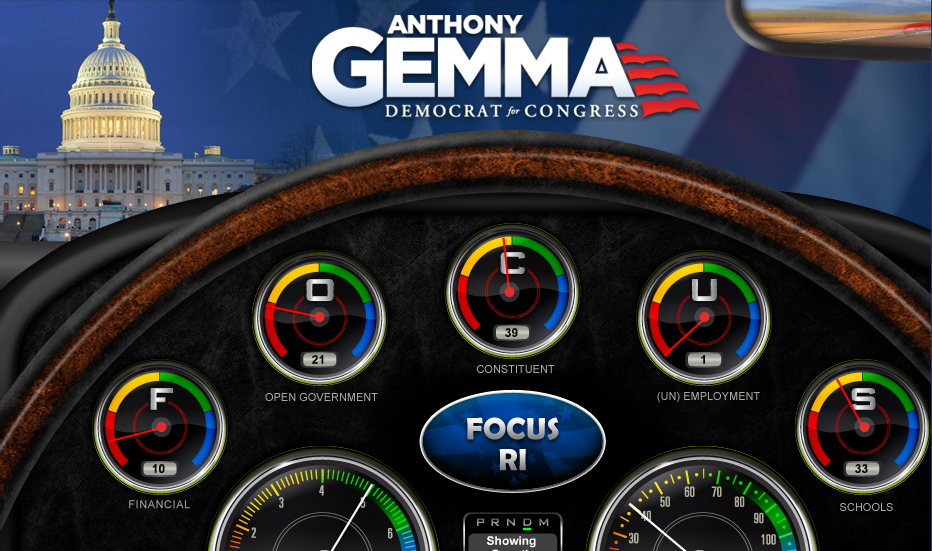
I have used the term “FOCUS” as an acronym for the following goals: Financial Accountability and Transparency; Open and Honest Government; Citizen-Driven Government and Communication; Unemployment Reduction and Economic Recovery; and Schools Attaining Educational Excellence. Included are over 40 specific actions to achieve those goals, some of which are offered below:
F - Financial Accountability and Transparency - Creating an easy-to-use Internet portal through which up-to-date spending and planned spending information, including legislative earmarks, may be accessed.
O - Open and Honest Government - Providing complete and unfettered access and links to all local, state and federal information and to provide constituents with comprehensive access to pending legislation and a secure access communication capability to inform me of their relevant views.
C - Citizen-Driven Government and Communication - Implementation of the Citizen-Driven Government Plan, as well as establishing as my congressional office a “Town Hall in the Mall” both in Providence Place and in an Internet variation that will facilitate 24/7 two-way communication among and between my office, our constituents, and representatives of the towns and communities in at least the First Congressional District. This will be the first such Federal office of its kind.
U - Unemployment Reduction and Economic Recovery - Establishing and implementing mechanisms to solicit and capture information from current and recent job seekers at all levels and from key industries pertinent to Rhode Island — on the challenges of the job search, and their suggestions regarding ways government might better help job seekers especially those suffering long-term unemployment to find gainful employment.
S - Schools Attaining Educational Excellence - Creating and implementing practical, efficient, and student- and teacher-friendly methods to evaluate student performance, and to track this data by school, city, state, and even classroom. Performance tracking should include letter grades earned, other genuine student assessments, standardized test results, graduation rates, college placement rates, first year college performance (if applicable and practical), job placement rates, and job continuance rates up to two years after completion of school.
This plan is incomplete insofar as it is designed to anticipate and react to change. I developed it, with the help of my team, based on needs inherent in the current situation as we understand them, goals we believe are necessary to achieve a citizen driven government, actions, and metrics needed to reach those goals.
A key part of my political campaign will be the solicitation of citizen input that is the pre-requisite for the ongoing development of this plan and ultimately, for the re-creation of citizen driven government. Accordingly, if I am elected, some plan components will be in place, and the remainder of a comprehensive, citizen-driven plan will be readily forthcoming.
In other words, I am not willing to wait until January or even September to initiate this plan.
At the heart of New England in general, and Rhode Island in particular, is the inalienable right symbolized by the statue atop our State House - the Independent Man. Independence generates initiative and innovation. However, independence can result in non-alignment of government goals and needs.
I believe that Government needs to be re-calibrated for the 21st century as its systems, modes of operation, and operating values are largely outdated. Systems, processes, service delivery, and the modes of interaction between the government and its citizens have not kept pace with the growth and increasing complexity of society, government, and technology. Citizen participation, a mainstay of how our government was conceived and originally structured, has diminished and become significantly undervalued. The size, complexity, and cost of government has grown, at least in part due to diminished citizen participation, to a point that its bureaucracy is cumbersome and our cost of government and its actions significantly exceeds the value that citizens perceive they are getting from the government.
As a result, and as the news regularly reports, citizens have become increasingly frustrated with government at all levels. Indeed, there is a sense that no one in government is listening. Further, there is growing public apathy and a continuing decline of citizen participation in government; the people who actually vote in our elections, in general, no longer demographically represent the full public, which in turn reduces the likelihood that the vote truly represents the will of the people.
Here are some examples of conditions, actual or perceived, that are the reasons for frustration with government:
- Taxes and spending
- Taxes are perceived to be too high and inequitably assessed.
- Money is often spent for things that are of little real benefit, and there is not enough being spent on priority needs as established by the people.
- Rather than focusing on spending the people’s treasury on programs to meet national priorities and objectives, our congressional representatives regularly add to legislation, wasteful earmarks that contribute little to the public good.
- How our elected officials and government appear to be operating.
- Public office holders do not appear to honor campaign promises.
- Our political processes and the headlong rush to political expediency encourage and enable lawmakers to add amendments to legislation that have nothing to do with the purpose of the legislation. As a result, lawmakers are forced either to vote against good basic legislation or to vote for amendments, or riders they feel are ill- advised and/or wasteful.
- Most lobbyists who represent special interests and not the public good, have disproportionate and counterproductive input into legislation that in many instances they actually write. An example: Legislation to control and preclude the practices that led to the housing market collapse appears to have been greatly reduced in impact and effectiveness by interference by lobbyists.
- Partisan politics often tends to force legislative choices between two extremes, thus precluding legislation from being built from the best of all viable options
- Government appears to operate without an overall strategy to guide carefully thought-out and crafted legislative action.
- Government officials seem to expect consumers to be willing and able to support the economy even when they are unemployed and sometimes facing bankruptcy (see state of our economy, below).
- Government suffers a tragically demonstrated difficulty when attempting to respond quickly and effectively to major disasters.
- Access to, responsiveness of and feedback from office holders
- It is difficult if not impossible to communicate directly with our public office holders. Physical letters, e-mail messages, and via-website inputs can readily be sent, but there seems to be little or no meaningful feedback provided.
- Although public office holders appear to welcome and plan to act on citizen input in public forums, no actual action appears to result except for such inputs from well-connected persons or celebrities.
- The citizens are provided little regular insight — with exception — into the daily work activities of public officials and office holders.
- Constituents generally feel they are very much disenfranchised, and thus have become increasingly apathetic.
- The state of our economy
- Although we did prevent the backbone of our economy -— the financial system — from failing, we have done little to create broad-based, sustainable, jobs.
- We have allowed much of our major wealth-creating industry — manufacturing — to migrate to other nations, often unnecessarily. We are also migrating key components, such as software development and customer services of other industries to other nations.
- Our national approach to economic development appears to be focused more on getting companies to move from one location in the U.S. to another, rather than on creating and building businesses and industries and bringing back companies from overseas.
- The reliance on foreign oil and foreign manufacturing have transferred much of our wealth and tax generating processes to foreign lands, thus increasing our reliance on foreign financing of our industry, our national debt, and our tax burden.
- Professional recruiters and professional investors, often perceived to be the best sources of jobs for professionals and managers, are generally not interested in working with unemployed job seekers.
- Some growth industries, such as most of those in the healthcare, pharmaceutical, and biotech sectors, have continued to add jobs, even during the recession. However, except for entry-level positions, these jobs are generally open only to professionals from the industry. Professionals from other industries seeking such jobs generally will not be viable candidates unless they undergo extensive retraining and are willing to restart their careers at or near the entry level.
- Although we continue to be a major source of new technologies, we also continue to allow much of the major job-generating potential of these new technologies (manufacturing, engineering, infrastructure development and implementation) to move overseas, and we have a regulatory and bureaucratic requirement structure that discourages implementation. A classic example of this is all that has not happened in our nation in the renewable, green, and sustainable energy sectors.
- Rhode Island’s economic development and existing business support infrastructure appears to be very fragmented, unfocused, and of low responsiveness to industry needs.
- The educational system
- Public education students often get promoted and graduate despite the fact that they can barely read, write, or demonstrate basic math skills.
- Educational curricula, especially in public schools, are often perceived as not being aligned with the needs of business and higher education.
- There is strong evidence to suggest that public education has been politicized to the detriment of our students and also to our economy.
- Graduation rates in some urban centers are unacceptably low.
- Certain economic and social factors tend to discourage many highly talented, intelligent, and capable young people from considering careers in education, especially at the public primary and secondary school levels.
In spite of these severe problems, there is no reason to conclude that we are in an irrevocable socio-economic decline here in Rhode Island or throughout the nation. We retain all the strengths of independence and we continue to marshal them for many successful endeavors. There have been various initiatives throughout the country to improve government performance. One shining example has been set by the City of Coral Springs, Florida, and is most easily appreciated by studying its successful pursuit of the Malcolm Baldrige National Quality Award.
The criteria for achieving that award are quite complex and involved, and Coral Springs’ accomplishment is most laudable. Accordingly, I have used Coral Springs’ accomplishment and success (available for review at www.anthonygemmaforcongress.com) as a major input to this plan, and I look forward to gaining Rhode Island citizen inputs needed for me to complete our plan and guide its implementation to achieve the goals and objectives outlined below
Click here to read the full version of the plan.