


Guest MINDSETTER™ Gubernatorial Candidate Dr. Muñoz: Single-Out
Guest MINDSETTER™ Gubernatorial Candidate Dr. Luis Daniel Munoz
Guest MINDSETTER™ Gubernatorial Candidate Dr. Muñoz: Single-Out
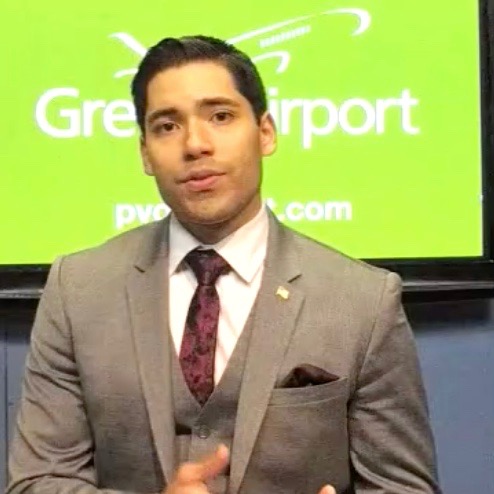
A Single-Payer health system is a health system primarily driven, funded, and regulated by government. The Single-Payer model is similar to the Medicare model, whereby, the government provides financial support for healthcare services and goods, and establishes a fee structure around the reimbursement of those services and goods.
I have studied the various manifestations of Single-Payer health systems in countries such as, Israel, France, Germany, and Japan. I can dive deep into the nuances of each of these Single-Payer systems, but instead, I will focus on two reasons why Rhode Island should not transition to a Single-Payer health system.
GET THE LATEST BREAKING NEWS HERE -- SIGN UP FOR GOLOCAL FREE DAILY EBLASTThe Cost Burden
The State of Vermont recently experimented with a single-payer system. In the end, Vermont went so far as to increase employer payroll tax to 10.6% and employee payroll tax to 3.6% and yet, the system was still unsustainable.
Recent opposition to Single-Payer legislation in Rhode Island has been fueled by cost concerns. It has been estimated that transitioning to such a system would cost Rhode Island approximately $5B annually, which Rhode Island taxpayers would likely have to pay for. How was the estimate derived? On average, annual health expenditures for each Rhode Islander approximates $5k. Therefore, if you are covering all Rhode Islanders, then you have acquired a greater than $5B bill. However, healthcare systems are far too complex to formulate cost estimates based on multiples of health expenditures and population size.
Healthcare systems embody multiple insurers, providers, technicians, facilities, technology infrastructure, and a network of business executives at the intersection of each decision. The “Single-Payer” legislation that has been proposed for Rhode Island aims to address that complexity by placing all financial and purchasing power into the hands of a few state government officials.
Developing a financial software system that integrates with multiple layers of healthcare (i.e., providers, patients, vendors) would be expensive, and with an administration that lacks health information technology and healthcare coordination expertise, it would undoubtedly predispose Rhode Island families to extraordinary risks. As an example, let’s remember the failed design and deployment of the Unified Health Infrastructure Project (UHIP), which harmed many Rhode Island families.
The Evolving State of Health
A well-known single-payer model is the Israeli healthcare system. Israel’s healthcare system is managed by ministries (i.e., finance and health), which embody a group of experts representing the fields of economics, finance, technology and healthcare. The Israeli single-payer system provides several public insurance options and yet, Israel has sustained free market principles by allowing over sixty private supplemental health insurers to co-exist in that environment, and to compete for business, and to provide patients with more options. Nevertheless, the unexpected rise in chronic diseases has presented new financial challenges to that system.
We have long been challenged with a high prevalence of diabetes, obesity, and heart disease. We have been subject to hyper-inflated drug prices. We have been victims to a health insurance industry with few options and ever-increasing health costs.
We are not the last in line for a Single-Payer system, but rather, we have evolved beyond a Single-Payer system.
The Road Ahead
There are those who believe that the right to health resides in the “opportunity” to live a healthy life. An “opportunity” defined by the availability of healthy nutrition, quality education, stable personal finances, clean environments and living conditions, and safe neighborhoods. It is through the edification of communities and improvements in the aforementioned societal realms that we can positively influence health choices and outcomes. The road towards a healthier Rhode Island requires a more comprehensive approach to health education and care coordination, a nurturing environment for our healthcare workers to grow and thrive, and a stronger voice with which the people, and the health providers who serve them, can challenge the institutions that contribute to rising health costs.
The author is an independent Gubernatorial Candidate -- Dr. Luis Daniel Munoz
GoLocal: Benchmark Poll, October 2017

Sponsor: GoLocalProv
Sample: N=403
Rhode Island General Election Voters Margin of Error: +/- 4.9% at 95% Confidence Level
Interviewing Period: October 9-11, 2017
Mode: Landline (61%) and Mobile (39%)
Telephone Directed by: John Della Volpe, SocialSphere, Inc.
Are you registered to vote at this address?
Yes: 100%
When it comes to voting, do you consider yourself to be affiliated with the Democratic Party, the Republican Party, Moderate, or Unaffiliated with a major party?
Unaffiliated: 49%
Democrat: 32%
Republican: 15%
Moderate: .4%
Next year, in November of 2018, there will be a statewide general election for Governor and many other state offices. How likely is it that you will vote in this election?
Will you definitely be voting, will you probably be voting, are you 50-50...
Definitely be voting: 78%
Probably be voting: 13%
50-50: 9%
In general, would you say things in Rhode Island are headed in the right direction or are they off on the wrong track?
Right track: 39%
Wrong track: 45%
Mixed: 10%
Don't know/Refused: .6%
What would you say is the number one problem facing Rhode Island that you would like the Governor to address?
Jobs and economy: 21%
Education: 12%
Taxes: 12%
Roads: 12%
State budget: 9%
Corruption/Public integrity: .8%
Healthcare: 3%
Governor: 3%
Homelessness: 2%
Immigration: 2%
Other: 7%
Don’t know: .9%
Over the past three years or so, would you say the economy in Rhode Island has improved, gotten worse, or not changed at all?
Changed for the better: 35%
Changed for the worse: 16%
Not changed at all: 43%
Don't know/Refused: 5%
Over the same time, has your family's financial situation improved, gotten worse, or not changed at all?
Changed for the better: 26%
Changed for the worse: 19%
Not changed at all: 54%
Don't know/Refused: 1%
Recently, a proposal has been made to permit the issuance of $81 million in bonds by the State to build a new stadium for the Pawtucket Red Sox. If there was an election today on this issue, would you vote to approve or reject issuing $81 million in financing supported moral obligation bonds to build the stadium?
Net: Approve: 28%
Definitely approve: 15%
Probably approve: 14%
Net: Reject: 67%
Probably reject: 19%
Definitely reject: 48%
Don't know: 4%
Could you please tell me your age?
18-24: 7%
25-34: 15%
35-44: 15%
45-54: 20%
55-64: 17%
65+: 25%
Don't know/refused: 1%
What was the last grade you completed in school?
0-11: 2%
High school grad: 16%
Technical/Vocational school: 1%
Some college: 23%
College grad: 34%
Graduate degree: 24%
Don't know/refused: 1%
The next question is about the total income of YOUR HOUSEHOLD for the PAST 12 MONTHS. Please include your income PLUS the income of all members living in your household (including cohabiting partners and armed forces members living at home).
$50,000 or less: 27%
More $50,000 but less than $75,000: 13%
More $75,000 but less than $100,000: 13%
More $100,000 but less than $150,000: 17%
$150,000 or more: 13%
Don't know/refused: 17%
What particular ethnic group or nationality - such as English, French, Italian, Irish, Latino, Jewish, African American, and so forth - do you consider yourself a part of or feel closest to?
American/None: 21%
English: 13%
Italian: 13%
Irish: 12%
Black or African American: 6%
Latino/Hispanic: 6%
French: 6%
Portuguese: 3%
Jewish: 3%
German: 1%
Would you say that Donald Trump has done an excellent good, fair or poor job as President?
Excellent: 13%
Good: 12%
Fair: 14%
Poor: 57%
Never heard of: 0%
Cannot rate: 3%
Would you say that Jack Reed has done an excellent good, fair or poor job as a United States Senator?
Excellent: 22%
Good: 29%
Fair: 23%
Poor: 15%
Never heard of: 6%
Cannot rate: 6%
Would you say that Sheldon Whitehouse has done an excellent good, fair or poor job as a United States Senator?
Excellent: 17%
Good: 22%
Fair: 21%
Poor: 28%
Never heard of: 6%
Cannot rate: 7%
Would you say that David Cicilline has done an excellent good, fair or poor job as a Member of Congress?
Excellent: 9%
Good: 29%
Fair: 21%
Poor: 27%
Never heard of: 6%
Cannot rate: 8%
Would you say that James Langevin has done an excellent good, fair or poor job as a Member of Congress?
Excellent: 7%
Good: 30%
Fair: 20%
Poor: 18%
Never heard of: 13%
Cannot rate: 11%
Would you say that Gina Raimondo has done an excellent good, fair or poor job as Governor?
Excellent: 6%
Good: 28%
Fair: 30%
Poor: 31%
Never heard of: 1%
Cannot rate: 3%
Would you say that Daniel McKee has done an excellent good, fair or poor job as Lieutenant Governor?
Excellent: 3%
Good: 16%
Fair: 21%
Poor: 8%
Never heard of: 26%
Cannot rate: 25%
Would you say that Peter Kilmartin has done an excellent good, fair or poor job as Attorney General?
Excellent: 3%
Good: 20%
Fair: 28%
Poor: 17%
Never heard of: 13%
Cannot rate: 19%
Would you say that Seth Magaziner has done an excellent good, fair or poor job as General Treasurer?
Excellent: 4%
Good: 18%
Fair: 24%
Poor: 13%
Never heard of: 21%
Cannot rate: 21%
Would you say that Nellie Gorbea has done an excellent good, fair or poor job as Secretary of State?
Excellent: 5%
Good: 21%
Fair: 21%
Poor: 10%
Never heard of: 20%
Cannot rate: 23%
Would you say that Jorge Elorza has done an excellent good, fair or poor job as Mayor of Providence?
Excellent: 4%
Good: 24%
Fair: 24%
Poor: 22%
Never heard of: 9%
Cannot rate: 15%
