Guest MINDSETTER™ Matt Fecteau: The Cold War Ended, So Should the Embargo
Matt Fecteau, GoLocalProv Guest MINDSETTER™
Guest MINDSETTER™ Matt Fecteau: The Cold War Ended, So Should the Embargo
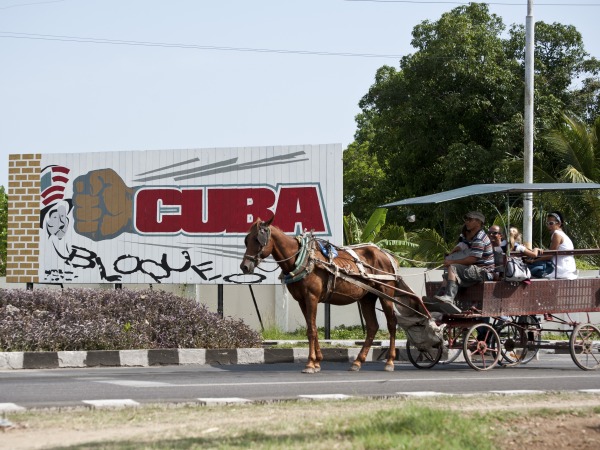
Another symbol of the past, the US embargo on Cuba, reminds us of a much more tumultuous period. Yet, much like the antiquated yank tanks, the embargo remains, an anachronistic, obsolete, vestige of a time long since passed.
The Cold War ended, so should the embargo.
GET THE LATEST BREAKING NEWS HERE -- SIGN UP FOR GOLOCAL FREE DAILY EBLASTTake All Necessary Actions
Once upon a time, the embargo had a purpose.
During the Cold War, in 1959, the Marxist-Leninist inspired Fidel Castro overthrew the corrupt, US-backed government of Cuba. After the Castro regime expropriated private property including US assets, the US cut diplomatic ties, and under the authority of the Trading with the Enemy Act, President Dwight Eisenhower eventually imposed a limited embargo on Cuba.
The Kennedy administration expanded the embargo after Cuba aligned with the US’s arch-nemesis, the Soviet Union. In his 1962 proclamation, President John F. Kennedy wrote, “[The US] is prepared to take all necessary actions to promote national and hemispheric security by isolating the present Government of Cuba.”
In 1963, in the shadow of the Cuban missile crisis, the US Treasury Department went even further issuing an injunction on almost any financial transaction by an American citizen in Cuba.
The embargo was originally designed to prevent a Soviet-allied government from amassing strength just ninety miles from the United States. An understandable concern especially during the Cold War. In 1989, the Berlin Wall would fall, and the Soviet Union would come a dramatic end just two years later, ending the Cold War in its tracks, but the US embargo would perversely remain.
Not Illegal, Just Impossible
The legacy of the embargo lurches on to this day.
Currently, Cuba is the only country that requires Americans to have a travel license. Americans can freely travel to Syria, Iran, or North Korea, but Cuba is off limits. Technically, travel to Cuba is not illegal, but Americans cannot make any financial transactions legally, making travel nearly impossibility.
As a result of the embargo, critical American tourism, and trade plummeted. Before the embargo, trade with the US made up two-thirds of Cuban imports and exports. Until its demise, the Soviet Union tried in vain to fill the economic void keeping the Cuban economy somewhat intact.
After the collapse of the Soviet Union, Cuban infrastructure visibly crumbled under the weight of the embargo, and poverty increased dramatically. Nevertheless, the Cuban government remained relatively unscathed.
Embargo Politics
Critics argue Cuba is a repressive country and the embargo is justified.
According to Freedom House, Cuba has an atrocious record on human rights, rated: “not free.” Cubans remain interned on this island, slum paradise unable to leave. However, key US economic partners such as China, and Saudi Arabia are also ranked “not free.” The latter having a far hideous track record than Cuba.
The reason for the persistent embargo is more political. For decades, Cuban exiles disproportionately influenced our executive branch. Because Florida is a swing state with a large exile population, Presidents routinely pander to Florida’s Cuban exiles by renewing or expanding the embargo.
The Cuban exiles also have a disproportionate influence on our legislative branch. U.S. Senator Bob Menedez of New Jersey, the son of Cuban exiles and avid Castro critic, is the sitting Chairman of the Committee on Foreign Relations, making any anti-embargo legislation difficult to successfully emerge intact.
Even Rhode Island’s federal leaders share some blame. While sitting on the House Foreign Affairs Committee, in 2011, Rhode Island’s U.S. Rep. David Cicilline voted for draconian Bush-era restrictions on Cuba, making travel for people like me next to impossible.
Give us a Chance
We need to revise our Cuban policy. Instead of deposing the Castro regime, the embargo protected, and insulated it. Most Cubans view the embargo as the reason their life is so terrible. The embargo has become a mere scapegoat for all problems faced on the island.
Many Cubans seek to end the embargo for altruistic ends. One Cuban explained to me, “End the embargo for the Cubans. For the people.” She elaborated. “We are capable of reform, but you have to give us a chance.”
If the embargo was dismantled, many Cubans, like the one mentioned, argue human rights would improve dramatically – one stated goal of the embargo -- to attract American investment. Some research additionally notes if the US dismantled the embargo, the increased economic interaction would be a small stimulus for the US and Cuba.
Trading with the Enemy
Cubans hold out hope for some executive action or inaction on the embargo. In 1977, President Jimmy Carter failed to endorse the policy, and thus, it was not renewed until President Ronald Reagan assumed office. Since then, every President has renewed this the embargo.
According to the Trading with the Enemy Act, the primary legal footing for the embargo, it has to be reviewed annually by the executive branch. To President Barack Obama’s credit, he relaxed stringent restrictions imposed by President George W. Bush, but also, renewed the policy like clockwork.
The embargo was slightly modified in 1996 making it more difficult not to enforce. The Helms–Burton Act of 1996 gives the legislative branch the power to overrule the executive branch through a joint resolution if Congress determines Cuba has not transitioned into a democracy.
However, arguably, a joint resolution would be difficult to muster with the state of our Congress.
End the Embargo Already
The embargo is a far bigger liability than asset.
Our international partners recognize this. The UN cited Cuba’s fight against Ebola as a rationale for dismantling the embargo this past October. For the 23rd time, the United Nations General Assembly voted overwhelming for a non-binding resolution that condemns the US embargo on Cuba. The only countries opposed to the non-binding resolution: the US and Israel.
Fortunately, Congress does have the power to end the embargo. Though sadly, none of Rhode Island’s U.S. Representatives cosponsored what is known as the Free Trade with Cuba Act. This act would justifiably relegate this obsolete embargo to the trash heap of history. In addition, the beautiful island of Cuba would be opened for all Americans to enjoy.
Until the embargo becomes a mere footnote in the history books, the few Americans that visit will fall in love with the island, and all the while, the Cubans will yearn for a better, embargo-free future.
Contact your U.S. Senator or Representative and let them know: let’s end the embargo already.