


Jencunas: Residency Requirements - Bad Idea For City Boards
Brian Jencunas, GoLocalProv MINDSETTER
Jencunas: Residency Requirements - Bad Idea For City Boards
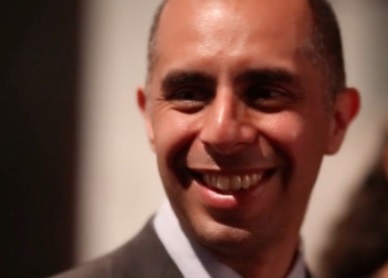
Mayor Elorza nominated Cranston resident Luis Peralta for a seat on the licensing board. Peralta was one of Elorza’s earliest supporters and donors, and sought-after appointments are a traditional way to reward allies. As Buddy Cianci often says, “No politician ever stands up on election night and says, ‘I want to thank all my supporters, but in the interest of democracy, I’m not going to give them consideration, I’m going to hire my enemies.’”
Some city councilors are skeptical of a Cranston resident serving on the licensing board. Residency questions should not derail Peralta’s appointment. Especially for appointed boards, strict residency requirements can lead to biased appointees who will advance their neighborhood over the public good.
GET THE LATEST BREAKING NEWS HERE -- SIGN UP FOR GOLOCAL FREE DAILY EBLASTThe case for residency requirements is logical. People are more likely to make thoughtful decisions if they are affected by the results. Therefore, the argument goes, making city appointees live in the city will produce better results.
Residency makes sense as a goal for large workforces like the police and teachers. In these positions, objective decision making is done better by an intimate knowledge of the neighborhoods and their inhabitants. Furthermore, having workforces with city residents is a good way to guard against what received national attention after Ferguson – a city workforce who views city residents as the enemy.
Even then, residency shouldn’t be a requirement, as that can interfere with recruiting talented candidates. But it ought to be an advantage for potential candidates, in order to ensure the city’s workforce isn’t vastly different from the people they serve.
Appointed boards are different from these larger workforces. Boards work in a wonkier, more mechanistic way, similar to a judge. They are expected to weigh arguments and render impartial verdicts, not engage with a community.
With appointed boards, there’s a dark side to the logic of residency. People who are affected by the results of their decision will put themselves first, which can lead to decisions that help them but hurt the city.
For example, consider a zoning board member reviewing an affordable housing development in their neighborhood. The development wouldn’t be considered just on its merits. Instead, the zoning board member would consider how it would affect his property values and whether he wants lower-income residents in his neighborhood.
Historically, people have fought those developments tooth-and-nail and would likely do so if they were zoning board members. The city would be better served in that hypothetical by an impartial board member who lived outside of Providence.
The same would be true of a licensing board member reviewing a bar in his neighborhood. If he disliked the noise, he might close it even if the bar’s actions didn’t deserve that punishment.
Instead of residency, board members should be evaluated based on their judgment. If they have shown an ability to weigh evidence, listen to varying viewpoints, and make unpopular decisions, they will probably make a good board member even if they live in Cranston.
Luis Peralta’s confirmation is in the hands of the city council. He possesses the most important qualification – donating early to the winning mayoral candidate. I don’t know if he has the proper judgment, but that’s what his confirmation should be based on, not his address.
Ten Issues Elorza Can't Hide From

Staffing Costs
Elorza has announced a slew of hires to date -- including the position of Chief Operating Officer in addition to Chief of Staff, as well as two Deputy Chiefs of Staff. Outgoing Mayor Taveras' former Director of Administration was the highest paid city official at $196,086 in total compensation before departing (but retaining a private contract with the city). To date, Elorza has not responded to requests for salary information for his administration. Once the budget is submitted he won't be able do hide.

One Time Fixes
The current Administration loaded up this current year's budget with one-time stop gap measures. So while next year's budget gap is projected to be anywhere between $17 million and $24 million, Elorza's also got to factor in where the city will get the money -- roughly $7 million -- from the one time fixes in FY15 that won't be on the table in FY16.

Council Relations
When Elorza was elected, and announced his transition team, he didn't give likely council-President Luis Aponte heads up or prior notice. The council has two new faces in the way of Mary Kay Harris and Jo-Ann Ryan, but the remaining 13 seats are returning. Will Elorza work in tandem with the council -- or will it be a more hands-off approach from the Mayor's office?

Body Camera Funding
Since Elorza was elected, the fallout from grand jury decisions Ferguson and New York has brought a new reality to cities -- both in protests and policing. While law enforcement members said they would support the use of body cameras -- and some community members sided with them, while others did not -- the question is where the funding of both the technology, and manpower to oversee it would come from, given the current constraints of a force that is looking to get up to full complement .

195 Development
Developments since election day have included the purchase and sales agreement for a dorm on 195 land -- and reaction from those who are opposed to tax breaks for such a project. Will Elorza work in tandem with the 195 commission to articulate a vision for the future use of the land, or will it largely be dictated by outside interests? And with minority contractors looking to be sure to be part of the process, there are more questions than answers at this point.

East Side Crime
East Side Crime: In December, residents, and a City Councilman, flagged crime issues on the east side as and issue, and Elorza did not respond to request for comment. Whether it was a seasonal aberration, or indicative of a long-term trend, the uptick of crime has residents concerned about the safety of the community.

Superman Building
Whether it be Citizens Bank or another bidder, the looming behemoth at 111 Westminster continues to need to be addressed. High Rock Development failed in its attempts over the past two years to gain traction for apartments coupled with retails space. Will Elorza play a driving role in determining the fate of the downtown anchor? With the reconfiguring of Kennedy Plaza, whether or not the Superman building can find a tenant is an issue Elorza cannot hide from.

Blackstone Boulevard
The initial proposal for a sub-division of the Granofff property on Rochambeau and Blackstone Boulevard -- which faced vocal opposition from neighbors -- did not pass the City Planning Council. But could the team of Granoff, Moses, and DeRentis, husband of Chief Operating Officer Brett Smiley, come back to the table for a new lot subdivision based on new lot allotments? If so, Elorza will have a major issue on his hand that he's been able to stay out of until now.

Labor Issues
Following an election that saw most of labor's support got to Cianci, labor issues are at the forefront. "Right now one of my top priorities is to get a tentative agreement and subsequently a collective bargaining agreement that respects Providence teachers and the amazing work they do everyday," said Providence Teachers Union head Maribeth Calabro. However, even labor leader Paul MacDonald said he sees bigger issues -- the council. "Can he get the support of the city council will be a bigger challenge for him than labor. The big question for the Mayor is he willing to work with the Teachers, firefighters, hotel/bartenders and the big one the Laborers union 1033," said MacDonald in Decemb

Affordable Housing
During the campaign, Elorza's announcement that he would create a bonded $5 million revolving loan program to redevelop foreclosed and abandoned properties in Providence was met with questions from affordable housing advocates as to its impact both on the market, and neighborhood redevelopment.
"There are lots of questions here. I'm not sure it's been completely vetted for a long term strategy. You can't just fix a house and sell it, and cross your fingers and hope it works," said SWAP's Carla DeStefano. "What this program needs to do is work within the greater context of neighborhood revitalization, and incorporate best practices from other states, and our knowledge." How Elorza will work with the affordable housing community to articulate his vision -- and succeed -- will be a major test


