


Russell Moore: Warwick Puts Politics Before Students
Russell J. Moore, GoLocalProv MINDSETTER™
Russell Moore: Warwick Puts Politics Before Students
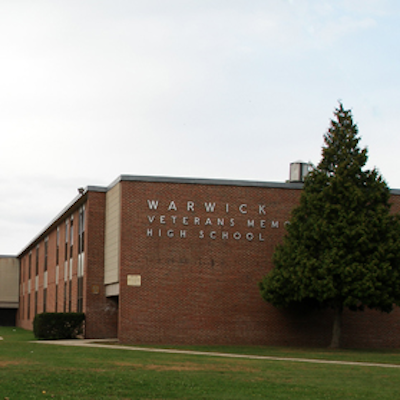
The plan would have saved an estimated $4.5 million according to the LTFPC.
The savings would have come from closing the two buildings and the maintenance costs associated with keeping them up. It will cost millions just to bring those two buildings into line with the fire code. The savings also would have been used to improve special education and honors programs while freeing up money for all-day kindergarten.
GET THE LATEST BREAKING NEWS HERE -- SIGN UP FOR GOLOCAL FREE DAILY EBLASTGovernment by emotion
Members of the Warwick School Committee were influenced by the emotions of the students and parents who didn’t want to see the consolidations take place and cowered under the pressure. Instead of doing the courageous thing and voting to save the money, the school committee voted to spend money by hiring consultants to study the issue further.
The cynic in me knows that consultants tell their employers what they want to hear, so let’s not be surprised when the consultants study the same data and conclude that the consolidations don’t need to take place.
It won’t be an easy case, however. Like it or not, enrollment has dropped and will continue to do so. Over the last 10 years, Warwick’s high school population has gone from 3,878 students in ’03-‘04 to 2,852. That’s a drop of 1,026 students (26 percent). Over the next 10 years, Warwick will see a drop of an additional 400 students, according to data provided by the New England School Development Council (NESDEC)—a non-biased agency that provides data for districts throughout the region.
Numbers don’t lie
Meanwhile, in Cranston, a city with more students, there are only two high schools—and they seem to be getting along relatively well.
And concerns of class sizes are a non-factor as the contract with the Warwick Teachers Union assigns a maximum class size of 28 students per teacher. In other words, when you get past all the Pollyanna stuff from people who think consolidations are never the answer under any circumstances, the decision was really a no-brainer. Especially when figuring in the fact that the Warwick School Department is running on roughly the same amount of money as it did in 2008.
Yes, it would mean less sports programs and more competition amongst students to make sports teams. But a school department cannot run with sports programs as their main focus or concern.
Unsurprisingly, like most politicians, the Warwick School Committee members were apparently thinking more about their next election than the best solution for everyone involved. It’s not just the School Committee, however.
Warwick Mayor Scott Avedisian hasn’t been much better on the issue. If we’re looking for leadership, he certainly didn’t provide any. To find Avedisian to comment on this issue, you’d need a search warrant. A Warwick Beacon reporter, however, was able to track him down for comment and it amounted to, from what I could decipher, lukewarm support for consolidations.
After some babble about how there is opposition to the plan and how he evidently went through consolidations when he was a kid, here’s what Avedisian told Jen Rodrigues: “It is evident based on the historical enrollment data that the Warwick school system is running under capacity at the cost of efficiency. Some action by the School Committee is necessary to free up resources that can then be reinvested into the system in the form of technology and facility upgrades as well as improved programs for students.”
“Some action”, certainly doesn’t, to my mind, signify strong support for the logical plan put forward by the city’s (LTFPC). Expect Avedisian to continue to recommend level funding the school department on an ongoing basis given that they balked at substantial savings. Despite his lack of help in the process, its hard to argue with that logic.
More rationality, please
Given how they’ve handled this process, one would think the Warwick School Department was flush with cash—not struggling.
I’ve never really been one of those people who say that government should be run as if it were a business. But when I see such blatant illogic ruling the day because government officials are too afraid to make difficult decisions, it makes one yearn for the cold rationality of business.
Yet sometimes, when I see the state or local governments running their operations based on emotions, nostalgia, and self-interest instead of sound logic and rationality, it makes me yearn for a more sound, rational, business-like approach.

RI Experts on the Biggest Issues Facing Public Education

Sasse
"Provide a state constitutional guarantee that all children will have access to an education that will prepare them to meet high performance standards and be successful adults.
Bridge the gap between the educational achievement of majority and minority students. This will require the implementation of a comprehensive agenda for quality education in Rhode Island’s inner cities."
Sasse
"Revisit school governance and clearly define the roles and responsibilities of the state, school districts , neighborhood schools, and school teachers and school administrators. Develop and implement a system to hold schools responsible for student outcomes."
Sasse
"Build a consensus and buy in of all stakeholders around the education reform initiatives being advanced by the Board of Education."

Metcalfe
"Set high expectations and raise our standards across the state for anyone that contributes to the success of our students. From adopting the Common Core to discussing rigorous teacher evaluations, conversations around creating a culture of high expectations have to be at the center of the work."
Metcalfe
"Expand opportunities and start earlier - we must ensure that all kids have access to a high performing public school of their choice, which includes full-day kindergarten."
Metcalfe
"School facilities - with an aging infrastructure, underutilized buildings and the need to provide fair funding for school facilities for all public school students regardless of the public school they attend, this needs to be a top issue tackled by the RI General Assembly in 2014."

Cano-Morales
"Meet the academic potential of all students but especially with regards to urban schools students -- 3 out of 4 are Latinos in Providence, Central Falls, and Pawtucket."
Cano-Morales
"Connect through specific best practices the academic successes of our students to careers jobs. Investing in schools is economic development as a whole for Rhode Island. "
Cano-Morales
"Increase the access to -- and completion of -- higher education and post- secondary opportunities. Poverty? Struggling families? Education and access to careers and competitive wages is the best antidote."

Duffy
"Providing adequate funding is critical -- and there are going to be pressures on the state budget, which mean stresses to meet the education funding formula. With the predictions of the state's projected loss of revenue with the casinos in MA, education funding could be on the cutting board, and we need to ensure that it's not. Do we need to look at strengthening the language of the constitution to guarantee funding?"
Duffy
"Implementing the common core standards will provide continuity -- and comparison -- between states now. With over 40 states involved, we're embarking a new set of standards here."
Duffy
"Accountability and assessing student performance -- how that it's driven by the common core, we'll be able to compare the best districts in RI against the best districts in say MA. That's the intent of the Common Core is a standardization of how we hold the system accountable."

Cylke
"Issue one is quality. Your quality of education should not be dependent on your zip code. And the reality is, certain cities are distressed, or whose property values are not as high, I know each town has a different capacity to fund education. There's an absolute, clear relationship between the quality of public schools, and economic development of states. There's irrefutable evidence that quality public schools can make states more competitive."
Cylke
"Issue two is equality. In West Warwick and Providence, the per pupil spending is around $16K. In Pawtucket it's $12.9. What's wrong with that picture? If I'm in charge of overseeing that my students are college ready, they need to be adequate funding. A difference of $3000 per pupil? We're talking in the tens of millions of dollars -- more like $25 million in this case. An exemplary school district is Montgomery County, MD -- they have roughly the same number of students, around 145,000 -- there's one funding figure per pupil. There's equitable funding for all kids."
Cylke
"Issue three is Infrastructure. A critical issue is whether the state is going to lift its moratorium in 2014 for renovations for older schools, ore new construction. If that moratorium is not lifted, and those funds are not available, it is critical to us here in Pawtucket. The average of my schools is 66 years, I've got 3 that celebrate 100 years this year. These old schools have good bones, but they need to be maintained. These are assets -- and this is all interrelated with the funding formula."


