


State Report: Social Media Privacy, Taxi Cab Tax + Jobs for Vets
Anthony Faccenda, GoLocalProv News Contributor
State Report: Social Media Privacy, Taxi Cab Tax + Jobs for Vets
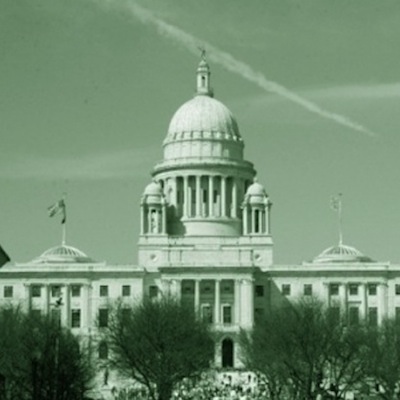
Social media privacy legislation introduced in both chambers
From one end of the nation to the other, state legislators are taking up legislation to protect workers and students from intrusion by employers and schools into their personal social networking accounts. This week, Rhode Island legislators introduced bills in both chambers to ensure that Rhode Islanders are not subjected to an unfair invasion of privacy.
“As more and more people use social media sites, it becomes even more important that we have laws in place to ensure their privacy and prevent outside parties – such as employers and universities – from requiring access to that personal information,” said Rep. Brian Patrick Kennedy (D-Dist. 38, Hopkinton, Westerly).
GET THE LATEST BREAKING NEWS HERE -- SIGN UP FOR GOLOCAL FREE DAILY EBLAST“The term ‘social media’ does not mean everything associated with a person’s online presence is automatically public, and it is not a license for an employer or school to pry into private material,” said Senate Majority Dominick J. Ruggerio (D-Dist. 4, Providence, North Providence).
Ruggerio and Kennedy have again this year introduced the “Social Media Privacy Act,” legislation that would establish two new chapters of state law, one covering student social media privacy and the other covering employee social media privacy.
Provisions
• No educational institution can require, coerce or request a student or prospective student to disclose the password or any other means of accessing a personal social media account, or to access an account in the presence of the institution’s employee or representative or to divulge any personal account information.
• No educational institution could compel a student or prospective student, as a condition of acceptance, to add anyone (coach, teacher, administrator or other school employee or volunteer) to their list of contacts associated with a personal social media account
• No educational institution could discharge, discipline or otherwise penalize a student for refusing to disclose social media information.
• Similarly, no employer can require, coerce or request an employee or applicant to disclose the password or any other means of accessing a personal social media account, or to access an account in the presence of the institution’s employee or representative or to divulge any personal account information.
• No employer could compel an employee or applicant, to divulge any personal social media account information except when reasonably believed to be relevant to an investigation of allegations of employee misconduct or workplace-related violation of applicable laws and regulations.
• No educational institution could discharge, discipline or otherwise penalize an employee or refuse to hire an application for refusing to disclose social media information.
Privacy Protection
“This legislation is not giving anyone a right to privacy over the parts of social media that are unsecured, but there is a distinct line between readily accessible portions of social media pages and other information, such as passwords and one-on-one communication, that an individual does not intend to be widely shared or made public,” said Kennedy, who chairs the House Committee on Corporations.
“We need to spell out that that right to privacy is very clear in our laws, especially today, when there are concerns that an individual’s privacy may be more and more under attack,” added Kennedy. “If social media accounts have information or postings that an individual has created to remain private, then this information should remain private as the user meant it to be and only read or seen by those individuals the user intended.”
“Even in an age of rampant social media and instant access to most everything, individuals have a right to share their personal thoughts with whom they choose,” said Ruggerio. “There must be a presumption of privacy in certain areas of social media interaction, and account holders – whether students applying to a new school or job applicants – should not be threatened or coerced into providing certain private information. This legislation reaffirms that as an individual’s right.”
The Kennedy bill, 2014-H 7124, has been referred to the House Committee on Judiciary. Among the co-sponsors are Rep. Edith H. Ajello (D-Dist. 1, Providence), Rep. Eileen S. Naughton (D-Dist. 21, Warwick), Rep. Elaine A. Coderre (D-Dist. 60, Pawtucket) and Rep. William San Bento Jr. (D-Dist. 58, Pawtucket).
Ruggerio's bill, 2014-S 2095, has been referred to the Senate Committee on Judiciary and is co-sponsored by Sen. Joshua Miller (D-Dist. 28, Cranston, Providence), Sen. Erin P. Lynch (D-Dist. 31, Warwick, Cranston), Sen. Paul V. Jabour (D-Dist. 5, Providence) and Sen. Adam J. Satchell (D-Dist. 9, West Warwick).
Among the states that have acted on or where social media bills are under legislative consideration are California, Florida, Georgia, Hawaii, Illinois, Iowa, Kansas, Maryland, Minnesota, Mississippi, Nebraska, New York, North Carolina, Ohio, Oklahoma, Pennsylvania and Wisconsin, and, in New England, Maine, Massachusetts and New Hampshire.
Check out more news from the past week in the slideshow below.
RI State Report: More News of the Week - 1/25/14

Employment Opportunities for Veterans
Rep. Deborah A. Fellela has introduced legislation that would push the state to ensure that at least 3 percent of the total value of all contracts available to businesses in each fiscal year goes to veteran-owned businesses. The state Department of Administration, in consultation with the division of veterans’ affairs, would be responsible for establishing related rules and regulation formulas for giving veteran-owned small businesses a preference in contract and subcontract awards.
“As noted in my bill, this state’s policy is to support the ‘fullest possible participation of firms owned and controlled by individuals actively serving or veterans in state-funded and state-directed public construction programs, projects and in state purchases of goods and services,’” said Fellela (D-Dist. 43, Johnston). “We’re essentially asking our friends and family to risk their lives for us and muster this overwhelming sense of courage, only to come back home and find nothing for them. Maybe if we give veterans and active duty members more incentive to start their own businesses, they will be less afraid to take risks and create opportunities for themselves. We want Rhode Island’s image to continue to evolve in a more positive direction.”
To read the bill in its entirety, go here.

Erin's Law
As a result of legislation introduced this week by Sen. James E. Doyle II (D-Dist. 8, Pawtucket) and Rep. Raymond H. Johnston Jr. (D-Dist. 61, Pawtucket), Rhode Island is one of about a dozen states where an ‘Erin’s Law’ bill will be taken up this year for legislative action.
The legislation would establish a comprehensive program to provide an age-appropriate course of instruction in the prevention of child abduction, child sexual exploitation and child sexual abuse.
“There is not a single one of us who would disagree that child sexual abuse and sexual exploitation, including the use of children in pornography and prostitution, poses a threat to the health and safety of young people, and puts child victims at grave risk of death or severe bodily harm,” said Doyle.
“Child sexual abuse, child sexual exploitation and child abduction can be reduced by raising awareness among young children of the common dangers and warning signs, empowering children to better protect themselves from sexual predators and teaching children how to get any necessary assistance or services,” said Johnston.
The legislation would require that all pupils in grades kindergarten through 8 in all public schools in the state receive instruction designed to prevent abduction, exploitation or sexual abuse. The instruction would be provided by or under the direct supervision of regular classroom teachers or any other agency, public or private.
Pictured: Sen. James E. Doyle II

Fiscal Note Bill
House Minority Leader Brian C. Newberry has filed legislation strengthening the requirement for fiscal notes, making them mandatory prior to committee consideration of bills before the RI House or Senate.
The legislation is the first of a series of bills to be introduced as part of the House Republican Caucus’ ‘Getting To 25’ initiative, and is one of its Spend Smarter proposals.
Fiscal notes are brief explanatory statements or notes which set forth “the estimated revenue, expenditure or fiscal liability of the state” of proposed legislation. Typically prepared by the State Budget Office, they are currently required by statute (RIGL 22-12) on all measures with financial impacts, but the requirement is commonly ignored.
Last year, 289 bills were heard by the House Finance Committee, but only 21 fiscal notes were issued
“Fiscal notes are a very good idea, and already required by law,” said Newberry. “But there are no consequences to ignoring the law, and the General Assembly appears to have been doing that for some time now. It’s a little like having stop signs, but no penalties for running them.
“How can the legislature expect members to cast informed, fiscally-sound votes when they receive so little information regarding cost? This is something that needs fixing,” Newberry said.
Newberry's legislation would require that fiscal notes with estimates of cost or fiscal impact be prepared and submitted to legislative committees at least three days before a bill is heard. Under certain circumstances, committees can override the legal requirement, but only by unanimous vote.

Proposal to Lower Corporate Tax
Sen. James C. Sheehan (D-Dist. 36, Narragansett, North Kingstown) is sponsoring legislation in the Senate this session to reduce Rhode Island’s corporate tax rate from its current 9 percent to 7 percent.
“As we move forward with the work that’s already been started by the legislature to improve Rhode Island’s business climate, and our state’s overall economic health, we need to make some bold moves,” said Sheehan. “We need to be competitive with nearby states, we need to be attractive to businesses that want to locate here and stay here and grow. We need to provide a compelling reason that Rhode Island is a good state for business. Reducing the corporate tax rate is a significant way to improve our business climate.”
Sheehan said his legislation calls for an outright cut of the tax rate from 9 to 7, unlike a plan announced last week by the governor which would hinge a corporate tax rate reduction to Congressional action to allow the state to collect taxes on online purchases.
Currently the highest in New England at 9 percent, reducing the rate to 7 percent would immediately make Rhode Island the lowest of the five states.
Click here to read Sheehan's proposal.

Taxi Cab Tax
Rep. Doreen Costa (R-Dist.31 – North Kingstown, Exeter) has introduced legislation to repeal a tax on taxicab fares and pet groomers.
“I have opposed this unfair tax against small business owners from the beginning,” said Costa. “I now have 40 signatures of legislators who also support this bill; a majority of the House. I am asking Speaker Gordon Fox to let the bill out to a floor vote. We cannot continue to hurt small business in this state. I encourage everyone affected by this tax to join me at the State House and let their voices be heard.”
The taxes were imposed in 2012. There were efforts to repeal the taxi cab tax, but they were unsuccessful.
Click here to read Costa's bill.


