


Will Turnout Be High?
Stephen Beale, GoLocalProv Politics Editor
Will Turnout Be High?
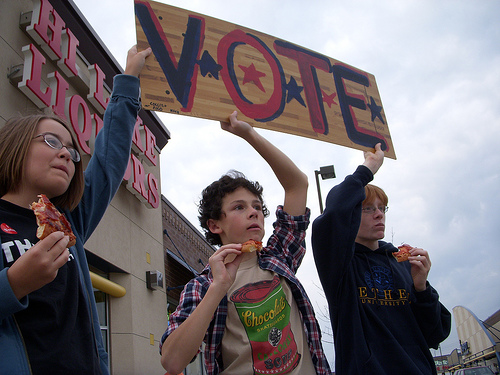
Several experts who spoke with GoLocalProv didn’t think so. “I don’t see a lot of excitement out there,” said pollster Joseph Fleming, who is president of Fleming & Associates.
But not everyone thought so. Economist Leonard Lardaro predict that voters will use today's primary as opportunity to vent their feelings about the recession and unemployment.
GET THE LATEST BREAKING NEWS HERE -- SIGN UP FOR GOLOCAL FREE DAILY EBLASTExperts Predict Low Turnout
Political scientist Victor Profughi, a retired professor at Rhode Island College, agreed with Fleming. He expects that turnout will be less than the 2002 statewide primary when 149,359 voters, or 22.5 percent of those registered, turned out. In 2006—another non-presidential election year—the turnout in the statewide primary was slightly lower, with 20.99 percent of registered voters participating.
A number of factors could be at work, according to Affigne. For one thing, he said there are not any contested council races seven wards in Providence. The absence of a Democratic primary for governor or Senate, he added, is another reason that voters may not be as motivated to come out to the polls.
Will the Recession Boost Turnout?
URI economist Leonard Lardaro disagreed. “People are very angry about the way things have gone in the state and nation and I think they really think that things have to change. It is taking something of this severity to stir things up,” Lardaro told GoLocalProv. “Unemployment is so severe and widespread I think people are not just fed up about this election, I think they are downright mad. …They’re angrier than I’ve seen in decades.”
For those who are unemployed and don’t feel like they have much control over their situation, voting is a chance to vent their frustrations, Lardaro added. “They have to say something,” he said. “This is really the only outlet. So in a sense it gives them a little control.”
Rich Holtzman, a political scientist at Bryant University, said the economic and political climate could lead to either outcome. “You have a lot of cynicism in government, so that should lead to a low turnout,” Holtzman said. On the other hand, he said the economic frustrations people have should drive them to the polls. “So it could go either way,” he concluded.
Photo credit: Collin Knopp-Schwyn