


Tale of Two States: MA Jobs Exploding v. Rhode Island Falling
GoLocalProv
Tale of Two States: MA Jobs Exploding v. Rhode Island Falling
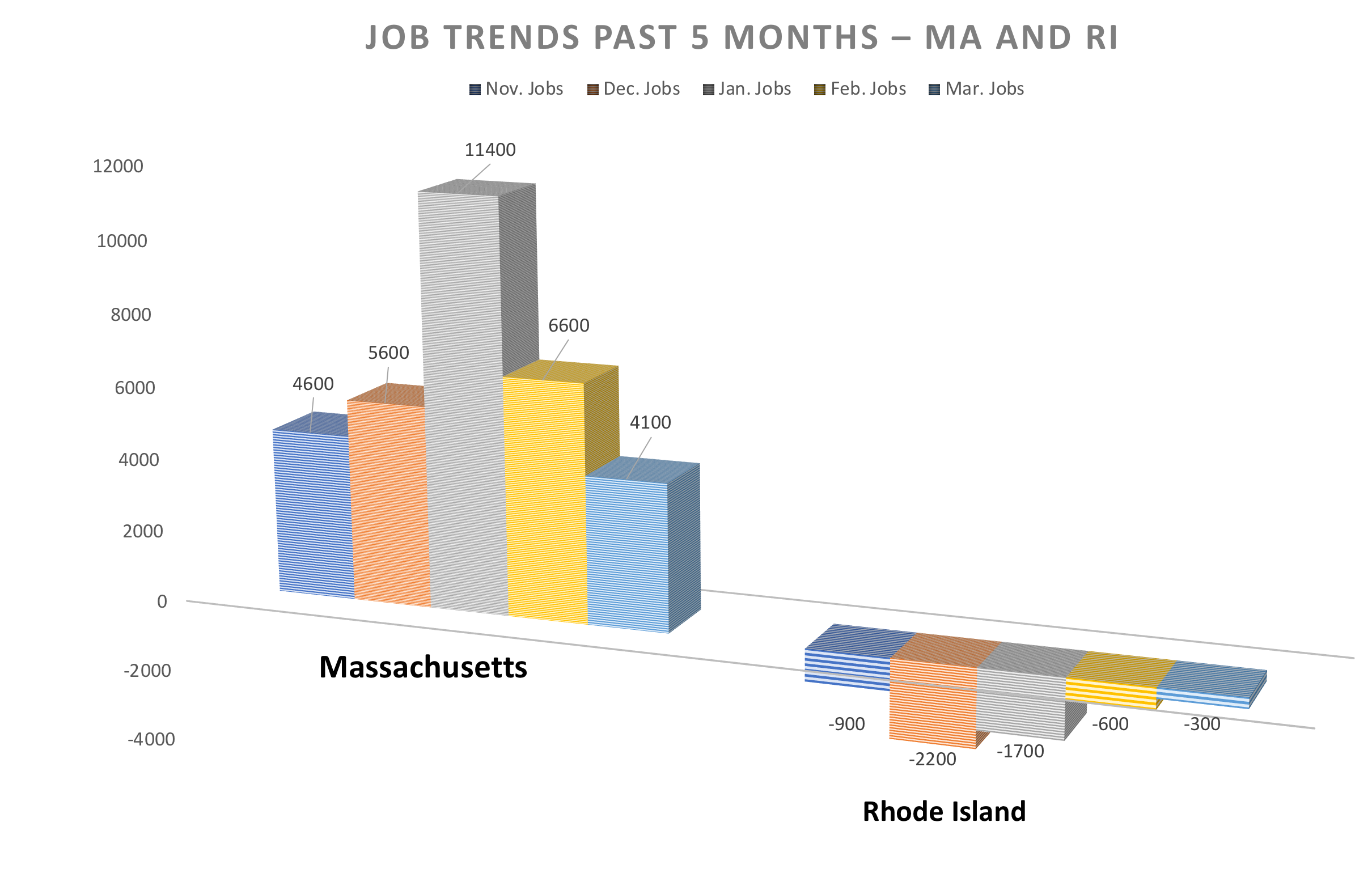
Over the past five months, Rhode Island and Massachusetts have been moving in opposite directions.
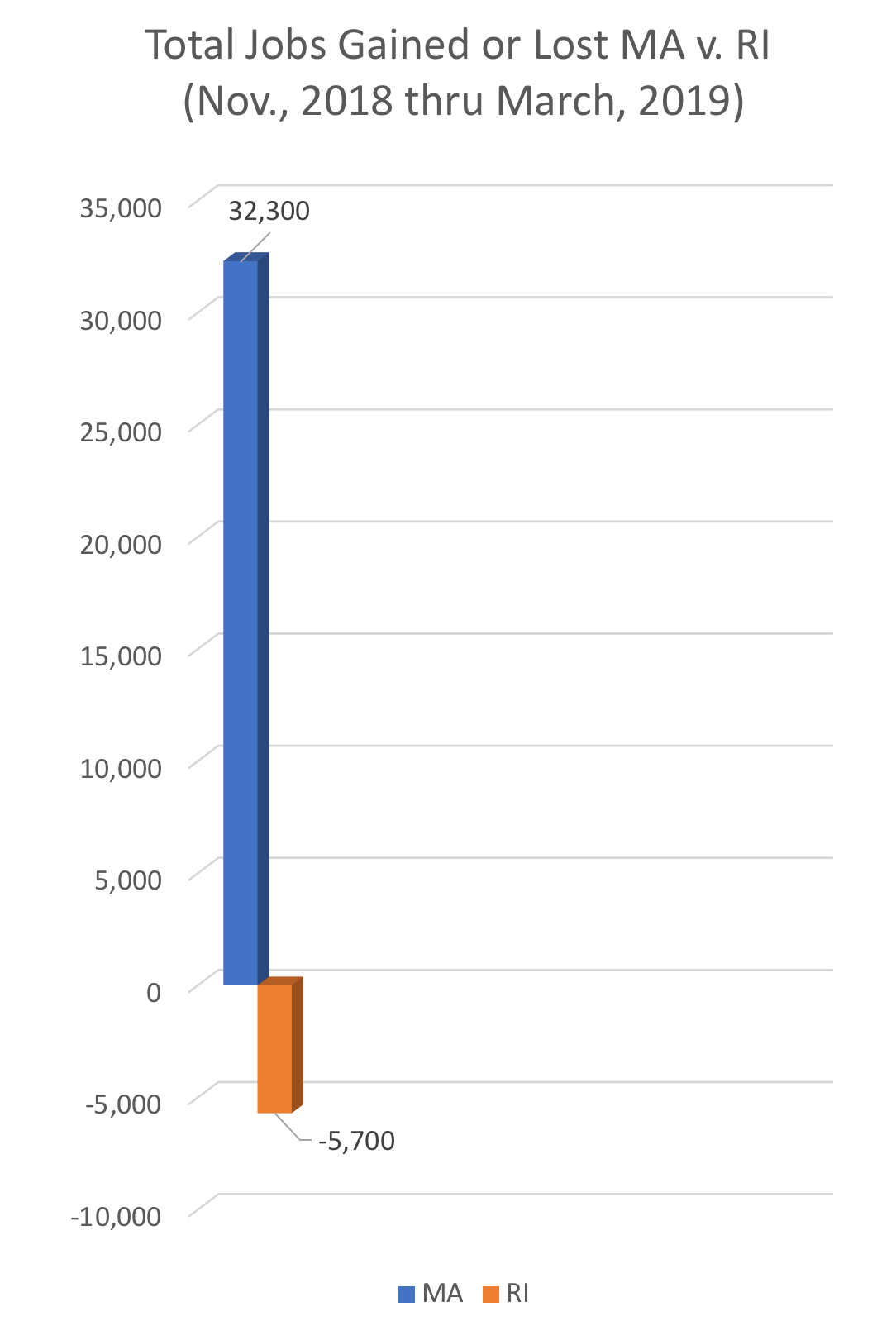
Economically, Massachusetts continues its explosive growth — in the past five months the Commonwealth has added more than 32,000 jobs, but just across the state line, Rhode Island has experienced five consecutive months of job losses.
GET THE LATEST BREAKING NEWS HERE -- SIGN UP FOR GOLOCAL FREE DAILY EBLASTRhode Island has lost 5,700 jobs since November. Rhode Island's numbers are an outlier compared to the rest of the country.
Now, RI has the lowest number of seasonally employed since January of 2018.
One of Rhode Island's top economists is warning about the financial trend for Rhode Island.
“Rhode Island’s February economic performance was abysmal, to put it kindly. Payroll employment, which has yet to move above its December 2006 level, declined in February on both an annual and monthly basis. Resident employment, which never really came very close to reaching its prior peak, has remained stuck at the same level since last September,” wrote Len Lardaro of the University of Rhode Island in his recent report about the February economic numbers.
In contrast, Massachusetts continues to celebrate its economic and jobs expansion.
The March estimates show 3,729,900 Massachusetts residents were employed and 113,800 were unemployed, for a total labor force of 3,843,600. The unemployment rate remained at just 3.0 percent. RI's rate is 3.8 percent.
U.S. Trends
While Massachusetts is a top performer, the five-month job loss trend dramatically underperforms U.S. trends. The U.S. economy has not lost jobs since September of 2010 — the economy lost 64,000 jobs.

"Our state’s Labor Force reached its most recent peak in October and has plateaued at that value ever since, albeit at declining rates of annual growth. In February, it fell relative to its level a year ago (-0.1%). Along with this, the labor force participation rate also declined in February. The Unemployment Rate fell to 3.9 percent, but as has been the case for well over a decade, this was very obviously not the result of robust job growth," he added.
In a recent appearance on GoLocal LIVE's Business Monday, Gary Sasse of Bryant University said, “I think a black cloud is descending over the economy of the state… there was some work done by the regional economic studies group of Bryant, which is Professor Eddie Tebaldi -- who we work very closely with -- and just to take a second to summarize and highlight some data, if you look at the gross domestic product for the fourth quarter, ours is going to grow by 0.2%."
Sasse said the challenge for Rhode Island is to shift from a transactional economic development strategy of a lot of one-off deals to a more strategic and planned strategy focused on critical clusters that can help transform Rhode Island’s economy not just for the short-term, but for the state’s long-term viability.