


Miriam Hospital Uses New Technology To Diagnose, Treat Bladder Cancer
GoLocalProv Health Team
Miriam Hospital Uses New Technology To Diagnose, Treat Bladder Cancer
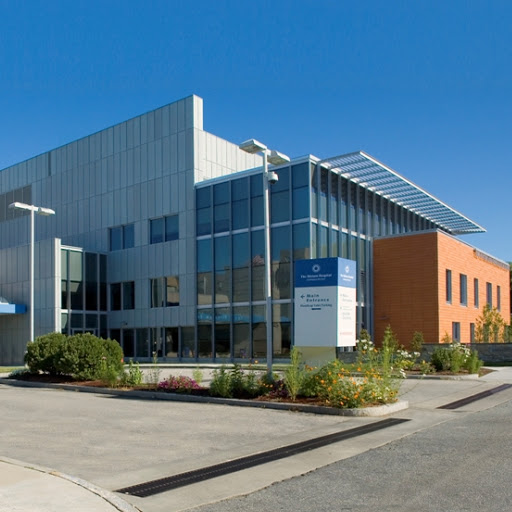
The Miriam Hospital is using a new minimally invasive technology that improves the ability for doctors to detect bladder cancer. Using blue-light cystoscopy, doctors can detect abnormal growths or suspicious areas. The procedure is performed at The Minimally Invasive Urology Institute (MIUI) at The Miriam Hospital, the only hospital in Rhode Island to offer the treatment.
“Rhode Island has one of the highest bladder cancer rates in the country, but research shows that blue-light cystoscopy decreases the chances of both bladder cancer recurrence and progression among patients,” said Arthur Sampson, president of The Miriam Hospital. “Using this type of technology and providing this level of service to our patients reinforces our goal to provide comprehensive, high-quality urologic care through our Minimally Invasive Urology Institute.”
With blue-light cystoscopy, the patient is sedated and the physician enters the bladder, without making any incisions using a scope to closely inspect the lining of the bladder for signs of cancer. Other hard-to-see tumors that may be present become more visible under the blue-light technology.
Bladder cancer is the sixth most commonly diagnosed cancer in the U.S. and has the highest recurrence rate of any form of cancer. It is the fifth most common cancer in Rhode Island.
“I strongly urge patients to see their doctor immediately if they experience blood in their urine or other changes in urination. They should not delay – thinking the symptoms may be related to another disease,” said Dragan Golijanin, M.D., director of genitourinary oncology at The Miriam and Rhode Island hospitals and co-director of the Minimally Invasive Urology Institute at The Miriam. “By being able to detect more tumors of the bladder with blue-light cystoscopy, we’re able to significantly improve disease management because there is less risk of tumors being missed during the procedure.”
The most common risk factors for bladder cancer include smoking, chemical exposure, and old age.
According to a hospital spokesperson, “The Minimally Invasive Institute at The Miriam Hospital provides full comprehensive services and by using this new technology, it is the hospital’s hope to identify more cases of bladder cancer early and improve treatments and outcomes to benefit our patients.”
GET THE LATEST BREAKING NEWS HERE -- SIGN UP FOR GOLOCAL FREE DAILY EBLASTTop 10 Hospitals in Rhode Island Rated By Patients

#10 Kent County Memorial Hospital
Kent County Memorial Hospital
Warwick, RI
New England Rank: 61
No. of Beds: 359
Kent Hospital is a nonprofit, acute care hospital which serves a number of towns in central Rhode Island. Kent’s Emergency Services Department receives 70,000 visits each year, making it the second busiest in the state.
Highlights: When surveyed, 80% of patients stated that 80% of their doctors communicated well with them, and 78% said that their nurses did.

#9 Rhode Island Hospital
Rhode Island Hospital
Providence, RI
New England Rank: 57
No. of Beds: 719
This private, not-for-profit hospital was founded in 1863 and has been serving Southeastern New England for over 150 years. Rhode Island Hospital acts as a major trauma center for the region, while also providing the Ocean State with the only facility dedicated solely to pediatric care.
Highlights: 78% of patients reported that their doctors always communicated well, and and 76% said their nurses did.

#8 Memorial Hospital
Memorial Hospital of Rhode Island
Pawtucket, RI
New England Rank: 49
No. of beds: 294
This community hospital has provided primary and ambulatory care services for residents of the Blackstone Valley of Rhode Island and southeastern Massachusetts for 120 years.
Highlights: Memorial’s highest marks were earned for its staff’s communication skills—84% of patients said they were given information about what to do during their recovery at home.

#7 St. Joseph of RI
St. Joseph Health Services and Hospital of RI
North Providence, RI
New England Rank: 32
No. of beds: 231
St. Joseph's treated 188 patients in its first year in 1892, and now, it currently serves 99,000 patients annually.
Highlights: Great communication at St. Jospeh got the highest marks from patients--82% said nurses always communicated well, and 80% said the same of doctors.

#6 Roger Williams
Roger Williams Medical Center
Providence, RI
New England Rank: 28
No. of beds: 176
Located in one of Providence’s oldest neighborhoods, Roger Williams is a community-owned and governed health care organization that provides some of the most advanced specialty care currently available.
Highlights: RW's highest marks were earned for its staff’s communication skills—86% of patients said they were given information about what to do during their recovery at home.

#5 Women and Infants
Women and Infants Hospital of RI
Providence, RI
New England Rank: 24
No. of beds: 247
One of the nation’s leading specialty hospitals for women and newborns, Women & Infants is the ninth largest stand-alone obstetrical service in the country with nearly 8,400 deliveries per year. In 2009, Women & Infants opened what was at the time the country’s largest, single-family room neonatal intensive care unit.
Highlights: Stellar communication is a hallmark at Women and Infants—82% of patients said they were given information about what to do during their recovery at home.

#4 Westerly Hospital
Westerly Hospital
Westerly, RI
New England Rank: 9
No. of beds: 125
The Westerly Hospital is a 125-bed hospital featuring private patient rooms that provides Washington (RI) and New London (CT) County residents a wide array of medical, surgical, laboratory and rehabilitative services using state-of-the-art technology in an intimate, community hospital setting.
Highlights: Communication is key at Westerly Hospital—83% of patients said they were given information about what to do during their recovery at home.

#3 Newport Hospital
Newport Hospital
Newport, RI
New England Rank: 6
No. of beds: 129
Founded and funded by Newporters in 1873, Newport Hospital began as a 12-bed cottage hospital on donated land, and now has 129 licensed beds. In 2011, the hospital received its second consecutive designation as a "Baby Friendly" hospital by the World Health Organization and UNICEF.
Highlights: Newport’s highest marks were earned for its staff’s communication skills—86% of patients said they were given information about what to do during their recovery at home.

#2 Miriam Hospital
Miriam Hospital
Providence, RI
New England Rank: 5
No. of beds: 247
Founded in 1926, Miriam Hospital is a private, not-for-profit hospital, with a history of providing superior patient care. The hospital is staffed by more than 870 physicians, approximately 50 full-time house staff (medical school graduates), a nursing staff of 500 and more than 2,300 employees.
Highlights: The overall patient experience at Miriam Hospital was incredibly positive—83% said they would definitely recommend the hospital to another person.

#1 South County Hospital
South County Hospital Inc.
Wakefield, RI
New England Rank: 1
No. of beds: 93
An independent, non-profit, acute-care hospital in Rhode Island, South County Hospital offers the latest advances in technology and a comprehensive range of medical and surgical services to its patients.
Highlights: Great communication is a hallmark at South County--85% of patients said their doctors communicated well, and 85% said their nurses did. Additionally, 91% of patients reported that they were given information about what to do during their recovery at home.


