


$14 Billion Budget Gets Approval - Key Arts, Small Biz and Low Income Efforts Failed
GoLocalProv News Team
$14 Billion Budget Gets Approval - Key Arts, Small Biz and Low Income Efforts Failed

The budget bill (2024-H 7225Aaa) now goes to the governor, who is scheduled to sign the budget legislation on Monday.
GET THE LATEST BREAKING NEWS HERE -- SIGN UP FOR GOLOCAL FREE DAILY EBLAST
Winners and Losers
The Economic Policy Institute said that the budget failed to address some critical needs.
“The FY25 budget should raise the state Earned Income Tax Credit (EITC) from its current rate of 16% of the federal EITC level to 30% but does not. It also should establish a Child Tax Credit. These are major omissions because these cost-effective policies have been proven to significantly reduce poverty,” said the EPI.
And EPI said, “Critically, the Medicare Savings Program expansion — which would make thousands of elderly and disabled Rhode Islanders newly eligible for healthcare and coverage of out-of-pocket costs of healthcare — did not make it into the budget. This would bring up to $33 million in federal funds into the state if adopted.”
The RI Coalition for the Arts and Rhode Island State Council on the Arts were advocating to create an $18 Million RI Creative Futures Fund (RICFF). The hope was to create a significant and ongoing funding source. The groups were told it would not be in the budget and the freestanding legislation failed to move. The Assembly did approve a bond question to help a small number of arts non-profits. That will go before voters in November -- see details below.
There was no significant relief in the budget for small businesses. The budget provides little relief for small businesses in Rhode Island. The budget does include a small fund of $2.6 million for businesses impacted by the failure of the Washington Bridge.
A free-standing bill to give Citizens Bank and other taxpayer-supported subsidies was adopted. Citizens will realize an additional $15 million. The bank has received $90 million in subsidies in the past five years.
Defending the Budget
But legislative leaders defended the budget.
“Through this budget, we are emphasizing education at every level and supporting children. This budget is the result of a truly collaborative process between my colleagues here in the House, the dedicated members of the House Finance Committee, our partners in the Senate and Governor McKee and his team to carefully create a plan that meets Rhode Island’s needs for education, students and children first, while addressing our challenges, such as housing and healthcare,” said Speaker K. Joseph Shekarchi (D-Dist. 23, Warwick).
President of the Senate Ruggerio (D-Dist. 4, North Providence, Providence) claimed, “This is a responsible budget resulting from a truly collaborative process among the Senate, House and the Governor’s office. I am pleased that the budget will invest in many Senate priorities, particularly in the areas of healthcare, child care, education and providing some needed relief to retirees."
Budget Elements
Under the spending plan approved by the Assembly, schools will receive a $70.9 million increase in state aid, $33.8 million more than originally sought by Governor McKee, to help schools and students still reeling from the effects of the pandemic.
The Assembly made more modest increases for multi-language learners (MLL), the governor’s Learn365RI initiative for out-of-school learning, and efforts to boost reading and math achievement, than the governor had sought, but those efforts will still get a boost over the current year. Currently MLL students get 15% extra over the core education aid; it will increase to 20% and be incorporated directly into the education funding formula. Learn365RI will get $5 million, and there will be $5 million more for reading and math achievement. The Assembly fully funded an $813,000 proposal by the governor to provide free breakfast and lunch to the 6,500 students statewide who currently receive reduced-price school meals.
The budget provides an additional $1 million in operating supports for Community College of Rhode Island and $2 million for University of Rhode Island, and continues both the Rhode Island Promise and the Hope scholarship programs, which provide two years of free tuition to Rhode Islanders at CCRI and Rhode Island College, respectively. The bill authorizes a two-year extension of the Hope scholarship program. It also covers with general revenue $2.3 million for the dual and concurrent enrollment initiative, which allows high schoolers to earn college credits without costs. Federal funds for the program have expired.
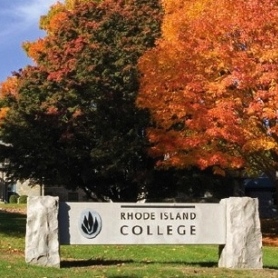
- One of the four bond questions that would go before voters in November would fund two major facilities at URI and RIC. The first is $87 million to build a state-of-the-art Biomedical Sciences Building at the Kingston campus of the University of Rhode Island. The governor had planned to ask voters to approve $80 million, but lawmakers added $7 million to fully fund the project as a means to bolster both URI and the life sciences industry in Rhode Island through increased research infrastructure. The bond would also provide $73 million to fully fund the renovation of Whipple Hall at RIC to house the new Institute for Cybersecurity and Emerging Technologies.
- Legislators added an additional $20 million to the governor’s proposal for a bond question on the November ballot to support more affordable housing creation, bringing the total to $120 million, the largest housing bond in the state’s history. The bond would provide $80 million for affordable housing, $20 million for acquisition and revitalization, $10 for homeownership programs, $5 million for site acquisition, $4 million or housing-related infrastructure and $1 million for municipal planning. Questions have been raised about how effectively and quickly previously approved dollars have been spent.
This past week, GoLocal reported that the Providence metro area has a major housing shortage and despite commitments of hundreds of millions of dollars by Rhode Island McKee and top lawmakers over the past two years. In 2023, the metro Providence area ranked second to last in the country of the top 50 metro areas in developing new multi-family units, according to data released this week by Apartment List based on the U.S. Census Bureau’s New Residential Survey.
So far, in 2024, the Providence metro area is seeing little improvement. READ MORE
- The Assembly included over $160 million from all sources to fully fund the plan recommended by the Office of the Health Insurance Commissioner to raise Medicaid reimbursement rates next year, rather than over three years as the governor had proposed. That includes $3.8 million for Early Intervention providers.
- The Assembly included a proposal by the governor to redirect $10 million in unspent federal COVID funding to nursing homes.
- The proposal adds $30.6 million to the governor’s request of $30.3 million to fund pending increases to support providers contracted by the Department of Children, Youth and Families.
- Recipients of Rhode Island Works, the state’s cash assistance and work-readiness program for low-income children and their families, will get a 20% raise in cash benefits and higher income disregards, and children will no longer lose their benefits if their parents are sanctioned. Lawmakers have instituted raises over the last several years, following a 30-year period without a single rate increase.
- The Assembly increased eligibility for child care supports, raised the rates of center-based providers and extended the child care for child care providers pilot program for an additional year.
- The plan allocates $83.6 million for the state match for federal funds for the reconstruction of the shuttered westbound Washington Bridge that brings I-195 over the Seekonk River between Providence and East Providence.
- The Assembly increased a proposal to direct $5 million of unspent federal ARPA funds for an existing municipal grant program for construction of roads, sidewalks and bridges, adding $2 million.
- The Assembly plan adds another $5 million to the $10 million the governor proposed to help the Rhode Island Public Transit Authority close a $18.1 million budget gap following the end of federal pandemic aid. The agency has announced that the extra funding is enough to ward off any service reductions in the coming year.
- The plan includes a proposal to raise the exemption on certain pension plans and annuities income from $20,000 to $50,000 for qualified single filers, $100,00 for joint filers.
- It also repeals the suspension of full annual cost of living adjustments (COLAs) for state employees who retired before 2012, when the state’s pension reforms took effect. This benefit restoration will give a small boost to their pensions, which will be most meaningful for those who make the least. For people who retired after July 1, 2012, the threshold for the COLA to be returned will be changed from when the pension fund is 80% funded to when it is 75% funded.
- It also changes the calculation for pension benefits to base it on the highest three consecutive years of earning instead of five.
- The Assembly added open space programs to the “green bond” to appear on November’s ballot: $5 million for farmland protection, $5 million to the Department of Environmental Management’s open space program and $3 million to DEM’s Division of Agriculture and Forest Environment to fund forest and habitat management on state property. The Assembly reduced some of the bond’s allocation for work at the Port of Davisville, as well as funding to repair Newport’s Cliff Walk that has now been awarded from federal funds, keeping the bond to $53 million even with the open space additions.
- The Assembly added a new $10 million bond referendum to support arts infrastructure in Rhode Island, including $6 million for specific “shovel ready” projects at Trinity Repertory Company, the Tomaquag Museum and Newport Contemporary Ballet.