


McKee Offers Safe Budget — Few Initiatives, Little Relief for Taxpayers or Businesses
GoLocalProv News Team
McKee Offers Safe Budget — Few Initiatives, Little Relief for Taxpayers or Businesses
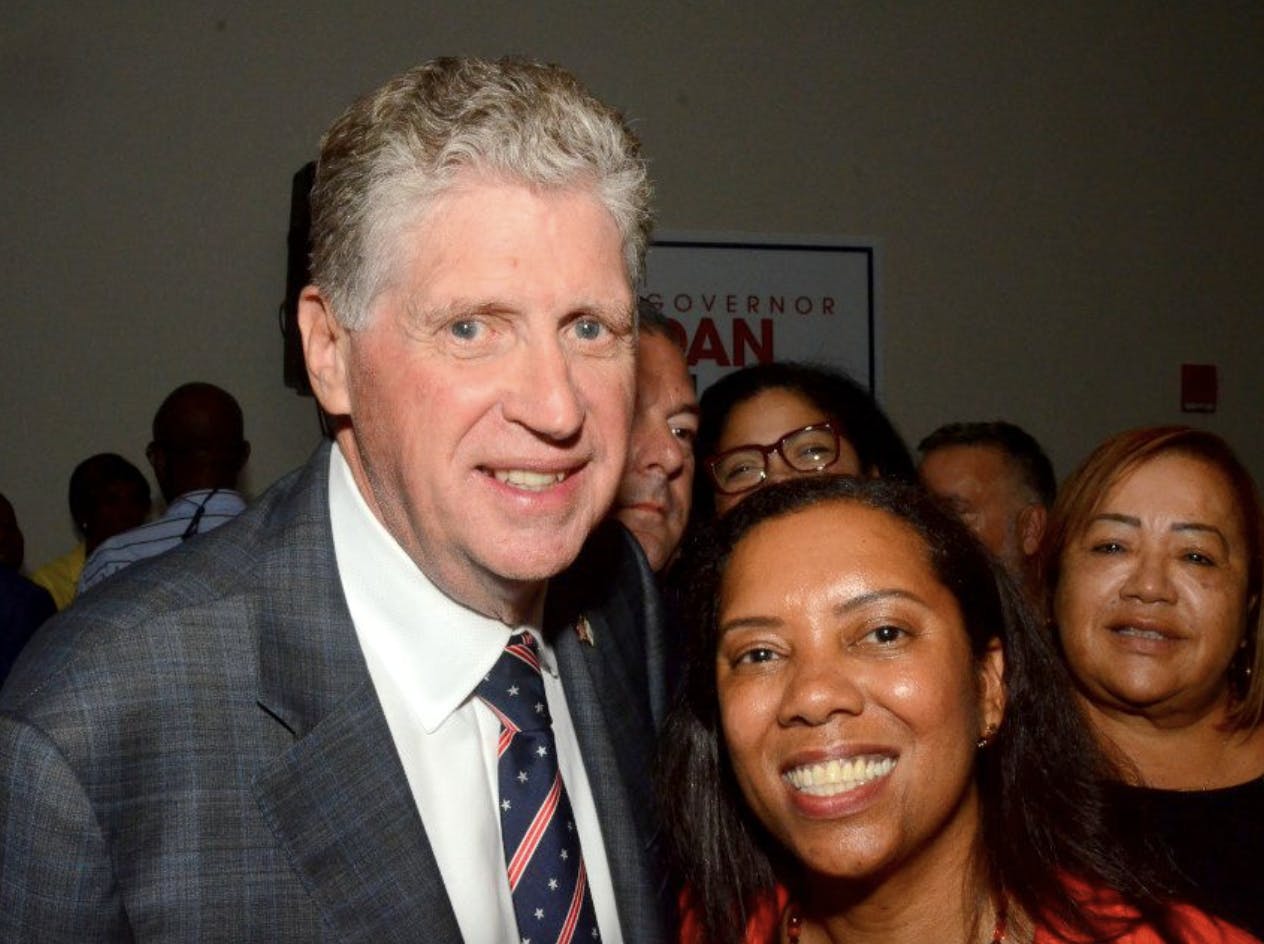
Last year, McKee proposed cutting the sales tax. Legislative leaders ignored McKee's proposal.
Also, last year, McKee promised to create “a 21st-century transportation system by 2030.” That plan is in shambles — one of the state's two major highways, I-195, has been forced to partially shut down and divert traffic due to the RIDOT Washington Bridge failure.
GET THE LATEST BREAKING NEWS HERE -- SIGN UP FOR GOLOCAL FREE DAILY EBLASTThis year, McKee proposed some increased spending in Pre-K through 12 education.
Big healthcare may be the biggest winner — he is proposing pumping more than $100 million into private hospitals and nursing homes.
McKee is pushing to allocate $90 million to Rhode Island hospitals and $10 million to nursing homes.
Among McKee’s proposals are:
Education
Rhode Island test scores have still not reached pre-pandemic levels. According to McKee:
• Raising the additional amount of per-pupil funding for Multilingual Learners in the three lowest proficiency categories from 15% to 25% of the per-pupil amount. More support for this student population is important to accelerate gains in English proficiency.
• Investing $15 million to improve outcomes in math and English language arts by providing coaching services to local education agencies with the most acute academic needs, as well as professional development opportunities for teachers and funds to meet the needs of students, families, and teachers.
• Adding 35 Pre-K classrooms totaling 700 seats for the start of the 2024-25 school year. This will bring the total number of Pre-K seats to 3,000 – a pivotal step in achieving the State’s goal of offering 5,000 seats by 2028.
• Providing $5 million to support McKee's out-of-school-time programming, with an emphasis on critical skill development.
• Increasing state funding formula aid by $19.2 million, which raises per-pupil funding to $12,335 – an increase of $459 from the enacted FY 2024 level.
Health and Human Services
• Investing $20.4 million in general revenue ($51.2 million, all funds) to phase in new Medicaid rates that were proposed as part of the Office of the Health Insurance Commissioner’s rate review process in 2023. The Governor proposes phasing in these higher rates over three years for all services except for Early Intervention.
• Fully fund the rate increase for early intervention in FY 2025 with $1.7 million in general revenue ($3.8 million, all funds). This represents further support for a program that promotes the development of infants and toddlers who have a developmental disability or delay.
• Providing $29.1 million in general revenue ($79.7 million, all funds) to establish rates and support operating costs for Certified Community Behavioral Health Clinics – a new model of care to provide a comprehensive range of behavioral health services to improve outcomes and reduce reliance on emergency departments.
• Providing additional state-directed payments to hospitals with approximately $90 million in general revenue and $284 million from all funding sources to improve quality and create better rate parity between commercial health insurance and Medicaid rates. These payments, which were approved in the enacted FY 2024 budget, will reduce the gap between rates and provide hospitals with additional financial support.
• Supporting nursing homes with $10 million in State Fiscal Recovery Funds to bridge the gap from July to October when new rates along with an annual inflationary index take effect.

• Raising the exemption for taxable retirement income from $20,000 to $50,000 starting in the tax year 2025 – projected to save Rhode Islanders $3 million in FY25 and $6.2 million in FY26.
• Cutting the corporate minimum tax from $400 to $350. A $50 savings to small businesses annually.
• Investing $500,000 to expand efforts to register minority and women business enterprises to maximize their participation in state procurements.
• Providing $1 million in grants to municipalities and economic development agencies to revitalize main streets and business districts.
Borrowing - General Obligation Bonds
• The Governor also recommends placing four general obligation bond questions – totaling $345.0 million – on the November ballot to make long-term, infrastructure improvements for higher education, housing, a state archive facility, and the environment.
• University of Rhode Island Biomedical Sciences Building: Providing $80 million to help build a facility on the Kingston Campus that will include the laboratory space necessary to advance cutting-edge discovery, educate tomorrow’s workforce, and accelerate the life sciences industry. The project builds on the creation of the State’s Life Sciences Hub that will fund and incubate Rhode Island-based life sciences companies that promote economic and workforce development and position Rhode Island to compete nationally and internationally.
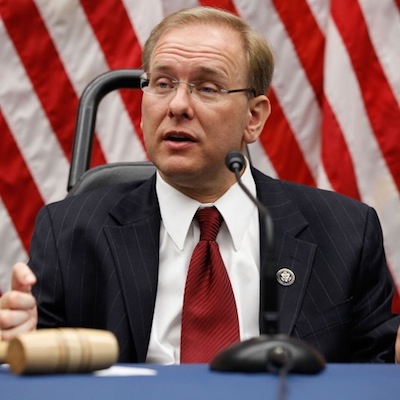
• Rhode Island College (RIC) Cybersecurity Building: Providing $55 million to repair and restore Whipple Hall to support the Institute for Cybersecurity and Emerging Technologies that is preparing students and professionals with the technical and business skills associated with cybersecurity, artificial intelligence, and other emerging technologies. This initiative is being run by former Democratic Congressman Jim Langevin.
Housing and Community Opportunity – $100 million
• Increasing affordable and middle-income housing production and infrastructure, supporting community revitalization, and promoting home ownership. Much of the funding appropriated in federal dollars is still unspent.
State Archive and History Center – $60 million
• Establishing a modern, permanent state archive and history center to store and display historical documents central to both the state’s and country’s founding, including copies of the Declaration of Independence, letters from George Washington, and the original Public Laws and Private Acts of the General Assembly.
Construction Project and Local Funding – $50 million
• Port of Davisville Infrastructure at Quonset: Providing $20 million to make infrastructure improvements at the port that are part of its master plan, including the development of roads for oversized freight vehicles to access a new terminal and the completion of space for cargo to be offloaded. These projects are upgrading World War II-era infrastructure and positioning the port to accommodate offshore wind project components and logistics staging. This is on top of the $65 million provided to the site with federal ARPA funds.
• Municipal Resiliency: Providing $10 million in financial assistance to municipalities to restore or improve the resiliency of infrastructure, vulnerable coastal habitats, and rivers and stream floodplains. These funds are expected to leverage significant matching funds to support local programs to improve community resiliency and public safety in the face of increased flooding, major storm events, and environmental degradation.
• Newport Cliff Walk: Providing $8 million to restore or improve the resiliency of the historic tourism infrastructure of the Newport Cliff Walk.
• Brownfields Remediation and Economic Development: Providing $5 million for up to 80 percent matching grants to public, private, and nonprofit entities for brownfield remediation projects.
• Local Recreation Projects: Providing $5 million for up to 80 percent matching grants for municipalities to acquire, develop, or rehabilitate local recreational facilities.
• Coastal Resiliency and Public Access Projects: Providing $2 million for up to 75 percent matching grants to public and nonprofit entities to restore or improve the resiliency of vulnerable coastal habitats and restore rivers and stream floodplains.