


Pell Bridge Turns 50, Washington Must Build for the Future: Guest MINDSETTER™ Berbrick
Guest MINDSETTER™ Walter Berbrick
Pell Bridge Turns 50, Washington Must Build for the Future: Guest MINDSETTER™ Berbrick
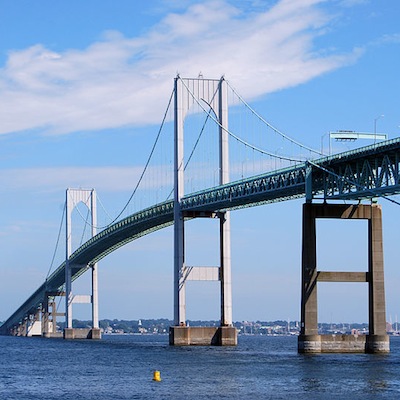
The longest suspension bridge in New England forever changed Rhode Island. Thousands helped build the sturdy structure and nearly 350 million motorists have crossed it. It’s a symbol of hope and American ingenuity.
During this same half century, however, America’s investment in transportation infrastructure, as a share of our economy, has been cut by half. In fact, China invests four times as much as we do in transportation and most European countries now invest twice as much as us.
GET THE LATEST BREAKING NEWS HERE -- SIGN UP FOR GOLOCAL FREE DAILY EBLASTIt’s no wonder why the American Society of Civil Engineers (ASCE) gave the United States a D+ grade in overall infrastructure. To put that in perspective, the over 54,000 faulty bridges, if placed together, would stretch from Providence to Orlando. Needless to say, the failed federal policies of our past have left this generation, my generation, in a $2 trillion dollar hole.
Rhode Island, with the highest percentage of structurally deficient bridges in America, has the deepest hole to get out of. And Providence, the city of progress, is home to the worst of them. Despite the striking fact that the number of structurally deficient bridges are down across America, it would still take us at least the next 50 years to repair or replace those bridges given the current pace of investment and inaction.
It comes down to a failure of leadership in Washington. It’s not a two-year or six-year investment, it’s a generational investment— because for a generation, lawmakers from both Houses and both parties have failed to invest in the infrastructure of the future.
Beyond making our bridges safer, infrastructure investments of all kinds, from roads and rails to homes and hospitals, must be built to stand the test of time—which increasingly will include the worst impacts of climate change, something these staggering estimates don’t account for. Because it’s not a question of if, but when the next extreme weather event or devastating wildfire will hit.
That’s why Washington should empower state and local leaders who need help building a strong defense against the climate impacts felt today—and against the more devastating ones of tomorrow. In doing so, House leadership should set clear, ambitious, and specific goals, requirements, and incentives to reduce carbon pollution through infrastructure investments. Federal funding should prioritize investments that increase resilience and nonpolluting alternatives—like electric vehicles—and increase affordable access to opportunities like biking, walking, and public transportation.
Lawmakers in Washington should require and incentivize states to prioritize and spend money on repairs. And State agencies competing for limited federal funds to expand transit must prove they can fund long-term maintenance and operations. The sorry state of Rhode Island’s roads and bridges clearly reflect that reality.
To make matters worse, these sobering estimates do not account for social inequities made worse by neglectful and discriminatory infrastructure investment policies. That’s why federal funds should target communities facing the greatest need while preventing pollution and geographic isolation—especially in underserved, low-wealth, and rural communities.
Surely we’ll need to build better roads and bridges for a better tomorrow. That means we’ll need to change the way we build. If the cement industry were a country, it would be the third largest emitter in the world— behind China and the US. No matter the type of bridge, we must radically rethink how bridges are constructed, inspected, maintained and replaced. We’ll need to spearhead new research and take advantage of research underway. Surely we’ve got a lot of work to do—from developing new technologies and materials that reduce the carbon footprint of infrastructure to breaking down institutional barriers that sever its funding sources.
But throwing more money at the problem isn’t the only answer either. A future infrastructure bill must protect workers’ rights, fight workplace discrimination, set high standards for wages and benefits, and facilitate high-quality training and apprenticeships. It should give our veterans preference and embrace our neighbors released from prison.
A comprehensive national infrastructure investment package provides Washington an extraordinary opportunity to unite a divided nation and a divided Congress around a common purpose: higher wages, rebuilding struggling communities, and decarbonizing our economy.
It’s time Washington roll up its sleeves and get to work. We can do better—and we must. We certainly won’t solve these issues overnight; or within the next couple years, for that matter. As the old saying goes, “we’ll cross that bridge when the time comes.” Well the time is now. Let’s cross this bridge together. And let’s get it right for the next generation who will inherit a warmer and wetter America.

19 to Watch in 2019 - FULL LIST

Angie Armenise
Chef and co-owner of Blackie’s Bulldog Tavern in Smithfield, Angie Armenise has it all going. Expansion to a new and larger location, a wonderfully loyal customer base and a big stack of awards -- and more to come in the new year. READ MORE

Marcela Betancur
Marcela Betancur, the new head of Latino Policy Institute at Roger Williams University and will be the power behind Latinx think tank in 2019.
Betancur, a Central Falls native, most recently worked READ MORE

Brian Goldner
No one will influence the psyche of Rhode Island more this year than Hasbro CEO Brian Goldner. After the loss of the PawSox to Worcester and the closing of Rhode Island’s beloved Benny's in 2017, Rhode Islanders are a bit raw.
He is poised to announce that Hasbro is...READ MORE

Cortney Nicolato
New United Way of Rhode Island President and CEO Cortney Nicolato succeeded Anthony Maione in 2018 — and takes on her first full year at the helm of the social service organization in 2019.
She is a Rhode Islander turned Texan returned back to Rhode Island. The Pawtucket native is all about Rhode Island and is passionate about helping to improve issues of housing affordability and the quality of education in RI. She is the mother of two elementary school-aged children. READ MORE

Sabina Matos
It is the rise of the Phoenix in Providence. On Monday, Sabina Matos won back the Presidency of the Providence City Council and returns to the top legislative position in the City of Providence.
As Providence goes so goes Rhode Island. Matos will be faced with taking on some of the most difficult issues in the state. READ MORE

Jamie Bova
The Newport City Councilor At-Large lined up the votes to votes for Mayor after being elected to just her second term on the Newport City Council this past November.
Bova, an engineer who grew up in Middletown, attended URI, and moved to Newport in 2012, succeeds Harry Winthrop as the city faces major changes ahead for 2019, including the construction of a new hotel on Thames Street — and more hotel proposals in the pipeline — and READ MORE

Jennifer Wood
The former private practice attorney turned top government aide turned non-profit director might have her biggest — and most public — battle on her hands in 2019.
RI Center for Justice Executive Director Jennifer Wood joined GoLocal News Editor on GoLocal LIVE where she spoke to the next steps after filing a federal class-action lawsuit in late November on behalf of all Rhode Island public school students to establish the right, under the U.S. Constitution, to an adequate education to prepare young people for full civic education.

Catholic Church Sex Abuse Survivors
In 2018, Bishop Tobin with the Diocese of Providence landed on GoLocal's “18 to Watch” as the Catholic Church was — and continues to remain — at the center of lawsuits pertaining to the collapse of the St. Joseph pension fund.
He’ll remain squarely in the spotlight — and not for good — in 2019, when he has pledged to release a list of names of abusive priests “credibly accused” over the years in the Diocese, as pressure mounts nationally for how sexual abuse claims were handled around the country — READ MORE

Matt Voskuil
One of Newport’s most iconic — and upscale — dining locations has a new look, a new chef — and people are taking note not just in Newport, but beyond.
Executive Chef and Director of Food and Beverage, Matt Voskuil at the newly opened Cara at the Chanler READ MORE

David Torchiana
The most powerful person in healthcare in Rhode Island may soon be a man who rarely visits the state and few here know his name.
Dr. David Torchiana is the CEO of Partners HealthCare and he is poised to push through an acquisition of Rhode Island’s second largest hospital group, ending the local control over three of Rhode Island’s most important healthcare assets. And, the deal has the potential of putting in peril thousands of Rhode Island jobs through consolidation. READ MORE

RI GOP Party Chair
Rhode Island Republican Party Chair Brandon Bell was defeated in his run for the General Assembly in 2018.
Republican Cranston Mayor Allan Fung lost in his second attempt at the Rhode Island Governor’s office, after a bruising primary that saw former opponent and House Minority Leader opt to endorse former Republican-turned-independent (and honorary chair for President Donald Trump’s campaign in Rhode Island) Joe Trillo. READ MORE

Anthony Baro
Anthony Baro heads Newport-based PowerDocks — one of Rhode Island’s most interesting startups. It is a market-making green tech company that, in many ways, combines the best of Rhode Island.
The emerging maritime renewal energy company is having an impact in the U.S. and globally. READ MORE

Blake Filippi
Blake Filippi is the new House Minority leader and is a fresh-faced leader for the GOP in Rhode Island. But, he faces a number of challenges. READ MORE

Desmond Cambridge
Brown University sophomore basketball player Desmond Cambridge has been a human highlight film his first year and a half on College Hill. He won Ivy League Freshman of the Year and this year he is READ MORE

Sarah Markey
South Kingstown School Board member Sarah Markey has been at the center of controversy since her election in November.
Markey, a top labor leader for the RI National Education Association, has drawn criticism by Democrats, Republicans and multiple municipal attorneys because READ MORE

Peter Neronha
Peter Neronha, the new Attorney General, takes over for the controversial Peter Kilmartin. The former U.S. Attorney for Providence now faces a far busier assignment than his federal one. READ MORE

Dylan Conley
Dylan Conley seems to be everywhere. Recently, GoLocal featured the attorney as one of Rhode Island's "Emerging Leaders."
He is the chairman of the Providence Board of Licenses and is in a hotbed READ MORE

Mike McGovern
Chef Mike McGovern -- formerly the chef at Red Stripe -- is taking the helm at East Greenwich's Kai Bar -- and now 241 Main Sports Bar and Grill.
Kai Bar is a combination of small plates and big drinks, “Kai offers a rotating small plates menu from an award-winning Chef and Craft Cocktails READ MORE

BIg Tourism Voids
Tourism is one of the most important sectors of the Rhode Island economy and two of the most important positions in the state are now vacant. READ MORE


