


Bryant Refuses to Respond to Charges, Criticism Building Against Chinese Sponsored College Programs
GoLocalProv News Team
Bryant Refuses to Respond to Charges, Criticism Building Against Chinese Sponsored College Programs

The programs have been criticized as being centers for espionage, tools for the Chinese government to control dissent, and structures for developing strategies to collect intellectual property. Most of the programs are funded in whole or in part by the Chinese Ministry for Education.
In late 2018, the University of Rhode Island announced it was ending its relationship with the program. The announcement came just months after GoLocal sought thousands of emails tied to the Director of the Confucius Institute at URI — Dr. Wayne Wenchao He.
GET THE LATEST BREAKING NEWS HERE -- SIGN UP FOR GOLOCAL FREE DAILY EBLAST“In order for us to be consistent with the intent of the United States John McCain National Defense Authorization Act, which had some specific limitations,” Clifford Katz, the acting director of the Confucius Institute at URI, said. “We decided on December 1 that we were going to dissolve our Confucius Institute and terminate our relationship with the Chinese organization known as Hanban, which supports Confucius Institutes.”
Bryant University officials refused to respond to repeated phone calls and emails from GoLocal about the Confucius Institute in Smithfield.
The Confucius Institute program director at Bryant, Dr. Hong Yang, also refused to respond to questions.
Bryant University’s website cites, “Established in October 2006, the Confucius Institute at Bryant University (CIBU) was the first China-funded institute in Southern New England dedicated to the promotion of Chinese language and culture."
The Bryant program is not only being retained, but according to Bryant documents, the Chinese partnership is being expanded. "Bryant University President Ronald K. Machtley and the Director of Art Exhibitions China, Mr. Ping Tan, signed a Memorandum of Understanding in Beijing during President Machtley’s recent trip to China in November. Director Tan highlighted the cooperation and exchanges between China and the United States," said a recent Bryant announcement.
Bryant has its own campus in China.
"Situated on the campus of Beijing Institute of Technology Zhuhai, Bryant University Zhuhai houses the only U.S.-China joint four-year undergraduate business degree program in Guangdong Province. The academic program for Chinese as well as U.S. students mirrors the vigor and quality of Bryant's nationally recognized curriculum. Bryant is the first and only American university with a presence in Zhuhai. Guangdong Province, the site of Bryant Zhuhai, is an important area for China's economy, providing 10 percent of China's total GDP and the location for many of China's innovative manufacturing operations," according to Bryant.

In January, the University of Maryland said that it will close its Confucius Institute, the earliest of its kind in the United States. It blamed new federal regulations on the decision.
Last month, the University of Missouri announced it is closing its Confucius Institute, in part, due to visa problems with Chinese students.
The U.S. Department of Justice recently announced that the Chair of Harvard University’s Chemistry and Chemical Biology Department and two Chinese nationals have been charged in connection with aiding the People’s Republic of China.
Dr. Charles Lieber, 60, Chair of the Department of Chemistry and Chemical Biology at Harvard University, was arrested and charged by criminal complaint with one count of making a materially false, fictitious and fraudulent statement. Lieber will appear before Magistrate Judge Marianne B. Bowler in federal court in Boston, Massachusetts.
Yanqing Ye, 29, a Chinese national, was charged in an indictment today with one count each of visa fraud, making false statements, acting as an agent of a foreign government and conspiracy. Ye is currently in China.
Zaosong Zheng, 30, a Chinese national, was arrested on Dec. 10, 2019, at Boston’s Logan International Airport and charged by criminal complaint with attempting to smuggle 21 vials of biological research to China. On Jan. 21, 2020, Zheng was indicted on one count of smuggling goods from the United States and one count of making false, fictitious or fraudulent statements. He has been detained since Dec. 30, 2019.
While these arrests were not tied to the Confucius programs, it does demonstrate the Chinese strategy of leveraging academics to gain access to critical IP and research.
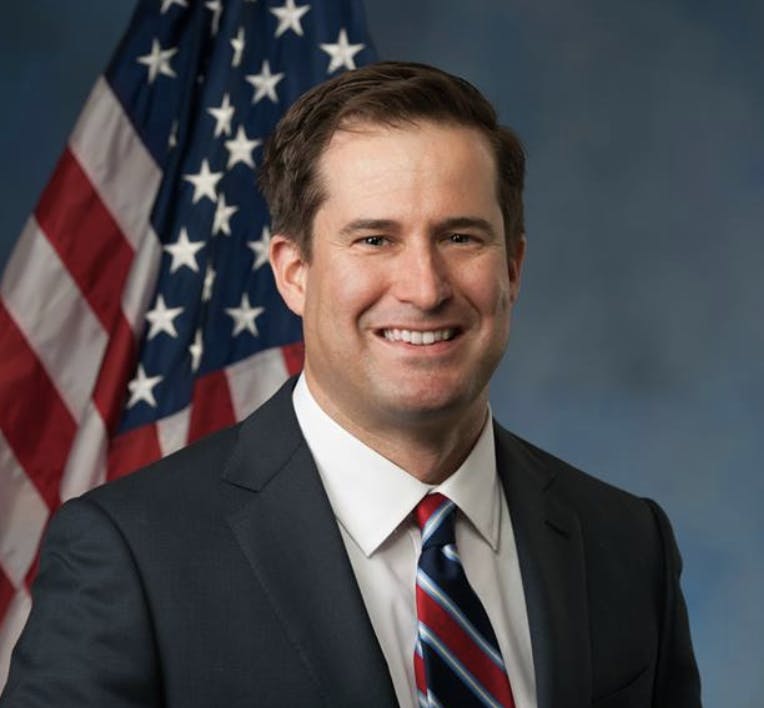
“The Chinese government has been clear in its goal and purpose for creating and expanding Confucius Institutes throughout the country, namely to distort academic discourse on China, threaten and silence defenders of human rights, and create a climate intolerant of dissent or open discussion,” said U.S. Congressman Seth Moulton on Facebook.
Moulton, a former Marine officer and former Democratic candidate for President, is not the only member of Congress to urge universities to drop their relationships with the Confucius Institute partners across the country.
U.S. Senator Marco Rubio (R-FL) has also been a leading critic.
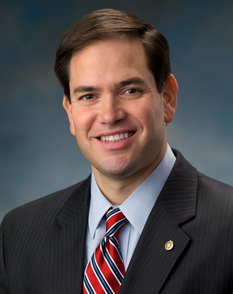
“The Pentagon is absolutely right to deny federal funding to American universities that have agreements with Chinese state-run Confucius Institutes attempting to infiltrate college campuses, and every other federal agency should follow suit,” Rubio said. “The Communist Chinese government’s attempts to influence academic institutions and thwart critical analysis of China’s past and present policies is just one part of their aggressive campaign to stifle free speech and censor information both here at home and abroad. American universities that still have agreements with Confucius Institutes should follow the lead of Florida’s academic institutions that have already terminated these agreements.”
Chinese-sponsored press has been relentless in defending the program. The China Daily writes:
"There seem to be two types of Confucius Institutes in the United States: those that are hailed on more than 100 campuses as a bridge to learning the Chinese language and culture, and those that are labeled by some newspapers and websites as a "political tool" of China.
The US media's "flawed assumption" has contributed to such confusion, according to a senior China expert in Washington. There have been many such reports in recent weeks following two US lawmakers' letters urging a handful of schools to sever ties with the Confucius Institute. The lawmakers and media outlets have accused the programs of being a tool to expand the "political influence of China" and distort US academic discourse," wrote the China Daily.
China Daily is an English-language daily newspaper owned by the Publicity Department of the Communist Party of China and published in the People's Republic of China.