


Electric Rate Hike Means Millions More in RI Tax Revenues
Stephen Beale, GoLocalProv News Contributor
Electric Rate Hike Means Millions More in RI Tax Revenues

The additional revenues are thanks to the 4 percent gross earnings tax that all customers pay and a 7 percent sales tax levied on businesses who are not manufacturers, according to Paul Dion, the chief of the state Office of Revenue Analysis. In the last fiscal year, the two taxes yielded a total of $61.8 million in revenue for the state, according to official state figures. (See below slides for a breakdown of state-related costs and charges on local electric bills.)
One state rep says this is not the right time for the state to collect more revenues from customers who are hard-hit by the rate increase. “It’s … a matter of principle. The state should not be making money off this unprecedented increase,” said Blake Filippi, an independent from Block Island who is starting his freshman term in the General Assembly.
GET THE LATEST BREAKING NEWS HERE -- SIGN UP FOR GOLOCAL FREE DAILY EBLASTFilippi is having legislation drafted that would exempt customers from paying the gross earnings tax and the business sales tax on the increase. Filippi said the measure would provide some immediate relief in what is a much larger problem. “I think it’s pretty obvious we kind of have an energy crisis,” he said. “When you see a 32 percent increase in the cost of electricity, it kind of makes you stop and say, ‘Wait a minute, what’s going on?’” (The 32 percent figure represents the increase compared to last year’s July to December rates.)
Filippi plans to have a bill filed by the end of this month. A spokesman for Speaker Nicholas Mattiello said he could not comment on whether the House Leadership would support the bill until it had been filed.
Five other ways state is increasing costs
Beyond taxes, there are at least five other ways—and likely more—that the state is contributing to the costs customers see on their electric bills, according to a GoLocalProv review of National Grid documents, state law, and interviews with company and state officials. (See below slides for the breakdown.)
There’s a flat 73-cent charge that funds the state’s Low-Income Home Energy Assistance Program (LIHEAP) Enhancement Plan—not to be confused with the federal LIHEAP program. The state program supplements the federal one, helping low-income residents.
There are currently at least two separate charges stemming from state mandates on renewable energy, with a possible third charge taking effect this year, thanks to a new state law. (National Grid appears to have overcharged customers on one of the renewable energy charges last year. The charge is currently listed as a credit on bills.)
Customers also pay .983 cents per kilowatt hour towards energy efficiency programs. For a typical customer, that comes out to $4.91 on their electric bills each month. The programs, which are overseen by the state and administered National Grid, offer customers loans and other incentives to make their homes or offices more energy efficient.
GoLocalProv asked a spokesman for the state Public Utilities Commission whether it considers all these other state-mandated costs that customers bear when voting on whether to approve requests for rate increases. “In general rate cases the commission does certainly weigh the impact of the various distribution rate factors,” said the spokesman, Thomas Kogut. “That said, with some other factors, including a few you have pointed out, the statutory language (like that in the LIHEAP enhancement) limits the discretionary actions of the commission.”
A spokeswoman for Governor Gina Raimondo did not respond to a request for comment.
Just because the above charges are the result of state mandates does not mean that National Grid opposes them, said David Graves, a company spokesman. In fact, he said National Grid officials are “strong believers” in the need for more renewable energy. He also noted that customers ultimately can benefit from some of the charges.
“We support energy efficiency programs because they pay for themselves and more,” Graves said.
He pointed to his own home as an example. Through the state program, Graves, who is a Rhode Island resident, said he had an energy audit done on his house. That audit allowed him to secure a zero interest loan to replace the insulation in his home. So, while he pays an extra charge on his bill for the program, Graves, like over potential customers, benefits from that cost in other areas.
“It’s not a negative, it’s a positive,” Graves said. “They’ll get their money back.”
But Filippi notes that National Grid also benefits from the program, receiving a 5 percent “management incentive fee” in addition to state reimbursement for its administrative costs. Last year that incentive amounted to over $4 million for National Grid. Now, National Grid stands to make even more after the fee was increased from 4.4 percent to 5 percent, according to Filippi.
“While National Grid must be fairly compensated for its work, the arrangement must be fair and focused on what it best for ratepayers,” Filippi said.
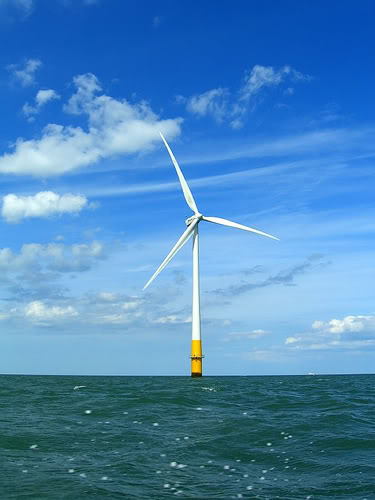
One taxpayer advocacy group says that the state’s renewable energy mandates are having an adverse effect on the economy. The Rhode Island Center for Freedom and Prosperity issued a report in 2013 that estimated that the maintaining current renewable energy mandates will boost the cost of electricity by nearly $150 million through 2020. The same report concluded that electricity prices will go up by an additional 1.85 percent during the same period.
Mike Stenhouse, the president and CEO of the center, says the organization raised similar concerns about new renewable energy mandate that passed the General Assembly last year, known as the Distributed Growth Generation Program (another name for it is the Renewable Energy Growth Program).
Stenhouse testified against the bill at a Statehouse hearing where he says few seemed concerned about the potential impact on customers. “In that hearing I was shocked at the blatant disregard for the ratepayer, both by elected officials on the committee and by proponents of the bill. All that seemed to matter was that Rhode Island was on track to meet some arbitrary green energy target, the ratepayer was not even considered. I was scoffed at when I brought up this point in my testimony,” Stenhouse said.
Graves said National Grid supports renewable energy. He was not able to provide any informational in time for publication on what additional costs customers might see this year due to the new renewable energy program. But he said it’s important for customers to remember that renewable energy and other mandates are not the main driver of increases on their bills.
“The real villain here is the price of electricity,” Graves said. “I hate to say, that’s out of our hands.”
Seven Ways the State Makes Your Electric Bill More Expensive

LIHEAP Charge
Charge: $.73 a month
Explanation: This monthly charge is billed to all customers as required by Rhode Island law. The amounts collected through this charge are used to provide funding for the Low-Income Home Energy Assistance Program (LIHEAP) Enhancement Plan, created to supplement the Federal LIHEAP funding being received by customers of Rhode Island electric and natural gas distribution companies. LIHEAP assists low-income households primarily in meeting their home energy needs. By law this charge may not be more than $10 per year for each electric or natural gas service account. This charge is subject to change on an annual basis after review and approval by the Rhode Island Public Utilities Commission.
- National Grid’s Glossary of Terms on Your Bill
Read more about the program.

Energy Efficiency Program
Charge: 0.983¢/kWh (kilowatt hour)*
Explanation: According to National Grid, this charge is used to fund energy efficiency programs the company offers. However, these are programs that are offered through the state. The state Office of Energy Resources provides incentives and loans to enhance energy efficiency in homes, businesses, and cities and towns. According to this office, “The energy efficiency programs are supported by a surcharge on electric and gas customers’ bills, and program administration is provided by National Grid.” A second state agency, the Energy Efficiency Resource Management Council works with the Office of Energy Resources to help National Grid with the “implementation and development of the annual energy efficiency programs.”
*Note: This rate actually consists of two charges. One is the Energy Efficiency Programs Charge of 0.953¢. The other is a Renewables Charge of 0.03¢.
Read the applicable state law here. Read more about the program here.

Renewable Energy Charge
Charge: .512¢/kWh (kilowatt hour)*
Explanation: National Grid must charge customers an additional charge to comply with a state law that mandates that the company purchases electricity from renewable sources. Companies can also comply with this mandate by buying what are known as Renewable Energy Certificates (RECs), which fund “the development of renewable electric generational resources,” according to National Grid. National Grid opts for the RECs. The additional cost is listed as the Renewable Energy Charge on a homeowner’s electric bill. (The applicable state law is Rhode Island General Laws 39-26-1.)
Read the state law here.
*Note: This rate represents what a typical customer would have paid in spring 2014. The updated rate was not available in time for publication.

Distribution Charge
Renewable Energy Distribution Charge
Charge: (0.024¢)/kWh (kilowatt hour)*
Explanation: The actual cost of purchasing renewable energy is split into two areas of the bill, delivery services and supply services. The Renewable Energy Charge discussed in the previous slide is listed under supply services. The Renewable Energy Distribution Charge, on the other hand, is listed under delivery services. It is part of the same state mandate discussed in the previous slide.
*Note: Normally this would be a charge for customers. However, it is currently a credit because National Grid over-collected from customers.

Gross Earnings Tax
Charge: 4%
Explanation: The gross earnings tax is a revenue-generating tax the state levies on all electric customers. Both homeowners and businesses are subject to the tax.

Sales Tax
Charge: 7%
Explanation: This is an additional tax paid on electricity bills. It applies only to businesses and only those that are not manufacturers, according to Paul Dion, the Chief of the state Office of Revenue Analysis

Renewable Energy
Renewable Energy Growth Program
Charge: Not yet available.
Explanation: Under a new state law, National Grid now must also create a new way of financing “renewable energy distributed generation.” Formally known as the Renewable Energy Growth Program, it applies to smaller renewable energy sources, such as wind turbines or solar power, not larger centrally located renewable energy generators, such as hydropower facilities, according to a National Grid spokesman. The program would be financed by tariffs. It’s not yet clear what the specific cost will be to customers. The bill does not account for what those costs may be and information was not available from National Grid. The program is expected to take effect sometime this year.
Read the bill here.


