


EXCLUSIVE: Nabsys Founder Forced Out by Bready, Raimondo for Raising Concerns UPDATED
Kate Nagle, GoLocal News Editor
EXCLUSIVE: Nabsys Founder Forced Out by Bready, Raimondo for Raising Concerns UPDATED
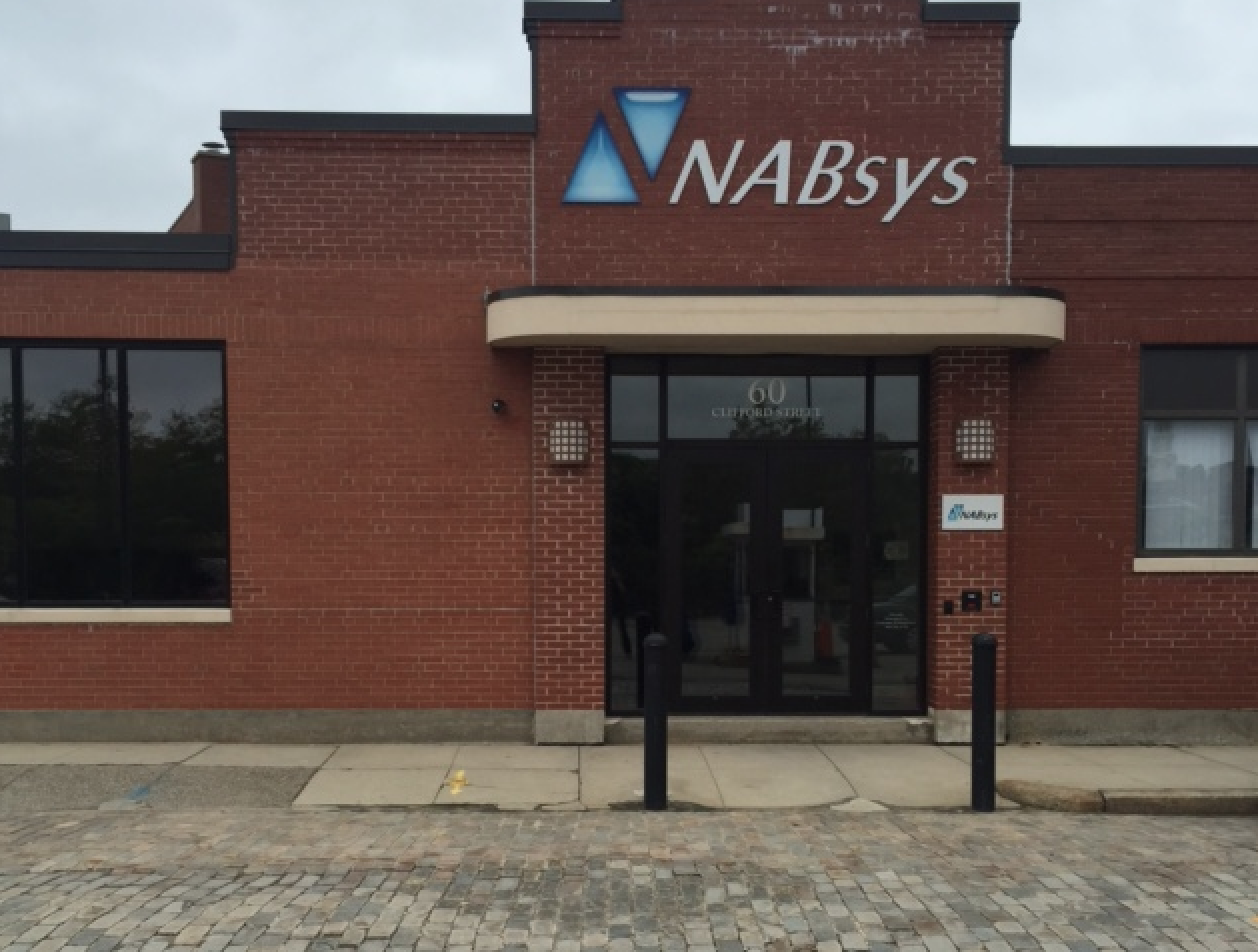
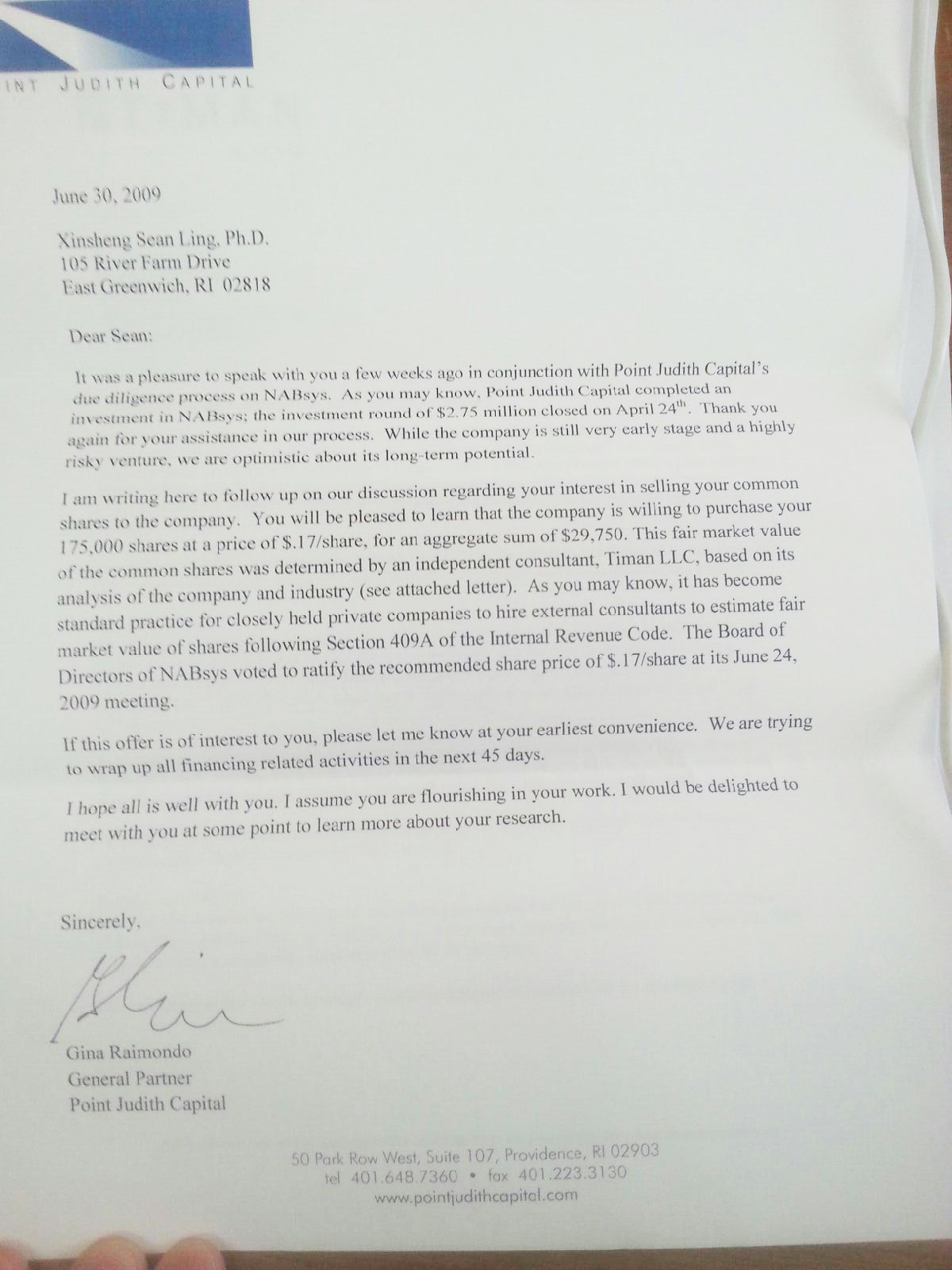
At that time, Ling said former board member and now Rhode Island Governor Gina Raimondo offered to buy him out while a managing partner at Point Judith Capital, but he refused.
Ling said he predicted the demise of the startup company that he founded as far back as 2008 due to what he said was a "critical component" that was lacking.
GET THE LATEST BREAKING NEWS HERE -- SIGN UP FOR GOLOCAL FREE DAILY EBLAST"I had the idea of creating [Nabsys] back in 2004. I hired Barrett Bready in 2005, and then I was kicked out in 2009," said Ling. "He literally kicked me out. I was very upset, but there was nothing I could do. Then, Gina Raimondo called me and offered to buy me out, but I turned her down."
Raimondo offered to pay Ling $29,750 to buy him out during the period in which her venture fund was investing $2.75 million in a round of investment which totaled $4 million.
"I refused. I said this is either worth nothing, or it will be worth a lot, but I don't want to take your money," said Ling.
Issue at Core
"The issue at the core is there was one piece of technology that was not fully developed at that time," said Ling. "Barrett [Bready], and [former VP] John Oliver thought it was trivial, and I said this is still not solved -- that's been the problem."

"Millions were wasted in my view," said Ling. "They were building a cart before the horse had all four legs. When they kicked me out -- I told [Raimondo] this thing's not ready. It wasn't ready the way they wanted to run. I wanted just a small amount of money to solve the key piece."
"Instead, they said two legs were enough. So I hate to say this, but [I] want to say, "I told you so," said Ling, who has been a member of Brown's faculty since 1996.
According to his bio, Ling has done postdoctoral research at Yale University and the NEC Research Institute at Princeton, and has been a visiting professor at Delft University of Technology in the Netherlands, a guest professor at Wuhan University, and a Qianren Plan Visiting Professor at Southeast University in Nanjing. Ling received a Research Innovation Award from the Research Corporation in 1998, and he was an A.P. Sloan Fellow from 1998-2001 and a J.S. Guggenheim Fellow from 2002-2003. He was elected a Fellow of the American Physical Society in 2005.
Under Ling, Nobel Prize winner Leon Cooper had served as Nabsys board member through 2009.
More Emerging
GoLocal was first to report on Friday that Nabsys had closed; GoLocal reported Monday that Raimondo's venture fund, Point Judith, and Rhode Island could stand to lose millions in Nabsys'closing.
Ling said he believed that the company could still have "significant value" based on its intellectual property.
"I've tried to get some of the intellectual property. The IP is still worth something," said Ling. "I want to buy three patents with my name on it, and the trademark. So it's not clear at this point the total loss of value."
Editor's note: A prior version stated Ling ran out of funding in China. Ling clarified it was initial U.S. NIH funds that ran out, and that he just began his effort in China in January 2015.
14 Biggest Business Stories of 2014

Zero Value
1) Superman Building Has Zero Value
The tallest building in RI continued to serve as a grim reminder of the under performing economy, as GoLocalProv’s investigation found:
The Superman Building in Providence has "no value," according to an appraisal conducted earlier this year by Providence-based appraiser Scotti and Associates.
Moreover, the findings show that the Industrial National Bank Building at 111 Westminster Street would cost between $60 million and $100 million to rehabilitate.
"It's my opinion for the highest and best use is to shutter the building until which point the market conditions improve to the point that rehabilitation is an option. We estimate that as of December 31, 2012, the building has zero value," wrote Scotti in February 2014, referring to the 2012 date when the building's last tenant, Bank of America, moved out.

Out
2) Alex and Ani Shake Up
Rhode Island’s homegrown success story Alex and Ani hit the cover of the national business magazines and then out of nowhere, the dynamic duo of Giovanni Feroce and Carolyn Rafaelian were no more. The combo had helped grow the company from $4 million to $220 million in just four years.
Feroce was out.
Alex and Ani today announced that founder and creative director Carolyn Rafaelian has been appointed interim Chief Executive Officer of the company by the Board of Directors. Ms. Rafaelian will guide the company while the Board conducts a search for a new CEO to replace Giovanni Feroce who has left the company. The process to recruit a new CEO is expected to take several months.
“Alex and Ani has experienced incredible positive energy and growth since this journey began 10 years ago,” said Carolyn Rafaelian, founder, creative director and interim CEO of Alex and Ani. “Now as we seek to take the company to the next level, it is imperative we bring on board a new CEO who has experience leading a fast growing company to the next level and who can provide the strategic direction and vision that will serve us well into the future.”

Snowden's Prov Connection
3) Providence Equity - Snowden Connection
In January, GoLocal broke a story that went global. Providence Equity -- the $48 billion Rhode Island-based private equity fund -- was tied to the firm hired to vet Edward Snowden. GoLocal's investigation piece went around the world.
A blockbuster federal fraud suit filed yesterday against the Virginia security contractor charged with vetting Edward Snowden is having massive reverberations – and nowhere more so than in Providence, where it threatens the legacy of one of Rhode Island’s top financiers and favorite sons.
The Snowden case, the biggest U.S. security leak since the Pentagon Papers, may seem like a remote affair, involving a lone security analyst based in Hawaii who leaked National Security Agency files in Hong Kong, now lives in limbo in Moscow, and has President Obama and the Washington policy establishment grappling with the fallout.
Huge blow
But among its many other consequences, it has dealt a huge blow to Providence Equity Partners, the local investment giant quietly run by Jonathan M. Nelson, a Providence native whose low-key demeanor and insistence on remaining in Providence earned him the nickname, the “stealth mogul.”
Nelson is Rhode Island’s richest man, with a net worth of $1.6 billion, according to Forbes.
From discreet offices on Kennedy Plaza, Nelson and a small shop of financiers run a global empire of assets worth more then $37 billion, owning everything from cable giants in Europe and India, to pay TV in Turkey, to a piece of the Yankees Entertainment and Sports Network, known as YES!, that broadcasts the Bronx Bombers.

Comeback Kid
4) Feroce Bounces Back with BENRUS
It did not take Giovanni Feroce long to bounce back. He left Alex and Ani in March and by early July he was announcing a new company - the launch of a historical watch brand into a new lifestyle company.
Giovanni Feroce, who teamed with Carolyn Rafaelian to grow Alex and Ani from sales of $4 million to more than a reported $220 million in 4 years, then left the company, is now back with a new venture - BENRUS. The BENRUS company has a rich legacy as a military watch company, but under Feroce the company is being built into a broader lifestyle brand.
Feroce describes the acquisition as a multi-million dollar transaction.
The legacy of the watch company goes back to 1921, when three brothers Benjamin, Ralph, and Oscar Lazarus of Romanian descent founded the watch company that went on to be the watch of choice to the U.S. military during World War II.

Projo's Ownership
5) Projo Sale Drives More Cuts
From many who worked for the Providence Journal or read the the paper during the Belo ownership era, they thought it could not get much worse. Then, GateHouse Media purchased the paper and devastated the newsroom and laid off some of the best branded and most talented journalists.
As GoLocal first reported about the Projo's sale in June of 2014, the new owner - GateHouse -- was just a few months removed from bankruptcy.
The news that GateHouse Media is poised to be the new owner of the Providence Journal has garnered the attention of media academics and experts who have weighed in on what the acquisition will mean for the oldest continually published daily newspaper in the U.S.
"They've been savaging newsrooms across the country," said Michael Scully, Assistant Professor of Communications at Roger Williams University. "Gatehouse Media has been buying flags all over the [U.S.]. The model seems to repeat itself: They buy, they survey, they layoff."
"Now, I'm not sure if the [GateHouse] business model is working, but I do believe they are destroying local media," continued Scully. "Every time you fire a daily newspaper reporter, editors must fill open space with wire copy, which means the paper loses its "local appeal."

RI Loses a Corp HQ
6) Media General Buys LIN Media and RI Loses a Corporate Headquarters
The sale of the parent company of WPRI-12 to the parent company of WJAR-10 was a blockbuster in the local TV industry in the US. The deal created a one of the largest local TV groups in the US. The bad news is that LIN Media which was located in Providence, RI is now rolled into Richmond, Virginia-based Media General
The most underreported story in Rhode Island is the $1.6 billion acquisition by Channel 10’s parent of Channel 12’s parent company – the impact on Rhode Island’s economy and the media landscape will be profound. Media General is also assuming nearly $1 billion of LIN Media debt making the deal $2.6 billion.
The story broke four hours before the FBI and IRS raided Speaker Gordon Fox’s office and so most everyone in the state forgot about one of the biggest business and media stories ever to hit Rhode Island.
Certainly Channel 10 and Channel 12 won’t be reporting on the story.

Security
7) Security Breaches
Every consumer needs to be concerned. The threats to their data is real and growing.
From big box retailers like Target to online businesses like Zappos, recent history has illustrated that major companies are susceptible to data security breaches. In the last three months alone, there have been five major instances of hacking affecting retail stores, hotel chains and Internet services.
Not a new problem, instances of retail and online security breaches have been plaguing businesses since the mid-2000s, beginning with the notorious TJ Maxx case. In 2007, the Massachusetts-based store disclosed that hackers had gained access to more than 45 million credit and debit card accounts. In a similar event, Target revealed in December that 40 million customer accounts were hacked.

Brown CEOs
8) Brown Grads Leading Business
Brown may be the anti-business school. Amazingly, Brown grads are among the most successful at leading companies across the United States.
Famously bohemian Brown, with its conspicuously lacking business school, has somehow managed to graduate a sweeping array of America’s top business leaders.
From their perches atop the most powerful Wall Street firms, entertainment companies, and technology firms, Brown grads are divinely undefinable.
The Ivy League school is known more for its alternative curriculum and as a result is often a magnet for where the children of the top celebrities attend. Everyone from George Harrison’s son Dhani to President John Kennedy’s son JFK Jr. to Bruce Willis and Demi Moore’s daughter Scout and Jack Nicholson’s daughter Lorraine – to name just a very few – all spent time criss-crossing the school’s famous quad paths.
The school’s image was well expressed by former Brown Provost Mark Schlissel (now president of the University of Michigan), who put it this way: “Students at Brown are free to imagine and create their own course of study, integrating their major areas of interest into a broader program of liberal learning.”
Photo: Bank of America CEO Brian Moynihan

Go West
9) GoLocal24 Expands to Portland, Oregon
As a local start-up. the news was big for us at GoLocal. The ability to take a new model for local journalism across the country was a big step for a homegrown RI company.
GoLocal24, a rapidly growing digital local news and information company, is expanding to the west coast, launching a new site this spring in Portland, Oregon. GoLocal24, which serves mid-sized markets and is based in Providence, will launch its third news and lifestyle content platform with GoLocalPDX.com.
The company has been delivering news and information to Rhode Island consumers since the company was founded in 2010. The company launched GoLocalWorcester two years ago. Combined, the two platforms now deliver in excess of 7.5 million pageviews per month and just under 800,000 unique visitors monthly.
“In both Rhode Island and Central Massachusetts, we have quickly grown to be a leading source of enterprise local news content,” said Josh Fenton, Co-Founder and CEO at GoLocal24. “GoLocal is creating new ways to access vital news and information for citizens who want their local content delivered digitally.”

Citizens
10) Citizens Looking at Superman Building for Corporate HQ
GoLocalProv has learned that Citizens Bank is eyeing the Superman Building for its corporate headquarters.
The Superman building - Providence’s tallest building — has been vacant since its last tenant, Bank of America, moved out of the iconic structure in March 2013, leaving Providence with a massive black mark on its landscape. The building is located at 111 Westminster Street.
Since then, the owner of the building High Rock Development has been seeking federal tax credits, state subsidies, state tax credits, and a tax stabilization treaty from the City of Providence to underwrite a mammoth redevelopment of the building for proposed residential use. According to the developer and assessments, the cost of rehabbing the building is expected to exceed $75 million.
GoLocal has learned from sources in the bank -- and in government -- that the proposed relocation of the Citizens Headquarters has been in play since before the bank’s IPO in September.

Up and Down
11) Farmstead Closes - Birch Keeps Impressing
Matt Jennings was one of the stars of the RI restaurant scene - now he has sold and moved to Boston. Don’t shed too many tears, Providence still dominates the restaurant world and Ben Sukle is emerging as the next mega-food star.
Chef and owners Matt and Kate Jennings are selling their popular Providence restaurant and shipping up to Boston.
The Beantown natives will close the doors on their bistro and storefront June 1st and plan on opening a new restaurant called Townsman.
The Jennings’ plan on opening Townsend later in 2014 and have set their sights on the new Radian building at 120 Kingston Street in downtown Boston for a location.
Matt Jennings is an acclaimed chef and has even been dubbed “The Prince of Pork” for winning 3 consecutive wins at the nose-to-tail culinary competition Cochon 555. He’s also won a Star Chefs “Rising Star” award in 2014, appeared on the front page of The New York Times’ Dining section. He was named one of GoLocalProv's 14 to Watch in 2014 in January

Hot, Hot, Hot
12) Providence Start-Up Market is Hot
One gleaming sector of the Rhode Island economy is the world of start-ups. In the past two years, Rhode Island-based companies have raised in excess of $200,000,000 in capital.
While Silicon Valley and Boston/Cambridge are two of the biggest hubs for attracting venture capital that fuels hundreds of companies each year, Rhode Island has seen a precipitous increase in dollars and deals.
“We are seeing the logical outcome of having a healthier startup scene in Providence. We have a half-dozen startups with big ideas that are coming into their own around the same time. In the past we've had one at a time, and long stretches when there weren't any obvious breakout successes. Venture capital is increasingly mobile, it will follow the best entrepreneurs and startups if they prove their business,” said Allan Tear, one of the founder of the business incubation company Betaspring.

Game Changer
13) Providence Soccer Stadium Could Create Thousands of Jobs and Billions to Improve Economy
You do not have to look far to get a glimpse of what the costs and benefits of a new soccer stadium would be in Providence, RI.
Washington, DC has given the green light to build a new soccer mega-stadium complex for their Major League Soccer franchise (MLS). The DC project is significant and designed to revamp an entire section of the city - Buzzards’ Point along the Anacostia River. The benefits are projected to be massive too.
The DC project is the biggest MLS soccer stadium development in the US and is both a sports complex development and the reclamation of that section of the city complete with hotel and amenities. Washington is banking on thousands of permanent jobs and billions in economic growth.

Newport's Big Deal
14) Newport’s Big Change
One of the biggest game changers for RI's city by the sea - Newport had one of the biggest business transactions - a game changer.
The Newport Harbor Corporation has sold the Newport Yachting Center to the East Providence-based Peregrine Group, whose principal is Colin Kane, the Chairman of the 195 Commission.
The Peregrine Group confirmed they were planning on issuing a release later on Tuesday.
Newport Harbor Corporation Statement:
“We have made a decision to sell the property we own on the downtown Newport waterfront. The primary reason we made this decision is to invest into our expanding restaurant and hotel operations, where we see excellent growth opportunities. However, we will continue to operate the Newport International Boat Show, the Charter Yacht Show, The Mooring, The Smoke House, and the Newport Yachting Center Private Events business at the Sunset Terrace, by leasing back the land from the new owner.


