


Fed $$ Prop Up RI Programs: Will It Last?
Chip Young, Senior Editor
Fed $$ Prop Up RI Programs: Will It Last?
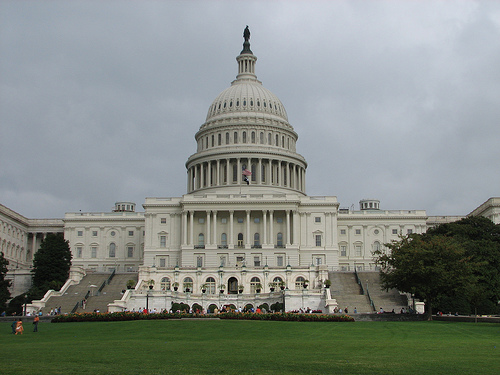
It pays to keep an eye on what is happening in the U.S. Congress these days, as much as looking at what state legislators will propose cutting when they begin the inevitable task of paring back on state-funded programs.
U.S. Government Cutting Back
This becomes particularly true when looking at the House of Representatives and its new Republican leadership, which is has pledged to drastically reduce government spending.
GET THE LATEST BREAKING NEWS HERE -- SIGN UP FOR GOLOCAL FREE DAILY EBLASTThe U.S. Senate recognizes that the largesse of the feds is not unending, with the Senate Appropriations Committee saying in a recent press release, “The reductions in funding levels agreed to in (the House’s Continuing Resolution bill) will impact millions of Americans, and many good programs will suffer difficult cuts. As these cuts must be implemented in just the remaining six months of the fiscal year, their impact will be especially painful in some instances. “
A quick scan of state departments reveal some familiar programs that many do not realize get virtually no state funding to implement, and will be at the mercy of those projected cuts.
Beaches, Mothers and Kids
The Ocean State prides itself on the beaches that attract tourists – and accompanying revenues – to their shores. But the Department of Health’s beach monitoring program is totally federally funded through the Environmental Protection Agency, acknowledges beach coordinator Amie Parris.
For all the state relies upon beaches as an economic driver for the state, the program that allows Rhode Island to reassure bathers that the water is just fine to wade into, is at the mercy of EPA cuts in Congress.

At the municipal level, the Providence school system’s highly successful “Breakfast in the Classroom” program is fully funded by the federal government, albeit because of the 84 percent poverty rate in the school district. But with all elementary schools being involved in the program by year’s end, and health statistics like morning visits to the nurse appreciably reduced, it is not an item for the chopping block in D.C.
But community health care centers, more valuable than ever in tough economic times, could see as much as an $800 million drop in government spending nationally according to the House Appropriations figures.
Senior Citizens
The Department of Elderly Affairs has a slew of federally full-funded programs, including that most homey, community-oriented and recognizable elderly nutrition program, Meals on Wheels, according to DEA’s Larry Grimaldi.

RI’s Workforce and the Unemployed
Unemployment Insurance administration in the state -what it costs to run the UI program, minus the benefits paid out - is about $23 million, 95 percent of which comes from federal funds, according to Laura Hart of the Department of Labor and Training.
UI benefits paid $607 million last year, and was derived from federal funding and the state UI trust fund - which is funded through employer contributions. The state UI trust fund is a restricted account and is not considered part of the state general revenue.
The increasingly relied-upon Labor Market Information and netWORKri centers that help people get back into the workforce centers are 98 percent percent federally funded, and DLT’s newest workforce development program, the Business Workforce Center, is 100 percent federally funded.
Reclaiming RI’s Polluted Land and Flood Worries
Rhode Island has picked up the pace in its work to reclaim its Brownfields and Superfund sites to support economic development. Both of those restoration programs run by the Department of Environmental Management are fully funded by Washington, according to Gail Mastrati at DEM, and appear to be away from the proposed cuts to environmental programs.
But for a state ravaged by the flooding of March 2010, projected cuts to Federal Emergency Management Agency programs, whose pass-throughs provide nearly $15 million to the RI Emergency Management Agency every year, according to RIEMA spokesman Steve Kass, the House Appropriations cuts of hundreds of millions of dollars for programs such as flood mapping and predisaster planning and readiness may wind up with the state having to bear some unexpected burdens in the result of another bad season of storms.
The current situation in the South and Midwest can hardly offer any reassurance.
If you valued this article, please LIKE GoLocalProv.com on Facebook by clicking HERE.