


Finneran: MLK, LBJ and Savage Selma
Tom Finneran, GoLocalProv MINDSETTER™
Finneran: MLK, LBJ and Savage Selma
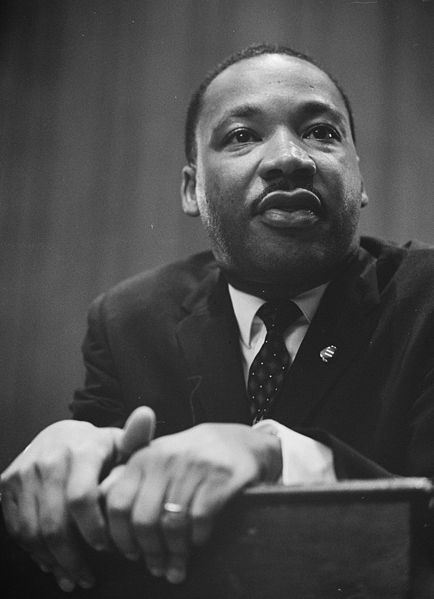
I think the movie captures the essence of Reverend Martin Luther King. I think it does an injustice to President Lyndon Johnson. And as with any good movie, it leaves you thinking about many things.
Here and now in the year 2015, it is very hard to comprehend the sheer savagery and racial hatred found in the deep South throughout most of the twentieth century. It beggars the mind that a region that is both deeply religious and admirably inclined to bear arms in the service of the nation could also act so barbarically to fellow human beings, indeed to fellow Americans, even veterans, of a different hue.
GET THE LATEST BREAKING NEWS HERE -- SIGN UP FOR GOLOCAL FREE DAILY EBLASTNot that the North was any grand bargain for black folks. It’s just that there is a big difference between general indifference and practiced hatred. Perhaps psychiatrists and psychologists can explain the geographic gulf—is it as simple as the steaming resentments and blame-shifting so common to war-vanquished peoples?—but America as a whole might be on a longer road to full racial reconciliation than I’ve imagined.
Generalizations in the realm of American racial history are dangerous. Certainly there were white Southerners who were deeply ashamed of the hostile acts and attitudes of many of their neighbors and their elected officials. Thus there should be no blanket indictment of every Southerner for it is equally certain that there were Northerners who harbored a Southern- equivalent contempt for the efforts of black folks to enter the mainstreams of American life………..
The words “be patient” sound utterly reasonable in most of life’s circumstances, but, if I was black in mid-twentieth century America and I heard those words I’d erupt. Patient for what? Patient for a chance to work? Patient for my children and their education? Patient for my grandchildren? Patient for a drink of water from a public fountain? Or for a chance to play baseball? Or for a seat for my tired mother on her bus ride to work? Patient for an end to the beatings and the killings? Patient for simple justice? How many more years would I have to wait for a simple sample of a free American life? No, I would not have waited. Patience has its limits and those limits had long been passed when Reverend King appeared on the scene.
Reverend King was a complex man of enormous talents, leading an eager long-suffering people and a reluctant nation to a better place. And he was joined in that journey to justice by Lyndon Johnson, another complex man of enormous though different talents. How singularly American that these two towering figures would meet at this momentous crossroads in our history. Forget Nixon-to-China or the Cold War or even Pearl Harbor. Those events involved external adversaries and as such could be met by a nation united in purpose. The issues which tormented King and Johnson were internal, matters of the mind and the heart, and thus decidedly different from armaments and war against foreign aggressors. Their war was against the torments of the nation’s soul.
I don’t pretend to be a Presidential historian. Yet my limited reading informs me that Johnson was a scheming, clever, brilliant political animal, uniquely able to lead, persuade, cajole, and threaten Senators and Congressmen in order to get his way. And, as a Southerner, he was the only person who could make voting rights become real in a region so cruel to political empowerment. The movie grudges him credit. I do not.
Johnson brought King’s dream and demand for justice to statutory life. They needed each other. They each filled a special role, roles that only they, and they alone, could play. Destiny spoke and God’s will was done.
See the movie.
Tom Finneran is the former Speaker of the Massachusetts House of Representatives, served as the head the Massachusetts Biotechnology Council, and was a longstanding radio voice in Boston radio.
Male African American Leaders in RI - 2015

Keith Oliviera
Chairman of the Providence School Committee
How many times have you been stopped by police?
I have been stopped by the police 6-7 times by the police while driving. I was also stopped and detained once while walking home to Fox Point coming from the Brown Bookstore.
What has your experience been - how did it make you feel?
The first time I was stopped and detained by the police I was 15 years old. I was walking home to Fox Point from the Brown Bookstore on Thayer St. As I was walking, three or four police cruisers pulled up all around me with lights flashing. They got out the cars, grabbed me and pushed me spread eagle against one of the cruisers. I was told that there was a break-in on the next street over and I fit the description of the suspect. The phrase "you fit the description" sounds so cliché but it all so common. I was put in the back of a cruiser and driven through my neighborhood for all my friends and neighbors to see and driven to the house that was broken into. When it was determined that I wasn't the suspect I was allowed to walk home. While walking home I felt angry to be treated like a criminal and I felt humiliated to be seen as a criminal by my friends and neighbors. I also felt vulnerable and helpless that my freedom could be taken away so easily for being nothing more than a black kid walking down the street.
What's your suggestion for officers?
My suggestion for police officers is to know the community that you serve. The police must become part of the community. But understand that how you serve the community will reflect how the community views you.

R.J. Evans
Digital Media Consultant at GoLocal
How many times have you been stopped by police?
I have been stopped by the police in my car about 5 times in my life and have been approached by them as a pedestrian about 3 times, all happening after I was 18 (6 years).
What has your experience been - how did it make you feel?
There were times that I felt I was treated differently because of my race. For instance I was pulled over with my best friend on a saturday night once, just headed home from a friends house and the police officer made us both get out of the car and he frisked us and asked if “we had guns or knives on us." This made me feel like there was already an assumption that because I was a black male I automatically had to have weapons on me and be up to no good. Little did they know I was a Division 1 athlete at Holy Cross who had never even seen a gun before in his life.
What's your suggestion for officers?
My suggestions to the police would be to stay clear of pulling over or approaching people simply because of an “idea” or “assumption” of how a certain group of people carries themselves. I'm not saying all black men are perfect because that is far from true but we deserve the respect of every other race. If we break a law we should be charged. If we don’t then leave it alone. There is no reason to be targeting someone on what you assume because of the color of their skin.

Ray Rickman
Founder, The Rickman Group
How many times have you been stopped by police?
“If you are actually asking how many negative encounters I have had with police officers, the answer is twelve. My first entanglement involved being beaten by four Detroit policemen for leading a walk-out at my junior high school. Foch was built to accommodate 2,000 students; when I arrived in the 7th grade it had 4,400 students. We demanded a new building. After the superintendent paid no attention, I was elected to lead a student protest. With a little help from several adult advocates, we were able to attract the media and the police to our walk-out. The four officers bloodied me with Billy-clubs just in time for the evening news. Four months later I was given a silver shovel to help dig the foundation for the new junior high school. That success has given me faith in non-violent protest. Two years later I marched with James Meredith outside Jackson, MS, where the local sheriff arrested us for trespassing after one of his deputies ran us off the road with his truck onto private property. That night in the Sunflower County Jail, two officers took turns punching me, after which the bludgeoned me, leaving two scars on either side of my head. I tell people that when I am bald, my civil rights scars will show. As head of the Providence Human Relations Commission in the 1980s, I knew of scores of young Black men being stopped by police for nothing other than being Black on the “wrong” street.
What has your experience been - how did it make you feel?
A city, a state and a nation where racism was legal prior to 1965, where individuals, police officers and the government could visit it upon Black men whenever they so chose, was the norm. I have seen much progress in Providence since Mayor Paolino curtailed many of these practices. But a glass half-full is not good enough in a free society.
What’s your suggestion for officers?
Cornell Young, Jr. would be alive today if the police officers involved had given him seven seconds more to fully identify himself as an off-duty police officer. Police officers need to be trained in how to appropriately encounter minorities. Every one of the recent shootings across the nation has involved substandard judgment. Ten years ago, I trained the entire Providence Police Department, and had individual conversations with almost one hundred members of the force about interactions with the public. I felt the progress being made. Police officers should be encouraged to live in the city of Providence, and required to meet and greet citizens on their beats. It is human nature to fear the unknown. I would like to see the Police Department get to know us better. I have a tried to provide quiet leadership to some of new Black community leaders. I am impressed by their willingness to push for change. But, I have been saddened by the reluctance in White leadership. This is a moment that requires clergy, public officials, community leaders, and social workers to take to the streets to show that they care.

Chace Baptista
Community Organizer, Concerned Citizens for John Hope Settlement House
How many times have you been stopped by police?
Asking me this question is like asking someone, how many times have they caught a cold? I would estimate it at over 30 times. This includes, walking, driving, and while riding my bike.
This does not include interactions with the police ranging from arresting people that I care about, to my job working with them doing gang prevention in Kennedy Plaza for a year or as School Resource Officers in my school. Counting those interactions the answer becomes innumerable.
What has your experience been -- how did it make you feel?
How do you describe a constant presence that does not interact with you unless they think something is wrong? Police are constantly there. Some polite. Some kind. Some respectful. Some neutral. Some who are quite frankly not those things. All of them melting into an amorphous amalgamation of uniform, badge, and baton. At what point do they just become just another part of the Providence experience? Just as unpaved roads, dilapidated schools, and abandoned homes are? Their presence is forever a part of my experience.
The same people whose bosses I’ve met and possibly worked with or for.
When they see me that does not matter. How could they know?
All they know is that on certain occasions, I’ve fit the description. Between 5’5 and 6’3, African American male, weighing between 160 and 230 pounds.
As a whole, I see them melt into one general picture as I must do for them.
Asking me how I feel is irrelevant. They have been a presence in my life since childhood. They are what they are. I’ve had great interactions, with Chiefs of police and other higher ups. However, when we talk about the day to day officer, for the most part I feel powerless. My voice, thoughts, experiences, do not matter. At that moment, I can be spoken to however that officer chooses to speak me. I can be treated however that officer chooses to treat me, and it’s ok. He has full immunity to do whatever he wants to me. At least that's what our society has taught us.
What's your suggestion for officers?
I have no suggestion. All police officers know how to treat people the way that they would want to be treated in their own community.

Kobi Dennis
Community Organizer, Founder of Project Night Vision
How many times have you been stopped by police?
How many times have you been stopped by police? Since the age of 16, I've been stopped by law-enforcement in over 5 states approximately 30-40 times. (reasons vary)
What has your experience been - how did it make you feel?
What has your experience been -- how did it make you feel? I will be the first to admit some of the stops were warranted, speeding, no seat belt etc. The stops that continue to leave feelings of doubt are definitely the majority. Naming departments will only fuel the fire that has already been "burning out of control" among law-enforcement , therefore I will say this. The departments that require minimal education requirements, zero residency restriction and archaic recruiting processes will always remain less professional during car stop or civilian interaction. I am a social service professional with countless hours of training and volunteer hours under my belt. In order to properly serve the community in any capacity or within any city, you must know and understand the population of people. I truly believe law-enforcement is not for the faint of heart and lately the officers I've encountered display barriers before they even utter a word. I can almost smell the fear and distrust before they reach my vehicle. Combine this mistrust and fear with little to no knowledge of the neighborhood or the culture and routine traffic stops or face to face confrontations become stressful situations for all involved.
What's your suggestion for officers?
Professionalism!! I believe our officers should be taught to remain professional at all times regardless of the situation. When an officer is unable to remain professional, they should face the consequences just as any other professional in any other field of work. Absolutely no passes!! The only way to become a professional in your field of work is through extensive training and research about the subject matter or population. My suggestions include: professional development training, mentor , volunteerism, community events, coaching, school events, etc. The officers will never see "Eye to Eye" with the community they serve unless they stand "Shoulder to Shoulder".

Mike Van Leesten
CEO of OIC of Rhode Island
How many times have you been stopped by police?
I haven't had that experience of being stopped, so I don't fit into that category. I must not have been in the wrong place at the wrong time. But I've always been enaged in change.
What has your experience been - how did it make you feel?
My experience has to do with a police brutality suit years ago, stemming from an incident that occured in South Providence. Hundreds protested, and that's when the coalition of black leadership formed. After talking with people, I knew the only way was through the courts. I was told that I should talk to top notch civil rights attornies. We got Alvin Bronstein -- he's a foremost civol rights attorney -- and I had to get affidavits from people who alleged police brutality -- I got 150. This would have been in 1971.
I had to raise some money to hire attorneys -- I was representing six plaintiffs in the suit - 4 are dead, and the remaining 2 don't want much to do with it anymore, so I'm the last man standing
We got Drew Days -- Professor Emeritus at Yale , Assistant Solicitor General for [former President Jimmy] Carter -- John Roney with RI Legal Services -- so we went to the courts, they reviewed the affidavits down to 75 -- and there was a consent order. We weren't happy, but it was progress.
What's your suggestion for officers?
Here we are, 40 years later. A year and a half ago Pare and Clements called for changes under the consent order -- they're reasonable guys -- and the only way they could make changes was if the plaintiffs agreed, the 2 remaining just signed off, again, I'm last man standing. The timeliness of it all, it provides us with an opportunity -- if they want an effective one, it gives us the opportunity to come up with an effective one. I'm hoping to affect something that's good for the community and all the nuances. We want to put together something doesn't exist in the U.S. America was built on these types of traumatic things that happened -- throwing the tea in the Boston Harbor.

Jim Vincent
President of NAACP - Providence Chapter
How many times have you been stopped by police?
Fortunately. I have (only) been stopped by police only a few times in my life.
What has your experience been - how did it make you feel?
Most of the times there wasn't an issue, however, a few times the officer acted unprofessionally. Nothing serious, but it was dehumanizing.
What's your suggestion for officers?
My advice to officers is that you can't act professionally at ALL times, they should leave the department.
After the forum Monday night, I am convinced that there is a problem with police community interactions in Rhode Island. It is my belief that the vast majority of complaints from the community involve the few "bad apples" who are employed by virtually every department in the state. Community police relations will only improve when the police are better able to police themselves. Every thing from the complaint process, progresive dicipline and the policemen's Bill of Rights needs to be greatly reformed. The vast majority of police officers do a great job of serving and protecting our communities but its the few "bad apples" who make it bad for all of us.

Ray Watson
Executive Director of the Mount Hope Neighborhood Association
How many times have you been stopped by police?
I've had a number of encounters with law enforcement growing up in Rhode Island. Too many to count to be honest. I say Rhode Island because my encounters haven't just been while in the City limits of Providence. In fact, I feel less likely to be stopped by law enforcement while in Providence than I do outside of the City.
What has your experience been - how did it make you feel?
Not all of my encounters have been negative. As I always say, I know some very good Law Enforcement Officials who conduct their business appropriately. That being acknowledged, when my encounters have been negative many of them (too many of them, in my opinion) have been very negative. I've had Officers rush into a backyard screaming "Don't move!" with guns drawn and pointed at us without explaining why they were pointing guns at us; I've been pulled over and had my car towed because of a "mistake" in reading the paperwork properly on the part of the Officer; I've been pulled over and had my car and its passengers searched for guns because "it's Dominican Festival weekend"; worst of all I've been arrested and had false charges levied against me for telling an Officer that he didn't have the right to yell at people in the neighborhood while he was doing his job. I know he yelled because I was one of the people he yelled at. The last encounter sounds unbelievable, I know. I might not believe it myself were it not for the document that I had to sign agreeing to not sue the Officer or the Department in exchange for the charges against me being dropped. The Officer is still on patrol and I'm not aware of any disciplinary actions that have ever been taken against him for his behaviour, so it's especially insulting to have to bump into him from time to time. Once again, not all of my experiences have been negative... but when they have been many of them have been extremely bad.
What's your suggestion for officers?
Respect and Professionalism has to be key. Respect for the badge that you wear and the department you represent, respect for the laws that you are sworn to uphold, respect for the communities that you serve. Professionalism has to be the standard that you abide by as you move in this regard. That especially includes holding fellow Officers accountable to the same standard when they are conducting themselves in an unprofessional and/or inappropriate manner. Training, workshops, etc... are only as good as how they get applied by the Officers when they are in the Community. To state it plainly, the Community doesn't just want to hear that you are Law Enforcement Professionals, they want to see it and feel it in their interactions with you. We understand that the job is hard and we agree that we all have bad days... but we, the Community, also understand that a true Professional will not sacrifice even an iota of their professionalism despite how difficult the job may be. Respect and Professionalism; those are two of the majors keys to more and better Community-Police relations, in my humble opinion.


