


Guest Mindsetter™ Pimentel: Immigration, Driver’s Licenses and the Fight for Civil Rights
Rodrigo Pimentel, GoLocal Guest Mindsetter™
Guest Mindsetter™ Pimentel: Immigration, Driver’s Licenses and the Fight for Civil Rights
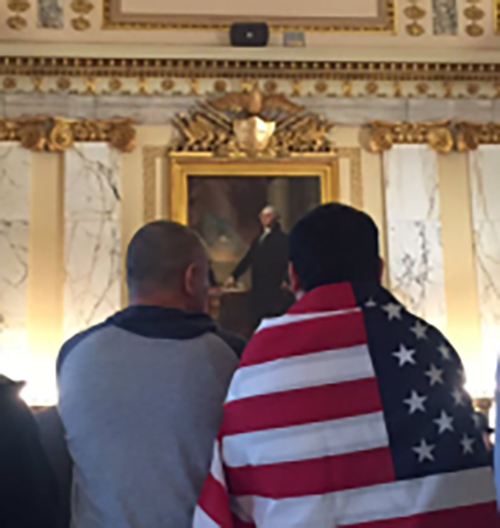
Today we face a civil rights struggle of our own, as unjust laws have split apart undocumented families and youth, as demagogues have attempted to divide-and-conquer our great nation, pinning worker against worker, white against black and documented against undocumented. Much like the Jim Crow laws of the past, new unjust and discriminatory laws are being passed, with the explicit intent to tell those who differ by the pigment of their skin, the nation they are from, the language they speak or the God they pray to, that they are not welcome, that they cannot pursue the American Dream, that they are not even allowed to drive to work or their children to school — all because we deprive them the opportunity of Citizenship.
Legislators Cannot Be Indifferent
GET THE LATEST BREAKING NEWS HERE -- SIGN UP FOR GOLOCAL FREE DAILY EBLASTLegislators cannot respond to this grievous violation of human dignity with inaction and indifference. Legislators have a duty to ensure equal protection under the law, meaning that states must take the lead to prevent discrimination against undocumented immigrants. By providing access to driver’s licenses, higher education, and equal opportunity, States may then begin towards the path of ensuring equal protection.
In recent years, states have shown a concerted effort to discriminate and target undocumented immigrants. Legislation such as Arizona’s SB 1070 and Georgia’s SB 350 have institutionalized racial profiling against undocumented immigrants. In the case of SB 1070, the Supreme Court preempted three of four of its provisions in Arizona v. United States, ruling that: “...making criminals out of aliens engaged in unauthorized work—aliens who already face the possibility of employer exploitation because of their removable status—would be inconsistent with federal policy and objectives.”
In Georgia, SB 350 has targeted unlicensed drivers by criminalizing driving without a license — including punishments of up to five years in prison, leading to a significantly disproportionate number arrests of people of color. For instance, in Fayette County, Hispanics make up 6.9 percent of the population but 17 percent of arrests. In Roswell City, Latinos make up 13.1 percent of the population, but 63 percent of those arrested, whereas whites make up 75.4 percent, but only 8.4 percent of arrests. The same discriminatory trend also applied to African Americans in Fayette County and Houston County. As the statistics show, Georgia's SB 350 specifically and disproportionately targeted people of color, making it an unjust law that codifies a violent discomfort of racial diversity and a desire to subjugate those who they see as less-than, so the economic exploitation of undocumented workers may continue.
E-Verify - Separate but Unequal
For instance, many states have required the use of E-verify by all employers. The E-verify program assists employers in verifying whether or not a prospective employee is authorized to work in the United States. While well intentioned, this law forces undocumented workers off of the payrolls, and into the black market where only unscrupulous employers are willing to hire them. Although E-verify is different from the Black Codes and Jim Crow laws that were a focus of the civil rights movement, the result is the same: creating a separate but unequal labor pool that is ripe for exploitation. Black Codes enabled the former slave owner to continue their economic exploitation, by utilizing enticement laws which criminalized the act of hiring blacks who were under an active labor contract, even if it meant better wages and working conditions.
Other states, however, have taken a far more equitable approach in regards to undocumented immigration, even as Congress is stalled in gridlock. New Mexico, for instance, is one of a dozen states that have allowed residents regardless of their immigration status to earn a driver’s license. California has passed its version of the DREAM Act, allowing undocumented students access to education, including financial assistance that can mean the difference in attending college or not. These states have taken bold action to better the economic mobility of an oft-forgotten group. They have taken the high road instead of the path of separate but unequal.
In Rhode Island, residents have been advocating for action on driver’s licenses for immigrants. In 2014, Gina Raimondo made a campaign promise to the Immigrants in Action Committee that she would sign an executive order in her first year. Instead of issuing an executive order, she has since responded with inaction, opting to pass the buck to the General Assembly. While legislation has been introduced, it has not yet passed the General Assembly. The House Speaker, Nicholas Mattiello (along with his leadership team) has refused to let the bill out of committee for a vote. Earlier in May, Mattiello stated: “I have reviewed the testimony from the House Judiciary Committee hearing, and I have listened to many people throughout the state. This is a federal issue, and I don’t think the state should be weighing in at this time”. Rather than employ his knowledge as a lawyer in his statement, Mattiello cleverly opted for dog-whistle rhetoric to please his voters.
The fact of the matter is, issuing driver’s licenses is indeed a right of a State, and that the federal REAL ID Act explicitly allows states to issue driver’s licenses to undocumented immigrants, provided that they are not valid for federal ID purposes. Furthermore, the legislation introduced in the last session in Rhode Island would create REAL ID compliant driver’s licenses for undocumented immigrants. Unfortunately, dog-whistle and demagogic rhetoric have been obfuscating the facts, an all too common theme this election cycle.
Immigrants have come to America, they have brought her their cultures, their traditions, and their ingenuity. Immigrants have risked it all in starting their businesses, they have fought alongside American workers in unionizing workplaces, fighting for higher wages and safer conditions. And yet, our legislators treat them as separate, and unequal. Rhode Island lawmakers have a choice: they can correct this long-standing injustice, they can ensure equal protection under the law for workers, documented, and undocumented, or they can tell thousands of undocumented workers, families, and children in Rhode Island that they are not even worthy of a driver’s license. Legislators can acknowledge their humanity, or they can succumb to nativist, discriminatory policies of the past.
Rodrigo Pimentel is an organizer with the Coalition for Safer Rhodes and a resident of East Providence, RI.
Rhode Island's Best Communities 2016

#39 Central Falls
At one time called Chocolateville because of a chocolate factory located in its center, Central Falls, which gets its name from the waterfall on the Blackstone River, is the most densely populated city in Rhode Island. Emerging from municipal bankruptcy in 2012, Central Falls has struggled to bring up its standard of living for many immigrants who call it home.
Central Falls by the numbers
Established: 1730
Population: 19,376
Median household income: $29,025
Median housing price: $76,001
2016 Best Communities rankings
Overall ranking: 39
Affordability ranking: 18
Education ranking: 39
Economic condition: 39
Safety ranking: 35
Arts & Culture ranking: 32
Famous people
Lincoln Carter Almond, Governor
Michael Breault, game designer, editor and author
Francis Condon, congressman
Viola Davis, actress
Carl Russell Fish, historian
Roland Hemond, baseball executive
Jack McGee, aviator
Glyn O'Malley, playwright
Charles Risk, congressman
John Robitaille, politician
Michelle Siwy, Fashion Designer

#38 Woonsocket
The City has produced many of the best athletes in the history of the state and is the home to the corporate headquarters of CVS Health -- a Fortune 10 Company.
A lively, ethnically diverse community, rich with a history of Indian influence, Woonsocket has a legacy of industrial wealth evident in its architecture. The origin of the city's name has numerous theories, but the translation “thunder mist” from the falls on the Blackstone may be the most popular. A city that has historically relied on manufacturing as its primary form of income, Woonsocket continues to struggle with a myriad of challenges, from poverty to educational opportunity for its youth.
Woonsocket by the numbers
Established: 1867
Population: 41,186
Median household income: $40,096
Median housing price: $133,125
2016 Best Communities rankings
Overall ranking: 38
Affordability ranking: 30
Education ranking: 37
Economic condition: 38
Safety ranking: 34
Arts & Culture ranking: 7
Famous people
Greg Abate, musician
Rocco Baldelli, baseball player
Latimer Whipple Ballou, congressman
Bryan Berard, hockey player
Brian Boucher, hockey player
Marcel Desaulniers, chef
Eddie Dowling, actor, screenwriter and songwriter
Allen Doyle, golfer
Draco and the Malfoys, wizard rock band
Denise Duhamel, poet
Eileen Farrell, opera soprano
Ernest Fortin, theology professor
Stuart Gitlow, physician
Brian Harnois, paranormal investigator
Gabby Hartnett, baseball player and manager
Ambrose Kennedy, congressman
Clem Labine, baseball player
Nap Lajoie, baseball player
Catherine J. Lanctot, law professor and legal scholar
Neil Lanctot, historian and author
Francis Leo Lawrence, college president
William C. Lovering, congressman
James McAndrews, congressman
J. Howard McGrath, politician
Dave McKenna, jazz pianist
Edwin O'Connor, radio personality and novelist
Aram J. Pothier, governor
Duke Robillard, blues guitarist
Christopher Robinson, congressman
Mathieu Schneider, hockey player
Bill Summers, umpire

#37 Pawtucket
Known as much for the PawSox and ast the historic site where Samuel Slater constructed and operated machines for spinning cotton yarn at Slater Mill in 1793,
Pawtucket is the birthplace of the American Industrial Revolution - and most recently the battle for the Red Sox AAA team. This city faces challenges of struggling schools, depressed economic conditions, and high crime levels per capita, but certainly has its bright spots (like the popular winter Farmer's Market at Hope Artiste Mill and vibrant arts at the Armory).
Pawtucket by the numbers
Established: 1671
Population: 71,148
Median household income: $45,045
Median housing price: $129,950
2016 Best Communities rankings
Overall ranking: 37
Affordability ranking: 15
Education ranking: 36
Economic condition: 36
Safety ranking: 37
Arts & Culture ranking: 13
Famous people
Adam J. Barlow, basketball player
Willard L. Beaulac, diplomat
Don Bousquet, cartoonist
Jon B., singer and songwriter
Ernie Calverley, basketball player
Wendy Carlos, composer and electronic musician
Aram Chobanian, cardiologist
Ruth Clifford, silent film star
Mike Cole, actor
Jim Connors, radio personality
Thomas Gardiner Corcoran, presidential advisor
Michael Corrente, independent film director
Alice Drummond, actress
Jack Duffy, actor
Joseph L. Fisher, congressman
Joel Garreau, journalist, editor and author
David Hartman, television personality
Raymond Hood, architect
Galway Kinnell, poet
Armand Lamontagne, sculptor
John LaRose, baseball player
Irving R. Levine, journalist and foreign correspondent
Kevin Lima, film director
Peter Manfredo, boxer
Rosario Mazzeo, clarinetist
Louis Monast, congressman
Abraham Nathanson, developer of the game Bananagrams
Morris Nathanson, architect
Chet Nichols, Jr., baseball player
Sam Patch, daredevil
Gerry Philbin, football player
Red Pollard, Jockey
David Rawlings, musician
Charles Reilly, novelist
Al Rockoff, photojournalist
Ken Ryan, baseball player
Walter Schroder, author and lecturer
Samuel Slater, industrialist
Hank Soar, football player, baseball umpire
Samuel Starkweather, politician
Minton Warren, scholar
Craig Watjen, assistant treasurer at Microsoft
Tim White, professional wrestling referee
Gary Whitehead, poet and painter
Jeff Xavier, basketball player
Les Pawson, 3-time Boston Marathon winner

#36 North Providence
North Providence may be one of the state’s smallest communities, but has the eighth-highest population of Rhode Island’s 39 cities and towns. Formed on June 13, 1765, after separating from Providence, this small town makes up for its size by celebrating its schools, restaurants, and numerous points of pride. North Providence also embodies a bustling residential area with most of its residents working outside of their community.
North Providence by the numbers
Established: 1636
Population: 32,078
Median household income: $44,792
Median housing price: $156,300
2016 Best Communities rankings
Overall ranking: 36
Affordability ranking: 29
Education ranking: 31
Economic condition: 37
Safety ranking: 21
Arts & Culture ranking: 21
Famous people
Ernie DiGregorio, former NBA player
Jim Gilchrist, founder of the controversial Minuteman Project
Danielle Lacourse, Miss Rhode Island USA 2007, first runner-up at Miss USA 2007
Zellio Toppazzini, NHL - AHL hockey player, Rhode Island Reds Player of the Century, Providence College Head Coach
Bob Giammarco, former Providence radio talk show host and elected official in Cranston

#35 West Warwick
Did you know that West Warwick is the most recent community in Rhode Island? West Warwick established itself as a separate entity from Warwick in 1913. Host to some of the earliest textile mills in the United States, the community has a proud heritage based on immigrant influx and milling. Its continuous educational growth, rapid industrial expansion, and boost from immigrant influxes since the 19th century all contribute to its community.
West Warwick by the numbers
Established: 1648
Population: 29,191
Median household income: $51,927
Median housing price: $150,023
2016 Best Communities rankings
Overall ranking: 35
Affordability ranking: 17
Education ranking: 33
Economic condition: 33
Safety ranking: 26
Arts & Culture ranking: 31
Famous people
Ann Hood, novelist
Saint Andre Bessette, builder of St. Joseph's basilica in Montreal, canonized by Pope Benedict XVI in 2010
Robert Quinn, 58th Governor of Rhode Island

#34 East Providence
Whether its views of the bay, rides on the carousel, or packed high school sports games, East Providence is known for a diverse array of boasting points -- beautiful neighborhoods, historic cemeteries, and vibrant immigrant culture.
You gotta live "Townie Pride."
The growing city is nearly surrounded by bodies of water, is the state’s 5th-largest city, and is and home to the fastest-spinning carousel in the state and a bikeway that brings thousands of Rhode Islanders together. The city has worked to address environmental issues by tasking a commission with facilitating the redevelopment of old industrial sites and brownfields along the Seekonk River.
East Providence by the numbers
Established: 1812
Population: 47,037
Median household income: $46,859
Median housing price: $169,450
2016 Best Communities rankings
Overall ranking: 34
Affordability ranking: 27
Education ranking: 34
Economic condition: 35
Safety ranking: 22
Arts & Culture ranking: 11
Famous people
Claudia Jordan
Rebecca DiPietro, 2006 WWE Diva Search Contestant & ECW Vixen
Meredith Vieira, television journalist/host
Davey Lopes, former Major League Baseball player
Estes "Buddy" Rodgers, former Maryland Terrapins football running back
Arunah Shepherdson Abell, apprentice on the Providence Patriot, later publisher of the Philadelphia Public Ledger and the Baltimore Sun
Jamie Silva, NFL safety for the Indianapolis Colts
Pedro Braz, Professional Soccer Player
Ron Wilson, US Olympic Hockey Coach, coach of Toronto Maple Leafs
Kevin Robinson, Professional BMX Biker

#33 Johnston
Does a Rhode Island town ever outgrow its big hair reputation? Johnston might have had a chance, but the skyscraper stylings of perhaps its best-known local boy, Pauly D, have kept the big coif rep intact.
It's no surprise that 46.7% of Johnston residents identified themselves in 2000 as being of Italian heritage. In fact, the town has the highest percentage of Italian Americans of any municipality in the country. Johnston is the home to the Clemens Irons House a stone-ender museum and of course the only landfill in the state of Rhode Island.
Johnston by the numbers
Established: 1636
Population: 28,769
Median household income: $56,266
Median housing price: $155,000
2015 Best Communities rankings
Overall ranking: 33
Affordability ranking: 14
Education ranking: 30
Economic condition: 31
Safety ranking: 24
Arts & Culture ranking: 25
Famous people
Anthony Paul Cerbo, singer
Samuel Ward King, Governor of Rhode Island during the Dorr Rebellion
Pauly D, DJ and featured performer on The Jersey Shore and star of The Pauly D Project
Joe Polisena, former member of the Rhode Island Senate and mayor of Johnston

#32 Hopkinton
It's hard to believe, but Hopkinton had been aprevious hub of Rhode Island life when it was a stagecoach center. Now, this quiet, old-fashioned town shows off numerous fresh water fishing areas, campgrounds, and parks–attractions that make it a desirable vacation spot for locals and tourists alike. And along with these pleasant activities, Hopkinton has excellent public schools. It’s mostly a rural town but the community still shows a great pride in its history.
Hopkinton by the numbers
Established: 1669
Population: 8,188
Median household income: $61,364
Median housing price: $220,000
2016 Best Communities rankings
Overall ranking: 32
Affordability ranking: 24
Education ranking: 23
Economic Condition ranking: 27
Safety ranking: 14
Arts & Culture ranking: 35
Famous people
John Wilbur, Quaker minister
Prudence Crandall, taught first desegregated classroom in USA
Billy Gilman, youngest country western star
Both the Aldrich and the Rockefeller families built small mansions in Hope Valley before the families merged. The Rockefeller house now serves as the rectory for St. Joseph's Parish

#31 Warren
Warren is the original home of Brown University, founded in 1764 as the College in the English Colony of Rhode Island and Providence Plantations. With suburban, safe Barrington to the north and historic postcard-perfect Bristol to the south, this East Bay small town is often the middle child. As a town that has enjoyed a diverse and vibrant history, Warren maintains genuine sensibility amidst the wealth and publicity surrounding it.
Warren by the numbers
Established: 1620
Population: 10,611
Median household income: $58,681
Median housing price: $225,000
2016 Best Communities rankings
Overall ranking: 31
Affordability ranking: 28
Education ranking: 27
Economic condition: 30
Safety ranking: 33
Arts & Culture ranking: 24
Famous people
Lou Abbruzzi, NFL football player
Pat Abbruzzi, All-Star Canadian football player, RI football legend
Luther Blount, Started Blount Marine, American Canadian Caribbean Cruise Lines and Bay Queen Cruises
Hezekiah Butterworth, author and poet
Jo-Jo Morrissey, Baseball player
Mark Portugal, Former Boston Red Sox Pitcher
Brett Quigley, Professional Golfer

#30 West Greenwich
With Rhode Island being so small, it has a surprisingly large number of rural areas, and West Greenwich is exactly that. A landscape of woodlands covers much of more than 50 square miles, the 7th largest place in Rhode Island, in terms of land area, and living is quiet and unassuming in West Greenwich. Its sprawling woodlands and charming countrysides makes the town popular for its natural trails and scenic views.
West Greenwich by the numbers
Established: 1639
Population: 6,135
Median household income: $77,613
Median housing price: $236,000
2016 Best Communities rankings
Overall ranking: 30
Affordability ranking: 16
Education ranking: 12
Economic condition: 12
Safety ranking: 8
Arts & Culture ranking: 39

#29 New Shoreham
A bona fide jewel set just 13 miles off Rhode Island's southern shoreline, this charming, still-rustic island draws sailors, beachlovers, and even celebrities to its verdant hills and hollows. Even though Block Island is nearly 10 square miles of heaven to visit, New Shoreham has problems with affordability. The city still maintains a beautiful scenic view of broad hotels that stand along the waterfront that remind of the love affair with New Shoreham, and Block Island as a whole.
New Shoreham by the numbers
Established: 1664
Population: 1,051
Median household income: $94,625
Median housing price: $970,000
2016 Best Communities rankings
Overall ranking: 29
Affordability ranking: 39
Education ranking: 7
Economic condition: 2
Safety ranking: 36
Arts & Culture ranking: 23
Famous people
William Stringfellow, attorney and radical Anglican theologian
Kenneth Bacon, Department of Defense spokesman who later served as president of Refugees International
Jens Risom, Danish-American furniture designer
Christopher Walken, American actor

#28 Westerly
Located in the southwestern corner of Rhode Island, Westerly has a rich and storied history based on textiles and tourism. Along with her fellow Rhode Island vacation enclaves like New Shoreham and Little Compton, this gracious town draws visitors from around the world to its beautiful beaches. The community is a prime vacation sport mainly due to spectacular Watch Hill and its Victorian architecture.
Oh, and it just so happens to be the summer home of superstar Taylor Hill.
Westerly by the numbers
Established: 1661
Population: 22,787
Median household income: $58,746
Median housing price: $275,000
2016 Best Communities rankings
Overall ranking: 28
Affordability ranking: 32
Education ranking: 20
Economic condition: 29
Safety ranking: 23
Arts & Culture ranking: 14
Famous people
Dr. Joshua Babcock, physician, American Revolution general, RI Supreme Court Justice
Samuel Ward, Royal Governor, Chief Justice of RI
Ruth Buzzi, television star and actor
Eddie Sawyer, former major league baseball manager
Dave Stenhouse, former Washington Senators pitcher
Frankie Frisch, player-manager of the St. Louis Cardinals' famous "Gashouse Gang"
Elisson "Tarzan" Brown, marathon runner

#27 Tiverton
Tiverton is a town for a perfect summer getaway or a weekend trip with the beautiful waterfront views. Tiverton embraces a breathtaking waterfront, four-corners-style retail village, and a renowned clam shack Evelyn’s and Gray’s Ice Cream. This beautiful stretch of waterfront land also has great history from its role in the Revolutionary War as it was an asylum for Americans fleeing from British influence and occupation. Now facing a bit of change with a proposed casino.
Tiverton by the numbers
Established: 1694
Population: 15,780
Median household income: $68,012
Median housing price: $207,000
2016 Best Communities rankings
Overall ranking: 27
Affordability ranking: 12
Education ranking: 25
Economic condition: 22
Safety ranking: 31
Arts & Culture ranking: 25
Famous people
Robert Gray, merchant sea-captain and explorer
Russell Warren, architect
Paul Di Filippo, science fiction author
Mika Seeger, ceramic artist
Shane Palmer, marine biologist

#26 Little Compton
With a very small town feel, both old-money families and longstanding rural clans populate Little Compton. A prime vacation destination with the nostalgic mood of New England, Little Compton may be Rhode Island’s most small-town small town with a legacy of insularity that makes residents practically family.
Little Compton by the numbers
Established: 1862
Population: 3,492
Median household income: $84,097
Median housing price: $507,500
2016 Best Communities rankings
Overall ranking: 26
Affordability ranking: 37
Education ranking: 4
Economic condition ranking: 7
Safety ranking: 10
Arts & Culture ranking: 37
Famous people
Awashonks, female sachem of the Sakonnet tribe
Sydney Richmond Burleigh, artist
Captain Benjamin Church, father of American ranging
Christopher R. Hill, former Assistant Secretary of State for East Asian and Pacific Affairs and current United States Ambassador to Iraq
Henry Demarest Lloyd, muckraking journalist
J. William Middendorf, diplomat, civil servant, and artist
Arden Myrin, cast member of MADtv
Elizabeth Pabodie, daughter of John Alden and Priscilla Mullins, recognized as the first white girl born in New England
Abel Head "Shanghai" Pierce, a rancher and cattleman in Texas
John Simmons, clothing manufacturer and founder of Simmons College
Henry Tillinghast Sisson, Civil War hero, Lieutenant Governor of Rhode Island, and inventor of the three-ring binder
Charles Edwin Wilbour, journalist and Egyptologist
Isaac Wilbour, Governor of Rhode Island, member of the United States House of Representatives, and Chief Justice of the Supreme Court of Rhode Island
Paul Suttell, current Chief Justice of the Rhode Island Supreme Court

#25 Charlestown
Coastal beauty at its best.
Another beach community that helps to creates beautiful shoreline in Rhode Island. The South County town on the small side enjoys open spaces and old-fashioned beachfront life. In addition to vast expanses of conservational and recreational ground, the headquarters to Rhode Island's Narragansett Indian Tribe are located in Charlestown. State parks, wildlife refuges, and beaches also serve to attract visitors and local residents alike.
Charlestown by the numbers
Established: 1669
Population: 7,827
Median household income: $72,797
Median housing price: $308,750
2016 Best Communities rankings
Overall ranking: 25
Affordability ranking: 25
Education ranking: 22
Economic Condition ranking: 17
Safety ranking: 17
Arts & Culture ranking: 28
Famous people
Eric Lutes, actor

#24 Coventry
Named in 2011 as a community on the move, this town of just over 35,000 in Kent County has rural, historic roots and a legacy of its 8 once-vibrant mill villages. Interestingly, the east and west side of the town have different features. While the western half of Coventry remains mostly rural in nature, the eastern half is one of the fastest growing communities in Rhode Island.
Coventry by the numbers
Established: 1639
Population: 35,014
Median household income: $62,105
Median housing price: $169,000
2016 Best Communities rankings
Overall ranking: 24
Affordability ranking: 7
Education ranking: 24
Economic Condition ranking: 26
Safety ranking: 25
Arts & Culture ranking: 18
Famous people
Henry B. Anthony, notorious anti-Catholic newspaperman, later became a United States Senator and Governor of Rhode Island
Henry P. Baldwin, served as the governor of Michigan from 1869 to 1873 and as a U.S. Senator from 1879 to 1881
General Nathanael Greene, general during the American Revolutionary War (his homestead still stands on Taft Street)
Desiree Washington, Miss Black America contestant whom Heavyweight boxer Mike Tyson served prison term for raping
Mike Stefanik, NASCAR driver
HM3 Joshua T. Chiarini, awarded the Silver Star for actions in Iraq in 2006
Karl Wilhelm Ludwig Pappe, South African botanist

#23 Portsmouth
Portsmouth was settled in 1638 and is known as the “Birthplace of Democracy," It was here where British Commander-in-Chief, General Prescott, was captured by the daring Rhode Island colonel William Barton during the Revolutionary War. Portsmouth is also the site of Rhode Island’s lone battle in the Revolutionary War: an American victory against the British on Butt’s Hill. Today, Portsmouth is a fully developed community with shops, hotels, golf courses, and numerous marinas.
Portsmouth by the numbers
Established: 1638
Population: 17,389
Median household income: $73,049
Median housing price: $321,250
2016 Best Communities rankings
Overall ranking: 23
Affordability ranking: 31
Education ranking: 5
Economic Condition ranking: 16
Safety ranking: 12
Arts & Culture ranking: 15
Famous people
Mike Cloud, NFL running back for the Kansas City Chiefs, New England Patriots, and New York Giants
Chris Cosentino, American chef and cast member of "The Next Iron Chef"
Helen Glover, cast member on Survivor: Thailand and host of the Helen Glover Show on TalkRadio 920 WHJJ
Patrick Kennedy, former U.S. congressman for Rhode Island's First district
Ronald Machtley, former U.S. congressman, President of Bryant University
John Robitaille, Republican nominee for Governor of Rhode Island in 2010
Ryan Westmoreland, baseball player, Boston Red Sox prospect
Ade Bethune, liturgical artist and Catholic Worker
Julia Ward Howe, author of "The Battle Hymn of the Republic"
Anne Hutchinson, founded colony of Rhode Island in 1638
Betty Hutton, American film actress and singer

#22 Exeter
This quiet rural community is known not only for being the home of Rhode Island’s only ski area but also for having good schools and providing safe, affordable places to live, work, and raise families. Surrounded by a quaint and sprawling countryside, Exeter is mostly a rural, residential area. The town’s natural beauty complemented with wooded hills, crystal streams, and large population of wildlife make it a pleasant and quiet place to reside.
Exeter by the numbers
Established: 1641
Population: 6,425
Median household income: $86,657
Median housing price: $322,500
2016 Best Communities rankings
Overall ranking: 22
Affordability ranking: 22
Education ranking: 11
Economic Condition ranking: 4
Safety ranking: 27
Arts & Culture ranking: 30
Famous people
Mercy Brown, alleged vampire

#21 North Smithfield
North Smithfield is a town on the rise and used to be a central stop on the Great Road’s stagecoach route. Even though it faces challenges with economic growth, housing affordability, and education improvement, this Blackstone Valley town has been redesigned into residential, industrial, and recreational use forming a unique suburban identity.
North Smithfield by the numbers
Established: 1730
Population: 11,967
Median household income: $72,146
Median housing price: $228,500
2016 Best Communities rankings
Overall ranking: 21
Affordability ranking: 11
Education ranking: 16
Economic condition ranking: 18
Safety ranking: 32
Arts & Culture ranking: 34
Famous people
Peleg Arnold, delegate to the Continental Congress and Chief Justice of the Rhode Island Supreme Court
Jeff Jillson, National Hockey League player
David Rawlings, musician, singer/songwriter

#20 Lincoln
In previous years, this Blackstone Valley town grabbed the national spotlight as a desirable place to "Live and Launch," as CNN/Money Magazine wrote, when it placed Lincoln in its Top 100 nationally. Nowadays, the coverage of this rural/suburban hybrid up Route 146 from Providence has centered on the future of gambling. With Twin River officially a full casino, it's anyone's bet as to what transpires next as gaming expands just north of the border in Massachusetts. Lincoln boasts a recent #63 ranking in Money Magazine’s “Best Places to Live."
Lincoln by the numbers
Established: 1650
Population: 21,105
Median household income: $76,380
Median housing price: $222,500
2016 Best Communities rankings
Overall ranking: 20
Affordability ranking: 13
Education ranking: 17
Economic condition: 14
Safety ranking: 29
Arts & Culture ranking: 17
Famous people
Edward Harris, industrialist, builder of the first public library in RI, state representative and anti-slavery candidate for Governor
Clem Labine, Major League Baseball relief pitcher

#19 Jamestown
Another great Rhode Island town, Jamestown is tucked away enough to be something of a secret, but the word is out. An island that has developed into a residential area, this enchanting region lies in the middle of Narragansett Bay. As you head toward the Newport tolls, cast one look down that tidy Main Street, or hop off before leaving Conanicut Island to check out some of the most beautiful properties in the entire state.
Jamestown by the numbers
Established: 1639
Population: 5,405
Median household income: $83,987
Median housing price: $450,000
2016 Best Communities rankings
Overall ranking: 19
Affordability ranking: 34
Education ranking: 13
Economic condition: 8
Safety ranking: 19
Arts & Culture ranking: 22
Famous people
Luke McNamee, four-star admiral and Governor of Guam
Jack Reed, US Senator

#18 Burrillville
Known as a pleasant residential community, Burrillville is currently the center of statewide news for a new power plant proposal. In addition to its agricultural past, the community has thrived on the series of waterways, which imbue the town. Built in the faraway corner of northwest Rhode Island, Burrillville offers terrific affordability in tough economic times, a low crime rate, and perhaps the state’s most beloved chicken dinner restaurant.
Burrillville by the numbers
Established: 1730
Population: 15,955
Median household income: $67,669
Median housing price: $181,250
2016 Best Communities rankings
Overall ranking: 18
Affordability ranking: 6
Education ranking: 32
Economic condition: 23
Safety ranking: 13
Arts & Culture ranking: 16

#17 Middletown
This Aquidneck town was named in the 18th century for its middling location. A place where you can pick strawberries with postcard views of Narragansett Bay, the community has an agrarian component and a diverse landscape made up by sand dunes, scenic beaches, and a rocky coastline. Surrounded by water on three sides, Middletown is a scenic ocean town with active practices of fishing, boating, and swimming.
Middletown by the numbers
Established: 1639
Population: 16,150
Median household income: $69,373
Median housing price: $310,000
2016 Best Communities rankings
Overall ranking: 17
Affordability ranking: 33
Education ranking: 19
Economic Condition ranking: 20
Safety ranking: 18
Arts & Culture ranking: 10
Famous people
Nicolas Cage, former owner of "Grey Craig" mansion
Charlie Day, actor, in the TV show, It's Always Sunny in Philadelphia
John Huston, Oscar winning film director
Obadiah Holmes, an early colonial Baptist minister, and an ancestor of President Abraham Lincoln
Edwin Booth, actor and brother of John Wilkes Booth

#16 East Greenwich
The 8th oldest community in the state, East Greenwich is the West Bay heavyweight with a quaint main street and small but popular waterfront. Geographically located in the center of Rhode Island, the town provided a protected port in Narragansett Bay and became a center for fishing and shipbuilding. Today, East Greenwich remains a thriving town with a distinct and unique flair, known for it schools and restaurant scene.
East Greenwich by the numbers
Established: 1677
Population: 13,146
Median household income: $83,160
Median housing price: $423,000
2016 Best Communities rankings
Overall ranking: 16
Affordability ranking: 38
Education ranking: 2
Economic Condition ranking: 9
Safety ranking: 9
Arts & Culture ranking: 9
Famous people
Donald Carcieri, Governor of Rhode Island
Suzanne Carcieri, First Lady of Rhode Island
Debra Messing, actress
Mark Zito, radio host
Leeann Tingley, 2006 Miss Rhode Island USA
Robin Kall, columnist

#15 Cumberland
Formerly known as Attleboro Gore, Cumberland was one of 5 towns to be received from Massachusetts by Royal Decree. Located near the Blackstone and Abbott Run Rivers, industrial advancement and mining contributed greatly to the town’s development during its fledgling years. Based on the motto of “Great History, Bright Future,” this Blackstone Valley town has a vibrant Portuguese community and continues to grow from manufacturing and retail trade.
Cumberland by the numbers
Established: 1746
Population: 33,506
Median household income: $73,923
Median housing price: $233,250
2016 Best Communities rankings
Overall ranking: 15
Affordability ranking: 10
Education ranking: 18
Economic condition: 15
Safety ranking: 15
Arts & Culture ranking: 20
Famous people
William Blaxton, Cumberland's first European settler
Jemima Wilkinson, 18th century evangelist, was born and raised in Cumberland
Tim White, former WWE referee
The Farrelly Brothers, filmmakers
David Macaulay, author and illustrator
Aaron Fricke, gay rights activist
Brad Adamonis, current PGA tour golfer
Richard Jenkins, Academy Award Nominated actor
Rocco Baldelli, MLB Free Agent outfielder
Brian Lawton, the first American ice hockey player selected #1 overall in the NHL entry draft
Cory Pesaturo, world champion accordionist
John Capron, Sr, textile pioneer

#14 Richmond
Richmond is a profoundly rural town that is 60% uninhabited woodlands. Its location near the water allowed for water powered mills to advance the textile industry of this old-fashioned community in South County. The town also hosts one of Rhode Island's most popular old-style entertainments, the Washington County Fair in August.
Richmond by the numbers
Established: 1669
Population: 7,708
Median household income: $88,889
Median housing price: $230,000
2016 Best Communities rankings
Overall ranking: 14
Affordability ranking: 3
Education ranking: 21
Economic Condition ranking: 3
Safety ranking: 4
Arts & Culture ranking: 36

#13 North Kingstown
North Kingstown is unique in the way that it combines small waterfront villages, military/industrial sites, and historic homes. This South County community is not only the birthplace of perhaps the most famous early American portrait artist but also the town where you’ll find the state's most famous doughnut shop. Known as a sea town for its natural harbor, North Kingstown is famous for its sailing culture and summer resorts with old churches and nostalgic shops.
North Kingstown by the numbers
Established: 1641
Population: 26,486
Median household income: $76,729
Median housing price: $280,000
2016 Best Communities rankings
Overall ranking: 13
Affordability ranking: 23
Education ranking: 3
Economic Condition ranking: 13
Safety ranking: 16
Arts & Culture ranking: 12
Famous people
Gilbert Stuart, portrait artist

#12 Foster
Home to the highest point in a state, this western Rhode Island town is also home to farmsteads, mill ruins, and quiet country life. And what is more emblematic than being home to one of the only two covered bridges in Rhode Island? Known for having the oldest government meeting house in the US, Foster remains sparsely populated with most of its land covered with hills or forests. And snow. Don't forget the snow.
Foster by the numbers
Established: 1636
Population: 4,606
Median household income: $85,508
Median housing price: $225,000
2016 Best Communities rankings
Overall ranking: 12
Affordability ranking: 5
Education ranking: 14
Economic condition: 5
Safety ranking: 5
Arts & Culture ranking: 38
Famous people
Theodore Foster, U.S. Senator, the town's namesake
Solomon Drowne, physician, author, close friend of Foster who lived on a farm called Mount Hygeia
Nelson Aldrich, U.S. Senator, father of Abby Rockefeller
Lucinda Landon, author of the "Meg Mackintosh" children's book series
H. P. Lovecraft, author
Mark Picard, author of the Ultraquest series

#11 Scituate
New England history at its best.
Incorporated in 1730, Scituate lies just to the west of Providence and just beyond the outer reaches of Johnston. Scituate has played an important role in many United States Wars. During the Revolutionary War, 76 cannons were constructed at the Hope Furnace. The town is most popular for its scenic landscapes, comprised of vast woodlands, stone walls, quaint farms, and colorful apple orchards. During the Fall season, the vibrant art festivals and delicious apple orchards attract thousands to its roads from all over New England.
Scituate by the numbers
Established: 1636
Population: 10,329
Median household income: $84,277
Median housing price: $248,000
2016 Best Communities rankings
Overall ranking: 11
Affordability ranking: 8
Education ranking: 8
Economic condition: 6
Safety ranking: 2
Arts & Culture ranking: 33
Famous people
Ezekiel Cornell, delegate to the Continental Congress
Esek Hopkins, Naval figure in Revolutionary War
Stephen Hopkins, Governor of Rhode Island, signer of the Declaration of Independence
Armand LaMontagne, prominent wood sculptor
William West, Revolutionary War General, Lt. Governor of Rhode Island, Chief Justice of Rhode Island
James Burrill Angell, President of the University of Michigan, University of Vermont
Alice Howland, first librarian in Scituate; donated the land that is now the Hope Recreational Park
Robert Capron-Rowley Jefferson in the Diary of a Wimpy Kid film series

#10 Bristol
The best parade in America.
Surrounded by 15 miles of Narragansett Bay coastline, the major industries of Bristol are boat building, manufacturing, and tourism. Home to the nation's oldest Fourth of July parade, Bristol is not only an emblematic New England town but also a mixed and vibrant community with historic homes, bustling waterfront, and a red-and-white-stripe Yankee Doodle Dandy of a Main Street.
Bristol by the numbers
Established: 1680
Population: 22,954
Median household income: $63,441
Median housing price: $260,000
2016 Best Communities rankings
Overall ranking: 10
Affordability ranking: 26
Education ranking: 26
Economic Condition ranking: 25
Safety ranking: 7
Arts & Culture ranking: 6
Famous people
Benjamin Bourne, lawyer, jurist, and politician
Pat McGee, singer, songwriter, musician
John Saffin, best known for his A Brief and Candid Answer to Samuel Sewall's The Selling of Joseph (1700), over the issue of slavery
William Bradford, physician, lawyer, and United States Senator
Jonathan Russell Bullock, jurist and legislator
Ambrose Burnside, railroad executive, industrialist, politician, and Union general
Jonathan DeFelice, President of Saint Anselm College
James De Wolf, slave trader and United States senator
Nathanael Herreshoff, yacht designer & builder
Ira Magaziner, former senior adviser for policy development to the Clinton Administration and chairman of the William J Clinton Foundation Initiatives
Ethel Barrymore Colt, actor and lyricist
Samuel P. Colt, entrepreneur, politician, lawyer, gentleman farmer & philanthropist
Anthony Quinn, actor
William Thomas "Billy" Andrade, PGA Tour Professional Golfer
Edward L. Leahy, United States Senator and federal judge
Norman Rene, theater and film director
John Saffin, merchant and author (A Brief and Candid Answer to Samuel Sewall's The Selling of Joseph, 1700)
Todd Santos, meteorologist for The Weather Channel

#9 Smithfield
The combination of a suburban ethos and still-operational farms that decorate the landscape and draw tourists characterizes this large Blackstone Valley community, which is also home to one of Rhode Island’s top universities, Bryant. Agriculture is still important to the town, which is apparent from its unofficial nicknamesof “Apple Country" or "Apple Valley" for its numerous apple orchards. In the same way, industry is still a force as there are numerous ultra modern factories.
Smithfield by the numbers
Established: 1636
Population: 21,430
Median household income: $70,740
Median housing price: $215,000
2016 Best Communities rankings
Overall ranking: 9
Affordability ranking: 9
Education ranking: 10
Economic Condition ranking: 19
Safety ranking: 11
Arts & Culture ranking: 19
Famous people
Cyrus Aldrich, United States Congressman from Minnesota
Ronald K. Machtley, former U.S. Representative
Peleg Arnold, delegate to the Continental Congress
Daniel Mowry, Jr., delegate to the Continental Congress
Arthur Steere, politician, businessman
Don Orsillo, commentator for the Boston Red Sox on New England Sports Network(NESN)
David Wilkinson, machinist, co-builder of Slater Mill
Elizabeth Buffum Chace, influential American activist in the Anti-Slavery, Women's Rights, and Prison Reform Movements of the mid to late 19th century

#8 Narragansett
This strand-like town on the Bay may be the closest thing to California surf culture anywhere in New England, much less Rhode Island. With two of the state's largest, most wave-driven beaches, Narragansett defines itself more than anything by surf, sun, and playing in both. From grand homes in Saunderstown to funky vacation cottages in Bonnet Shores, and with the old-style culture on the Great Salt Pond, this town of just under 16,000 is truly Bay-driven.
Narragansett by the numbers
Established: 1888
Population: 15,868
Median household income: $67,090
Median housing price: $355,000
2016 Best Communities rankings
Overall ranking: 8
Affordability ranking: 35
Education ranking: 6
Economic Condition ranking: 24
Safety ranking: 20
Arts & Culture ranking: 8

#7 Providence
Providence has Rhode Island’s largest population and lays claim to being the "Creative Capital." Although the city continues to struggle with crime, and education. The wealth of the city is centered in a few neighborhoods. Striving to be the “Renaissance City” city again, it is home to 6 colleges and universities, and the former 195 land ripe with potential. Providence is a dynamic city with many facets and challenges, but its positive attributes often land it on top national lists for places to live and visit.
Providence by the numbers
Established: 1636
Population: 178,042
Median household income: $49,526
Median housing price: $100,000
2016 Best Communities rankings
Overall ranking: 7
Affordability ranking: 1
Education ranking: 38
Economic Condition ranking: 34
Safety ranking: 39
Arts & Culture ranking: 1
Famous people
Like Newport, Providence boasts a list of more than one hundred famous residents.

#6 Barrington
Barrington is the town for a family to be in, with top-notch public schools and sports teams and safe neighborhoods. In its earliest days, Barrington was an agricultural society, but slowly began to develop a small manufacturing industry. In the 19th century, it became popular as a summer resort area and is still today known for its beautiful homes and large country estates. It has been dubbed "Borington" because it is the ultimate suburb - quite and safe.
Barrington by the numbers
Established: 1653
Population:16,310
Median household income: $105,769
Median housing price: $369,250
2016 Best Communities rankings
Overall ranking: 6
Affordability ranking: 21
Education ranking: 1
Economic Condition ranking: 1
Safety ranking: 6
Arts & Culture ranking: 27
Famous people
David Angell, American television sitcom producer
Nicholas Bianco, former member of the Colombo Crime Family before moving to Barrington. Underboss then Boss of the Patriarca Crime Family. Died in prison in 1994.
Thomas W. Bicknell, educator and historian
Christopher Denise, illustrator of children's books, including many in the Redwall series
Brad Faxon, professional golfer
Steven Frazier, CNN anchor
Henry Giroux, world-renowned academic and cultural critic
Spalding Gray, actor, screenwriter and playwright
Scott Haltzman, physician and author (wrote Secrets of Happily Married Men)
Michael S. Harper, poet
Phil Madeira, Nashville songwriter, musician, and recording artist, raised there
Shanna Moakler, model, Miss USA 1995, actress, and reality television star
Jon Land, author and screenwriter of Dirty Deeds.
Dan & Jordan Pious, winners of the Amazing Race 16

#5 Glocester
The town gets its name from Frederick Lewis, the Duke of Glocester after dividing from the Town of Providence. One of the town’s most popular events is the Ancients and Horribles Parade, held every Independence Day where crowds gather to the tune of about 10,000 people. Radio host Salty Brine, back in the day, made it infamous (along with Foster, of course) for its endless winter school closings. Many a Rhode Island kid wished they lived there!
Glocester by the numbers
Established: 1639
Population: 9,746
Median household income: $78,401
Median housing price: $180,000
2016 Best Communities rankings
Overall ranking: 5
Affordability ranking: 2
Education ranking: 9
Economic condition ranking: 11
Safety ranking: 1
Arts & Culture ranking: 29
Famous people
Charles J. Fogarty, politician

#4 Warwick
The state's second largest city combines industry, retail, and varied residential neighborhoods both wooded and waterfront. It is situated a short way from the capital and is easily accessible through the highway system. Warwick’s location in the center of the state also makes it a prime location for T.F. Green Airport, which has undergone expansion and improvements in recent years. Its easy accessibility and central location make Warwick an area ripe for continued industrial, commercial, and population growth.
Warwick by the numbers
Established: 1642
Population: 82,672
Median household income: $61,003
Median housing price: $155,000
2016 Best Communities rankings
Overall ranking: 4
Affordability ranking: 4
Education ranking: 28
Economic condition: 28
Safety ranking: 30
Arts & Culture ranking: 4
Famous people
Bill Almon, MLB Baseball player
Rocco Baldelli, MLB Baseball Player
Will Blackmon, NFL player
Damian Costantino, NCAA record holder with hits in 60 consecutive games
Sara Decosta, US Women's Hockey Goalie
George Sears Greene, Civil War general
Nathanael Greene, Revolutionary War general and second in command to George Washington
Jason Hawes and Grant Wilson, paranormal investigators, founders of The Atlantic Paranormal Society, and hosts of Ghost Hunters
Michaela McManus, actress
Walt Mossberg, technology editor for the Wall Street Journal
Raymond Nels Nelson Bureau Chief of The Providence Journal and Evening Bulletin
Craig Price, notorious alleged murderer from Buttonwoods
Chris Terreri, NHL goalie
Dan Wheeler, Major League pitcher attended Pilgrim High School
Doug White, former NBC 10 News Anchor
James Woods, actor

#3 South Kingstown
This varied, beautiful South County gem has pretty much everything you want in a town: unspoiled beaches, historic villages, strong arts and culture, and an ever-growing university culture courtesy of URI. Nearly a third of the town’s land is preserved as open space, and the community has experienced great residential expansion and population influx. In addition to continued industrial growth, South Kingstown continues to be a popular destination for summer resorts.
South Kingstown by the numbers
Established: 1657
Population: 30,639
Median household income: $79,267
Median housing price: $280,000
2016 Best Communities rankings
Overall ranking: 3
Affordability ranking: 19
Education ranking: 15
Economic Condition ranking: 10
Safety ranking: 3
Arts & Culture ranking: 5
Famous people
Oliver Hazard Perry
Kate French, actress
Erika Van Pelt, American Idol 2012 tenth place finalist

#2 Cranston
Cranston has been ranked as one of the “100 Best Places to Live” in the United States by Money magazine, and is also among the top 25 safest cities in the country. Similar to its neighbor, Warwick, Cranston’s early development arose from burgeoning textile and manufacturing plants located along the Pawtuxet River. Cranston became a city with its own city government in 1910.
Cranston by the numbers
Established: 1754
Population: 80,387
Median household income: $54,583
Median housing price: $172,900
2016 Best Communities rankings
Overall ranking: 2
Affordability ranking: 20
Education ranking: 29
Economic condition: 32
Safety ranking: 29
Arts & Culture ranking: 3
Famous people
Cranston's list of famous residents is lengthy and includes the former Miss Universe, Olivia Culpo.

#1 Newport
There is a reason that this is a top place for the rich to come and play every summer.
Surrounded by a sprawling waterfront, Newport was dubbed the “Birthplace of the Navy” and is full of rich history. Since its establishment as a city, this highly visited community has enjoyed a history of progress and success. In fact, Newport has more standing buildings built before 1830 than any other American community. It offers cruises, excursion boats, city tours, golf, and fishing among other things for visitors making it one of the most desired tourist destinations in the country.
Newport by the numbers
Established: 1639
Population: 24,672
Median household income: $68,319
Median housing price: $352,500
2016 Best Communities rankings
Overall ranking:1
Affordability ranking: 36
Education ranking: 35
Economic condition: 21
Safety ranking: 9
Arts & Culture ranking: 2
Famous people
Newport boasts a long list of more than one hundred famous residents, from early Revolutionaries to contemporary film stars.


