


10 Judges Pay Zero into Pension System
Dan McGowan, GoLocalProv News Editor
10 Judges Pay Zero into Pension System
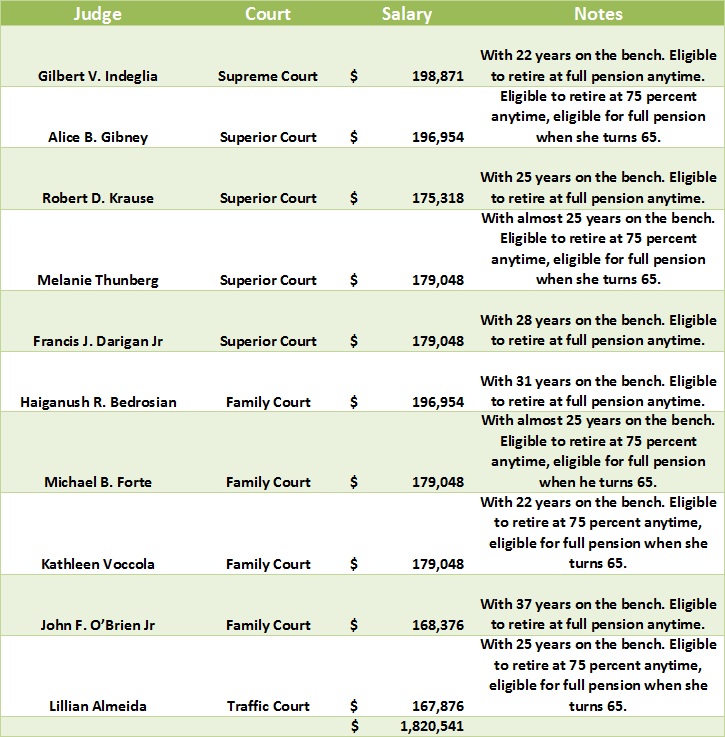
Ten Rhode Island judges earning nearly $2 million each year and paying nothing into the pension are eligible to retire this year with at least 75 percent of their pension, according to judicial spokesman Craig Berke.

The judges, which include one member of the Supreme Court, four superior court justices, four from family court and a traffic court judge, will have to start contributing 12 percent of their pay to the pension system beginning July 1, raising concerns they may simply retire before that time.
The problem, some critics say, is the state can’t afford to have a handful of judges retire by that time because it would put a serious strain on the already overloaded judicial system in Rhode Island. While Berke said he’s been told a number of judges will remain in position beyond July 1, at least one (Frances J. Darigan Jr.) is already believed to be retiring this year.
GET THE LATEST BREAKING NEWS HERE -- SIGN UP FOR GOLOCAL FREE DAILY EBLAST“I know judges come in as the later part of their lives and they give up their law practice to do that, but it [comes down to] economics,” State Senator John Tassoni said. “If they haven’t paid into it, why would they pay into it now?”
Should have Planned
Tassoni said that because it’s an election year, he doesn’t see the General Assembly being called back into session simply to confirm judges if a group of them do decide to retire.
The 100 percent noncontributing judges have all been in place since before 1990, which was when judges began contributing 8.75 percent into the judicial pension fund. The ten judges hired before that time were grandfathered in and allowed to keep contributing zero to their pensions. Taxpayers contribute just over $6 million each year – including $1.2 million in cost of living adjustments (COLAs) – to judges who pay nothing into the pension system.
It is unclear whether General Treasurer Gina Raimondo or the General Assembly factored in the potential mass exodus of judges prior to July 1 during the pension reform debate last fall, but Tassoni said the writing was on the wall. He noted that a similar situation occurred when state employees were asked to pay more of a co-pay for health insurance several years ago.
“It is something that they should have been cognizant of during the planning and if it wasn't shame on them,” Tassoni said.
The Treasurer’s office did not respond to a request for comment.
Keefe: They Hurt the Lower Class
Judicial appointments are made by the Governor and must receive approval from the Senate, meaning that if a handful of judges retire just before having to contribute into the pension system, the courts could face a situation where they have to hire back retired judges part-time to handle cases, which would cost the state additional funds. Tassoni said he doubts the General Assembly would be called back to approve appointments.
“That would be up to the Governor to say ‘if people are going to go, then we need to know,’” Tassoni said. “Because I’ll tell you this, no way no how do I think the General Assembly will come back in the summer of an election year to appoint judges.”
The lack of clarity around the judges is concerning for those who were in the trenches of the pension debate. According to Philip Keefe, president of the Service Employees International Union Local 580, the state never faced a pension crisis. He said he agrees there was a problem but that the state didn’t need a complete overhaul. He also questioned the fairness of the entire deal.
“I told the Treasurer on more than several occasions that I understand we had a pension problem, but I wasn't going to support a deal unless it was offered to everyone,” Keefe said. “That’s why I don’t think [the reforms] are fair and equitable.”
Keefe pointed to a Pew Research study that noted Rhode Island’s reforms were unprecedented and said he is sure what was accomplished. He said there was so much false outrage by groups who claimed state workers were receiving massive pensions and then running off to Florida.
“That was a complete fallacy,” Keefe said. “I wish EngageRI did their research more instead of going after state workers. If the point was to hurt the lower and middle class, they've accomplished that.”
Keefe said the difference between state workers making very little and wealthier pensions is stark. He pointed to a Boston College study that said 401k plans hurt low income workers. He said he believes state employees will win in court and that if that happens, “a problem will become a nightmare because where will the state get all that money to pay us back?”
As far as the judges go, another union official said he believes judges are entitled to the agreements they originally had, just like any other pension recipient. Paul Valletta Jr., the outspoken head of the Cranston Firefighters Union, said the state should not have gone back on agreements it already had.
“That's the pension they were promised so that's the pension they deserve,” Valletta said. “I think that's something that's been lost in this whole thing. I think if a judge is ready to retire, then god bless him. He should be allowed to retire.”
Valletta said he believes that the pension deal will be tied up in court and that eventually pension recipients will prevail. But for now, he said his focus isn’t on whether judges or anyone else deserve to face changes in their pensions. He said his primary goal during the new General Assembly session is achieve slight alterations to the bill, like the retirement age.
“We've taken our medicine,” he said. “We just want to see a few changes now."
If you valued this article, please LIKE GoLocalProv.com on Facebook by clicking HERE.