


Legislators Propose Free RIPTA for Riders: It Has Been Done in Other Cities - Would it Work in RI?
GoLocalProv News Team
Legislators Propose Free RIPTA for Riders: It Has Been Done in Other Cities - Would it Work in RI?
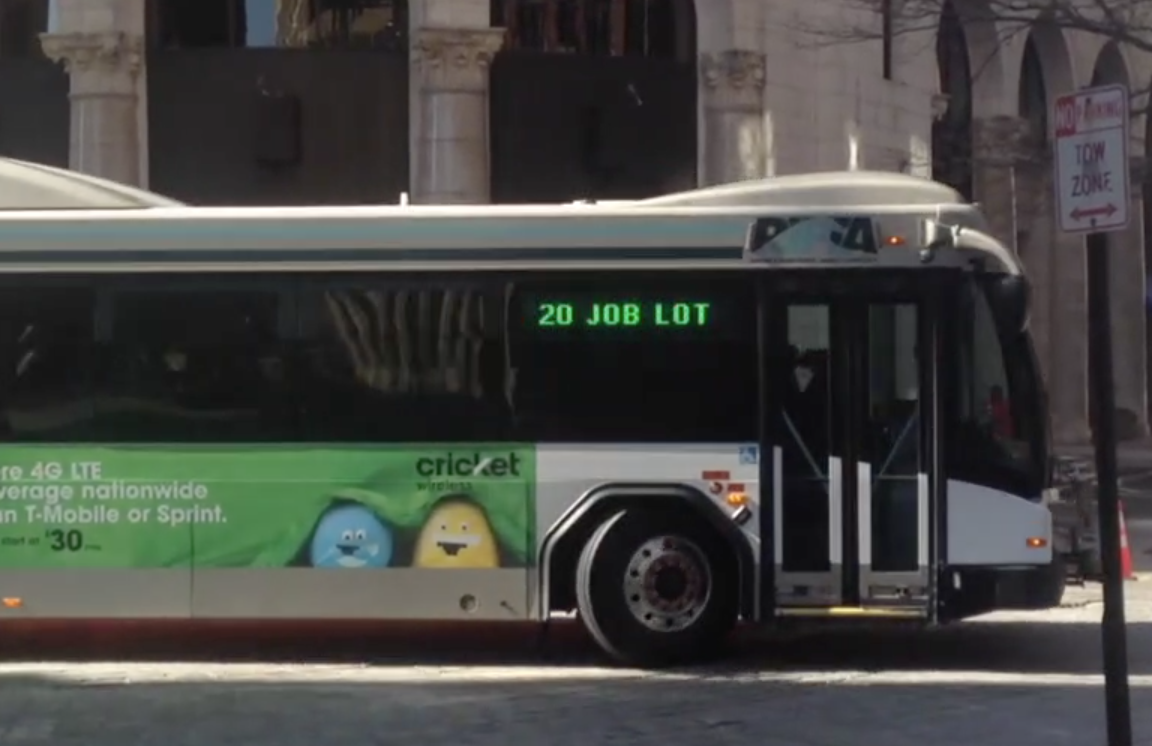
Now, Senator Meghan E. Kallman (D-Dist. 15, Pawtucket, North Providence) and Rep. Leonela “Leo” Felix (D-Dist. 61, Pawtucket) have introduced legislation that would provide free transportation on Rhode Island Public Transit Authority (RIPTA) buses.
Commuting is time-consuming and expensive for workers -- a major household cost.
GET THE LATEST BREAKING NEWS HERE -- SIGN UP FOR GOLOCAL FREE DAILY EBLASTAccording to the U.S. Census Bureau, the average American spends 25.9 minutes a day traveling to work one way — that adds up to just over four hours every week spent in transit for work.
The average commuter spends nearly 15.9% of their budgets on transportation costs, according to the Bureau of Labor Statistics. These numbers have been impacted by the pandemic, but are now returning to normal.

A program like Kalman and Felix's was adopted in Luxembourg in 2020 -- it became the first country in the world to make its entire public transit system free to all. Luxembourg has about 60% of the population of Rhode Island and is nearly the same size physically.
Cities like Worcester and Boston have been debating the issue.
“Public transportation is a significant part of the fight for racial and social justice,” said Felix. “We know that low-income and people of color use public transportation up to twice as frequently as white Americans. One of the most significant barriers to equitable transportation for low-income people is cost. This legislation ensures that everyone — regardless of race, ethnicity, or class — has a safe way to get to work or school, and to access critical services like health care or food. This will help employers as well, giving them access to a wider pool of workers.”
Not All Programs Have Worked or Have They
The New York Times reports that "a handful of experiments in the United States in recent decades, including the cities of Denver and Austin, were viewed as unsuccessful because there was little evidence that they removed cars from the road; new riders tended to be poor people who did not own cars, according to a 2012 review by the National Academies Press."
There were benefits. "They increased ridership right away, with rises between 20 and 60 percent in the first few months. That statistic accounts for its revival among a new wave of urban progressives, who see transit as a key factor in social and racial inequality," according to the Times.

Kallman also touted the legislation as a significant component of Climate Jobs Rhode Island, the state's major enviro-economic initiative that was launched earlier this year to transition Rhode Island toward a net-zero emission economy by the year 2050.
“Public transportation is one of the most effective ways to conserve energy while also growing local economies,” said Kallman. “Switching from a 20-mile commute alone by car to public transportation can reduce annual CO2 emissions by 20 pounds per day, and keeping fare money in people’s pockets — especially during a recession — can help stimulate the economy.”
For decades some employers have given their workers bus passes or subsidized them.
“It is actually cheaper in the long run for [the university] to make transit free for employees than building more parking,” said Rosalie Ray, a Columbia University Ph.D. student and contributing author of “Free Public Transit: And Why We Don’t Pay to Ride Elevators,” reports Next City.
The financial impact is not insignificant -- an estimated $25 million in lost revenue to RIPTA.
The legislators say that the revenue gap would be filled under their proposal by gas tax revenues and the Transportation and Climate Initiative.

The proposal has drawn the support of one likely gubernatorial candidate. General Treasurer Seth Magaziner has announced his support for the proposal.
“As General Treasurer, my highest priority is promoting economic growth and financial security for Rhode Islanders,” said Magaziner. “Free public transportation can grow our economy by more efficiently getting Rhode Islanders to and from their places of employment, education, and training, and helping workers to keep more of the money they earn and spending it in the local economy. I am pleased to stand with our partners today to advocate for a service that would help keep us competitive in the regional economy while supporting Rhode Island workers.”
The legislators claim that recent studies point to a growing preference and use of public transportation by younger Americans -- this is due to a number of factors, including less vehicle ownership and reliance; less need for travel due to more work and socialization at home via online access; more travel by foot, bike and shared-use services such car-sharing and ride-hailing.