


NASA's Camarda to Host "Symposium on Digital Education" at Salve Regina
GoLocalProv News Team
NASA's Camarda to Host "Symposium on Digital Education" at Salve Regina
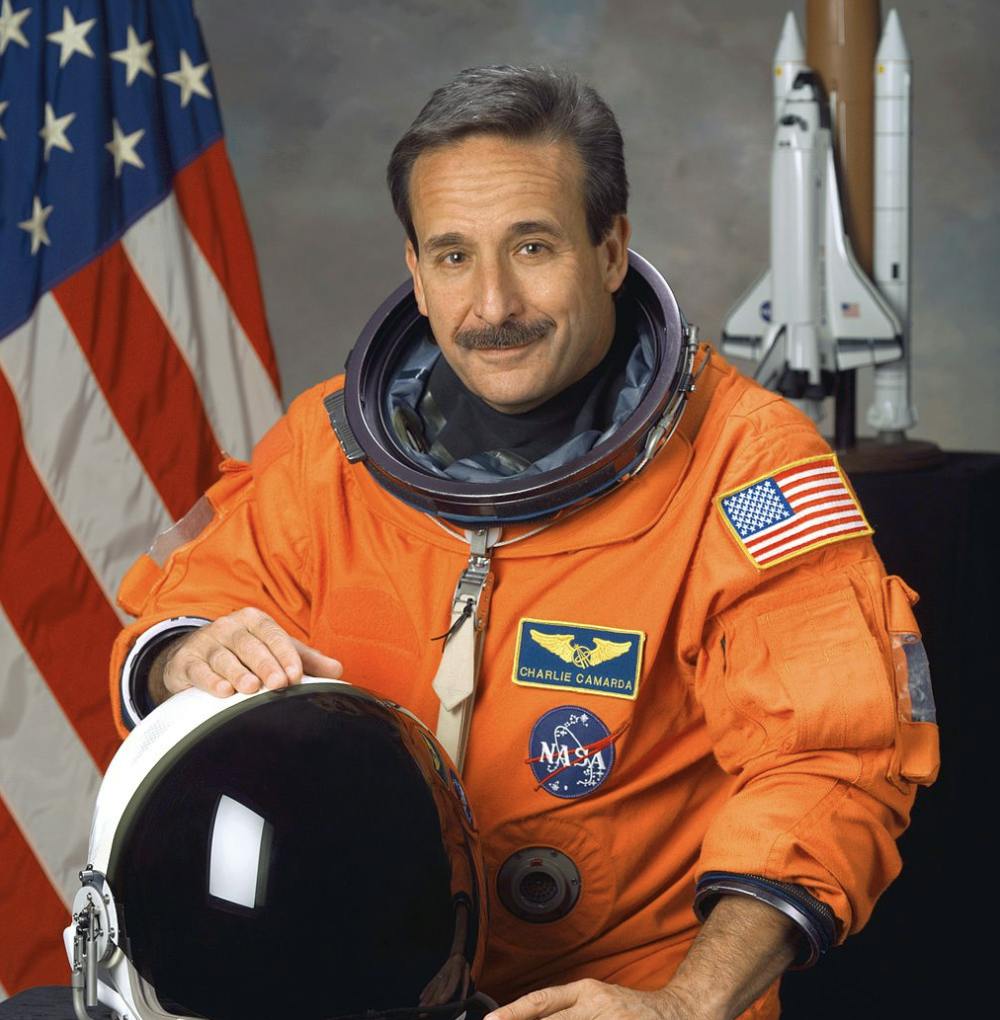
“The days of linear computer-based training are behind us. The future lies with using artificial intelligence, machine learning, and advanced analytics applied to adaptive individualized learning; for maximizing student success and outcomes,” said Irving Bruckstein, chief information officer at Salve Regina.
The symposium will take place on Tuesday, October 15 from 9 a.m. to 5:15 p.m.
GET THE LATEST BREAKING NEWS HERE -- SIGN UP FOR GOLOCAL FREE DAILY EBLASTThe Symposium
The “Symposium on Digital Education,” which is open to invited students and guests, will examine current delivery, assessment, and analytics of digital learning platforms with an eye on how the technology can evolve for enhancing future student success.
Panelists include:
John Katzman (Pedagogy), creator of Noodle Partners, is the co-founder and former CEO of The Princeton Review and best-selling author of “Cracking the SAT.”
Diego Zapata Rivera (Assessments), Managing Principal Research Scientist in the Cognitive and Learning Sciences center at Educational Testing Service in Princeton, N.J.
Sasha Dietrichson (Analytics), founder of X-Ray learning analytics product developed for Moodle and now owned by Blackboard.
Sherif Samman (Technology), CEO of Business Transformation Technologies, LLC with 25 years of experience as an IT executive for business and higher education.
About Camarda
Camarda holds seven patents on various innovations, including NASA's Heat-Pipe-Cooled Sandwich Panel, which was named one of the top 100 technical innovations of 1983 by Industrial Research Magazine. Named a mission specialist in 1996. He also served as a faculty at New York University Polytechnic School of Engineering.
He served as a back-up crew member for Expedition 8 of the International Space Station. His first space flight was STS-114, NASA's "return to flight" mission following the loss of the Space Shuttle Columbia.
Camarda continues to work for NASA and has pioneered an engineering-pedagogical approach called EPIC - that explores how to develop a mission as a collaborative training project. He has toured with this including in Finland in 2018.
He received a bachelor of science degree in aerospace engineering from Polytechnic Institute of Brooklyn in 1974 and a master of science degree in engineering science from George Washington University in 1980.
In 1990, he received a doctorate in aerospace engineering from Virginia Polytechnic Institute and State University.