Rescuing Providence: Part 3 - 1615 Hours Through Epilogue, a Book by Michael Morse
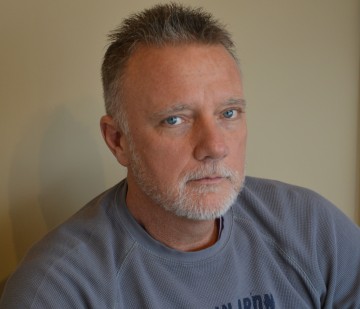
Michael Morse, Author
Rescuing Providence: Part 3 - 1615 Hours Through Epilogue, a Book by Michael Morse
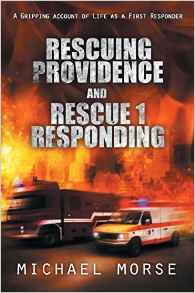
I’m glad I took the time to document what happens during a typical tour on an advanced life support rig in Rhode Island’s capitol city. Looking back, I can hardly believe I lived it. But I did, and now you can too. Many thanks to GoLocalProv.com for publishing the chapters of my books on a weekly basis from now until they are through. I hope that people come away from the experience with a better understanding of what their first responders do, who they are and how we do our best to hold it all together,
Enjoy the ride, and stay safe!
GET THE LATEST BREAKING NEWS HERE -- SIGN UP FOR GOLOCAL FREE DAILY EBLASTCaptain Michael Morse (ret.)
Providence Fire Department
The book is available at local bookstores and can be found HERE.
Note From the Author
Looks like this week will be the end of Rescuing Providence and the beginning of RESCUE 1 Responding. Here’s something for the next installment, thanks again and have a great memorial Day Weekend!
“No matter how long I do this job I seem to never learn the simplest things. Never judge a book by its cover is one of those simple sayings that I should pay closer attention to. Another fascinating person has just graced the inside of the rescue, yet I was ready to dismiss her without a second thought. I have a privilege that must never be taken for granted. People let me into their homes, share with me their secrets, and trust me with their lives. When I think of the enormity of that, I am overwhelmed.”
INTOXICATED
“No rest for the wicked,” says Mike. I just shake my head. We haven’t made it to the repair shop and are running low on fuel, and I still haven’t picked up the manicotti.
“Rescue 1 responding.”
Mike turns the lights and sirens on and drives while I doze. In what seems seconds, we stop in front of 1035 Broad Street. A man is lying in the parking lot of the liquor store, twitching, as people go about their business without missing a beat. Mike and I glove up and go to him.
“Leroy!” says Mike as if greeting an old friend. Leroy says nothing, just continues twitching.
“We’re not carrying you, Leroy, so get up,” I say, crossing my arms and standing over our patient.
“I’m having a seizure,” Leroy croaks, shaking on the filthy pavement. “Please, take me to Miriam.”
All the drunks want to go to Miriam. The staff there doesn’t deal with them as often as the people at Rhode Island Hospital; subsequently, they are treated better. It’s not that they don’t get good care at Rhode Island; the people at Miriam just don’t see them every day, and they have more patience. The drunks have yet to wear out their welcome.
“All right, walk to the truck, and we’ll take you to Miriam,” Mike replies convincingly.
“You’re lyin’. You’re gonna take me to Rhode Island. I am beyond reproach, motherfucker! Take me to Miriam,” roars Leroy, much like a king giving orders to his servants.
“Leroy,” I say reproachfully, “you know the rules.”
There aren’t any rules, but I like to pretend there are.
“They beat me up at Rhode Island,” he says.
Mike puts things into perspective: “They don’t take your bullshit is more like it.”
At Rhode Island Hospital, we take the drunks to the triage area, where their vital signs are taken and their alcohol level assessed. If they respond to verbal stimuli, they are off to the “tanks,” where they are monitored until they sober up. If they are unresponsive, they’re taken to a trauma room and given a thorough workup, which costs the taxpayers thousands of dollars. When their blood alcohol level reaches an acceptable level, they are released. If, as is Leroy’s case today, they need to be cleaned up, the emergency room technicians have to do it. They are stripped and taken to a de-con shower and treated like contaminated victims from a haz-mat incident. Newcomers are offered counseling. The regulars have been counseled so many times that the medical professionals have given up. All attempts at rehabilitation have failed, and they are on their own. If they act up during their stay, security is on them quickly. Restraints are common and necessary. Regulars like Darryl and Leroy don’t need to be restrained too often, but when they get out of line, the guards are not shy or gentle.
“That is because I am beyond reproach!” Leroy responds to Mike’s comment. “Rock and roll, lose control!”
The party is over for Leroy, and he knows it. He planned for his daily drinking binge to end this way. When he had enough, he faked a seizure, some dummy with a cell phone called it in, and he waited for us to take him to the hospital.
He gets up, dusts himself off, and makes his way to the truck. He has feces running down the back of his pants. Mike sees it and speeds toward the truck to put down a barrier between the seat and Leroy.
In the back of the rescue, I start filling out the state form, while Leroy sits on the bench seat, looking miserable and pleading with me to take him to Miriam. I didn’t have to ask him any questions; I know the answers. His name, date of birth, past medical history, medicine taken, and allergies to medicine all flew from the tip of my pen with me barely guiding it.
“When are you going to smarten up?” I ask him.
“I’m an alcoholic,” he responds, as if that explains everything.
“So what?”
“I need help.”
“You need to quit drinking.”
“You don’t know what it’s like.”
“Yes, I do.”
I say it without being condescending, and it takes Leroy by surprise. He looks at me and asks with a smirk, “What does a rich white boy know about anything.”
“I know that if I don’t drink and do go to meetings, I have a good life. If I drink, I’ll be an asshole like you.”
Leroy closes his eyes and gives in to his fate. Every alcoholic who wants to get sober knows the truth: we’re victims of a terrible disease. Some recover, most don’t. The only difference between these bums and me is that I don’t drink. I was there once and could be again. All it takes is one drink. As long as I keep things in perspective, I’ll be all right.
Of all the homeless alcoholics I have dealt with over the years, Leroy is the one I think has the best chance of getting sober. The rest of the rescue guys think I’m nuts, but I think he has the potential. Every now and then he drops out of sight for a few weeks. The story is that he has a wife who lets him stay with her only when he is not drinking. When I don’t see him for a while, I hope he is drying out at his wife’s house.
As we are leaving Rhode Island Hospital, after having dropped off Leroy, I ask Mike, “What are you up to tonight?”
“Painting Easter eggs. Henry’s waiting for the Easter Bunny.”
“What about Sammy?”
“He doesn’t believe in the Easter Bunny.”
“He’s a month old.”
“I told you he was smart.”
We can’t wait to get home. Mike’s wife, Amy, will have three boys to baby-sit when he gets there. I can only imagine the fun that must go on at their house. Mike is truly insane. His boys will probably follow in his footsteps. “Let’s get some fuel and call it a day. We’ll fix the thing that holds the stretcher tomorrow.”
“Good thinking. This will keep us out of service until we get relieved.”
“What do you think, this is my first day?” I ask.
Mike gives me one of his thousands of looks and drives. I have been running nonstop since yesterday at seven in the morning. I am tired, but it is a good tired. I managed just enough sleep throughout the two days to keep me going. Thirty-four hours goes fast when working at a busy pace. There were periods during that time that it felt like the calls would never end. But every week I get through the long shifts.
Sometimes, I think of my days as an hourglass. As the sands sift through from top to bottom, so does my shift. When the sand is through, I’ll have some time off. Then when I return to duty, I’ll turn the glass over and start all over again.
I have responded to 23 emergency calls since reporting for duty yesterday. Some people needed help, some thought they needed help, and some needed a ride or somebody to talk to.
The portable radio is like a monkey on my back. When my relief comes in, I’ll finally be rid of it. Although it takes time to relax after days of being in a state of readiness, it is imperative that I do so. Taking the job home is a big mistake. I have learned to distance myself from the department when I’m not there. Some guys can’t get enough of it; I prefer to leave it behind. I go so far as to not wear anything blue during my time off.
The fuel pumps are located near the waterfront a few blocks from the fire station. Mike pulls the rescue up to the pump, gets out, and begins fueling. The truck takes around 30 gallons of diesel to fill, and Mike puts 26 into the tank. We were almost dry. Before we could leave the fueling station, the radio crackles.
“Engine 13, a still alarm, a rescue run.”
“Shit, we’re going to have to take that,” I say. I’m so close to the end I can see the finish line. My plan to get out of the city on time is foiled again. One more run won’t kill me, I think as I key the mike.
“Rescue 1, clearing the pumps.”
1644 HOURS
PAIN (ALL OVER)
Roger, Rescue 1. Respond to 1212 Allen’s Avenue for a woman feeling ill.”
“Rescue 1 responding.
This sounds like another taxi ride to the hospital. There’s nothing wrong with a nice, easy run to finish things up. The trip to the ill woman’s home takes about three minutes; she walks out of her house as soon as we pull in front toward to the rescue.
“I’m in pain,” she informs us. I get out and open the side door.
She is 50 and tells me that she has been living with pain for years and that nobody can help her. Her private doctors have prescribed painkillers, but they don’t work. Every move she makes is accentuated with grunts and groans, and the look on her face is pure agony as she climbs the two steps into the truck. Another nut.
“I’m going to get your vital signs,” Mike informs her and places the blood pressure cuff over her upper left arm. The machine is automatic; Mike presses a button, and the cuff begins to inflate.
“It hurts!” our patient yells as the cuff tightens.
“It only hurts for a second and then begins to deflate,” I tell her, a little impatiently. I am out of compassion for the day.
It appears that she is enduring a Chinese water torture during the process. I am tempted to start an IV with a large-bore needle just to be mean, but the angel on my left shoulder overrules the devil on my right.
Her vital signs are normal, and the painful procedure is over. We head back to Rhode Island Hospital, hopefully for the last time today. My patient, Celeste, sits on the bench seat. I look at her from the captain’s chair.
“Can you work with all that pain?” I ask to pass the time.
“I’m an artist, so I work a lot from my house. I also have a studio in Warwick. It’s hard to be creative when living with so much pain,” she winces.
“What is the cause of all the pain?” I ask. I really want to know if she has Lyme disease or something similar, had an accident, or if she is a nut.
“No cause; just something I have to endure.”
She doesn’t look like a nut or act like one. People are so alike, yet so different. We can never know how it feels to be inside another person’s mind or body. A minor irritation to one person is major pain to another. We are wired differently, I figure.
“What is the emergency room going to do for you?” I ask.
“Help me.”
“How?”
“With medication.” That settles that. She is going to alleviate her pain. Why she needs a rescue to get her there is beyond me. Sitting inside her purse, on top is a fantasy/science fiction novel that I read years ago.
“Do you like the book?” I ask. She follows the direction of my gaze with her eyes.
“Oh, that. The story is all right, but I really like the cover art. This is what I do,” she picks the book up and shows me the cover.
“You did that?” I ask.
“Not this one, but I’ve done a lot of similar things. I really love the Tolkien stories. I’ve done some murals for those books.”
“Really? What is your favorite subject to paint?” Suddenly, I am wide awake. I grew up reading The Hobbit and The Lord of the Rings. I’ve read all the books dozens of times. The movie versions are popular now, but you can’t beat a good book.
“I painted the mirror of Galadriel, Treebeard, and the Black Riders at Bern. The originals are at my studio.”
“They must be worth a small fortune,” I say. She laughs and then grimaces and replies whimsically, “You would be surprised at how small a fortune they are worth.”
“That’s too bad. Creativity should be worth more than it is.”
“It’s not all about the money. I have a good life, and I love my art. I just hate living in pain.”
“Where is your studio?” Celeste tells me where she works, and I promise to stop by. I look forward to seeing her work. No matter how long I do this job I seem to never learn the simplest things. Never judge a book by its cover is one of those simple sayings that I should pay closer attention to. Another fascinating person has just graced the inside of the rescue, yet I was ready to dismiss her without a second thought. I have a privilege that must never be taken for granted. People let me into their homes, share with me their secrets, and trust me with their lives. When I think of the enormity of that, I am overwhelmed.
For the day’s last time, I feel the truck make the turn into the rescue bay at Rhode Island Hospital, the bump at the end of the driveway shaking the truck right on cue. Mike turns and backs into the bay. I help Celeste out of the side door, and we walk into the triage area together. There is a break in the action; the night shift is taking over. Standing at the desk, Tahra sees us, punches her report into the time clock, and asks, “What have you got?”
“Fifty-year-old female, complaining of pain all over, ongoing problem for years, no trauma or diagnosis, takes pain medication with no allergies to meds, vitals stable, ambulated to the truck. Sign here.”
“Long shift?” asks Tahra.
“Is it that obvious?”
“We usually can’t get rid of you; now you can’t wait to leave,” she says and signs my report.
“See you tomorrow.” I say good-bye to Celeste and walk back to the truck. The people we deal with at the hospital see a lot of us. We tend to hang around there between runs and sometimes wear out our welcome.
This is definitely it. The ride back to quarters takes five minutes. Mark is waiting at the station. I remove the portable radio from my belt and pass it over to him. I’m relieved. The torch has been passed again.
EPILOGUE
9:38. My clock doesn’t tell me if it is morning or night. I remember coming home, trying to stay awake, failing. I want to have a normal life, spend time with my wife and kids, but I can’t. Maybe someday.
There is no light coming from the spaces between the window shades. Night. I’ve been asleep for two hours. Cheryl probably has dinner in the oven, hoping that I’ll join her. I usually do. She’ll go hungry waiting for me to come downstairs. It is an effort for me to be pleasant, but she deserves that. Sometimes I fail, and she puts me back to bed, where I sleep on and off until morning. I’m going to stay awake tonight, at least until 11:00.
The fight we had about the forgotten manicotti is over, I think. I’ll pick it up tomorrow when I go back to work. In a few hours I’ll start another marathon shift and then have a few days off.
My corner of the world, Providence, is a little better off because of the work I do. It is a small contribution in the big scheme of things, but I find satisfaction in that. The people I meet and help are truly players on the world’s stage. Each individual has a part—some seemingly insignificant, yet vital; others apparently enormous, yet trivial. Firefighters die saving people from burning buildings and are given a hero’s farewell, with thousands attending the funeral, and thousands more watching on television. The people who weren’t saved are laid to rest in relative anonymity. Murderers walk free, their victims gone forever. Young people are killed in car accidents by drunken drivers who continue to drink and drive. Kids fall off dorm roofs to their untimely death, never reaching their potential as their families ponder what could have been.
Tomorrow begins another day. How many lives will be changed forever? Will it be my turn? I guess I’m going to find out.