


Rhode Island Has 5th Highest Student Loan Debt in Country
Kate Nagle, GoLocal Contributor
Rhode Island Has 5th Highest Student Loan Debt in Country
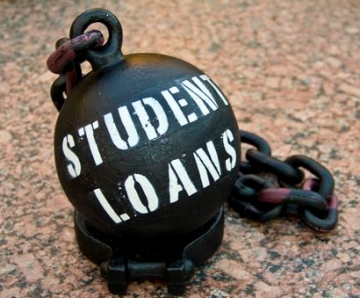
While the distinction for Rhode Island is a drop in one spot, having gotten the #4 position for "highest debt" last year, the amount has crept upwards from an average of $29,097 in debt for Rhode Islanders in the class of 2011, and $26,340 for those who graduated in 2010.
"Students should use this data as guide to make sure they aren’t over-borrowing. If students are planning to borrow well over the average levels stated in these reports, they should reassess their choices and see if they can come up with a plan to reduce their debt. This may mean making some difficult choices, like deciding to spend a year or two taking classes at the local community college instead of a pricey private school," said Chad Pastorius with the Rhode Island Student Loan Authority (RISLA).
GET THE LATEST BREAKING NEWS HERE -- SIGN UP FOR GOLOCAL FREE DAILY EBLASTSee How Rhode Island Colleges and Universities Ranked for Debt HERE

According to the report, state averages for borrowers’ debt at graduation in 2012 ranged from $18,000 to $33,650. High-debt states remain concentrated in the Northeast and Midwest, with Delaware the highest -- and New Hampshire, Pennsylvania, Minnesota, and Rhode Island also had average debt over $30,000.
See How Rhode Island Compared to the Rest of New England BELOW
Private vs. Federal Loans

Communications consultant and former Rhode Island Higher Education Assistance Authority Program Director Peter Kerwin said that students -- and families -- should however look first to max out on federal loans before looking to private ones as offered by agencies such as RISLA.
The Project on Student Debt reported that the proportion of Rhode Island students with debt for 2012 to be 69%, which is the sixth highest amount in the nation.
"Federal loans provide more forgiveness options than private ones," said Kirwin, noting that students can qualify for up to $33,000 in federal loans over four years. "Max out on your federal loans, then take private."
RISLA posts on their website the following message to students to maximize free financial aid -- and federal options.
Attention Students! Before borrowing, always remember to utilize any free financial aid, including grants and scholarships, first. Next, maximize your Federal Stafford Loan and Federal Perkins Loan (you must qualify for this loan) borrowing limits before turning elsewhere for loans. If you qualify for a Federal Perkins Loan, your school will include it in your financial aid award letter. To apply for a Stafford, complete the FAFSA and contact your school's financial aid office."
In addition, Kirwin noted that students and families should look at "FinAid" (www.finaid.org) as a resource to explore loan options.
Government to Ramp up Rankings?

"It is feasible for the president to establish a ratings system based on college access, affordability, and outcomes and tie those ratings to financial aid. In FY2012, The Federal government lent over $100 billion to students and parents and awarded approximately $50 billion in grants so they have a lot at stake when it comes to the success of students who attend certain colleges," said Pastorius.
"Currently, the Department of Education determines who gets federal loans and grants and how much they are eligible for. It's certainly possible that these formulas could be altered to include college ratings. Here in Rhode Island, we are fortunate to have very good schools so it's hard to see how a rating system would have an adverse impact for students attending school here."
GoLocal Mindsetter and college admissions advisor Cristiana Quinn said that in the meantime, students and families should utilize current tools available
"In November of 2011, the federal government mandated that every college in the U.S. post a net price calculator on their website that allows families to put in their tax information and receive an estimate of aid, based on that institution's policies and formulas. Perhaps, the federal government needs to mandate that all colleges release figures on student debt in order to encourage improvement and competition among institutions of higher education. However, those numbers will be broad in scope. I still encourage families to use net price calculators and financial aid offices on each campus as a more specific tool to determine their likely debt," said Quinn
New England States with the Highest Student Debt

#6 Connecticut
Average Student Debt: $27,816
Percent of Graduates with Debt: 61%
Note: All data is based on four-year or above institutions for students graduating in the 2011-2012 academic year.

#5 Vermont
Average Student Debt: $28,299
Percent of Graduates with Debt: 63%
Note: All data is based on four-year or above institutions for students graduating in the 2011-2012 academic year.

#4 Massachusetts
Average Student Debt: $28,460
Percent of Graduates with Debt: 66%
Note: All data is based on four-year or above institutions for students graduating in the 2011-2012 academic year.

#3 Maine
Average Student Debt: $29,352
Percent of Graduates with Debt: 67%
Note: All data is based on four-year or above institutions for students graduating in the 2011-2012 academic year.

#2 Rhode Island
Average Student Debt: $31,156
Percent of Graduates with Debt: 69%
Note: All data is based on four-year or above institutions for students graduating in the 2011-2012 academic year.

#1 New Hampshire
Average Student Debt: $32,698
Percent of Graduates with Debt: 74%
Note: All data is based on four-year or above institutions for students graduating in the 2011-2012 academic year.


