


RI Is Home to 12th Most Contaminated Hazardous Waste Site in America, According to Study
GoLocalProv News Team
RI Is Home to 12th Most Contaminated Hazardous Waste Site in America, According to Study
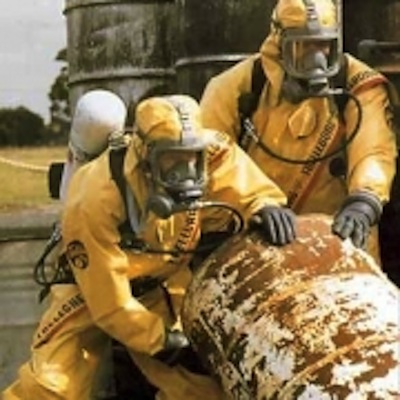
The business website 24/7 Wall Street “reviewed the 23 Superfund sites determined to be the most hazardous, based on the site’s assigned Hazardous Ranking System (HRS) score determined by the Environmental Protection Agency (EPA). Any score higher than 28.5 is deemed a serious enough hazard by the EPA to merit Superfund spending.”
The cost of cleaning up the Centredale Manor site in North Providence is already projected to exceed $100 million.
GET THE LATEST BREAKING NEWS HERE -- SIGN UP FOR GOLOCAL FREE DAILY EBLASTOfficials from President Donald Trump's EPA in Boston and Rhode Island local officials held a “celebration” press conference in September, to tout what they said was progress on the cleanup at the site.
"We celebrated the fact that federal and state regulators, along with help and push from our local municipal and environmental group partners, successfully reached an agreement with Black & Decker on a final remedy that maintains all of the protections and actions in EPA’s cleanup decision,” said EPA Region I spokesman Dave Deegan told GoLocal in an email.
The so-called Black and Decker agreement had been reached a year earlier.
“The settlement ensures that the responsible parties will pay for our past costs (i.e. pay back the taxpayers) for the prior work that we did at the site, as well as ensuring that the responsible parties will pay for the upcoming work to accomplish the clean up as detailed in the 2012 decision. Finally, the responsible parties also agreed to pay for EPA and RIDEM’s oversight of the upcoming remedial work that will be done,” said Deegan.

But Deegan has repeatedly refused to provide a breakdown of how much has been recovered from the polluters — the responsible parties — versus the overall cleanup cost.
In 2018, state and federal officials announced that "two subsidiaries of Stanley Black & Decker, Inc.—Emhart Industries Inc. and Black & Decker, Inc.—have agreed to clean up dioxin-contaminated sediment and soil at the Centredale Manor Restoration Project Superfund Site in North Providence and Johnston, Rhode Island."
"The settlement, which includes cleanup work in the Woonasquatucket River and bordering residential and commercial properties along the River, requires the companies to perform the remedy selected by EPA for the Site in 2012, which is estimated to cost approximately $100 million, and resolves longstanding litigation," according to EPA.
24/7 Wall Street writes about the contaminated site, “The Centredale Manor Restoration Project, located about four miles northwest of Providence, Rhode Island, is the site of chemical manufacturing and drum reconditioning operations that took place from the early 1940s to the early 1970s.”
“A fire destroyed most of the structures there in 1972. Because of previous operations at the site chemicals seeped into the ground and fed into the Woonasquatucket River and tainted sediment, streams, and ponds. EPA investigations from 1999 to 2012 revealed contamination of soil, groundwater, sediment, and surface water that contained dioxin and polychlorinated biphenyls, compounds the EPA regards as hazardous. The EPA took cleanup action from 1999 to 2002 and brought litigation against responsible parties that resulted in a $100 million cleanup plan in 2018,” added 24/7 Wall Street.
Methodology
24/7 Tempo reviewed the 23 Superfund sites determined to be the most hazardous, based on the site’s assigned Hazardous Ranking System (HRS) score determined by the Environmental Protection Agency. Any score higher than 28.5 is deemed a serious enough hazard by the EPA to merit Superfund spending.
The EPA determines the HRS of a site based on three main categories of risk: The likelihood that a site is releasing — or has the potential to release — hazardous substances into the environment; the toxicity of the waste and how much of it there is; and the proximity of the waste to people. It is important to note that these sites are being cleaned, and some have had their contaminants removed since the HRS assessment grade listed was made.