


Secrets and Scandals - Reforming Rhode Island 1986-2006, Chapter Eleven
H. Philip West Jr.
Secrets and Scandals - Reforming Rhode Island 1986-2006, Chapter Eleven

Since colonial times, the legislature had controlled state government. Governors were barred from making many executive appointments, and judges could never forget that on a single day in 1935 the General Assembly sacked the entire Supreme Court.
Without constitutional checks and balances, citizens suffered under single party control. Republicans ruled during the nineteenth and early twentieth centuries; Democrats held sway from the 1930s into the twenty-first century. In their eras of unchecked control, both parties became corrupt.
GET THE LATEST BREAKING NEWS HERE -- SIGN UP FOR GOLOCAL FREE DAILY EBLASTH Philip West's SECRETS & SCANDALS tells the inside story of events that shook Rhode Island’s culture of corruption, gave birth to the nation’s strongest ethics commission, and finally brought separation of powers in 2004. No single leader, no political party, no organization could have converted betrayals of public trust into historic reforms. But when citizen coalitions worked with dedicated public officials to address systemic failures, government changed.
Three times—in 2002, 2008, and 2013—Chicago’s Better Government Association has scored state laws that promote integrity, accountability, and government transparency. In 50-state rankings, Rhode Island ranked second twice and first in 2013—largely because of reforms reported in SECRETS & SCANDALS.
Each week, GoLocalProv will be running a chapter from SECRETS & SCANDALS: Reforming Rhode Island, 1986-2006, which chronicles major government reforms that took place during H. Philip West's years as executive director of Common Cause of Rhode Island. The book is available from the local bookstores found HERE.
Part One: DePrete, RISDIC
Chapter Eleven, Right Now (1991)
On December 11, 1991, precisely at 10:30, church bells pealed across Providence. The clanging rang from all directions: from belfries of the First Baptist Church in America and the cathedral of St. John, from Gloria Dei Lutheran and the Armenian Church of Saints Sahag and Mesrob. Thick State House walls seemed powerless to block their reverberation, a palpable clangor that evoked history.
Television lights flooded the House lounge. Behind a podium studded with microphones hung a white banner with the RIght Now! logo. Deep crimson walls held the oversized portraits of former House speakers in gilded frames. Each in his turn had been arguably the most powerful politician in Rhode Island, often going on to lucrative state jobs. Those who gazed down at the crowd of legislators, reporters, and coalition leaders, would have been flabbergasted by the twenty-eight point platform that the RIght Now! Coalition was about to unveil.
Alan Hassenfeld stepped to the bank of microphones, framed by the RIght Now! logo behind him. “Let the bells ring for a new dawn” he began, his public voice rich with the cheerful intimacy of a conversation among friends. “My business is toys, but we’re here today — half way between the first day of Hanukkah and Christmas — to give Rhode Islanders a different kind of holiday gift. Today, we announce the formation of what we think is the broadest coalition in the history of Rhode Island.”
He called reporters’ attention to a handout that listed the groups whose leaders comprised the steering committee. “We call this coalition ‘RIght Now!’ Our goal, very simply, is to make Rhode Island right again and do it right now.”
Hassenfeld said there was no need to revisit the bank closings, fiscal crises, and political scandals that had made Rhode Islanders despondent. It was obvious, he said, that RIght Now! could not turn back the clock. Instead, our goal was to make Rhode Island right for the future. “We cannot wait any longer. We must enact lock-tight reform measures that will serve as a model for every other state in America.” Then he announced that our organization would work toward three goals: tougher ethics laws, effective campaign finance reforms, and a constitutional amendment to establish four-year terms, with recall and a two-term limit, for the five statewide general officers.
Outlining our platform, I highlighted twenty-eight specific reforms. We welcomed bills already announced by Gov. Sundlun and leaders of the General Assembly, but added that we wanted substantially more than we had seen so far. “It’s not enough to close a few loopholes. We have to make a tight seal. When we’re trying to keep hot air in our house and cold air out, it doesn’t make any sense to weather-strip the doors if we leave the windows open.”
I added that RIght Now! was determined to stop senators and representatives from trading their votes for state jobs when they left the legislature. A Providence Sunday Journal story had identified forty-nine legislators who, during the last ten years, had moved directly from their seats in the General assembly to judgeships or other permanent, well-paid state jobs. “We’re not saying never,” I said, “only for one year. But make no mistake, we are passionate about this.”
Streamlining the Ethics Commission and opening up its adjudicative hearings was another goal. I wanted to add that the day before I had heard former Gov. DiPrete and his son testify, but the law kept their testimony secret. My list ended with our proposal for four-year terms for the governor and other statewide general officers. “No matter who wins, we’re putting that person in charge of a $2 billion-a-year corporation. With two-year terms, we’re saying: ‘Recruit great staff and produce flashy results in a hurry, because your next campaign starts in earnest only twelve months from now. And by the way, you’d better start raising $40,000 a week so you can get re-elected in two years.’”
News outlets loved the story. Cartoonists showed Hasbro’s G.I. Joe storming the State House. Editorials welcomed the effort, although several columnists wondered whether this unlikely coalition could hold together through the inevitable battles ahead.
Even as the klieg lights cooled, RIght Now! faced both internal stress and outside attack. Without consulting the steering committee, Alan Hassenfeld announced a moratorium on campaign contributions. He pledged to Providence Journal reporter G. Wayne Miller that he would not give to political campaigns or parties until meaningful reform was enacted. “I will call upon my colleagues at Hasbro to do the same, and I will implore all the people to tighten their belts and stop feeding the machine.” Once he went out on that limb, how could his moratorium not also become the coalition’s policy?
I stood in awe of Alan Hassenfeld. I wished we had discussed his idea for a moratorium before he declared it, but how could I criticize his bold move? A freeze in contributions made little difference for me, since national Common Cause barred staff from endorsing candidates or making campaign contributions, but I still feared its effect. A moratorium that dried up campaign contributions would hurt challengers while money flowed as usual from professional lobbyists to legislative leaders and their loyalists.
At our next steering committee meeting, I timidly raised my concern. If the moratorium dragged on for months, it could have unintended consequences.
“I hear you,” Hassenfeld said graciously, “but I think we have to send a strong message to everybody in that building that we can’t continue with business as usual. They simply must pass campaign finance reform with teeth.” He did not sound angry or bitter. “The real litmus test is: ‘are you willing to sign on to the moratorium?'"
I nodded and said no more.
Throughout the fall, those of us who were organizing the coalition had reached in every way we could to two major powers: the Roman Catholic Diocese and organized labor. Only days after we unveiled the coalition with pealing church bells, Bishop Louis E. Gelineau announced that he supported RIght Now!’s goals.
Gary Sasse and I had presented the RIght Now! platform to the ALF-CIO Executive Council at their headquarters, only a block from the State House. We left with a sense that the unions would not support our proposals. On the sidewalk afterward, Sasse said it was still important that we had reached out to labor. “Most of them will protect the legislative status quo,” he said, “but they’ll be less vehement after our visit. If we can keep them out of the fight, that helps us.”
Since 1935, when Democrats broke the Yankee Republican stranglehold on Rhode Island’s government, unions had become a dominant force. Lobbyists for teachers, social workers, firefighters, police, correctional officers, and other public employees constituted the most disciplined and professional force at the State House. Unions for teamsters, electricians, machinists, pipefitters, and longshoremen had lost membership when traditional industries fled the state, but their solidarity endured.
As Sasse predicted, ALF-CIO President Edward McElroy announced that labor would not join the Right Now! Coalition on the grounds that some of its proposals were “antidemocratic.” Promoting them would lead to an unnecessary “bashing” of lawmakers. “We’ll do our own thing in choosing those issues we choose to support and opposing those we feel are not wise policy,” McElroy said.
George Nee, the ALF-CIO secretary-treasurer, spoke of labor’s objection to strengthening the governor’s position with a four-year term while leaving lawmakers with two-year terms. “It’s important that we don’t get caught up in such a bandwagon of reform that we start upsetting the balance between branches of government,” Nee told the Providence Business News. “We shouldn’t harm these institutions in our quest to get rid of every injustice.”
While organized labor found RIght Now! too disruptive of the General Assembly’s dominant role in state government, an array of militant depositor and reform groups declared our new coalition not radical enough. Since RISDIC’s collapse, protesters had sorted themselves around differences over substance, tactics, and leadership. Besides Citizens for Depositors’ Rights, other new groups had coalesced: the Government Accountability Project, the Rhode Island Taxpayers Association, Reform 92, and Operation Clean Sweep.
Maurice “Mo” Guernon of Operation Clean Sweep told the Providence Journal he had considered joining existing reform groups but none had the “sweeping” approach needed. “With the current crew in the state legislature,” Guernon said, “you’re not likely to get any fundamental reform that has teeth in it.” On talk radio and in public statements, Guernon declared it time for ordinary citizens “to strip corrupt politicians of their special privileges.” Press releases warned that Operation Clean Sweep would “target corrupt public officials for removal.” Like Jack Kayrouz of Citizens for Depositors’ Rights, Guernon laced his comments with sarcasm.
As we organized the RIght Now! Coalition, I asked the steering committee if we could draw these grassroots groups in, but business leaders cringed. “You can’t deal with those people,” said Jim Hagan, who led the Greater Providence Chamber of Commerce. “They tar everybody with the same brush. Even their name says they think they can sweep corrupt politicians out — as if they can tell by just looking who’s crooked and who’s not.”
From the head of the table, Hassenfeld asked for candid comments. “Here’s the question,” he said. “Would they moderate their position at all? Could we bring them in?”
“What bugs me about Mo Guernon and his crowd,” said Jim Miller in his turn, “is that they constantly condemn public officials across the board. A lot of politicians have feathered their own nests, but no one will simply sweep them all away. Until the election next November, we have to work with the current senators and reps. We have a brief window to persuade the General Assembly to act. I’m all for being firm, but punching them in the gut will only make them resist our bills.
“I believe our message has to be that all of us — elected officials and ordinary citizens alike — need to repent for tolerating such corruption. Once we repent for letting corruption fester so long, then we can demand that legislators also repent and fix the political system.”
Norman Orodenker spoke for the Jewish Federation. “I’m obviously not a Baptist,” he said, “but I agree wholeheartedly with Jim. These ‘clean sweep’ people may mean well, or they may not mean well. Frankly, I have no way of knowing, but I don’t believe that bringing them to this table will moderate their behavior. It may even embolden them.”
Gary Sasse agreed. “A crisis like this attracts people who enjoy the politics of personal attack. I don’t think they’ll temper their militancy for the sake of passing genuine reforms. I’m not even sure they want reforms to pass, since that would undercut their case for sweeping all the incumbents out.
“In answer to Alan’s question,” Sasse said, “I agree with Jim and Norman that we would make a mistake by inviting Operation Clean Sweep into this coalition. Partners in a coalition don’t need to agree on every point, but they’ve got to be pragmatic and respect differences, which I don’t see.” He paused, as if to reflect. “I also need to say that if Operation Clean Sweep joins this coalition, my board would probably pull RIPEC out.”
Hassenfeld had said nothing while he listened to opinions around the table. He asked if anyone wanted to say more. He waited for the silence to work and then spoke. “Sounds like we’re in agreement. We may wish there were a way to invite Operation Clean Sweep onto this steering committee, but we can’t handle their belligerence. We can’t expect a leopard to change its spots.”
He scanned the table again. “And, hey, we’re no less committed than they are to making serious change in this messed-up state that we love. We’re simply admitting that you can’t achieve real reform through personal ad hominem attacks. So we reaffirm our position that we will fight to the death on principle, but we will never attack people.”
Weather forecasts predicted heavy rain for the first Sunday of 1992, and a cold drizzle fell from leaden skies. Thousands were expected for an interfaith rally on the broad plaza below the State House. The decision whether to move into a nearby auditorium rested on Jim Miller, who decided to risk the rain. Throngs gathered in cathedrals, churches, and synagogues of their choosing. Those not affiliated with any religious institutions could use a specified parking lot where parking would be free.
Processions stepped off with banners aloft. From Saints Sahag and Mesrob Armenian Cathedral bearded priests in black robes carried ancient icons across a bridge over I-95 to the beat of drums and the clanging of church bells. They met and mingled with the Lutherans who had gathered at Gloria Dei Church on nearby Hayes Street. Marchers tramped up Smith Hill from the Episcopal Cathedral of St. John, across from the Roger Williams National Memorial, while Roman Catholics from the Cathedral of Saints Peter and Paul on Weybosset Hill wound their way through downtown Providence, merging with streams of Protestants from Beneficent Congregational and Mathewson Street United Methodist churches. Unitarians came from several directions. Processions flowed together up Francis Street, over the Woonasquatucket River, and toward the State House. American Baptists, who had gathered at the First Baptist Church in America, crossed a bridge over the Moshassuck River near the spot where Roger Williams had founded Providence and their congregation more than three and a half centuries earlier.
A year earlier, low-flying military planes and artillery rounds had punctuated Bruce Sundlun’s inauguration. The new governor interrupted festivities by announcing the collapse of RISDIC. Since then, bitter protesters had come by the thousands, shouting for their money, but now church bells pealed across the city, a wild clanging cacophony of high chimes and deep gongs.
Streams of marchers flooded onto the State House grounds from all directions with triumphant music of fifes and drums, trumpets and bagpipes. They mingled on brick walkways under bare winter trees. A cheerful multitude filled the broad south plaza and overflowed onto wide swaths of soggy grass. Waves of people flowed up broad staircases and crowded the white marble terraces. A man and woman appeared on horseback representing Roger Williams and Anne Hutchinson, exiles from the Massachusetts Bay Colony. As if turning a new page, this vast ecumenical throng seemed to have left bitterness behind. As their numbers swelled, the sky cleared, and sunshine bathed the scene.
I watched Jim Miller, in a black preaching robe, make his way to a pulpit that held a single microphone. Nearby, an Orthodox icon portrayed a dark-skinned Jesus with gold halo. Behind Miller, the bold RIght Now! banner fluttered. Farther back, white marble pillars rose to a broad lintel engraved with words from the royal charter: “To hold forth a lively experiment that a most civil state may stand and best be maintained with full liberty in religious concernment.”
Miller welcomed the throng and thanked them for risking rain. He promised a gathering different from any ever held on this historic ground. “Our theme today,” he said, “is repentance. We want those who work in this building to repent of decisions made in this splendid structure, and we must repent of our indifference. We must repent for allowing so much that was wrong to go on for so long.”
Rabbi Wayne Franklin from Temple Emanu-El stepped forward in a white prayer shawl. He explained the ancient blowing of a ram’s horn for repentance at Rosh Hashanah and Yom Kippur. Then he lifted a shofar of polished onyx and gray to his lips. He blew, but no sound came. He put his lips to the horn and blew again but only sputtered. The rabbi drew a deep breath and blew again. This time, an eerie wail rose through and over the crowd, its pitch soaring like nothing heard in this space before. Then a cantor sang Psalm 15 on speaking truth from the heart, doing no harm to the neighbor, keeping oaths amid pain, and not accepting bribes against the innocent.
Bishop Louis E. Gelineau appeared in simple black cassock and red cap. He spoke from a pastoral letter he had published in the diocesan newspaper a few days earlier, lamenting those who took advantage of their positions to commit crimes: “Were not some of them raised in good catholic homes? Do they not see a relationship between their faith and their moral duties?” In a solemn liturgical voice, Gelineau called for “a renewed sense of public morality.” He told the crowd, “In the end, we shall each stand before God to be judged. I pray that when your moment and mine comes to give an accounting, we shall not be found wanting.”
Rabbi David B. Rosen, president of the Rhode Island Board of Rabbis, picked up the same themes. “We are not here to condemn state government as a whole,” he told the crowd, “for we know there are thousands of hardworking, dedicated and honest men and women in every branch of government who deserve our admiration and respect. But we cry out for repentance.”
Miller had made the event truly catholic and inclusive. Rev. Dietra C. Bell, from the Allen African Methodist Episcopal Church in the neglected West End of Providence, asked God to soften the hearts of public officials. Then she sang with power that set hands clapping and bodies swaying.
The chief Narragansett medicine man, Lloyd Wilcox, called out in a booming baritone, “Brothers and sisters, we gather in the presence of the great spirit.” With a beaded headband across his brow, he embodied the state’s paradoxical history of respect and cruelty toward its indigenous people. His voice reverberated across the city: “Broken promises, broken treaties, broken hearts, and broken bodies are echoed in this present time due to the abuse of leadership in government for selfish gain. Once again, trust between brothers and sisters is shattered and denied, and human dignity violated.
“Great Spirit, renew our trust!” Wilcox called and waited, then called again: “Great Spirit, renew our trust!”
This time, the crowd shouted back: “Great Spirit, renew our trust!”
He boomed again: “Great Spirit, renew our trust!”
Thousands responded: “Great Spirit, renew our trust!”
As if voices were not enough, Miller invited the crowd to climb the broad white marble stairs and march around the State House. The crowd surged upward behind rabbis blowing shofars. Once on the pedestal, they joined hands, forming a ring around the entire building. With church bells clanging from all directions, the line of marchers clasped hands to form a second circle around the iconic structure, and then a third. People cheered, and many danced.
I watched the rally on television news that night, flipping from channel to channel. Reporters expressed surprise — they had not heard a word of personal attack from the speakers or the crowd. The weather report showed a satellite photo of rain clouds swirling over southern New England. In time-lapse images, a clear eye of the storm opened up over Westerly and tracked northeast across Providence. As in ancient times, many took that patch of clear sky as a sign of God’s favor or, as Roger Williams might have said, of divine and merciful providence.
From the start of the 1992 legislative session, RIght Now! proved powerful and provocative. Publicity from newscasts and newspaper stories lent heft to our lobbying efforts. Volunteers arrived at the State House and cleaned out the stocks of RIght Now! buttons that I brought in my briefcase. They pinned the badges on proudly and went to find their senators and representatives. A few legislators asked for buttons and wore them for a day or two below legislative lapel pins, while others merely peered at the one on my jacket. “Would you like one?” I would ask as we shook hands.
“Not today,” some would say but then assure me they would give our bills every consideration.
Increased visibility also made RIght Now! a target. Near the end of January, the Rhode Island Black Caucus of State Legislators convened a press conference to demand that we add their issues to the RIght Now! platform. With the caucus were leaders of the NAACP, several smaller civil rights groups, and the president of the largely African-American Ministers’ Alliance of Rhode Island. Rep. Joseph E. Newsome, who represented the district where Anne and I lived on the South Side of Providence, declared that the debate must be broadened beyond “the Common Cause agenda. That agenda is very narrow.” Newsome insisted that any reform must also help children in poverty, increase funds for education, and make corporations socially responsible.
Newsome’s words stung. He and I had worked locally together to end apartheid in South Africa and to help refugees from Liberia’s civil war. We had been allies in streamlining voter registration, which increased voting in our neighborhood. He knew that the executive director of the Urban League, B. Jae Clanton, served on the RIght Now! steering committee. I began to sense that the real target of this press conference was Thomas J. Skala, the president of Fleet National Bank. Newsome insisted that banks needed to commit more to low-income neighborhoods, calling it “obscene and unethical” for corporate leaders with huge salaries and bonuses to lay off workers in poor neighborhoods.
Rep. Harold M. Metts, who chaired the Black Caucus, also weighed in. “Ethics reform, to be truly meaningful, needs to be all-inclusive,” he declared. While he spoke, I noticed Jim Miller’s name on the list of speakers on the list. The unprecedented racial inclusiveness of the January rally for ethics reform had been Miller’s doing.
“I’m honored to speak here today,” Miller began gently. “There’s no question that the concerns of our youngest and poorest and weakest must truly be our own. We must be attentive to all who bear the legacy of America’s deep original sin. We must all redress the wrongs and injustices perpetrated against persons of color. I want you to know that the Council of Churches is fully committed to addressing these concerns.”
Miller turned a page in a tiny notebook. “But I need to say that — as important as these issues are — RIght Now! cannot suddenly add them to its agenda. There are narrower anti-corruption issues that it must deal with first if we hope to get Rhode Island back on its feet. I hope this caucus in its wisdom will recognize that political reality.”
Miller was a newcomer in Rhode Island and the only Caucasian invited to speak, so he took a great risk in challenging the Black Caucus’s demand. He spoke carefully but firmly. “To push all these things in 1992 will mean that none will get done. With RISDIC’s collapse, our urban centers have suffered as much or more than any other parts of the state. Our inner-city neighbors will not trust state government until it is cleansed of corruption that bleeds the poor.”
I understood the anger behind this press event. Year after year, I had testified before the House Judiciary Committee on Common Cause legislation to widen the circle of those who could not benefit directly from family members who held public office. In prior years Metts had listened to testimony about the harm nepotism inflicted, and once, as I left the hearing room, he followed me into the hallway. “I’m against your so-called nepotism bill,” he declared. “I don’t agree with your supposedly righteous reasons. Do you want to know why?”
With lobbyists and other representatives around, I wanted a space for a private conversation, but he clearly meant to make his point in public.
“Do you want to know why?” Metts demanded. “I’ll tell you why. When the Yankees were in power, they got jobs for their relatives, and that was okay. When the Irish got power and doled out jobs for their kinfolk, nobody raised a ruckus. When the Italians came along, they took their turn. Where was Common Cause in those days to say that doing for their kin was wrong?” His voice grew louder. “So, what happens now that our community finally gets a few seats in the General Assembly? What happens when we finally get a foot in the door? All of a sudden you push to say no more nepotism. You say that’s good ethics. I say it’s not fair.”
As he turned and stalked back into the hearing room, his anger made complete sense to me. From his perspective, we were trying to outlaw family patronage just when African Americans could finally dispense a few government jobs.
On a rainy March day, the Episcopal Bishop of Rhode Island, George N. Hunt, faced a different attack. He signed a list of more than fifty witnesses and waited his turn to testify before the Senate Judiciary Committee. Dressed in a black suit, purple shirt, white clerical collar, and a RIght Now! button, he stepped to the witness box.
“In recent weeks,” Hunt began in his resonant baritone, “I have had a number of occasions to be reminded by members of the General Assembly that we who represent the larger religious community have little or no expertise in the writing of legislation or in the processes of government. This is certainly true. However, please permit me to claim a modest expertise in the matter of ethics and morality and honesty and integrity in human affairs.”
Calm and unhurried, Hunt declared support for the ethics bills listed on the committee’s agenda: legislation to streamline the Ethics Commission, trim its size, and open its adjudicative hearings to the public. He explained the concepts and illustrated the need for each bill. At the end of his prepared statement Hunt urged passage of bills that would close the revolving door and outlaw nepotism.
From his nearby perch behind the polished mahogany façade, Sen. Gregory J. Acciardo of Johnston challenged the bishop about the larger circle of relatives that our bill would place out of bounds for favored treatment. “How can you draw those lines?” Acciardo asked. “I read through this list, and it gets down to pretty fine detail. It says no official action to help a ‘nephew, niece, grandfather, grandmother, grandson, granddaughter, father-in-law, mother-in-law, brother-in-law, sister-in-law, son-in-law, daughter-in-law, stepfather, stepmother, stepson, stepdaughter, stepbrother, stepsister, half-brother or half-sister.’” Acciardo made the whole task sound exhausting. “Have you thought about all those relatives you’d have to keep track of?”
The bishop smiled. “I grant you, Senator, it’s an exhaustive list, but we both know that legal language must be precise to be enforceable.”
Acciardo teased: “Do we really have to go from ‘spouse and dependent child’ to this humongous list?”
“It’s a reasonable list, Senator,” Hunt replied. “I hope putting those family members off limits for favors will restore public trust that you’re here to do the people’s business and not your own.”
Acciardo drew back momentarily. “What about my nephew’s wife?” He chuckled. “I mean, shouldn’t she be included, too? When you come right down to it, isn’t everybody related?”
“Senator, there’s room for negotiation on the details.”
“So you agree we could leave nephews, nieces, and their spouses off the list?”
“Senator, that’s not for me to negotiate with you here. The point is that those in authority should never be in a position to hire or supervise their own relatives.”
“Never? Are families so evil?” He struck a pose of astonishment.
“If you’ll permit me a personal example,” the bishop replied. “My son was recently ordained a priest.” He gazed at Acciardo, who had begun whispering to the senator seated beside him.
Hunt stopped speaking until Acciardo again made eye contact. Then he continued, “My son phoned recently to ask whether there were any churches open in Rhode Island. The first thing that came to my mind was what a joy it would be to have him and his wife and our grandchildren close by, and I told him that.”
The bishop paused again. Everyone in the hearing room was riveted. “But I explained to him that no matter how fair I tried to be, people would inevitably wonder how I could supervise my son’s work without favoritism. I told my son that I loved him and his wife and their children, but that to avoid any appearance of impropriety, I had to ask them to look elsewhere.”
While lawmakers resisted making ethics and campaign finance laws more stringent, RIght Now! began taking fire from a new coalition that called itself the Public Interest Alliance. The new group included Operation Clean Sweep, the Government Accountability Project, the Coalition for Consumer Justice, and the Rhode Island Taxpayers Association.
None of these groups had promoted ethics or campaign finance legislation in previous years, but they lambasted the RIght Now! proposals as too soft. Where RIght Now! called for a one-year hiatus between service in the General Assembly and state jobs, including judgeships, the Alliance called for a two-year ban. Where RIght Now! proposed reducing the top individual contribution to any candidate from $2,000 to $1,000, the Alliance demanded that political donations be capped at one hundred dollars. At an early February press conference, leaders of the new coalition blasted our efforts at reform as “a total capitulation to and appeasement of the leadership of the House and its speaker, Joseph DeAngelis.” Nancy St. Lawrence, chairperson of the coalition for consumer Justice, completely dismissed the RIght Now! platform: “What they wanted was just so weak, we didn’t want to pursue it.”
I told reporters of my deep personal sorrow that we had not been able to bring all of those who wanted reform into the same tent. I tried to put a positive face on an increasingly divisive situation, reminding them that we had earnest people “working together or on parallel tracks toward similar goals of reform.” But I did not say how much I feared that these differences over details might play into the hands of lawmakers who wanted no reform at all.
In February, word leaked that a key player in the RIght Now! Coalition had undercut Alan Hassenfeld’s moratorium on campaign contributions. Scott MacKay reported that the Greater Providence Chamber of Commerce was quietly soliciting large contributions for pro-business legislative candidates. Paul J. Choquette Jr., the CEO of Gilbane Building Co. and head of the Chamber’s political action committee, had mailed a letter to chamber members asking for contributions of up to $1,000 to elect senators and representatives who would be “responsive to the needs of the business community.”
Choquette claimed to see no conflict between building the pro-business war chest and supporting campaign reform, since the money would all be collected before our proposed new law could be enacted. Jim Hagan, executive of the Greater Providence Chamber, insisted that the business leaders were “operating within the parameters of the existing law.” It looked hypocritical or worse — a major group in the coalition was collecting corporate cash that would be banned under the proposed new campaign finance law it claimed to support. George Nee, the head of the state ALF-CIO, told MacKay: “It looks like an effort to raise as much money as they can before the law takes effect.”
When Scott MacKay called me for a comment, I answered evasively. “I don’t know,” I said lamely. “You could probably argue it both ways.” He used my comment to end his story. Reading it the next morning over breakfast, I felt chagrined. How had I so badly underestimated the forces — both internal and external — that seemed to be tearing RIght Now! apart?
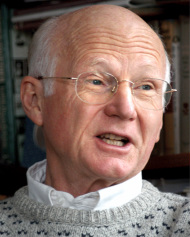
He helped organize coalitions that led in passage of dozens of ethics and open government laws and five major amendments to the Rhode Island Constitution, including the 2004 Separation of Powers Amendment.
West hosted many delegations from the U.S. State Department’s International Visitor Leadership Program that came to learn about ethics and separation of powers. In 2000, he addressed a conference on government ethics laws in Tver, Russia. After retiring from Common Cause, he taught Ethics in Public Administration to graduate students at the University of Rhode Island.
Previously, West served as pastor of United Methodist churches and ran a settlement house on the Bowery in New York City. He helped with the delivery of medicines to victims of the South African-sponsored civil war in Mozambique and later assisted people displaced by Liberia’s civil war. He has been involved in developing affordable housing, day care centers, and other community services in New York, Connecticut, and Rhode Island.
West graduated, Phi Beta Kappa, from Hamilton College in Clinton, N.Y., received his masters degree from Union Theological Seminary in New York City, and published biblical research he completed at Cambridge University in England. In 2007, he received an honorary Doctor of Laws degree from Rhode Island College.
Since 1965 he has been married to Anne Grant, an Emmy Award-winning writer, a nonprofit executive, and retired United Methodist pastor. They live in Providence and have two grown sons, including cover illustrator Lars Grant-West.
This electronic version of SECRETS & SCANDALS: Reforming Rhode Island, 1986-2006 omits notes, which fill 92 pages in the printed text.
Rhode Island's History of Political Corruption

Buddy Cianci
Vincent A. "Buddy" Cianci resigned as Providence Mayor in 1984 after pleading nolo contendere to charges of assaulting a Bristol man with a lit cigarette, ashtray, and fireplace log. Cianci believed the man to be involved in an affair with his wife.
Cianci did not serve time in prison, but received a 5-year suspended sentence. He was replaced by Joseph R. Paolino, Jr. in a special election.

Joseph Bevilacqua
Joseph Bevilacqua was RI Speaker of the House from 1969 to 1975, and was appointed as Chief Justice of the State Supreme Court in 1976. It was alleged that Bevilacqua had connections to organized crime throughout his political career.
According to a 1989 article that appeared in The New York Times at the time of his death:
The series of events that finally brought Mr. Bevilacqua down began at the end of 1984... stating that reporters and state police officers had observed Mr. Bevilacqua repeatedly visiting the homes of underworld figures.
The state police alleged that Mr. Bevilacqua had also visited a Smithfield motel, owned by men linked to gambling and drugs...

Thomas Fay
Thomas Fay, the successor to Bevilacqua as Chief Justice of the Supreme Court, resigned in 1993, and was later found guilty on three misdemeanor counts of directing arbitration work to a partner in his real estate firm, Lincoln Center Properties.
Fay was also alleged to use court employees, offices, and other resources for the purposes of the real estate firm. Fay, along with court administrator and former Speaker of the House, Matthew "Mattie" Smith were alleged to have used court secretaries to conduct business for Lincoln, for which Fay and Smith were business partners.
Fay was fined $3,000 and placed on one year probation. He could have been sentenced for up to three years in prison.

Brian J. Sarault
Former Pawtucket Mayor Brian J. Sarault was sentenced in 1992 to more than 5 years in prison, after pleading guilty to a charge of racketeering.
Sarault was arrested by state police and FBI agents at Pawtucket City Hall in 1991, who alleged that the mayor had attempted to extort $3,000 from former RI State Rep. Robert Weygand as a kickback from awarding city contracts.
Weygand, after alerting federal authorities to the extortion attempt, wore a concealed recording device to a meeting where he delivered $1,750 to Sarault.

Edward DiPrete
Edward DiPrete became the first Rhode Island Governor to be serve time in prison after pleading guilty in 1998 to multiple charges of corruption.
He admitted to accepting bribes and extorting money from contractors, and accepted a plea bargain which included a one-year prison sentence.
DiPrete served as Governor from 1985-1991, losing his 1990 re-election campaign to Bruce Sundlun.

Plunder Dome
Cianci was forced to resign from the Mayor’s office a second time in 2002 after being convicted on one several charges levied against him in the scandal popularly known as “Operation Plunder Dome.”
The one guilty charge—racketeering conspiracy--led to a five-year sentence in federal prison. Cianci was acquitted on all other charges, which included bribery, extortion, and mail fraud.
While it was alleged that City Hall had been soliciting bribes since Cianci’s 1991 return to office, much of the case revolved around a video showing a Cianci aide, Frank Corrente, accepting a $1,000 bribe from businessman Antonio Freitas. Freitas had also recorded more than 100 conversations with city officials.
Operation Plunder Dome began in 1998, and became public when the FBI executed a search warrant of City Hall in April 1999.
Cianci Aide Frank Corrente, Tax Board Chairman Joseph Pannone, Tax Board Vice Chairman David C. Ead, Deputy tax assessor Rosemary Glancy were among the nine individuals convicted in the scandal.

N. Providence Councilmen
Three North Providence City Councilmen were convicted in 2011 on charges relating to a scheme to extort bribes in exchange for favorable council votes. In all, the councilmen sought more than $100,000 in bribes.
Councilmen Raimond A. Zambarano, Joseph Burchfield, and Raymond L. Douglas III were sentenced to prison terms of 71 months, 64 months, and 78 months, respectively.

Charles Moreau
Central Falls Mayor Charles Moreau resigned in 2012 before pleading guilty to federal corruption charges.
Moreau admitted that he had give contractor Michael Bouthillette a no-bid contract to board up vacant homes in exchange for having a boiler installed in his home.
He was freed from prison in February 2014, less than one year into a 24 month prison term, after his original sentence was vacated in exchange for a guilty plea on a bribery charge. He was credited with tim served, placed on three years probation, and given 300 hours of community service.

Joe Almeida
State Representative Joseph S. Almeida was arrested and charged on February 10, 2015 for allegedly misappropriating $6,122.03 in campaign contributions for his personal use. Following his arrest, he resigned his position as House Democratic Whip, but remains a member of the Rhode Island General Assembly.

Gordon Fox
The Rhode Island State Police and FBI raided and sealed off the State House office of Speaker of the House Gordon Fox on March 21--marking the first time an office in the building has ever been raided.
Fox pled guilty to 3 criminal counts on March 3, 2015 - accepting a bribe, wire fraud, and filing a false tax return. The plea deal reached with the US Attorney's office calls for 3 years in federal prison, but Fox will be officially sentenced on June 11.


