


See the 2014 General Assembly Legislation to Know
GoLocalProv News Team
See the 2014 General Assembly Legislation to Know
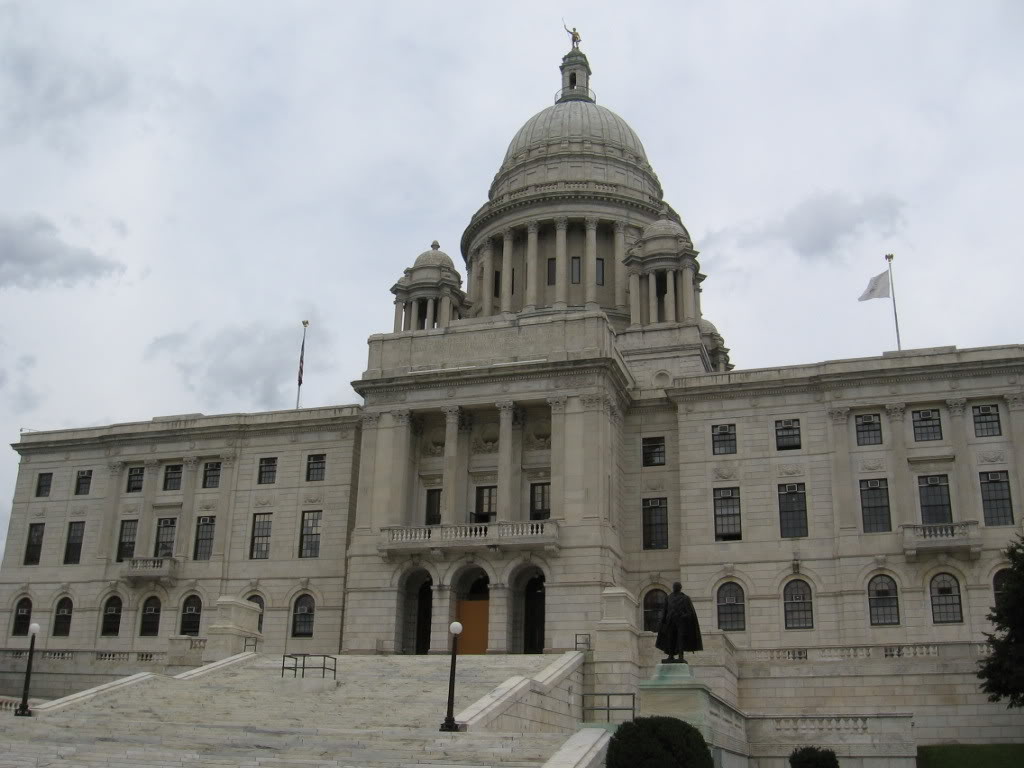
See what's been decided -- and what should be determined -- before adjournment this year.
Ten Biggest Bills in 2014 RI General Assembly

Budget
Year in, year out, the state budget is the major focal piece of the General Assembly.
This year's $8.7 billion budget was no exception. The FY15 tax-and-spend legislation saw a reduction of the state's corporate income tax from 9% to 7%, raising the credit on the estate tax from $921,655 to $1.5 million, and eliminating the Sakonnet Bridge tolls by upping motor vehicle fees and eventually the state's gas tax.
Also included in the budget, per Governor Chafee's proposal, was $12.3 million for paying down the 38 Studios bonds, despite efforts made on the House floor during the budget deliberation to halt payment.

Master Lever
The General Assembly approved the elimination of the master lever on the ballot -- starting next year.
Rhode Island, one of 14 states -- and the only New England state -- to provide the straight ticket voting option, is a signature away from Governor Chafee to abolish it.
“When I first came to the Senate 22 years ago, I was asked to co-sponsor legislation to remove the master lever. I did and I co-sponsored it for many years until finally becoming the prime sponsor, as I am again this year, because I believe this is vitally important to good government and a well-informed citizenry,” said Senator Bates.

Ethics Bill
An ethics bill that passed the House would include on this year's ballot a question asking voters whether or not to add language to the state Constitution that would give the sole responsibility of investigating and prosecuting lawmakers for Code of Ethics violations to the Ethics Commission.
Open government groups, including Common Cause, denounced what they saw as a much weaker
"The original purpose of the resolution–fixing the loophole that allows for legislators to be immune from most of the Code of Ethics–has been hijacked to create, among other changes, a whole new appeal process that applies to everyone covered by the Code of Ethics, and not just lawmakers," wrote Common Cause. "That appeal process would mean anyone found in violation of an ethics violation could wipe the slate clean with a de novo trial; allowing for another bite at the apple."

Minimum Wage
Beginning on January 1, Rhode Island's minimum wage will increase from $8 an hour to $9 an hour.
The bill, sponsored by Representative David Bennett and Senator Erin Lynch, was approved by the General Assembly on Wednesday, January 18. They also sponsored legislation last year to raise the minimum wage from $7.75 to $8.

Gambling
Twin River and Newport Grand, which both faced ballot initiatives for table games in 2012, once again were front and center at the General Assembly in 2014.
Twin River, which got approval from voters for table games in 2012, asked the state for an extension on its line of credit for patrons, which was approved by the House for $50,000.
"We're grateful that the General Assembly has recognized it's an important tool for us to have, in light of competition coming from Massachusetts," said Twin River Spokesperson Patti Doyle.
Newport Grand, which didn't get table games approved by local voters in 2012, is looking to get back on the ballot this November, following a vote by the Newport City Council to let the voters once again decide.

E-Cigarettes
In a year that saw CVS make a landmark announcement to stop selling cigarettes at its stores, the General Assembly voted to prohibit the sale of e-cigarettes to minors, and require a license for vendors and distributors.
Prohibitions on the sale of e-cigarettes to minors have been enacted in more than three dozen states, including Connecticut, New Hampshire, Vermont, New York and New Jersey.

Renewable Energy
The General Assembly approved the Renewable Energy Growth Program Bill, H7727/S2690 to establish a 160-megawatt, five-year program -- four times the size of the current program -- to encourage deployment of a variety of distributed generation technologies.
“This extension of Rhode Island’s distributed generation program is a significant success for the state and its clean energy industry,” said NECEC President Peter Rothstein. “The clean energy industry is one of the fastest growing, innovative sectors driving economic growth in Rhode Island and New England and this legislation will assure that Rhode Island reaps the economic, energy and environmental benefits that come with that growth.”
The RI Center for Freedom and Prosperity, however, called it an "electricity tax."
"House bill #7727 would create a tariff-based renewable energy distributive generation financing program that would speculatively divert electric ratepayer towards selected companies promising to grow the state's renewable energy capacity," the Center said in a statement.

Just Cause
The GA approved legislation this session which will aid in preventing foreclosing owners from evicting tenants in one- to four-family units without just cause.
Presently, tenants living in foreclosed homes have 90 days before the foreclosing lender can evict them without cause.
Pending the governor’s signature into law, the bills would require a foreclosing owner to post and deliver official notice of a foreclosure sale to the tenant 30 days before it takes place. The legislation also exempts banks and credit unions headquartered in Rhode Island and any lenders that have conducted less than 15 foreclosures in the previous year from the new provisions.

Calamari
The proposal to make calamari the official state appetizer has once again been a focal point of another General Assembly session.
Sponsored by Rep. Joseph M. McNamara (D-Dist. 19, Warwick, Cranston), Chairman of the House HEW Committee, the legislation 2014-H 7446, was introduced to acknowledge the importance of Rhode Island’s squid fishing industry and to recognize a dish that is known and served across the country.
Will this be calamari's year?

38 Studios
Prior to the budget vote, Rep. Karen MacBeth's bill to not make payment on the 38 Studios moral obligation bonds was posted for the House Committee on Finance at the 11th hour.
Rep. Mike Chippendale's proposal to create an official investigatory body that would be charged with looking into 38 Studios was also discharged at the time.
When both stand alone measures did not move out of committee, attempts were made to remove the bond payment during budget deliberations on the floor, but failed to garner enough support in the House.


