


Sen. Whitehouse Was Investor in For-Profit Charter School Company
GoLocalProv News Team and Kate Nagle
Sen. Whitehouse Was Investor in For-Profit Charter School Company
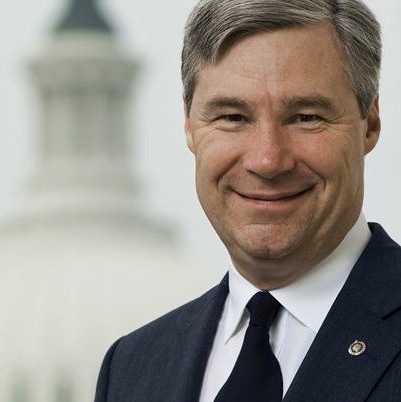
Rhode Island State Ethics filings show that Whitehouse held a 10% or greater ownership interest, or a $5,000 or greater ownership investment interest in Edison Schools a for-profit company that was launched by Christopher Whittle and whose leadership included Benno Schmidt - the former President of Yale. Whitehouse is a Yale grad.
"After four roller-coaster years as a publicly traded company, Edison Schools, the nation's largest for-profit manager of public schools, announced yesterday that its board had accepted a bid of about $174 million by its founder and chief executive, H. Christopher Whittle, to take the company private," the New York Times reported in 2003.
GET THE LATEST BREAKING NEWS HERE -- SIGN UP FOR GOLOCAL FREE DAILY EBLASTThe Daily Caller was first to report the Edison relationship.
"The company's stock -- which made its debut on Wall Street at $18 a share in 1999 and closed as high as $36.75 a share in February 2001 -- fell to 14 cents a share by last October, after a blistering year of regulatory troubles, lifelong unprofitability and public opposition to its takeover of a number of troubled public schools in Philadelphia," reported the Times.
Senator Whitehouse's staff refused to set up an interview or answer questions about Whitehouse's investment in the company -- it is not clear if Whitehouse profited on the stock, when he originally purchased the stock and when he sold the stock.
"Like Senator Whitehouse, most people naturally and intellectually understand that school choice can help many students rise out of poverty. But, obviously, under pressure from teachers' unions, many lawmakers fold and take political positions that are contrary to their personal beliefs," said Mike Stenhouse, CEO of the Rhode Island Center for Freedom and Prosperity, who is a leader in the school-choice movement in Rhode Island.
Last December, Whitehouse, who as a member of the Senate Health, Education, Labor, and Pensions Committee will be holding confirmation hearings for DeVos this month, convened a roundtable of education stakeholders in Rhode Island. The roundtable only included those who have voiced opposition to DeVos nomination.
“President-elect Trump has nominated Betsy DeVos, a billionaire whose views on education seem to be out of line with many Rhode Islanders’ values, to set federal education policy,” said Whitehouse. “The President-elect seems to fill his cabinet with ultra-wealthy individuals with ties to political special interests. The needs of Rhode Island students, parents, and educators will be front and center as I prepare for the hearing on this nomination.”
On Sunday, The Daily Caller reported, “Senator Dems Opposing Trumps Ed Sec Nom Attended Private schools," which included Whitehouse.
Six of the 10 Senate Democrats on the committee that will consider confirming DeVos attended private or parochial schools, or have children and grandchildren attending, according to information obtained by The Daily Caller News Foundation Investigative Group.
Whitehouse attended St. Paul School -- one of America's most exclusive prep schools. Whitehouse's children attended private school, including the Senator's son Alexander who is a 2012 graduate of St. George's School. Annual tuition at St. George's is approximately $60,000 a year.
Among the Democrats on the committee who never attended public school are Sens. Robert Casey, Jr., of Pennsylvania, Rhode Island’s Sheldon Whitehouse, and Colorado’s Michael Bennet.
Whitehouse’s office did not respond to request for comment on Monday, including whether or not he included Rhode Island school choice advocates at his roundtable.
"It is further disturbing that the Senator would hold a public forum among so-called educational leaders and not include anyone who would actually put the interests of our children ahead of the preservation of the failed status quo system," said Stenhouse.
According to the now-defunct Edison Schools' history:
Edison Schools Inc. is the leading for-profit manager of public schools in the United States. In July 2000 it was running 108 schools in 21 states, operating them under local school districts or charter-school boards. In return for administering these schools, Edison receives per-pupil funding generally comparable to that spent on other public schools in the same area.
This is not the first time that Whitehouse's public position and private investments were inconsistent. In December of 2014, GoLocalProv.com unveiled that the Senator has had massive holding in major companies that are leading producers of greenhouse gases:
Sheldon Whitehouse (D-RI), the United States Senator who has now delivered more than 80 floor speeches about the adverse impact of global warming, has himself benefited financially from ownership in the public companies that are among the leading producers of greenhouses gases. One company that he has had substantial stock ownership, Exxon, is second largest public company producer of greenhouse in the world.
Whitehouse has given 80 plus speeches on the dangers of greenhouses gases, according to the Huffington Post.
According to a GoLocal examination of the Senator’s financial disclosure reports, Whitehouse owned Exxon stock both personally and realized benefits from a separate family trust that also owned stock in the mega-oil company. He was required to file RI Ethics Commission Financial Disclosure Reports in the late 1990s and early 2000s when he served as a top level staffer to then-Governor Bruce Sundlun and as Attorney General.
Whitehouse has had a distinguished career in government serving as a top gubernatorial aid, state attorney general, US. attorney and now U.S. Senator. He is widely recognized as a leading voice in Washington in the effort to curtail greenhouse gases.
Beyond his Exxon stock ownership, Whitehouse has owned tens of thousands of dollars in Duke Energy Stock, according to his 2013 filed United States Senate disclosure forms. Duke energy is a company still pushing for expansion of coal power plants. Duke Energy reported in its most recent annual report (2013), “In June, we put our $3.5 billion Edwardsport plant in Indiana into commercial service. This power station is the world’s largest of its kind and one of the cleanest coal plants ever built. It gasifies coal, strips out pollutants and burns the synthetic gas to produce electricity. After rigorous testing and tuning, Edwardsport should reach its full capabilities later this year.”
Whitehouse's economic interests over the past fifteen-plus years seem in conflict with some of his environmental pronouncements.
In December of 2012, as Whitehouse held stock in a company championing a new “world’s largest” clean coal plant, he was delivering a floor speech which challenged his Senate colleagues to take action and pushed for divestiture from fossil fuel investment by colleges and universities.
“Madam President, the public is ready for us to take action. But, we’re not. We are, as I’ve said in previous speeches, sleepwalking. As Congress sleepwalks, Americans are actually taking action on their own. In coordination with the non-profit organization 350.org, for example, students at more than 150 colleges and universities across the country are pressing those institutions to sell off the portions of their endowment portfolios invested in fossil fuel companies. They are forcing schools to divest from the polluters,” said Whitehouse.
Whitehouse's spokesperson said the Senator has been divesting himself of stocks tied to fossil fuels. However, his office has refused to say what stocks the Senator has sold. "The Senator divested his investments from fossil fuels during the past couple of years. He feels strongly about his work on environmental issues,” said Seth Larson, Communications Director for Senator Whitehouse.
In June of 2013, Whitehouse received the National Marine Sanctuary Foundation’s Leadership Award for his work to protect oceans and combat climate change. Just one of a number of environmental awards the Senator has received.
Whitehouse's holdings in energy company and petroleum company can be tracked as far back 1998 through to his most recent U.S. Senate economic disclosure filings.
According to RI Financial Disclosure forms for the years 1998, 1999, 2000, and 2001, Whitehouse reported stock holdings in leading petroleum companies Exxon, Phillips Petroleum, and Royal Dutch (Shell). These holdings were in addition to oil company stocks held by family trusts - specifically the Helen Chase Rand Residual Trust, which reported ownership of Exxon stock.
Whitehouse’s slow divestiture comes more than two decades after U.S. Senator John Chafee (R-RI) had divested in the 1980s from ownership in oil company stocks citing environmental issues. Exxon more than almost any other company is tied to the production of carbon emissions.
A 2013 report on Climate Change Study found that 90 companies around the globe were responsible for producing two-thirds of all man made carbon emissions. The greenhouse gas producers fell into three categories in the study and Exxon was second only to Chevron in the category of investor owned and state-owned companies. Exxon is responsible for producing 3.2% of all the CO2 and CH4 emissions from the year 1750 up through 2010.
According to financial records, beyond Whitehouse's holding in Exxon and other petroleum company stocks, he also realized investment interest income of greater than $5,000 from his Exxon stock. The financial disclosure reports only required disclosure of interest income above $5,000. It is unknown how much in interest income in total Whitehouse realized from his stock ownership while he has served in public office.
Whitehouse’s United State Senate Financial Disclosure Report for 2012 (filed in 2013) no longer lists Exxon as a stock that he personally owns, but it is unclear if the Helen Chase Rand Residual Trust that the Senator continues to benefit from has Exxon as a holding.
"I couldn't tell you about the status of the family trust, as I don't have that information at this time,” said Larson in a phone interview with GoLocal.
Editor's Note: A spokesperson for Senator Whitehouse provided an official financial disclosure form that includes the sale of Senator Whitehouse's Duke Energy stock in February 2013. As reported in the story, he held the stock through 2012.
SLIDES: 17 to Watch in 2017
17 to Watch in 2017 in Rhode Island

Molly O’Brien: 17 to Watch in 2017 in RI
O'Brien, who may be Rhode Island's most-liked TV broadcast journalist, is poised for some big moves in 2017.
She was most recently at WJAR Channel 10, where she was the incredibly popular traffic, technology, and social media reporter. Chances are, you checked in and got a traffic report from O’Brien more than once.
The television newswoman, who got her degree in broadcast journalism (Summa Cum Laude) from Arizona State University, got start as a weather and anchor traffic at KVEW in Washington, followed by work as a morning show host and general assignment reporter for KBMT in Texas, before landing in Rhode Island in 2012, where she got “Best Traffic Reporter” in RI Monthly in 2012 and “Best Morning Personality” in 2014.
O’Brien’s work as an animal rescue advocate has won over even more fans, if that’s at all possible. She’s one of the hardest-working, best-liked media personalities in the market. And 2017 could be her biggest year yet.

Zach Darrow: 17 to Watch in 2017 in RI
For someone who’s been in the game for a while (he was a GoLocal PowerPlayer back in 2011), Darrow’s taking his work as Chairman of the law firm DarrowEverett to a whole other level.
He has the owners of the Superman Building as a government relations client, who upped their game in 2016 by rebranding their effort to develop the historic structure, partnering with the Providence Preservation Society to offer tours, and positioning themselves to attract tenants and make the building viable once again.
He is spearheading Waldorf Capital Management’s 195 play, “Chestnut Commons” — a 116,000 square foot retail and residential development that just saw the land sale approved by the 195 Commission for its proposed location on parcel 30.

Lara Salamano: 17 to Watch in 2017 in RI
This time last year, the RI Commerce Corporation had just announced Betsy Wall had been named the agency’s new chief marketing officer, and the state was due to unveil its much anticipated, $5 million tourism rebranding effort.
Fast forward twelve months, Wall was fired, and the state is still regrouping after a tourism campaign in chaos, having just issued in November a RFP for new business and tourism advertising agencies that was due on December 12.
Now, the urgency — and expectations — rest in part with Salamano, who the state brought on in June to be the new chief marketing officer. The Rhode Island native and URI grad honed her expertise as a marketing exec in the entertainment industry in New York.

Jocelyn Kelly: 17 to Watch in 2017 in RI
The United Way of Rhode Island is one of the state’s leading nonprofits for engaging young professionals — and at a time when the state is trying to retain and attract talented millennials, UWRI plays an important role in connecting them with different communities around the state.
Kelly, the current Chair of the UWRI’s Young Leaders Circle, is the Assistant Vice President, State Government Relations Manager at Citizens Bank, after having served as a government relations specialist following political work for then-Secretary of State Ralph Mollis. On UWRI's website she writes:
We come together to volunteer on projects and try to make a difference. Whether that’s providing eleven children with scholarships to attend summer learning programs or providing six families with emergency funds to keep them from losing their homes last winter, we’re making incremental differences that help our fellow Rhode Islanders.

John Florez: 17 to Watch in 2017 in RI
This past year in Newport, he proposed the municipal ordinance that had been introduced in Providence by former Mayor Joseph Paolino to prohibit distribution of goods or services between pedestrians and occupants of vehicles — which would not just take into account panhandling, but groups looking to raise money such as Pop Warner teams or firefighters.
“It’s a distraction for a motorist behind the wheel to be approached by someone soliciting for money or services, and it isn’t safe for anyone to be standing on a median strip or stepping off a sidewalk to approach motorists,” Florez stated. “This is a common sense and practical solution to practices that compromise the public safety of our city’s residents and visitors alike.”
Florez, who has backed body cameras for the Newport Police Department, a ban on single-use plastic bags, is calling for the creation of a PILOT program to reach agreements with the city’s nonprofits to make some form of payment in lieu of taxes.

Vin Mesolella: 17 to Watch in 2017 in RI
There are many reasons why Rhode Island was able to keep 3,000 jobs in Rhode Island and build a new-mega facility for Citizens Bank in Johnston, but according to Citizens Banks’ top official overseeing the project it would not have happened if Narragansett Bay Commission’s Chairman Vin Mesolella had not already developed expansion plans and engineering in the area and been able to implement a water and sewer plan immediately.
“When we looked at the final site (in Johnston), we thought there was no easily available water and sewer — it was looking like it would have been impossible to develop,” said Mike Knipper, Head of Property and Executive Vice President for Citizens.

George Zainyeh: 17 to Watch in 2017 in RI
George Zainyeh may be one of the key players in the marijuana debate at the RI General Assembly in 2017.
Legislator, Chief of staff for Patrick Kennedy and Governor Lincoln Chafee, and now top lobbyist for many on the big healthcare issues, he is likely to be one of the top players in the discussion about legalization.
Ironically, Zainyeh's former boss Kennedy today chairs the Board of the nation's leading anti-legalization advocacy group.
This session marijuana will take up a substantial amount of oxygen.
With Massachusetts legalizing and Rhode Island facing a $100 million deficit, there is mounting pressure to pass peer legislation to the Commonwealth's.

Dave Paolo: 17 to Watch in 2017 in RI
He is back. In early 2016, Dave Paolo launched his G Media firm and just a few months later he has added more than 25 clients, made an acquisition, and landed a Fortune 50 client. It has been a pretty good year.
Just as media behavior is transforming, so are advertising and marketing agencies.
In April, GoLocal reported:
The company is Rhode Island’s first agency focused exclusively on experiential marketing and content development.
“The age of experiential marketing has matured. These events…combined with the correct social and online digital campaigns are an essential piece of every integrated marketing budget. Its not about driving a one dimensional purchase anymore, it's about building a long lasting relationship (with the consumer) for which you earn repeat purchase,” said Paolo in an interview with GoLocalProv.

The Silks: 17 to Watch in 2017 in RI
The group that’s dubbed itself the “mangy blues rock power trio” has been around, but a big 2016 could signal an even bigger 2017 for The Silks.
GoLocal music reviewer Ken Abrams talked them up when he featured their latest album “Turn Me On” in his ten local music must-buys this holiday season:
The Silks play pure rock and roll throughout New England and beyond. The Providence power trio includes guitarist Tyler-James Kelly, Jonas Parmelee on bass and drummer Sam Jodrey. Check out their latest release Turn Me On, straight ahead rock and roll that’s fresh and vintage at the same time.
In December, the Silks nabbed “Blues Artist of the Year” at the Boston Music Awards — you can catch them Friday night (December 30) at The Met in Pawtucket. Next month, they’ll be at the Narrows Center on January 28 with Matthew Stubs and the Antiguas in Fall River.

Ed Brady: 17 to Watch in 2017 in RI
He’s got a number of success stories under his belt — and he only seems to add to his track record of winning.
From two Thirsty Beavers, to Milk Money, Brady recently expanded his empire when he opened Drift at the newly re-done Hilton Garden Inn Hotel at India Point Park in Providence.
However, it’s the Cranston West graduate's involvement in the community that sets him apart, time and time again.

Colonel Ann Assumpico: 17 to Watch in 2017 in RI
Colonel Assumpico was appointed the 13th Superintendent of the Rhode Island State Police and Director of the Rhode Island Department of Public Safety by Governor Raimondo on November 3, 2016 — she is the highest ranking female to serve in the Rhode Island State Police and the first female to lead a law enforcement agency in the State of Rhode Island.
Will Raimondo finally direct the State Police to release the interview notes from the 38 Studios investigation?
Regardless, all eyes will be on Assumpico, as she takes the helm for her first full calendar year. Following Assumpico’s appointment, GoLocal spoke with Lt. Charles P. Wilson, the Chair of the National Association of Black Law Enforcement Officers:
"Number one, putting a female of any ethnicity in charge of the State Police will have a dynamic impact on the entire law enforcement structure in the state, and that's a good thing," said Wilson, who is a Rhode Island College graduate.

Bankruptcy: 17 to Watch in 2017 in RI
It’s not a person, place, or thing — but it’s very real possibility for the City of Providence.
2016 saw the city battling with the firefighters over the platoon shift change that Mayor Jorge Elorza implemented in 2015, and while both sides touted a new five year contract moving forward as a step in the right direction, the city’s internal auditor projected — multiple times — that the purported savings are off by the magnitude of millions (not to mention the underlying legal battle has not been resolved).
The topic of a potential bankruptcy has been broached in recent years — with Elorza continuously dismissing the prospect — but with critics of the city’s financial position repeatedly advocating for it.

Darryl Kosciak: 17 to Watch in 2017 in RI
As Providence and Rhode Island continue to look for ways to address the issue of homelessness, the Rhode Island Coalition for the Homeless has a new face at its helm in 2017.
Darryl Kosciak is replacing ten-year veteran Jim Ryczek as Executive Director at the end of 2016, after a national search. Kosciak, is originally from Hopedale, MA, had lived in Greensboro, North Carolina for the past twenty years, where he headed up the city’s Youth First Division for at-risk youth starting in 2002, before becoming the Executive Director for Partners Ending Homelessness (PEH) in 2010.

Georgia Hollister Isman: 17 to Watch in 2017 in RI
The State Director of the Working Families Party in Rhode Island came off of 2016 claiming big victories — and has not stopped working since.
“Over all we won 7 of 10 races we took on, including important defenses of Rep. Teresa Tanzi and Rep. Kathy Fogarty and winning Susan Donovan’s race in an open seat. This is an enormous record for our very first election cycle,” said Isman, following the election.
After Trump’s victory, a “Resist Hate RI” group emerged, headed in part by Isman, to be proactive in pushing a progressive, "anti-Trump" agenda — and calling on the state’s elected officials to do the same. The Facebook group has nearly 5,000 members, community forums regularly draw hundreds of Rhode Islanders, and Isman is spearheading efforts as 2017 gets underway.

Patricia Morgan: 17 to Watch for 2017 in RI
The Republican State Representative is no stranger to GoLocal’s year end lists — in 2015, she was tapped for earning the accolades of having made a difference that year for calling into question state contracts with the Rhode Island Convention Center — not to mention the necessity, or efficacy, of truck tolls.
Morgan, who was first elected to the General Assembly in 2010, takes on a new role in 2017, however, when she assumes the role of House Minority Leader. (Representative Brian Newberry had held the post since 2011).

Iftikhar Ahmad: 17 to Watch in 2017 in RI
This September, the Rhode Island Airport Corporation landed one of the most successful airport heads in America, when the Board of Directors announced that it signed Iftikhar Ahmad to lead T.F. Green Airport as the new president and CEO of the Corporation. Ahmad increased passenger growth by 36% at his previous post in New Orleans.
"We have completely turned around this airport and are now underway on a new $826 million north terminal project," Ahmad said in a news release at his departure, as reported by the Times-Picayune. "My goal was to work with the Aviation Board and staff to improve the physical assets of the airport and attract additional air service for the benefit of metro New Orleans and the Gulf South...I feel like I have accomplished that and look forward to new challenges in my career."

The District RI: 17 to Watch in 2017 in RI
The Jewelry District is abuzz with the potential for development to finally get underway on 195 land in 2017, but there is one new addition that’s already opened its doors and ready to go in the new year.
The site of the former popular South Street Cafe is now The District RI, and officially celebrated its grand opening on December 22 — and will be open daily at 11:30 AM (except Mondays).
The restaurant Facebook page has already amassed nearly 1,500 likes, and has averaged 4.9 starts (out of 5) from 48 reviews so far. The menu features burgers, pizza, salads, calamari, and more.


