


St. Joseph Pension Fund Failure: Cautionary Tale for Recovering Millions for Washington Bridge
GoLocalProv Business Team
St. Joseph Pension Fund Failure: Cautionary Tale for Recovering Millions for Washington Bridge

Now, just short of the seven-year anniversary, the pension fund’s future is still in question. While tens of millions of dollars were recovered, tens of millions more were not.
As of today, the long-term financial viability of the pension fund is still in limbo.
GET THE LATEST BREAKING NEWS HERE -- SIGN UP FOR GOLOCAL FREE DAILY EBLASTThe receiver for the failed pension fund, Stephen Del Sesto, told GoLocal on Monday, "We recently received what was needed from the IRS to proceed to Pension Benefit Guaranty Corporation, and the PBGC process has begun, but no formal determination on 'taking over' the Plan has yet been made/issued."
If approved by the PBGC, the underfunded pension fund would become an Employee Retirement Income Security Act of 1974 (ERISA) compliant plan.
Del Sesto and special investigator Max Wistow were appointed by Superior Court Judge Brian Stern in 2017 to recover funds for the retirement funds.
Wistow was the attorney who recovered funds for the State of Rhode Island in the 38 Studios bankruptcy and is now the Rhode Island's attorney, along with Savage Law Partners, assigned to recover funds for the failed Washington Bridge.
_360_360_90.jpg)
The St. Joseph pension fund was underfunded by $120 million. It had been “orphaned” in the deal in which CharterCARE was sold to Prospect of California in 2014. State regulators — especially Rhode Island Attorney General Peter Kilmartin — failed to protect the members of the pension fund and had approved the hospitals' sales.
The damage to the fund began years earlier when the Diocese of Providence failed to properly fund the pension and then sold off St. Joseph to CharterCARE.
Bishop Thomas Tobin chaired the Board of Trustees in 2008, during the period in which the hospital merged with Roger Williams Medical Center.
For years earlier and under the direct auspices of the Tobin-led Diocese, contributions to the pension fund were either only a fraction of what was needed or not made at all.
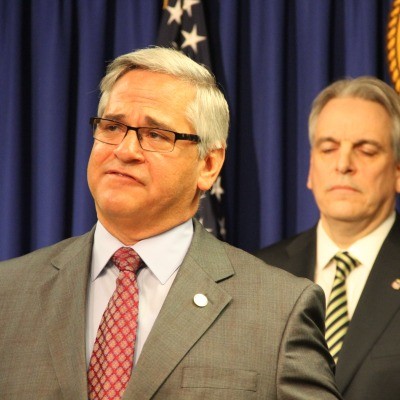
The Attorney General has the sole responsibility under Rhode Islands's Hospital Conversion Act to protect the employees of a healthcare facility financially during a transaction.
At the time of the agreement in 2014, Kilmartin said, “The transacting parties have worked diligently to provide regulators with the necessary documentation and information throughout this review process to make this decision, a decision I believe is in the best interest of Rhode Island’s healthcare marketplace, the community, the employees, and most importantly, the patients.”
Kilmartin said in his statement, “Conducting a hospital conversion review requires the commitment of a substantial amount of resources for the Office of Attorney General. I commend my staff for the time and careful consideration put into this review process.”
“At the very least, the Attorney General failed to ‘mind the store’ when it came to the rights of Plan participants in 2014, and continues to oppose their assertion of their lawful rights. Apparently, it will take the zealous advocacy of the Receiver on behalf of the Plan participants to obtain for them what was rightfully theirs over four years ago,” wrote the receiver Del Sesto and the special investigator Max Wistow in the documents filed in 2018 in the court proceeding.
Wistow and Del Sesto asserted in a lawsuit filed in June of 2018 that the Diocese of Providence was guilty of a massive financial fraud.
While all of the others targeted in the lawsuit settled for $47 million from the other litigants, CharterCare paid the lion's share — $27 million of the $47 million.
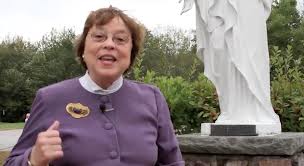
Former Sister of Mercy nun and America’s first female Attorney General Arlene Violet unleashed in an interview with GoLocalProv in October of 2018 on the legal tactics of the Diocese of Providence and specifically Bishop Thomas Tobin.
“It is unjust what the Roman Catholic Church is doing to delay the court action to try and help the retirees,” said Violet. "Tobin and the church, not only are they not putting any monies in, but they are actively objecting to every effort to recover money even when they are not economically involved.”
In a February 2022 article published by GoLocal, Del Sesto complained that the Diocese was “dragging its feet.”
The Diocese's lawyers used legal motions to delay the resolution of the case, said Del Sesto at the time.

“It's just the process by which things happen and with all of the complex issues that are going on that's just about how long it will take,” said Del Sesto.
“[As the] Diocese typically does in their litigation, they do not usually fold up their tent and walk away early-- they usually fight it until the end,” said Del Sesto.
In the end, Wistow and Del Sesto settled with the Diocese for pennies on the dollar despite documentation that the Church had conspired to mislead the retirees, regulators, and even the Vatican.
Wistow was paid more than $11 million, and Del Sesto was separately paid about $2 million.
The retirees' fund continues to limp along; it awaits approval by the PBGC for federal designation as an ERISA fund, and the Diocese paid pennies on the dollars for its role in the biggest pension fund failure in Rhode Island history.