


The Ten Biggest Questions Facing the PawSox Coming to Providence
GoLocalProv News Team and Kate Nagle
The Ten Biggest Questions Facing the PawSox Coming to Providence
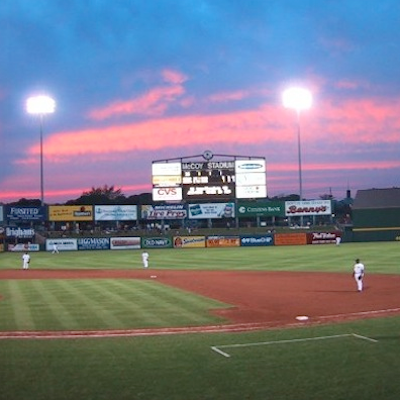
While it has been a week since the announcement was made that a new ownership group, led by James Skeffington and prominent Rhode Island businessmen, has an interest in bringing the PawSox to Providence, the possibility is raising more questions than answers.
SLIDES: See the Questions Facing a Potential PawSox Stadium in Providence
GET THE LATEST BREAKING NEWS HERE -- SIGN UP FOR GOLOCAL FREE DAILY EBLASTAt the press conference following the announcement, Skeffington did not rule out the possibility of seeking public funding assistance for the construction of a new stadium in Providence.
"I think what most economists not associated with teams find is that for professional sports, minor league sports is a low economic impact -- so the amount of public investment should be low," said Victor Matheson, a Holy Cross Economics Professor who specializes in sports economics.
"That doesn't mean that you don't provide infrastructure, support, so people can get to the stadium efficiently," said Matheson. "But putting a bunch of public money into the stadium to support someone else's business isn't the most prudent use of public funds."
Stadium Support

"He said basically if it's not Providence, it would be a broader catch area," said Providence City Council President Luis Aponte of his preliminary discussion with Skeffington.
Neil DeMause, who wrote Field of Schemes: How the Great Stadium Swindle Turns Public Money Into Private Profit along with Joanna Cagan, had been highly critical of public funding requests from privately owned sports teams.
"The best case scenario is that they don’t look for assistance from the city or state. Second best would be that they’d agree to repay any public subsidies with annual rent payments," said DeMause. "Anything else (trying to claim that tax revenues will go up or the like) is just blowing smoke, as innumerable economists have found no measurable benefit from the presence of sports teams."
Skeffington noted last week that the owners would be conducting an economic impact study in the coming weeks.
"Owners have the upper hand here for several reasons," said Matheson. "First of all, there are a limited number of baseball franchises, the baseball community uses that as leverage as a way a restaurant can't. If I don't build you an Olive Garden here, Applebees can just as easily come in -- you don't have the same thing with baseball."
"I don't know how much it matters with minor leagues, but it's easy to get stars in your eyes," continued Matheson. "You make decisions out of the heart and not economic sense. If anyone else besides Curt Schilling said you should give me a bunch of money for a game that hasn't been proven yet, no one would have thought about about pulling the trigger."
"One of the the problems with something like a stadium, it's unusable half of the year. It's only going to be used as what it's designed to be used for, maybe 60 days a year. It's not a good venue to be used for other stuff. It's not a good venue for concerts particularly, but they'll play it up as such," said Matheson. "It's designed to watch baseball. This would lie empty most weeks of the year."
The Ten Biggest Questions Facing the PawSox Coming to Providence

Owner interests?
What are the owners looking for from the state?
It's been one week since the new ownership group of the Pawtucket Red Sox was announced -- and their intention to look at Providence as a potential new location for the Red Sox AAA affiliate. How long this has been their plan is unclear but what is more certain is the new owners are considering the pursuit of some public funding to be on the table. What will they be seeking from the city and state, and how much? As the state still reels from the failed 38 Studios deal, look to see what might be proposed -- and how the public reacts.

Public funding?
How much is the city -- and state -- willing to give?
While the new ownership has indicated that Providence is tops on their list for a new location for the PawSox, there are other cities and towns that could vie for attention. "I said to Mr. Skeffington, if Pawtucket could pull it out, would they be interested, but he said basically if it's not Providence, it would be a broader catch area," said City Council President Louis Aponte, of his conversation with the new ownership. As the state and its capital city deliberate the best use of downtown real estate -- and the news 195 land -- how much will they be willing to make the new owners happy, especially if they starting pitting Providence against other locales?

Economic impact?
What is the potential economic impact on Providence?
If Providence is the new home of the PawSox, it gets a ball club that has seen attendance at McCoy top 500,000 for 16 straight years -- only Louisville, Columbus, Buffalo, and Indianapolis have longer streaks. "Anytime you can draw in on average 7500 people for games, it brings brings value to the state," John Gibbons, Executive Director of the Rhode Island Sports Commission, told GoLocal in January. "That type of business doesn't necessarily draw in hotel use, but I know those facilities nearby do well when the PawSox play, and I know they bring in tax dollars every night with the sales at the park." Jobs aside, watch to see who conducts economic impact studies -- and what that means in terms of any negotiations between owners and the city.

Jobs retained?
How many jobs will be retained?
Pawtucket's loss is Providence's gain, and the questions is does that go for jobs as well as economic impact. How many of the existing PawSox job holders will see an opportunity in Providence? Will the new ownership bring in new vendors, new office staff, new grounds crew? Will there be any downsizing in an attempt to streamline operations?

Jobs created?
How many jobs will be created?
One of the bigger questions is will a new Sox stadium create any new jobs in a state that certainly needs them. Construction of a new stadium would no doubt provide short-term labor opportunities for the buildings and construction trades, but what about long term opportunities? The development of the 195 land is beginning to take shape after addressing infrastructure needs, and now the city and state are looking to capitalize on the potential to foster high job growth industries. Does a new baseball stadium fit that bill?

New business?
What will get built around it?
The potential location for a baseball stadium that is currently being discussed is the land just to the north of the South Street Landing project, the mixed-use multi-million dollar project will be a new home to a Rhode Island nursing education Center, Brown University offices and graduate student housing as well as a parking garage. There are multiple 195 parcels on the land west of the river. Will addition parking options be needed? The PawSox play approximately 70 home games a year. Who will step up as potential new neighbors?

195 Plan?
How does it fit into 195 development?
Governor Gina Raimondo during her campaign called for the 195 land to be used as a manufacturing hub. “In order to rebuild our economy, we have to start making things in Rhode Island again,” said Raimondo during the campaign. “My strategy will be to take the good ideas coming out of our universities and colleges and turn them into products we manufacture here. We have a historic opportunity with this I-195 land and we have to get it right." There are over eighteen acres available for development -- and Raimondo shook up the 195 commission last month with her own set of appointees, who have yet to make any major moves - as of yet.

Transparency?
What level of transparency will be disclosed?
The announcement of the sale of the PawSox to its new ownership group was followed by a press conference led by new owner James Skeffington. While Skeffington offered ballpark figures for how much a new stadium might cost -- he cited $60-$70 million for other stadiums of its size -- what's unclear is how much the owners paid for the ball club. If the ownership (whose personal wealth combined totals over $1 billion) seeks public funding, how much will they be willing -- and required -- to disclose about personal financial interests?

Big picture?
Should Raimondo focus on larger issues?
Rhode Island's new Governor is entering her third month in office, set to introduce her first budget proposal in two weeks, and is facing tackling a projected $200 million budget deficit. Having recently announced a working group to overhaul Medicaid, following identification of the state's most pressing fiscal issues, can the Governor afford to spend time brokering a deal for a minor league sports stadium? Raimondo spoke of a state Innovation Institute being the cornerstone of her 195 vision -- will subsidizing a minor league ballpark be a focus of the administration?

Track record?
How have other deals performed – Convention Center, Airport, 38 Studios, Produce Market, Providence Place?
Providence hasn't seen major capital projects since Waterplace Towers changed the city skyline following the completion of the Providence Place Mall and the new Convention Center. Since then, the failed 38 Studios deal has brought into scrutiny private companies being underwritten with moral obligation bonds -- and tax stabilization agreements in the city have similarly undergone scrutiny by the city council and taxpaying public. Will a look a past projects play a role in the development of a stadium?


